




Carved Giltwood Pedestal Table
A carved giltwood pedestal table brings gilded warmth and architectural presence to a room, offering a sturdy yet decorative surface for display.

Carved Giltwood Pedestal Table
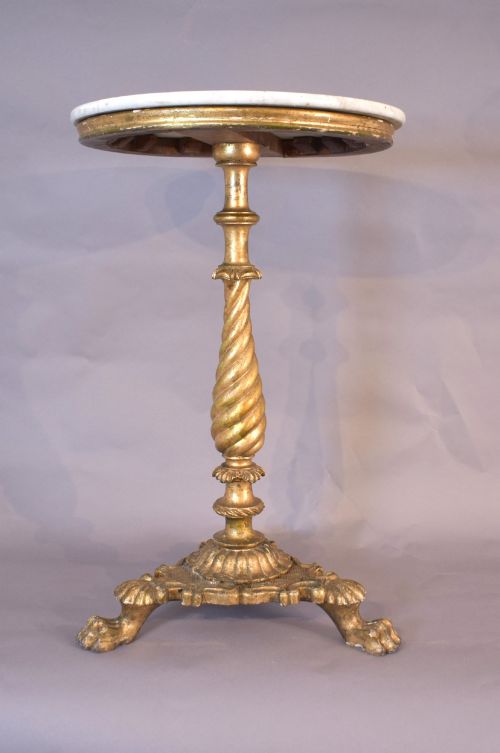
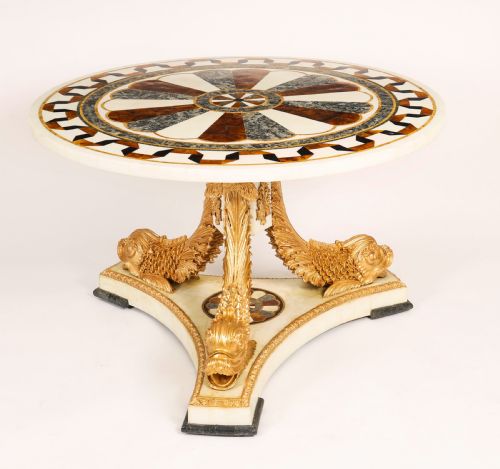
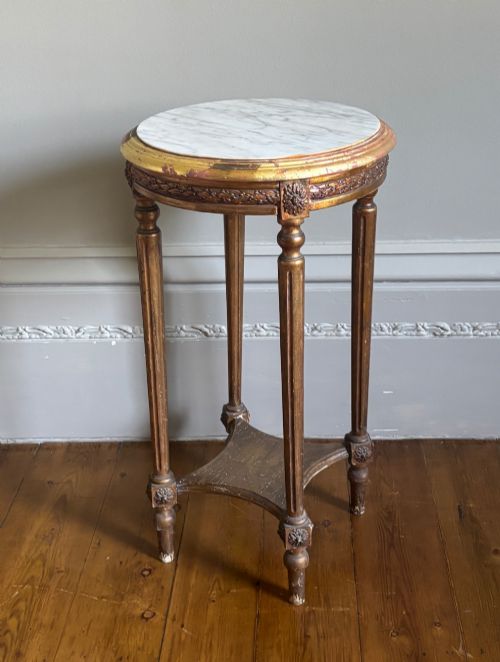
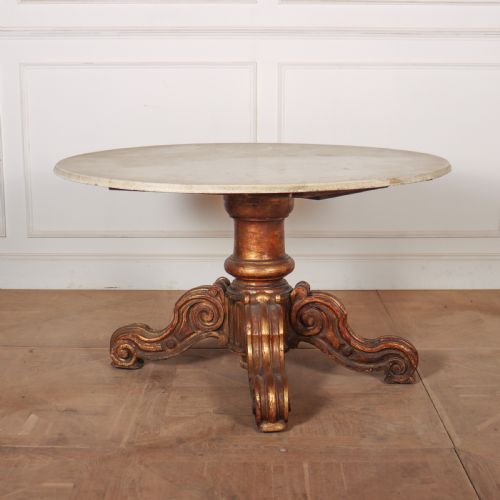
A carved giltwood pedestal table encompasses diverse forms such as centre tables, side tables, occasional pieces, urn stands, and breakfast tables. These items emerge across distinct periods, stretching from the eighteenth century through the nineteenth century and into the early twentieth century.
Italian, French, and English workshops contribute distinct stylistic vocabularies to the selection, drawing upon Baroque, Regency, and Neoclassical traditions. Pieces range from tripod and circular designs with marble tops to elaborate sculptural supports featuring dolphins, swans, or blackamoor figures.
The most frequent encounters on this page involve nineteenth century occasional and centre tables, often pairing gilded woodwork with inset marble or timber tops. Surviving examples demonstrate how these versatile surfaces functioned in period interiors, acting as focal points or functional display stands.
Evaluating the Pieces
The crispness and depth of the manual carving dictate the visual impact of the frame, distinguishing deeply undercut foliage and sculptural figures from shallow, mechanical moulding. Master carvers achieved fluid lines and naturalistic details that catch the light across the gilded surfaces.
The integrity of the gilding and the preparation layers beneath it determine how well a piece ages over centuries. Superior examples retain rich layers of gold leaf applied over carefully smoothed gesso, whereas lesser items show flat finishes or crude modern interventions.
The selection of secondary materials, such as the grade of the marble top and the density of the underlying timber, signals the original ambition of the workshop. High-quality tables unite balanced proportions with harmonious material pairings that remain stable through changes in environment.
Listings feature pieces spanning from the mid-eighteenth century to the early twentieth century, constructed in giltwood, marble, and rosewood.
The Carved Giltwood Pedestal Table Glossary
- Giltwood
- Wood that has been coated with gold leaf or powder. This finish provides a brilliant metallic sheen while protecting the carved substrate underneath.
- Gesso
- A plaster-like mixture applied to wood to create a smooth surface for gilding. It allows carvers to refine fine details before the gold leaf is laid down.
- Pedestal
- A single central support or column holding up a table top. This architectural form elevates the surface while freeing up floor space around the base.
- Tripod
- A three-legged support structure commonly found on small occasional and centre tables. This configuration ensures stability on uneven historical flooring.
- Neoclassical
- A style drawing inspiration from classical antiquity, featuring restrained proportions, columns, and symmetry. It emerged strongly in eighteenth and nineteenth-century furniture design.
Carved Giltwood Pedestal Table: Frequently Asked Questions
Where should I place a giltwood table?
These tables suit reception rooms, hallways, or drawing rooms where their reflective surfaces can catch natural light. They work effectively as central accents or against walls beneath mirrors and artwork.
Avoid positioning them in direct sunlight or damp areas to protect the delicate gold leaf and timber structures. A stable indoor climate helps preserve both the gilding and any inset marble tops.
How do I care for giltwood?
Dust the carved wooden elements very lightly using a soft feather duster or a clean, dry artist's paintbrush. Avoid pressing down on raised or delicate carved details.
Keep moisture and chemical polishes completely away from the gilded surfaces, as water and solvents lift the gold leaf. Professional conservation is recommended if the gilding begins to flake or separate from the gesso base.
What defines the Regency style?
Regency design draws heavily on classical Greek, Roman, and Egyptian motifs, often incorporating bold contrasts in materials. Pieces from this era frequently feature dark timbers combined with parcel gilding, bronze mounts, and clean architectural lines.
Tables from this period emphasise symmetry and structural clarity, reflecting the early nineteenth-century fascination with antiquity. They serve as striking focal points in traditional and contemporary interiors alike.