
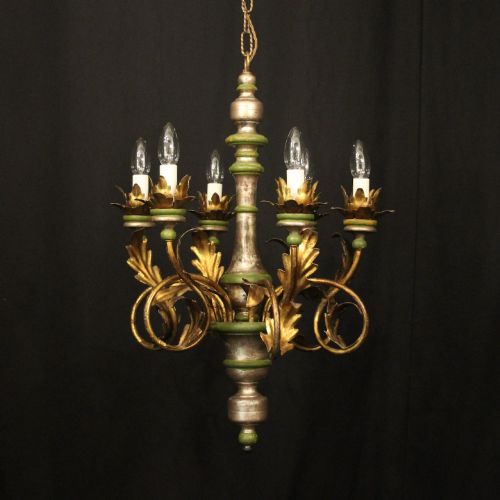
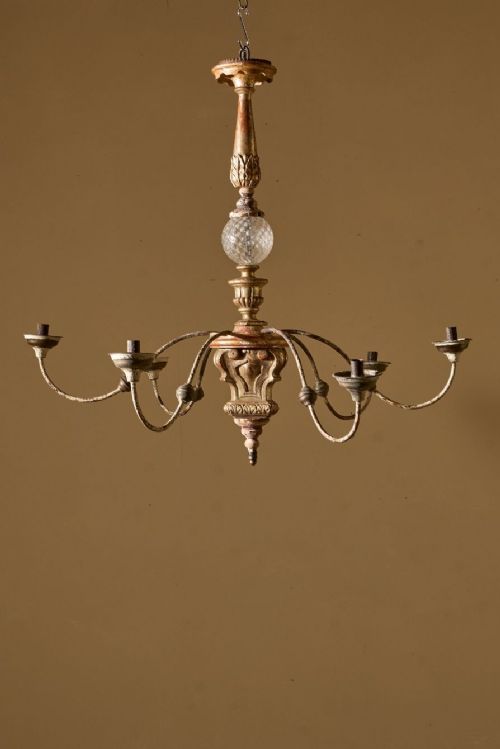
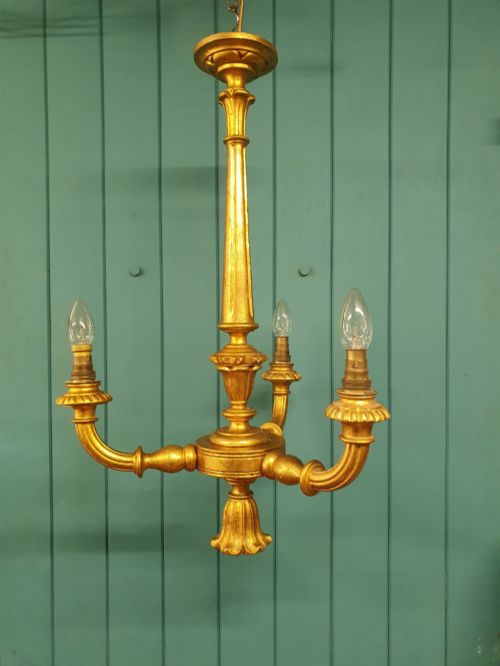
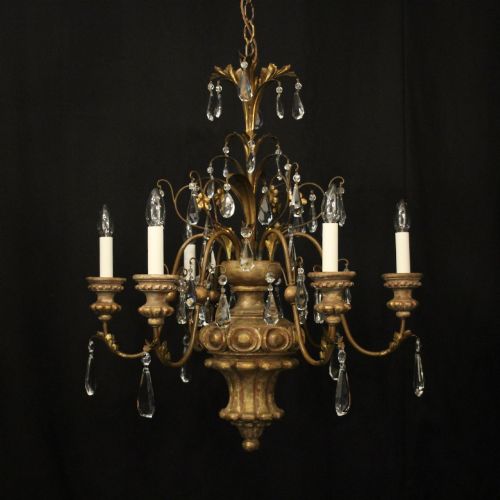
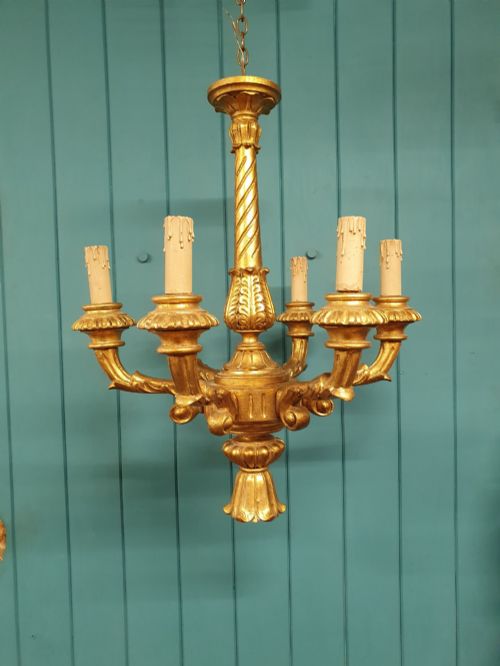


Carved Giltwood Chandelier
A carved giltwood chandelier brings warmth and reflective brilliance to a room, offering grand illumination through carved timber and gold leaf.
Carved Giltwood Chandelier
When you search for a carved giltwood chandelier, you find hanging light fixtures formed from carved wood covered in gold leaf or gesso, spanning several centuries of craftsmanship.
The selections available here range from early eighteenth-century Italian originals to later twentieth-century Florentine interpretations and French Chateau designs.
How they were made
The foundation of each piece begins with timber carved into elaborate scrollwork, foliage, and structural arms, sometimes built over a gesso base to smooth the surface.
Artisans applied thin layers of gold leaf over the carved wooden structures, occasionally combining the finish with ebonised painted sections or metal components for contrast.
The listings here include examples from the eighteenth century, nineteenth century, Edwardian era, and the 1920s to 1930s.
What varies in quality
Quality rests in the depth and crispness of the hand-carving on the wooden structure, where fluid organic forms distinguish masterwork pieces from simpler production.
The application and preservation of the gold leaf layer create variations in surface texture, with finer examples showing subtle ageing rather than flat modern gilding.
The Carved Giltwood Chandelier Glossary
- Giltwood
- Timber coated with gold leaf or gold powder. This finish provides the characteristic metallic sheen seen across Italian and French lighting.
- Gesso
- A plaster mix applied to wood surfaces before gilding. It creates a smooth base that holds crisp carved detail.
- Pricket
- A sharp spike on a candle holder. This metal point secures wax candles directly onto the arm of older fixtures.
- Florentine
- A regional style originating from Florence. It often incorporates ornate carved foliage and Baroque motifs.
Carved Giltwood Chandelier: Frequently Asked Questions
Were these chandeliers originally wired for electricity?
Most older examples were originally designed for candles or oil lamps and were later adapted to accommodate modern electrical wiring.
When modern components are fitted, they are integrated carefully to preserve the structural integrity of the antique carved arms.
How can I tell an eighteenth-century piece apart from a later one?
Examinations of the underlying timber, tool marks, and the wear patterns on the gesso layer help indicate the age of the structure.
Earlier examples often display heavier hand-carved forms and deeper patination in the gold leaf compared to twentieth-century revivals.
Where should I hang a large giltwood chandelier?
These fixtures suit high ceilings in principal rooms where their scale and reflective gold surfaces can dominate the architectural space.
Ensure the ceiling structure supports the combined weight of the dense timber, metal internal bracing, and glass elements.