
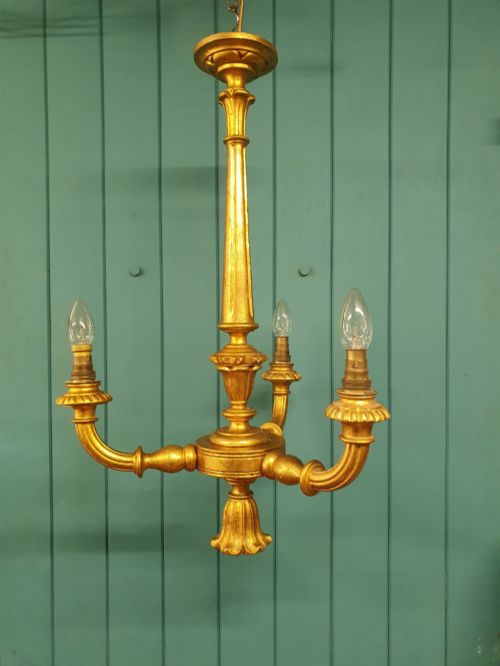
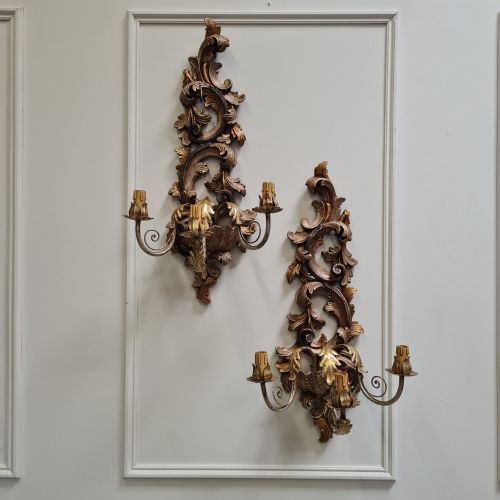


Giltwood Three Arm Light
A giltwood three arm light brings shimmering illumination and ornate carved form to an interior, drawn from centuries of Italian and English craftsmanship.
Giltwood Three Arm Light
A giltwood three arm light encompasses carved wooden chandeliers and wall sconces finished in gold leaf, designed to hold three candles or bulbs. When searching for a giltwood three arm light, you encounter wall lights and chandeliers originating from the eighteenth century through to the nineteen-thirties.
Makers and workshops across Italy and England produced these fixtures in various formats, including mirrored sconces and triple arm chandeliers. Each piece demonstrates the enduring appeal of gilded carved woodwork in domestic illumination.
How they were made
Artisans carved these lighting fixtures from solid wood, applying layers of gesso to create smooth surfaces for detailed ornamentation. Workers then laid fine gold leaf or silver gilt onto the prepared wooden structure to achieve a rich, reflective finish.
Construction techniques combined traditional carpentry with delicate surface preparation, allowing elaborate Rococo scrolls and floral motifs to emerge from the timber. Fabric and glass elements sometimes accompanied the metal fittings and wired components in later adaptations.
What varies in quality
The crispness and depth of the wood carving distinguish exceptional examples from simpler production, particularly in the rendering of scrolls and foliage. Superior pieces display masterly control in the application of gold leaf, where the burnished surface catches the light evenly.
Proportion and architectural balance dictate the visual success of a wall light or chandelier, ensuring the three arms project harmoniously from the backplate or central stem. The integrity of the underlying carved wood and gesso foundation remains vital to longevity.
The Giltwood Three Arm Light Glossary
- Giltwood
- Wood that has been decorated with gold leaf or powder. This finish provides the characteristic metallic sheen seen on antique frames and lighting.
- Gesso
- A plaster mixture applied to wood as a base for gilding. It allows craftsmen to carve intricate details before applying gold leaf.
- Rococo Revival
- A nineteenth-century style reviving the asymmetrical scrolls and shell motifs of the eighteenth century. It heavily influences the design of many wall lights.
- Sconce
- A wall-mounted lighting fixture designed to project illumination into a room. These often incorporate mirrors to amplify the glow of the candles or bulbs.
- Florentine
- Pertaining to the city of Florence, known for distinctive carved wooden furnishings and gilt finishes. Many triple arm chandeliers and wall lights originate from this region.
Giltwood Three Arm Light: Frequently Asked Questions
Where should I hang a wall light?
These fixtures suit placement in hallways, flanking living room mirrors, or adding warmth to dining spaces. Their projecting arms provide focused illumination along walls.
Ensure they are installed at a comfortable eye level to showcase the carved giltwood details while distributing light effectively across the room.
How do I identify a Florentine piece?
Florentine pieces typically display characteristic carved wooden forms with rich gilt or silver gilt surfaces. Look for traditional Italian craftsmanship and ornate floral or scroll motifs.
Stylistic cues link these items to workshop traditions centered in Florence during the nineteenth and early twentieth centuries.
Are these lights wired for electricity?
Many antique lighting fixtures undergo rewiring to accommodate modern electrical standards while retaining their original aesthetic. This allows safe integration into contemporary homes.
It is advisable to consult a qualified electrician regarding the compatibility of internal fittings and wall fixings before installation.
How do I care for giltwood?
Giltwood requires gentle dusting with a soft, dry cloth to protect the delicate gold leaf surface from abrasion. Avoid using liquid cleaners or polishes.
Keeping these pieces away from direct heat sources and excessive moisture preserves the gesso and timber foundation for years to come.