
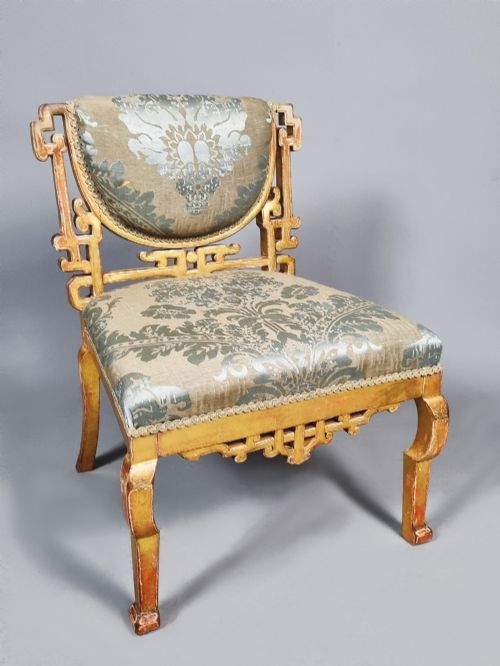
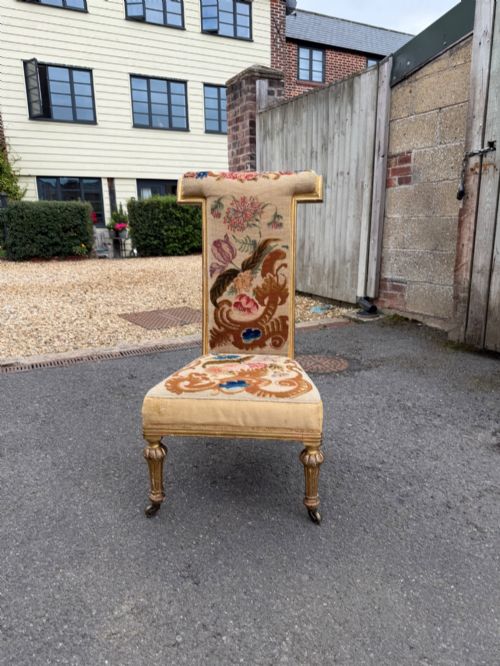

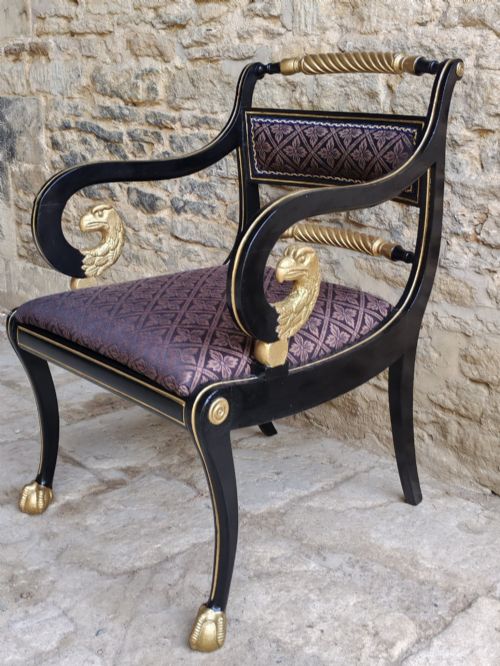
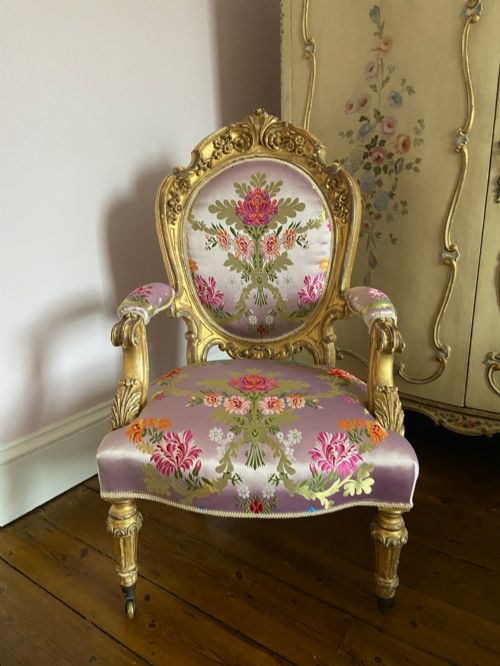
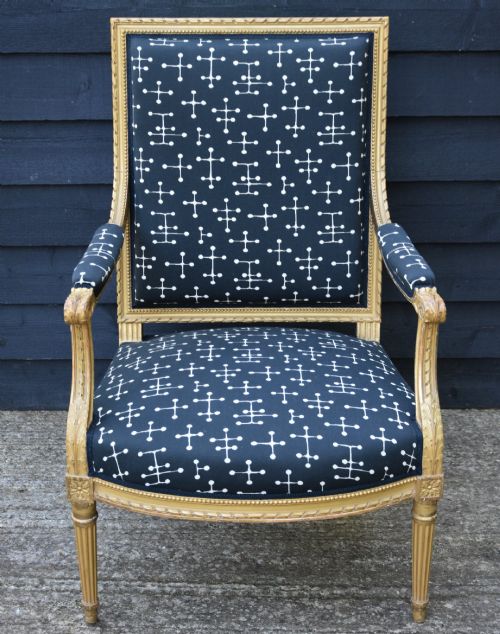
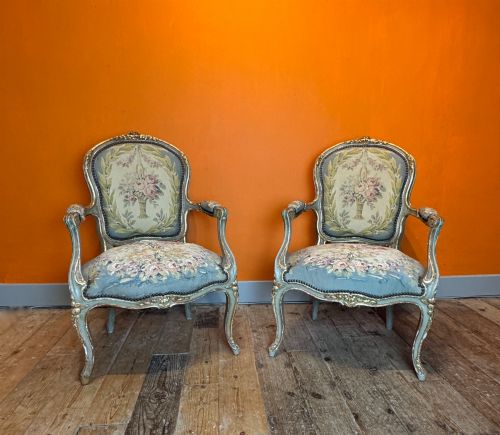
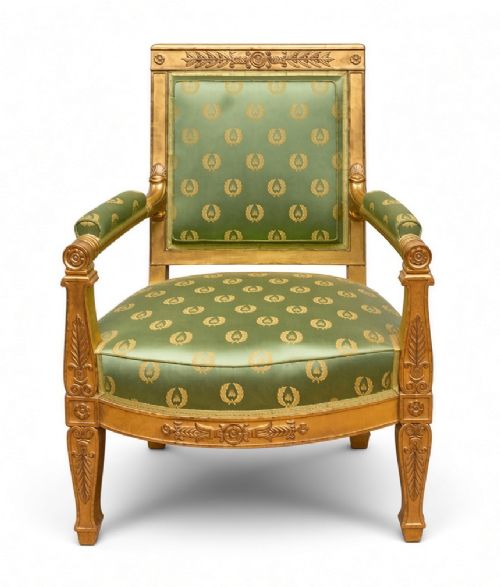
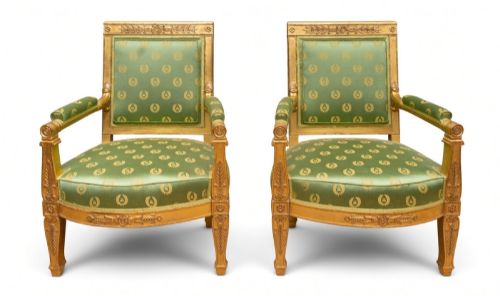
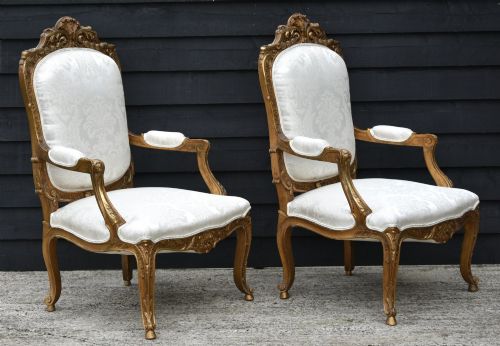
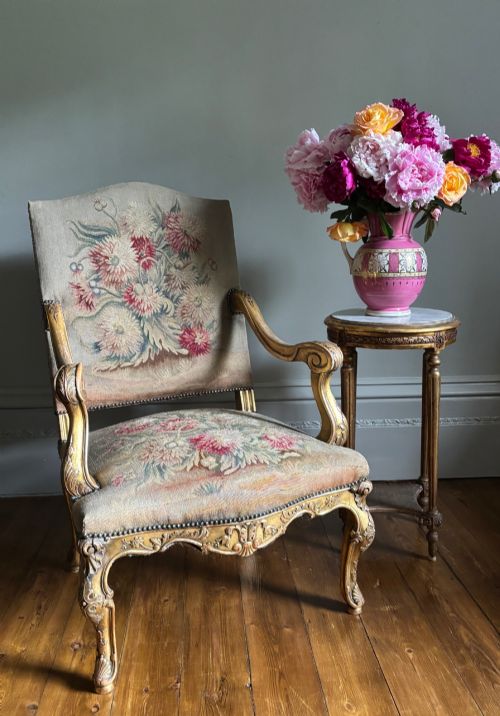
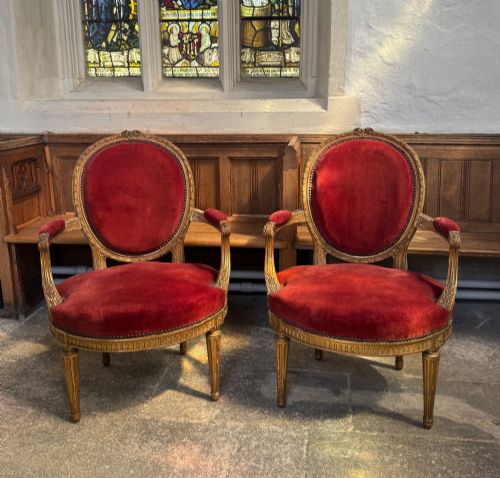
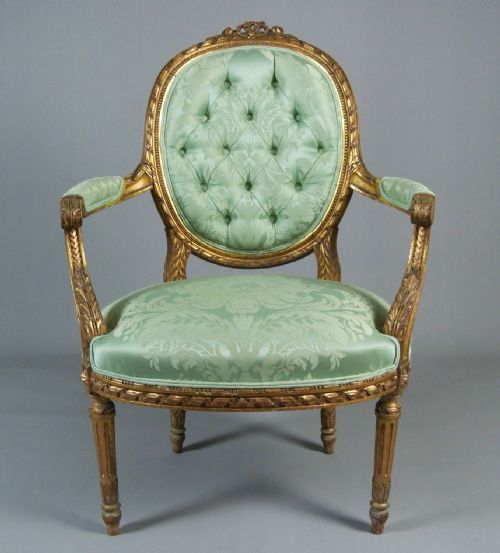
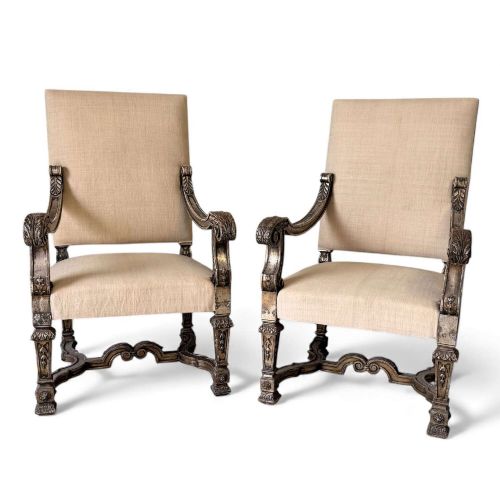
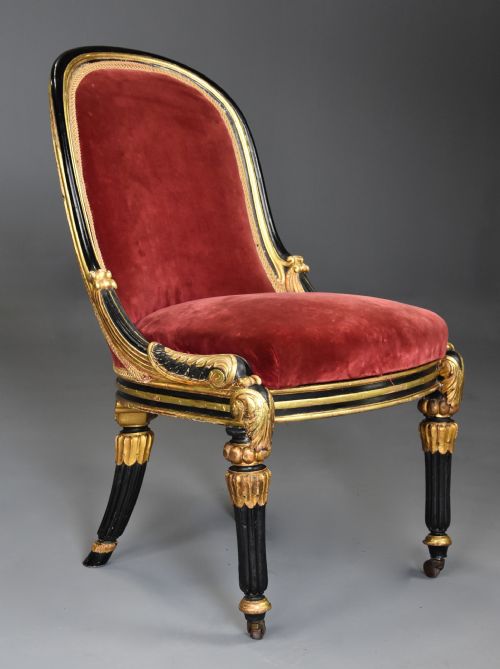
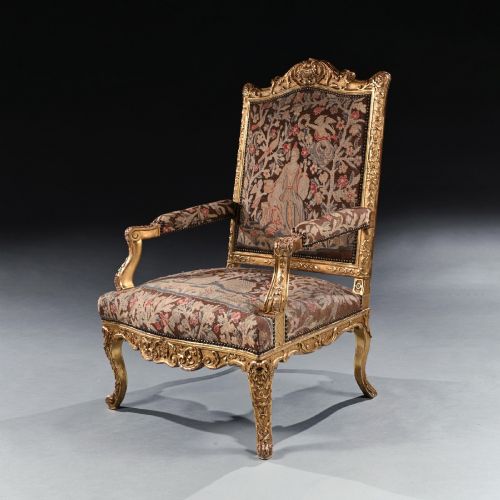
Carved Giltwood Chair
A carved giltwood chair brings immediate architectural presence and rich surface texture to a room, offering both historical weight and sculptural seating.
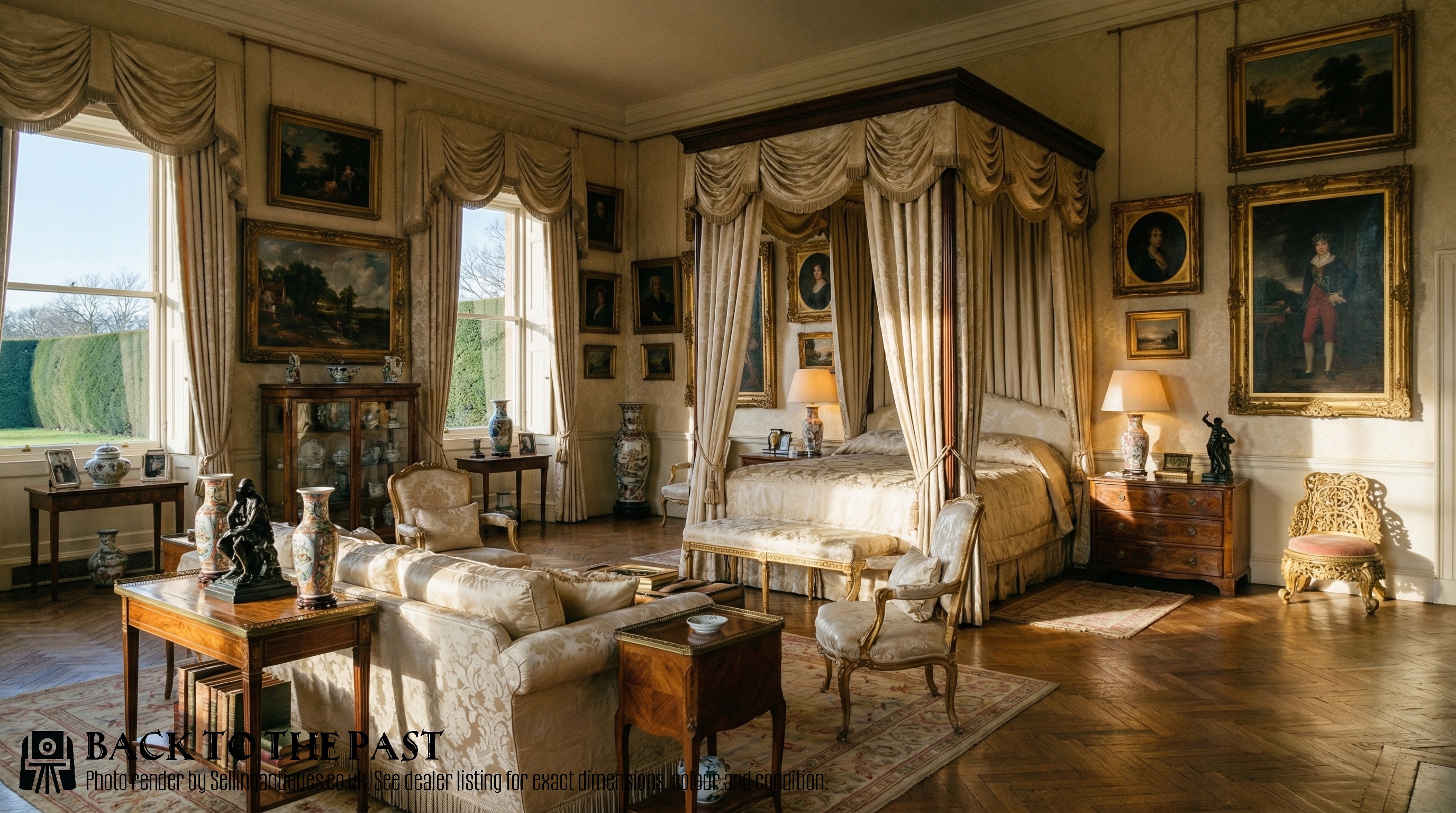
Carved Giltwood Chair
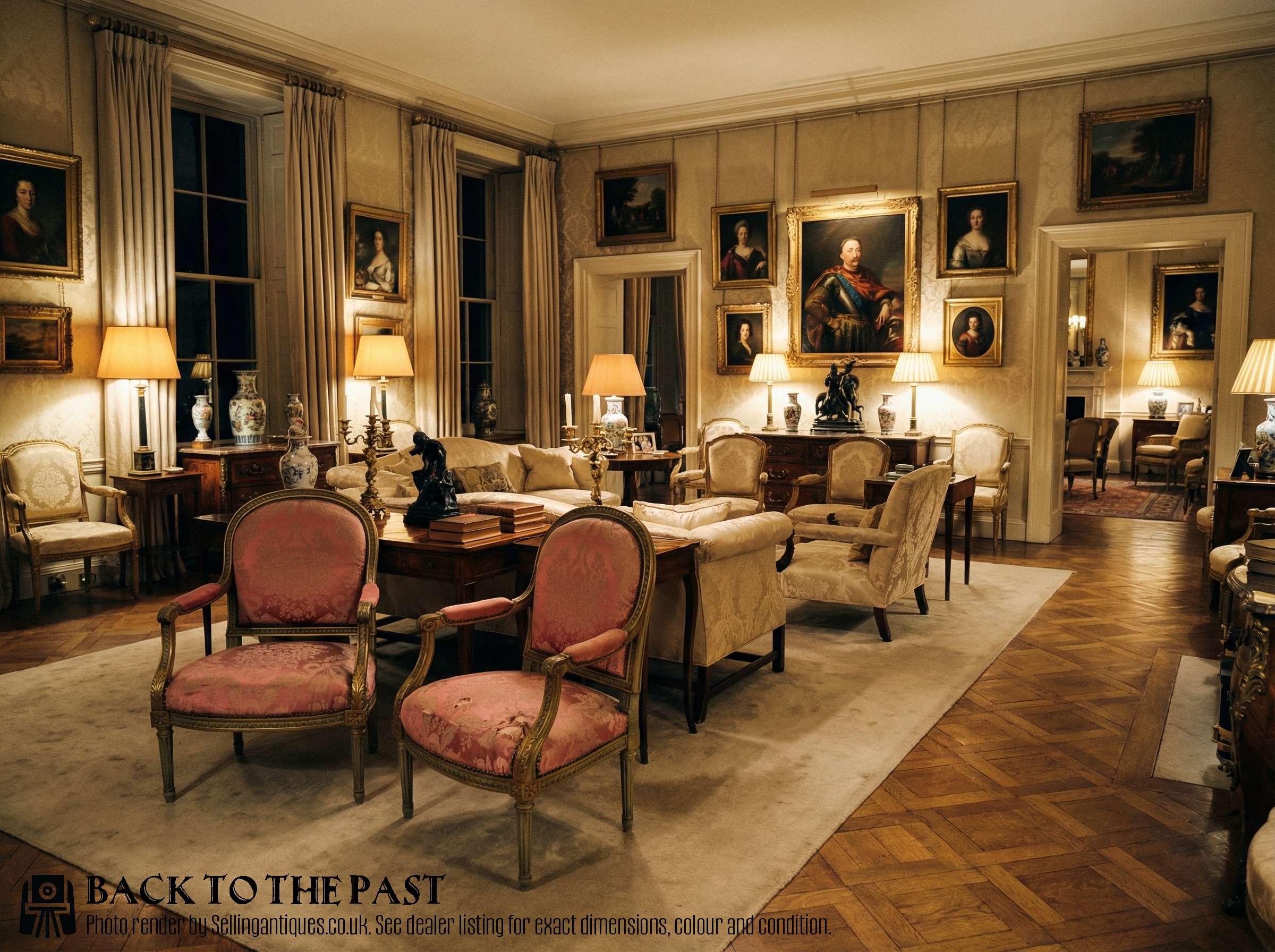
A carved giltwood chair is a formal seating piece defined by its wooden frame coated in gold leaf or metallic size, encompassing diverse forms such as open armchairs, bergères, fauteuils, and side chairs. These pieces emerge predominantly from eighteenth and nineteenth-century workshops across France, Italy, and England, reflecting changing stylistic revivals from Baroque and Rococo to Neoclassical and Louis XVI designs.
The selections available range widely in scale and function, from grand throne chairs and large salon seating to intimate fireside, nursing, and occasional chairs. Many survive from the nineteenth century as deliberate revivals of earlier court furniture, while genuine eighteenth-century examples display the deeper patination of earlier craftsmanship.
Buyers encounter numerous variations in upholstery, from period-appropriate silk and velvet to modern coverings over traditional sprung or stuffed foundations. The underlying timber typically comprises beech, walnut, or general hardwood beneath the gilt finish, often paired with parcel-gilt or painted elements.
How they were made
Cabinetmakers shaped the structural frames from hardwoods like beech and walnut, employing traditional joinery such as mortise and tenon to support weight and elaborate hand-carving. Craftsmen then applied fine gesso layers over the timber to create a smooth, responsive ground for subsequent gilding.
Thin sheets of gold leaf were laid meticulously over a preparatory bole, often burnished with agate stones to achieve deep reflective brilliance or left with a matte texture on recessed carved details. Upholsters completed the work by lashing webbing, stuffing natural fibres, and securing silk, velvet, tapestry, or cane work across the seat and back.
Carved Giltwood Chair Retail Price Guide 2026
Typical asking prices for carved giltwood chair among the pieces listed under this phrase on Sellingantiques today, from the lower quarter to the upper quarter. They describe what is for sale here now, not the wider market.
The selection spans from eighteenth-century originals to nineteenth-century revivals, utilising beech, walnut, and silk fabric.
What varies in quality
The crispness and depth of the hand-carving distinguish superior examples, where acanthus leaves, scrollwork, and floral motifs possess sharp undercutting and precise relief rather than soft, rounded edges. The quality of the gilding itself dictates visual impact, with genuine gold leaf ageing into a warm, multifaceted lustre compared to the flat appearance of modern metallic paints.
Structural integrity and the retention of original frame components separate exceptional seating from heavily altered pieces, particularly where joints remain firm and underlying timbers show consistent period wear. The sophistication of the design, whether adhering closely to court furniture proportions or representing provincial work, governs the overall standing of each piece.
Waugh And Son·Jacob-Desmalter·Thomas Chippendale·Blaise Maucuy·Morison And Co
The Carved Giltwood Chair Glossary
- Giltwood
- Wood covered with thin sheets of gold leaf over a prepared gesso ground. This finish provides the characteristic metallic sheen seen on formal antique seating.
- Bergère
- An enclosed armchair with upholstered sides and a padded back, often featuring a loose seat cushion. This comfortable seat design gained widespread popularity in eighteenth-century France.
- Bole
- A prepared clay ground applied to wooden frames before the application of gold leaf. Its reddish hue often shows through worn areas of old gilding.
- Rococo
- An ornate design style characterised by asymmetrical scrollwork, C-scrolls, and naturalistic shell motifs. It heavily influenced European furniture decoration during the eighteenth century and subsequent nineteenth-century revivals.
Carved Giltwood Chair: Frequently Asked Questions
How do I care for giltwood?
Keep these chairs away from direct sunlight and fluctuating humidity to protect the delicate gold leaf and gesso ground from cracking or lifting. Dust the carved surfaces gently with a soft, dry brush rather than liquid cleaners.
Avoid placing them in high-traffic areas where clothing or bags might rub against the edges. Gentle handling preserves the fragile metallic surface for future decades.
Are these chairs comfortable for daily use?
Many of these pieces were designed for formal reception rooms rather than lounging, meaning upright postures and firm padding are common characteristics. Some models feature generous proportions and sprung seats that offer more relaxed support.
Consider the specific room placement and intended use before relying on them as primary seating. Periodic evaluation of the internal webbing ensures safe structural support.
How can I tell a revival piece from an eighteenth-century original?
Examine the tooling of the wood, the composition of the gesso, and the specific wear patterns on the gold leaf to determine age. Nineteenth-century revival pieces often display machine-assisted precision or different assembly methods compared to eighteenth-century joinery.
Stylistic proportions also shift subtly between periods, reflecting the tastes of Victorian cabinetmakers rather than original court artisans. Comparing documented maker signatures and construction details clarifies the timeline.
Can I reupholster a giltwood chair?
Traditional upholstery methods using webbing, hessian, and animal hair maintain the historical integrity and correct profile of antique frames. Modern synthetic foams can alter the intended silhouette and place undue stress on fragile wooden tack rails.
Work with a specialist conservator or traditional upholsterer who understands period furniture construction. Preserving the outer show-frame without damaging the surrounding gilding requires careful tacking technique.