



Carved Gilt Pedestal Stands
These carved gilt pedestal stands bring height and classical presence to a room, holding lamps, urns, or sculpture with gilded authority.
Carved Gilt Pedestal Stands
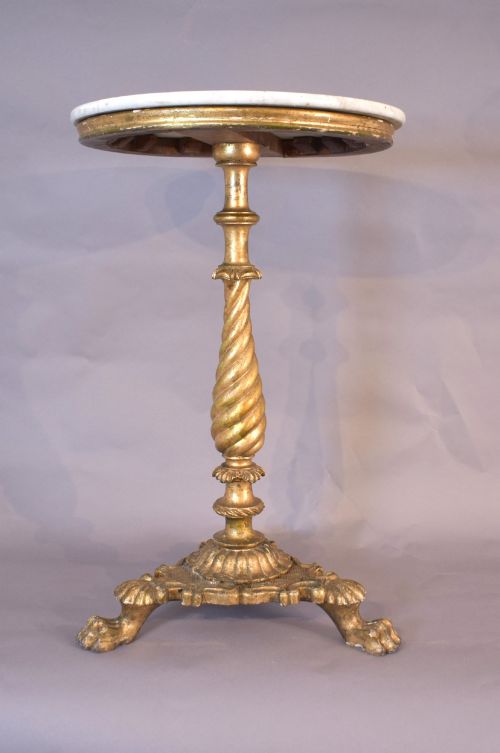
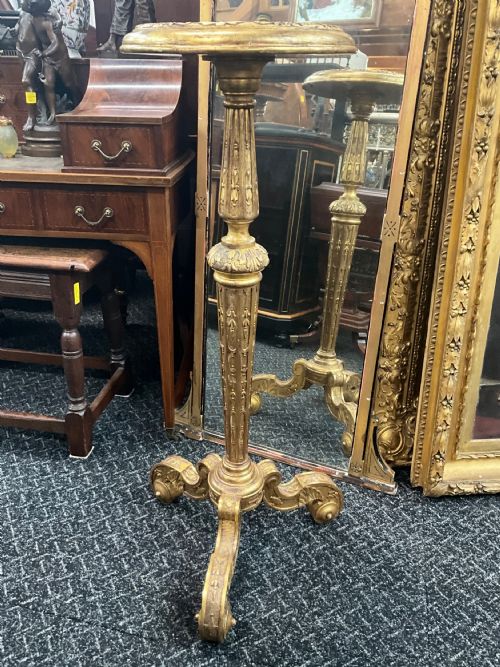
When you search for carved gilt pedestal stands, you encounter elevated display surfaces designed to lift sculpture, urns, and lamps into the room. These pieces range from tall torcheres and plant stands to compact occasional tables and columns, originating mostly from the nineteenth century with occasional Edwardian and early twentieth-century examples.
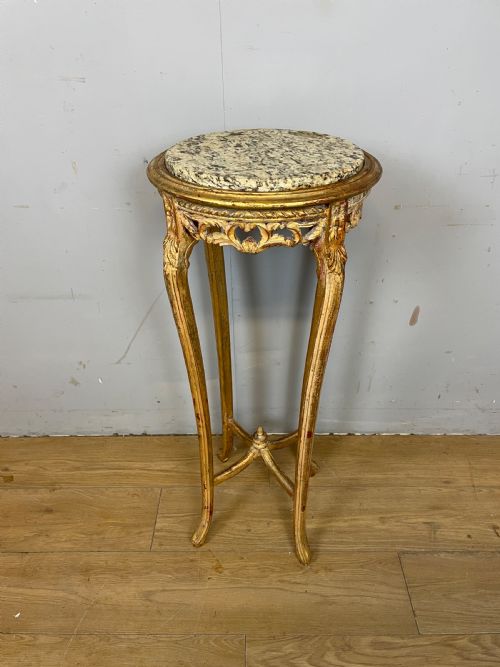
The versions you meet most frequently on this page display heavy continental influence, spanning Venetian baroque figures, French rococo curves, and Swedish neoclassical lines. Makers utilised rich surface finishes, combining carved wood and gesso beneath gold leaf or polychrome paint, often capped with inset marble or onyx tops.
How they were made
Carpenters carved structural woods such as walnut, kingwood, and general timber into slender columns, tripod bases, and figurative supports. Artisans then applied layers of gesso to smooth the surface before laying down gold leaf or paint to achieve the characteristic metallic sheen.
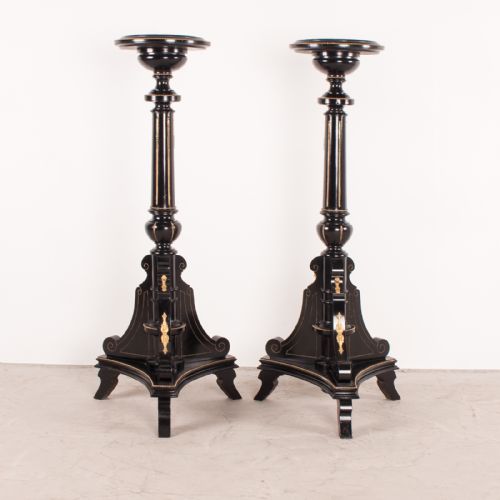
Many examples incorporate cast or chased ormolu mounts to accent joints and feet, while others integrate heavy stone inserts like marble or onyx directly into the top platform to support heavier display items.
Several stands double as carved Venetian figures, holding out trays or standing ready with permanent polychrome expressions.
What varies in quality
Quality rests heavily on the depth and crispness of the carving, distinguishing fluid, hand-tooled acanthus leaves and figurative work from softer, mechanical mouldings. The integrity of the original gilt surface also dictates value, where untouched gold leaf and subtle polychrome show superior preservation compared to unsympathetic modern regilding.
The choice of top material elevates a piece, shifting standard wooden discs to finely veined inset marble or polished onyx slabs. Heavier timber foundations and balanced tripod or column architecture provide the structural stability expected at the higher end of the range.
The Carved Gilt Pedestal Stands Glossary
- Giltwood
- Wood that has been coated with gold leaf or gold paint. This finish defines the reflective surfaces of these stands.
- Torchere
- A tall stand designed specifically to hold a light or candle, evolving later into pedestals for decorative vases and statues.
- Gesso
- A plaster-like mixture applied to wood surfaces to provide a smooth base for gilding and fine carving work.
- Ormolu
- Gilded bronze or brass mounts used decoratively on furniture and stands, particularly prevalent in French nineteenth-century pieces.
- Polychrome
- Painted in several colours, often seen on Venetian figures and Italian stands to create lifelike or decorative multi-toned surfaces.
Carved Gilt Pedestal Stands: Frequently Asked Questions
What were carved gilt pedestal stands used for?
These elevated stands served primarily to display decorative arts, including bronze sculptures, porcelain urns, and heavy candelabra, lifting them into the line of sight within formal reception rooms.
They also functioned as torchieres to hold candles or early lamps, placing light sources at effective heights around the perimeter of a drawing room or hallway.
How do I style a pedestal stand at home?
Place a standalone pedestal in an empty corner or flanking a doorway to introduce vertical contrast and architectural interest to a flat wall.
Top the stand with a single statement object, such as a bronze figure, a glass bowl, or a table lamp, allowing the carved and gilded base to remain visible.
Are these stands strong enough for heavy items?
Most stands with solid wooden frames and inset marble or onyx tops possess sufficient weight and structural integrity to support substantial decorative objects safely.
Tripod bases and wide column designs offer reliable stability, though tall and slender torcheres require placement in low-traffic areas to avoid accidental tipping.
How do I identify French versus Italian styles?
French pieces often display neoclassical symmetry, ormolu mounts, and rococo curves reminiscent of chateau interiors, utilising rich woods like kingwood and walnut beneath the gilding.
Italian and Venetian examples frequently incorporate carved figures, polychrome paintwork, and dramatic baroque or neoclassical silhouettes inspired by historic coastal interiors.