
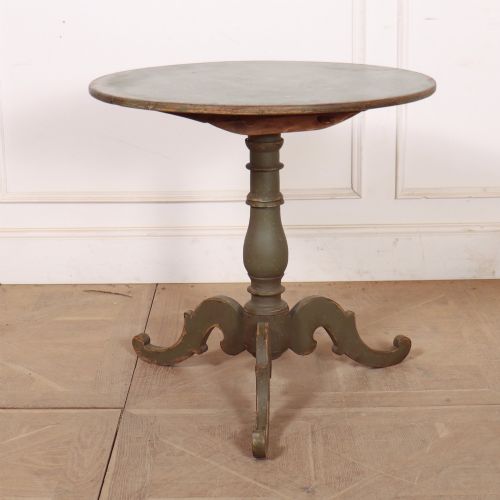


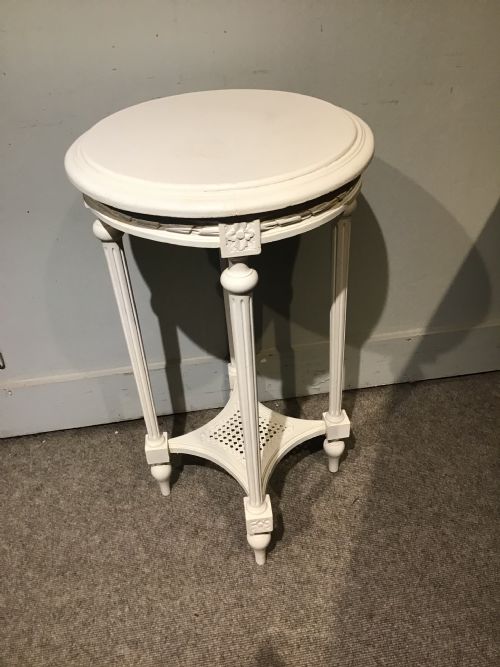


Painted Pedestal Wine Stands
These painted pedestal wine stands bring decorative charm and practical surfaces to a room, offering compact elegance for any interior.
Painted Pedestal Wine Stands
When you search for painted pedestal wine stands, you encounter compact occasional tables designed for holding glasses or displaying decorative items. These versatile pieces function as side tables, lamp stands, or tray tables across various residential settings.
The versions most commonly met on this page span from Georgian and nineteenth-century examples to later twentieth-century iterations. They appear in styles such as Swedish Country, Victorian, Venetian Revival, French Neoclassical, and Adam Style.
Makers shaped these stands from woods including mahogany, pine, and satinwood, often embellishing the surfaces with gesso, gold leaf, and hand-applied lacquer or paint. Their small footprints make them exceptionally adaptable for placing beside seating.
How they were made
Woodworkers constructed the foundational structures using timber such as mahogany, pine, and satin birch. Carpenters turned central pedestals and shaped supporting legs to achieve stable, balanced occasional tables.
Craftsmen applied surface decoration through paint, lacquer, gesso, and gold leaf. Many surfaces received detailed hand painting, reflecting regional aesthetics from Swedish Country folk traditions to Venetian and French neoclassical design.
Some nineteenth-century makers cleverly disguised occasional tables as portable lacquer trays perched atop folding wooden pedestals.
What varies in quality
The refinement of the painted and gilded surface decoration dictates much of the visual distinction. Delicate brushwork, original polychrome schemes, and well-preserved gold leaf elevate certain examples above simpler, utilitarian pieces.
The underlying carpentry and selection of timber establish structural integrity. Stands utilising dense hardwoods and well-turned pedestals demonstrate superior construction compared to simpler pine versions.
The Painted Pedestal Wine Stands Glossary
- Pedestal
- A central vertical support holding a tabletop. This single-column design allows for compact placement beside chairs and sofas.
- Gesso
- A plaster-like mixture applied to wood surfaces to prepare them for painting or gilding. It provides a smooth base for intricate decorative details.
- Gold leaf
- Extremely thin sheets of beaten gold applied to wooden mouldings and surfaces. It creates a lustrous, reflective finish characteristic of neoclassical and revival styles.
- Occasional table
- A small, movable table intended for specific, intermittent use rather than central room placement. Wine stands and lamp tables fall into this category.
Painted Pedestal Wine Stands: Frequently Asked Questions
Where do I place a wine stand?
These compact stands sit comfortably beside armchairs, sofas, or beds where a small surface is useful for drinks or lighting. Their modest footprint allows them to fit into tight corners and alcoves.
In larger spaces, they work well between seating arrangements or as display surfaces for small decorative objects and plants.
How do I clean painted surfaces?
Dust these pieces regularly with a soft, dry cloth to prevent dirt accumulation. Avoid harsh chemical cleaners or excessive moisture, which can damage aged paint and gilding.
Professional conservation methods are recommended for fragile seventeenth or nineteenth-century surfaces. Gentle care preserves the historical integrity of the finish.
What periods do these tables represent?
The selection includes eighteenth-century Georgian examples alongside nineteenth-century Victorian and Edwardian interpretations. Twentieth-century pieces from the nineteen-twenties and thirties also appear.
Stylistic influences range from French neoclassical and Louis XVI aesthetics to rustic Swedish Country and Venetian interiors.
Are these tables sturdy enough for daily use?
Most stands are structurally sound for holding lamps, small trays, or glasses. Their central pedestal design provides stable support when placed on level flooring.
However, delicate antique finishes and lighter timber construction mean they benefit from careful placement away from heavy traffic areas.