



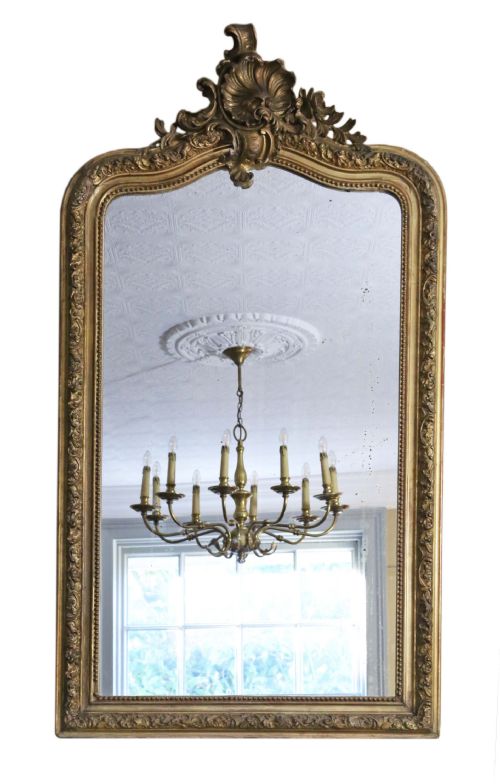
Carved Gilt Chimneypiece Mirror
A carved gilt chimneypiece mirror commands a room with reflective scale and golden presence above a hearth.
Carved Gilt Chimneypiece Mirror
A carved gilt chimneypiece mirror sits above a fireplace, bringing scale and reflective light to a room. When buyers search for a carved gilt chimneypiece mirror, they encounter large overmantel mirrors and wall mirrors originating from the eighteenth and nineteenth centuries. These pieces anchor interior spaces with commanding proportions and ornate frames designed specifically for mantel placement.
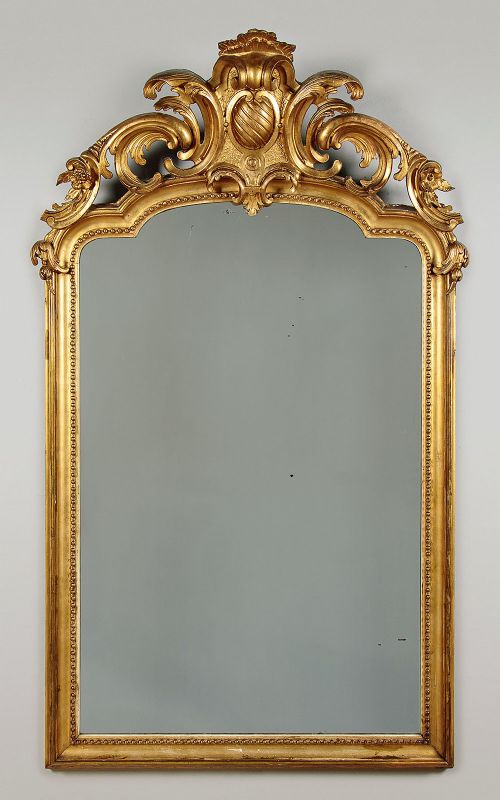
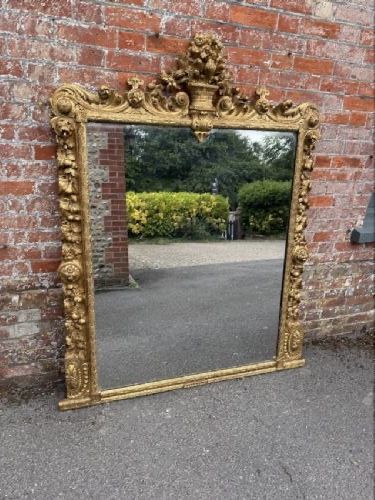
The selection on this page centres predominantly on nineteenth-century examples, alongside earlier eighteenth-century forms. Makers designed these overmantel and wall mirrors to dominate chimney breasts, utilising broad glass plates and architectural or scroll-work framing. Victorian interpretations alongside George II and Regency revivals dominate the forms currently available.
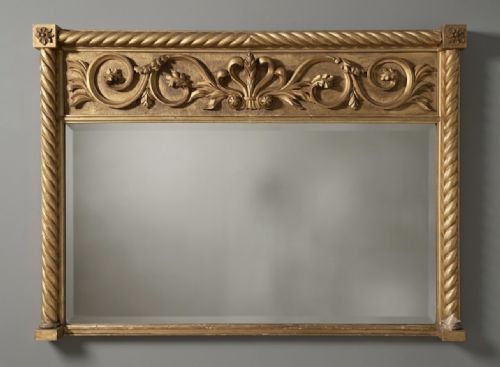
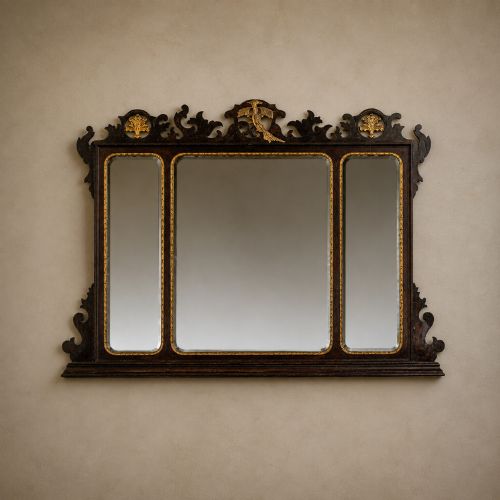
Most pieces take the form of substantial overmantel mirrors designed to sit horizontally above a fireplace mantel, though vertical wall mirrors also appear. Frame shapes vary from arched tops and triptych divisions to rope twist borders and parcel gilt surfaces. Each object reflects the prevailing aesthetic tastes of its period, moving from neoclassical restraint to exuberant revival styles.
How they were made
Carved gilt chimneypiece mirrors rely on a foundation of wood, predominantly carved wood or mahogany, built to support heavy glass plates. Craftsmen applied layers of gesso to wooden frames to create smooth surfaces for subsequent gilding. This combination provided the structural stability needed for large overmantel formats.
Surface decoration combined gold leaf, parcel gilt accents, and composition ornaments to achieve rich metallic brilliance. Artisans laid gold leaf over gesso grounds or utilised composition mouldings for intricate floral and scroll details. Painted elements and parcel gilt finishes frequently highlighted carved wooden details like the Ho-Ho bird cresting seen on revival pieces.
Carved Gilt Chimneypiece Mirror Retail Price Guide 2026
Typical asking prices for carved gilt chimneypiece mirror among the pieces listed under this phrase on Sellingantiques today, from the lower quarter to the upper quarter. They describe what is for sale here now, not the wider market.
Several Victorian pieces proudly feature a perched Ho-Ho bird cresting, bringing mythical avian majesty directly to the drawing-room fireplace.
What varies in quality
The depth and crispness of the carved wood and gesso ornamentation dictate the visual strength of the frame. Skilled carvers produced crisp architectural moulding and fluid scrollwork that catch ambient light differently than mass-produced composition ornament. The integration of hand-carved elements against moulded details marks the distinction between standard production and exceptional craftsmanship.
The preservation of the original gold leaf and the clarity of the mirror glass establish historical integrity. Overmantel mirrors retaining their early mercury glass or well-maintained silvered plates alongside undisturbed original gilding command greater appreciation. Frames that maintain their structural joinery without excessive restoration of the gesso ground represent superior survival.
The Carved Gilt Chimneypiece Mirror Glossary
- Giltwood
- Wood that has been coated with gold leaf or gold paint. This finish provides the characteristic metallic gleam seen on period frames.
- Gesso
- A plaster-like mixture applied to wood frames to create a smooth surface for gilding or stamping. It allows artisans to carve intricate relief details before applying gold leaf.
- Overmantel mirror
- A large mirror designed specifically to hang on the wall directly above a fireplace mantel. These horizontal formats reflect interior light across the room.
- Triptych
- A mirror plate divided into three distinct vertical sections within a single frame. Regency and Victorian makers utilised this layout to widen the visual span above a fireplace.
- Parcel gilt
- A finish where only specific portions of an object are gilded while other areas show painted surfaces or bare wood. This technique highlights carved architectural details.
- Composition
- A moulded material made from whiting, resin, and glue pressed into decorative motifs. Makers used it to economise on intricate frame ornamentation.
Carved Gilt Chimneypiece Mirror: Frequently Asked Questions
How do I hang an overmantel mirror safely?
These large mirrors carry substantial weight from their wooden frames and thick glass plates. Secure fixings must anchor directly into wall studs or masonry to support the heavy load safely above a fireplace.
Professional mirror hangers utilise heavy-duty brackets attached to the structural frame rather than relying on decorative hanging loops alone. Ensuring the weight distributes evenly prevents strain on the antique joinery.
What is the difference between an overmantel and a wall mirror?
Overmantel mirrors are specifically proportioned to span the horizontal width of a fireplace mantel. Their scale and landscape orientation were designed to occupy the chimney breast.
Wall mirrors generally feature square or vertical dimensions suited for general wall hanging. While some nineteenth-century examples serve both functions, overmantels prioritize width.
How do I date a nineteenth-century gilt mirror?
Dating relies on examining the construction methods of the wooden frame, the type of gesso preparation, and the style of ornamentation. Victorian and Regency revivals incorporate distinct decorative motifs like rope twist framing or architectural pediments.
Backboards, screw types, and the composition of the mirror glass provide further chronological clues. Examining these structural layers reveals whether a piece originates from the early nineteenth century or the late Victorian era.