
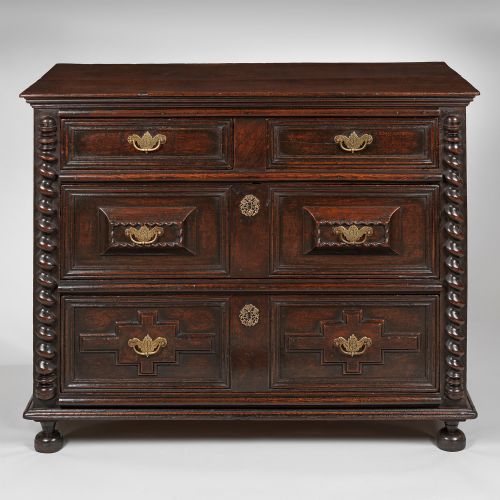


Carved Geometric Oak Coffer
A carved geometric oak coffer is a robust storage chest defined by intersecting mouldings and carved panels, prized for authentic early domestic history.
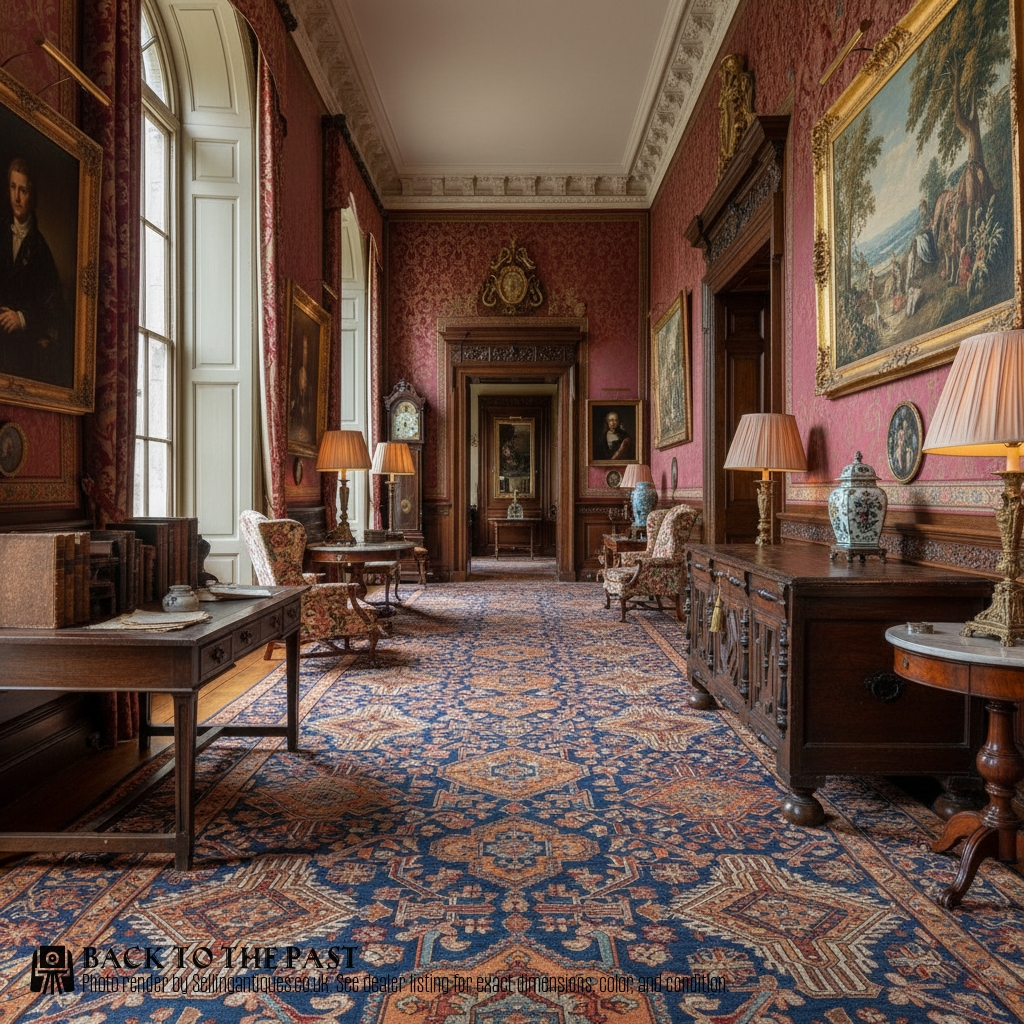
Carved Geometric Oak Coffer
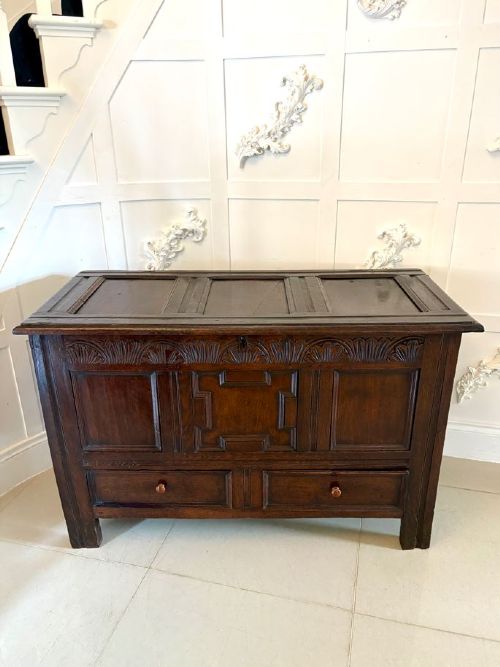
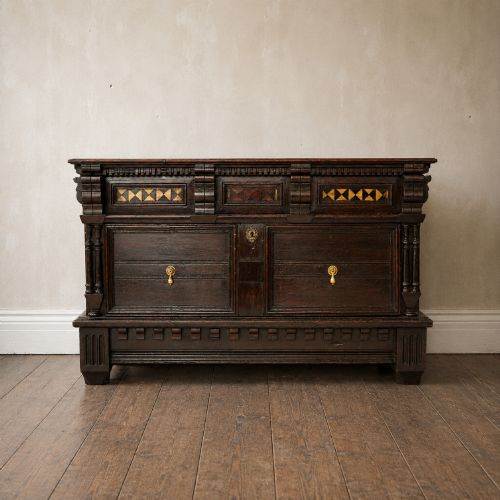
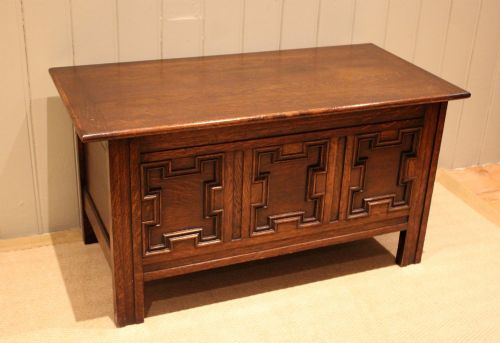
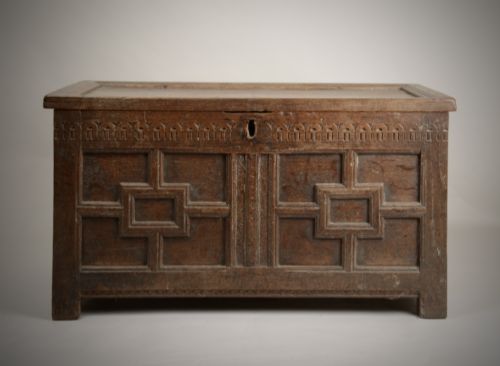
A carved geometric oak coffer represents a sturdy domestic storage container built primarily to house household linens, dry goods or valuables safely above floor dampness. Buyers seeking a carved geometric oak coffer generally encounter heavy timber constructions dating from the seventeenth century alongside later revival interpretations produced during the early twentieth century.
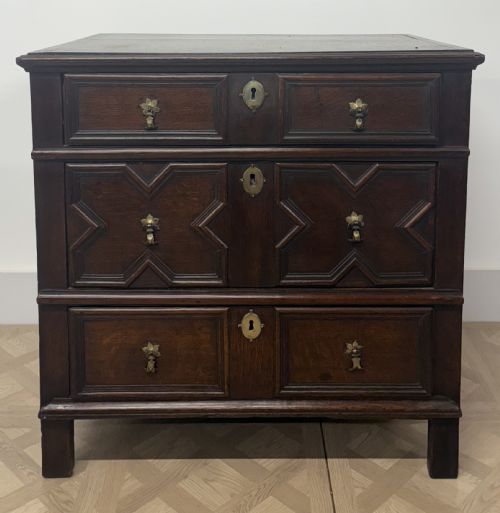
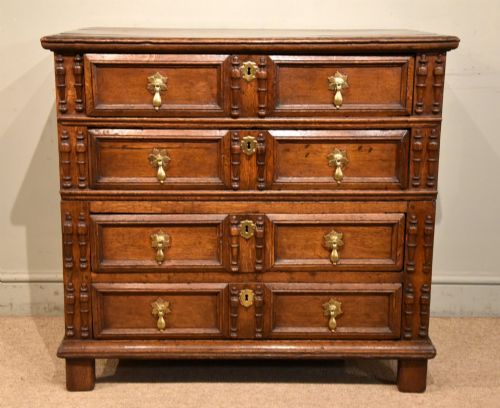
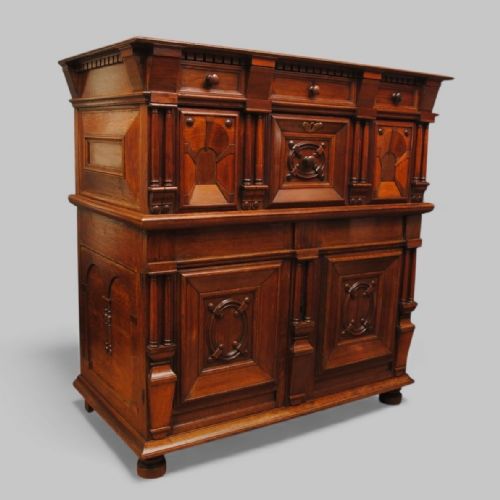
The forms span simple boarded boxes, chip carved examples, and two-part chest configurations featuring raised geometric mouldings upon the front elevation. Most surviving specimens derive from English workshops associated with the Jacobean, Charles II and William and Mary periods, reflecting the shifting decorative preferences of their eras.
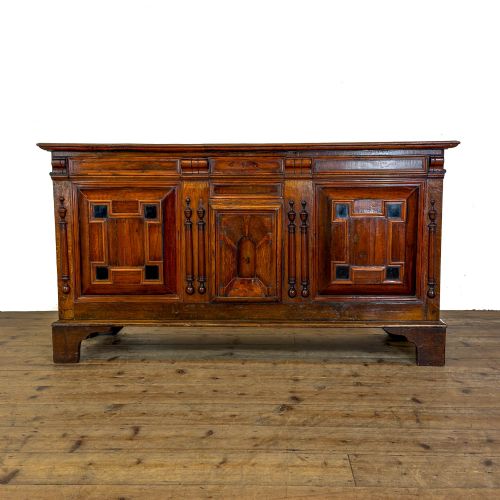
Alongside standard coffers, related storage forms appear frequently in these listings, including mule chests equipped with bottom drawers, blanket chests and chip carved boxes. The timber displays the natural grain and medullary rays characteristic of quarter sawn oak, often enriched by walnut, fruitwood or ebonised wood details.
How they were made
Cabinet makers constructed these chests using solid oak timbers joined by traditional mortise and tenon frames secured with wooden dowels or trunnels. Panels were left free-floating within their grooves to accommodate seasonal expansion and contraction of the wood caused by changing humidity.
Surface ornamentation relied on applied geometric mouldings arranged in mitred octagons, rectangles and lozenges, sometimes combined with chip carving directly into the solid timber. Metal hardware such as iron hinges, latches and brass drop handles or escutcheons were fastened by hand.
Secondary woods such as walnut and fruitwood were occasionally incorporated for contrasting inlay work or distinct mouldings. Surfaces were finished with wax or oil rather than modern synthetic sealers, allowing the natural grain of the oak to deepen over centuries.
Materials recorded across the inventory include solid oak augmented by walnut, fruitwood, brass hardware, iron fittings and ebonised wood details.
What varies in quality
The degree of crispness in the carved detail and the precision of the mitred geometric mouldings distinguish superior pieces from standard workshop output. Hand-cut mouldings that align flush and retain their original depth demonstrate higher craftsmanship than later replacements or poorly executed revival attempts.
The proportion of original timber versus later timber replacement dictates the overall integrity of the piece. Surviving brasses, original ironwork, and intact panel construction carry greater weight among collectors than chests subjected to extensive rebuilding or re-panelling.
The handling of secondary timbers and the retention of early surface patination reveal the care a chest received across its lifespan. Uniform colour and minimal structural intervention elevate a coffer within the surviving range.
The Carved Geometric Oak Coffer Glossary
- Geometric moulding
- Raised wooden strips applied to the surface of a panel to create repeating patterns such as octagons, squares or diamonds. These mouldings define the visual rhythm of seventeenth-century case furniture.
- Mule chest
- A storage chest fitted with one or more drawers beneath the main internal compartment. This hybrid form bridges the traditional coffer and the chest of drawers.
- Chip carved box
- A small wooden box decorated by removing small chips of wood with a gouge or knife to form geometric notches. The technique creates sharp, faceted patterns across the lid and sides.
- Quarter sawn
- A method of log milling where timber is cut radially through the growth rings, producing boards with enhanced dimensional stability and visible medullary ray flecks. This cut was preferred for high-status furniture.
- Ebonised wood
- Timber treated with a chemical stain or dark pigment to imitate ebony. It provides stark contrast against pale oak in geometric mouldings.
Carved Geometric Oak Coffer: Frequently Asked Questions
What were coffers used for originally?
Coffers served primarily as secure storage for valuable textiles, clothing, documents and household silver in wealthy or middling homes. Their heavy construction and solid lids also allowed them to double as seating benches or tables.
Because households were mobile during earlier centuries, these chests acted as travel trunks for transporting personal possessions between estates. Over time, they evolved into fixed domestic furniture positioned against walls in halls and bedchambers.
How do I date a seventeenth century oak coffer?
Dating relies on observing construction methods, joinery types, timber preparation and stylistic motifs. Hand-split oak boards, pegged mortise and tenon joints, and primary tool marks indicate earlier manufacturing techniques.
Stylistic shifts in mouldings, such as the transition from flat panels to applied geometric boss work under Charles II, help narrow the period of origin. Comparative examination of hardware fixings and secondary woods provides further chronological markers.
Are twentieth century revival chests authentic antiques?
Twentieth-century revival pieces, particularly those from the 1920s and 1930s, are distinct categories manufactured during periods of renewed interest in traditional craftsmanship. While they copy seventeenth-century forms and geometric mouldings, their materials and tool marks reveal a later date of production.
Collectors value these revival items for their utility and craftsmanship, provided they are accurately identified. They offer an alternative for buyers seeking traditional aesthetics without the cost or fragility of early timber.
How should I care for an antique oak chest?
Antique oak requires stable indoor humidity and protection from direct sunlight and heat sources to prevent timber splitting and shrinkage. Applying occasional coats of natural beeswax helps nourish the dry grain and maintain the surface patina.
Avoid using modern silicone polishes or abrasive cleaners that can damage the historical finish. Lifting the chest from the base rather than the lid during relocation protects the ancient frame joints.