

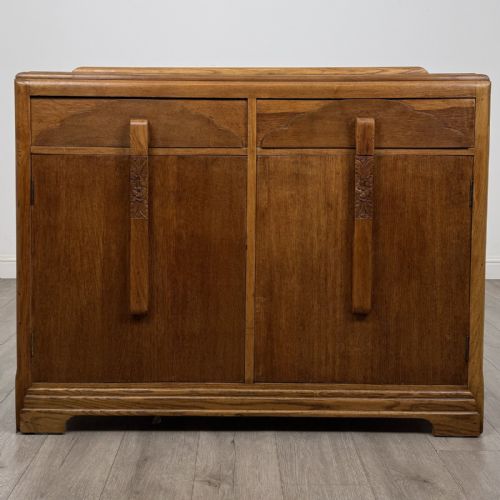
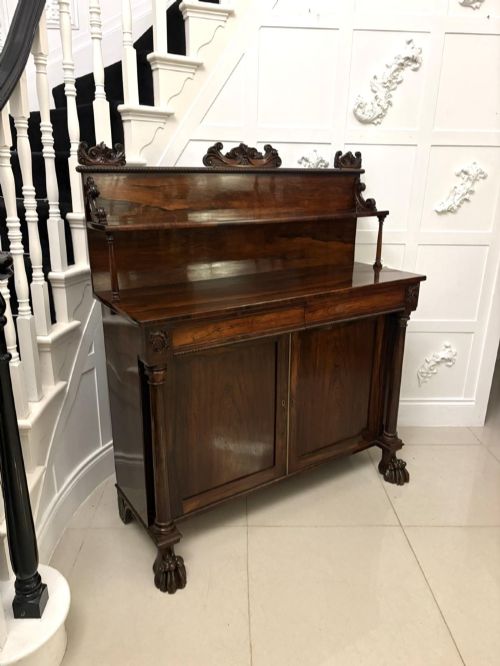
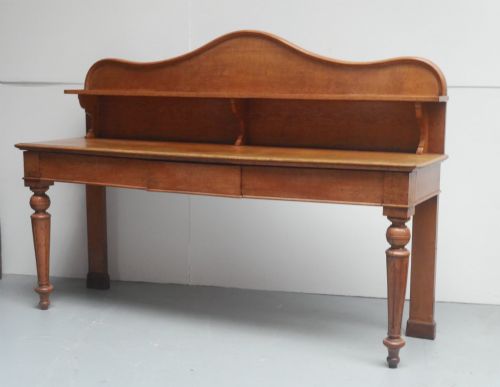


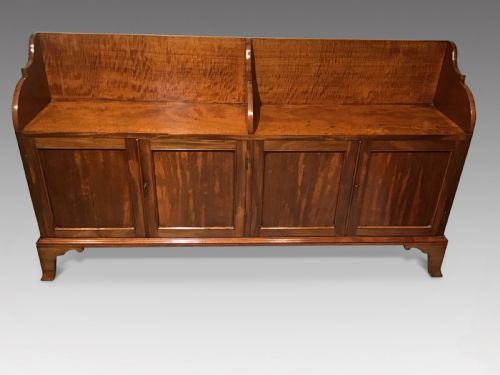


Carved Gallery Wooden Sideboard
A carved gallery wooden sideboard brings nineteenth-century presence to a room, offering both substantial timber structure and tiered display space.
Carved Gallery Wooden Sideboard
A carved gallery wooden sideboard serves as a commanding dining or living room storage piece, typically encountered in nineteenth-century forms such as chiffoniers, serving tables, and credenzas. These items range from Regency and Victorian iterations to distinct regional interpretations like Anglo-Burmese and Gothic Revival designs.
The practical function combines enclosed cupboard storage below with an raised upper shelf or gallery superstructure above, often framed by elaborate carved ornamentation. Buyers searching for a carved gallery wooden sideboard will encounter substantial mahogany, oak, and walnut examples alongside richly figured veneers.
Originating across British and continental workshops, these pieces often incorporate functional serving surfaces alongside display tiers. The presence of carved wooden galleries distinguishes these particular sideboards from simpler flat-topped servers.
Materials and construction methods
Construction relies heavily on solid mahogany, oak, and walnut, frequently enhanced by decorative applications of flame mahogany, amboyna, and burr walnut veneers. Regional timbers such as padauk wood also appear, reflecting broader nineteenth-century trade patterns and cabinet-making preferences.
Carving serves as the primary decorative technique, shaping structural galleries, door panels, and supports with motifs ranging from Gothic revival tracery to dense Burmese foliage. Cabinet makers utilised traditional joinery alongside applied mouldings to build robust frameworks capable of supporting heavy serviceware.
Carved Gallery Wooden Sideboard Retail Price Guide 2026
Typical asking prices for carved gallery wooden sideboard among the pieces listed under this phrase on Sellingantiques today, from the lower quarter to the upper quarter. They describe what is for sale here now, not the wider market.
Carved galleries often served as miniature stages for displaying prized ceramic plates, proving that Victorians loved showcasing their dinnerware just as much as their food.
Distinctions in craftsmanship and condition
Quality separates pieces through the depth and crispness of the hand carving on the gallery and doors, alongside the selection of timber figures in veneers such as flame mahogany or amboyna. Superior examples exhibit harmonious proportions where the upper tiered superstructure balances the mass of the lower cabinet.
The integrity of the timber, the subtlety of the turnings, and the retention of original brass hardware or fitted interior shelving further distinguish finer workshops from simpler commercial production.
The Carved Gallery Wooden Sideboard Glossary
- Chiffonier
- A compact nineteenth-century sideboard featuring enclosed lower cupboards and an upper shelf supported by pillars. This form developed from serving tables to become a common dining room storage piece.
- Padauk
- A dense tropical hardwood known for its deep reddish hue, utilised in nineteenth-century Anglo-Indian and Burmese furniture production. It accepts intricate, sharp carving exceptionally well.
- Credenza
- A sideboard or buffet cabinet, frequently associated with Victorian walnut and amboyna designs featuring glazed or panelled doors. These pieces often lack the raised superstructure of a chiffonier.
Carved Gallery Wooden Sideboard: Frequently Asked Questions
What is a carved gallery wooden sideboard used for?
These pieces provide substantial storage within lower cupboards while offering an upper tiered gallery for displaying decorative ceramics or serving pieces.
Historically situated in dining rooms and parlours, they function today as focal storage furniture in living spaces and halls.
How do I date a wooden sideboard?
Dating relies on identifying period characteristics such as Regency architectural restraint, Gothic Revival tracery, or Victorian proportions and timber choices.
Examining secondary timbers inside drawers and the style of applied carvings helps narrow the decade of manufacture within the nineteenth century.
What woods were used for these sideboards?
Maker workshops predominantly utilised mahogany, oak, and walnut as primary structural timbers, often applying rich flame mahogany or amboyna veneers to key surfaces.
Imported tropical woods like padauk also appear in pieces reflecting Anglo-Burmese and Anglo-Indian design influences.
How do I care for a Victorian sideboard?
Protect antique wood surfaces by placing the cabinet away from direct heat sources and strong sunlight to prevent veneer cracking or fading.
Maintain the finish through occasional applications of appropriate furniture wax, avoiding modern silicone sprays.
What is the difference between a chiffonier and a serving table?
A chiffonier incorporates enclosed lower storage cupboards topped by a distinctive carved gallery shelf structure supported on pillars.
A serving table typically provides an open surface or a simpler frieze drawer configuration without the raised upper tier.