



Carved Gallery Tray Table
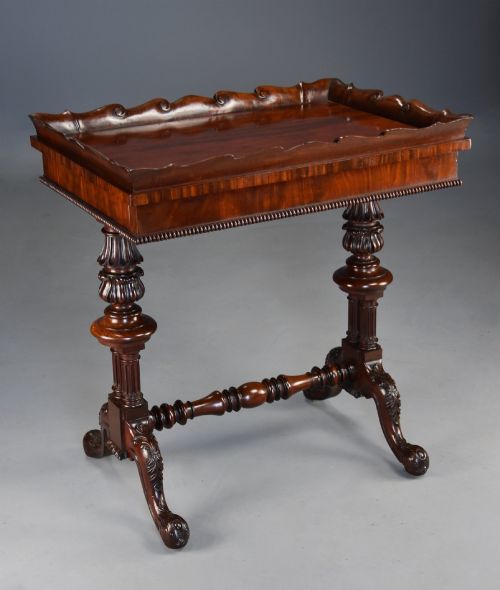
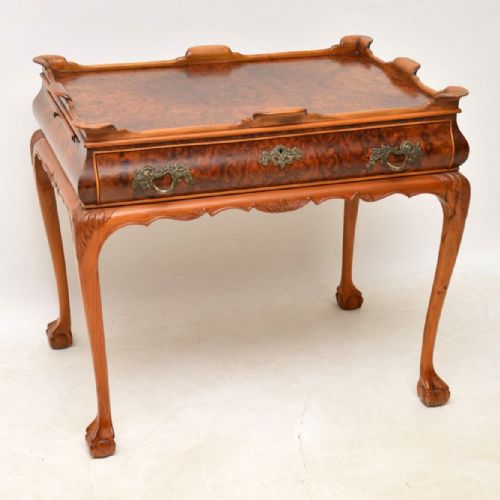
These carved gallery tray table examples bring together raised edges and timber frames to serve drinks or display objects with period character.
Carved Gallery Tray Table
When you look for a carved gallery tray table, you encounter practical furniture designed with raised borders to keep items secure while moving them around a room. These pieces function primarily as side tables, occasional tables, or bedside stands depending on their height and proportions.
The selections span the eighteenth century, the Victorian era, and the Edwardian period, showcasing stylistic revivals such as Chippendale and French Neoclassical influences. Many examples feature removable trays resting upon folding or fixed wooden stands.
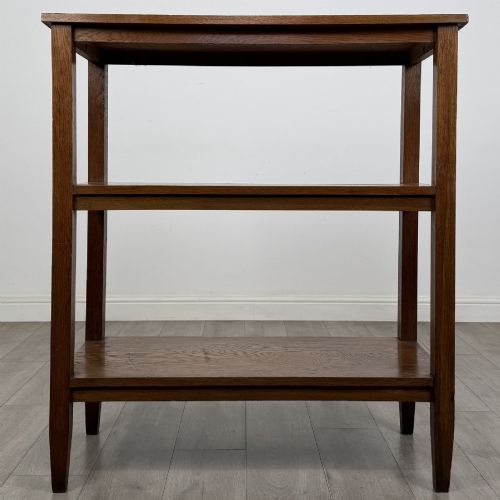
Mahogany predominates among the materials, alongside oak, burr walnut, and rosewood. Formats range from oval coffee tables to traditional silver tables and butler's trays.
How they were made
Cabinetmakers utilised dense hardwoods like mahogany, rosewood, and oak to construct stable frames that could support raised wooden galleries. Joinery techniques ensured the tray rims met the surface boards securely without splitting over decades of use.
Carving was applied by hand to table edges, friezes, and supporting stands, reflecting the decorative vocabulary of Georgian and Victorian workshops. Selected pieces incorporated brass hardware and ormolu mounts to accent the timber grains.
Carved Gallery Tray Table Retail Price Guide 2026
Typical asking prices for carved gallery tray table among the pieces listed under this phrase on Sellingantiques today, from the lower quarter to the upper quarter. They describe what is for sale here now, not the wider market.
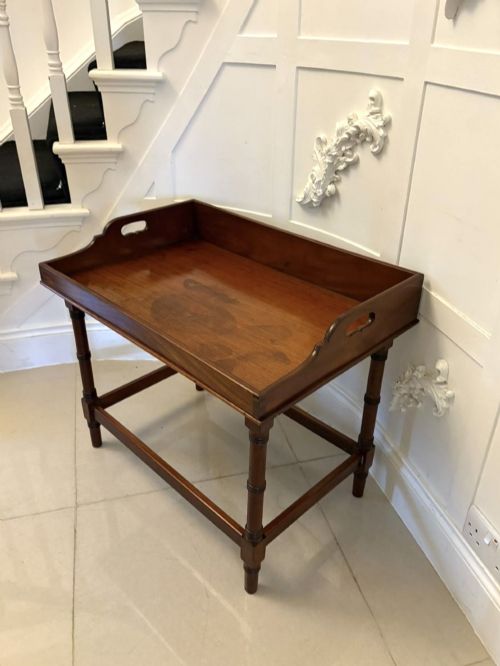
Butler's trays invite you to imagine a nineteenth-century household where breakfast was hauled upstairs on a folding wooden stand.
What varies in quality
The calibre of a carved gallery tray table rests upon the crispness of the hand-carved detail and the selection of figured timber veneers. Superior examples display thoughtful grain matching across the tray surface and robust joinery in the supporting stand.
Proportion and stability separate standard production pieces from finer furniture. Refined versions maintain balanced dimensions between the gallery rail and the legs, ensuring the tray sits firmly without rocking.
The Carved Gallery Tray Table Glossary
- Gallery tray
- A low raised rim fitted around the perimeter of a tabletop to prevent items from sliding off. This feature often incorporates pierced handholds or carved fretwork.
- Silver table
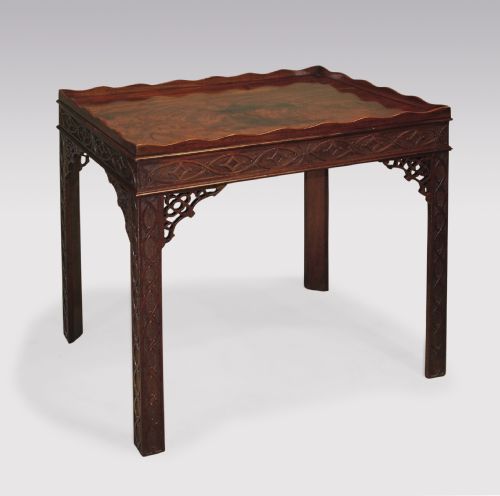
- A specialised display or serving table popular in the eighteenth century, typically featuring an elevated gallery edge. These tables were utilised for holding tea services or silver plate.
- Butler's tray
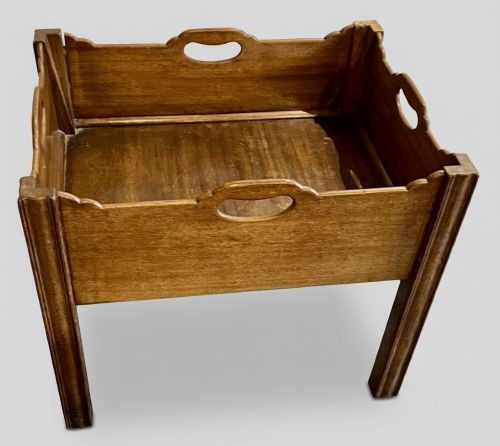
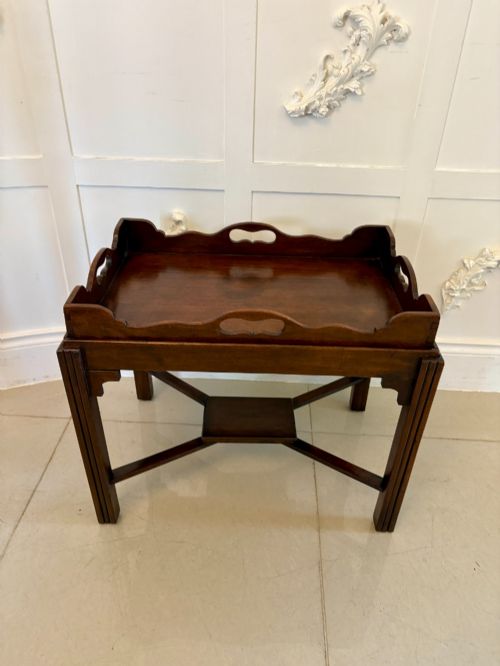
- A rectangular tray with hinged or fixed sides, traditionally lifted off its folding stand for carrying goods. Victorian iterations commonly pair oak with X-frame stands.
- Chippendale style
- A decorative aesthetic drawing on mid-eighteenth-century English design principles, characterised by carved mahogany details and subtle classical motifs. Edwardian cabinetmakers frequently revived these patterns.
Carved Gallery Tray Table: Frequently Asked Questions
How were tray tables used historically?
Historically, these tables served dining and entertaining functions, particularly for holding tea services, silver, or glassware. The raised gallery allowed servants or hosts to transport items safely.
Over time, many formats evolved into permanent side tables, occasional tables, or bedside night tables within domestic interiors.
Are the trays removable?
Some versions feature a loose tray resting on a separate folding or fixed stand, while others are built as a single integrated unit. Butler's trays traditionally lifted off their X-frames for carrying.
Checking the construction reveals whether the top was intended to separate from the base during its period of manufacture.
What woods were used for these tables?
Cabinetmakers predominantly utilised mahogany throughout the eighteenth and nineteenth centuries. Other recorded materials include oak, burr walnut, and rosewood.
Makers selected these dense hardwoods to ensure the stability needed for carved gallery rims and slender support legs.
How do I identify a revival piece?
Revival pieces often date from the Edwardian period or the late nineteenth century, reflecting earlier eighteenth-century Chippendale aesthetics. Examining the interior construction, timber seasoning, and tool marks helps determine the manufacturing era.
Stylistic cues like Chippendale Revival indicate later interpretations of classical furniture forms.