


Victorian Oak Tray Stand
A victorian oak tray stand brings sturdy utility and rich grain into a hallway or living space.
Victorian Oak Tray Stand
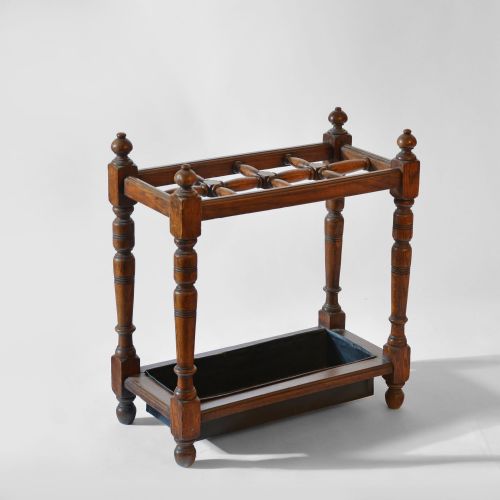
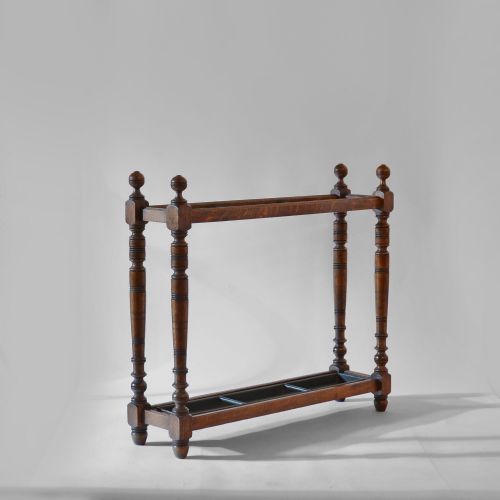
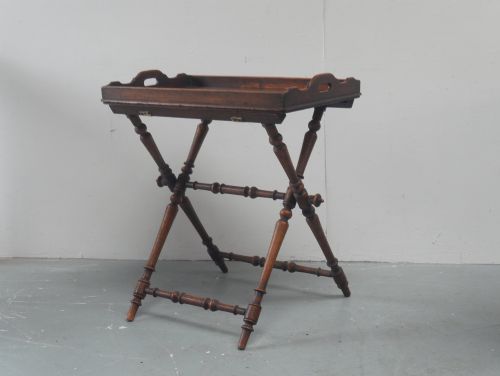
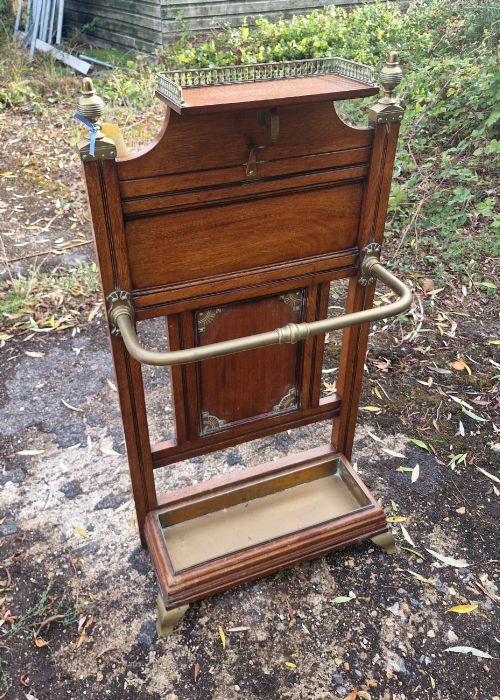
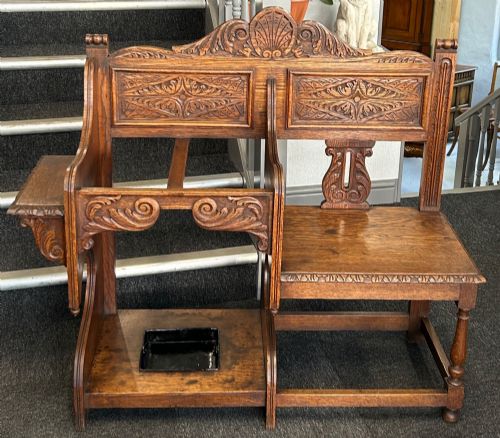
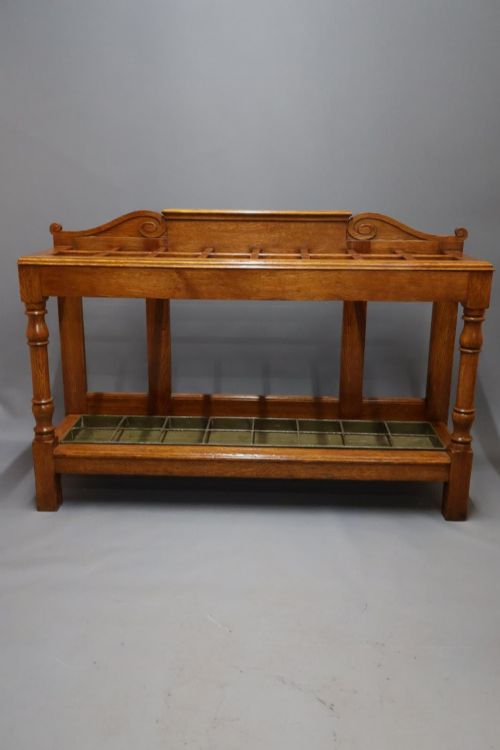
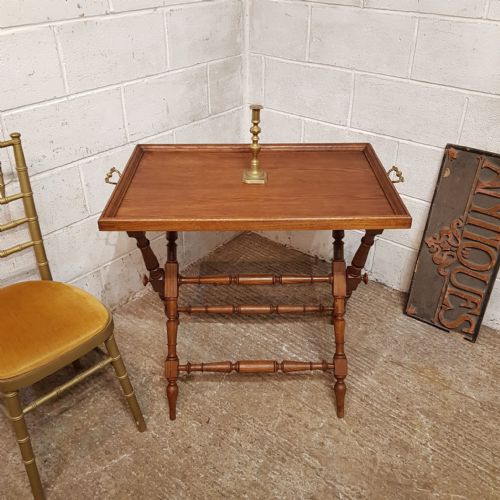
When you examine a victorian oak tray stand, you typically encounter either a folding butler tray configuration or a dedicated hall stand designed for umbrellas and walking sticks. These pieces originate primarily across the nineteenth century, spanning the Victorian and Edwardian eras, with many reflecting country house origins or aesthetic movement design.
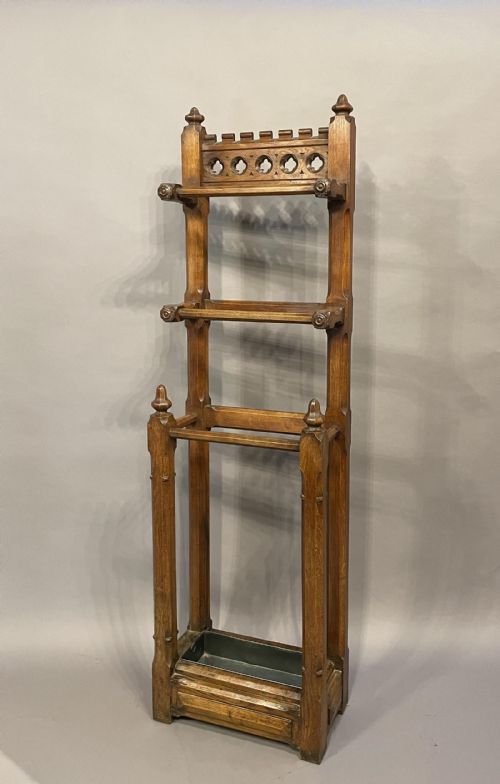
The forms range from rectangular stick stands with drop trays to elevated tray tables and elaborate hall seats. Many examples incorporate brass or metal drip trays, zinc linings, or carved details that place them firmly within the Gothic Revival and Arts and Crafts traditions.
How they were made
Makers utilised solid oak, selected for durability and pronounced grain, alongside brass and cast iron fittings to construct these stands. Trays and folding frames often join through traditional hinge mechanisms and pegged joints, whilst stick stands frequently pair timber frames with metal drip trays to manage moisture.
Surface decoration relies on carving, turned supports, and canted corners rather than heavy veneer. Secondary elements incorporate glass, silver plate, or zinc liners to protect the wood from daily wear in busy hallways.
One exceptional piece listed includes a patent number for the stick stand mechanism, proving Victorians loved engineering for umbrellas.
What varies in quality
The distinction between standard utility items and finer examples rests on timber selection and structural integrity. Superior pieces display carefully matched oak grain, crisp carving, and robust folding mechanisms that operate smoothly without supporting wobble.
Original hardware, such as marked brass fittings, patent numbers, or intact zinc drop trays, elevates an example above altered or later-repaired pieces. The proportion and weight of the solid oak frame ultimately dictate the presence of the object.
James Shoolbred
The Victorian Oak Tray Stand Glossary
- Butlers tray
- A removable wooden tray with hinged or shaped sides, designed for serving drinks or meals and often paired with a folding stand.
- Drip tray
- A metal or glass basin placed at the base of a stick stand to catch moisture from wet umbrellas.
- Gothic Revival
- A design style drawing on medieval architectural motifs, visible in pointed arches and heavy carved tracery on nineteenth-century oak furniture.
- Demi lune
- A half-moon shape utilised in hall stands and console tables designed to sit flat against a wall.
- Aesthetic movement
- A late nineteenth-century design approach emphasising visual beauty and simplified forms over excessive ornamentation.
Victorian Oak Tray Stand: Frequently Asked Questions
What is a victorian oak tray stand used for?
These versatile pieces served primarily as portable serving surfaces or as organised storage for walking sticks and umbrellas in large country houses.
Today, they function well as occasional tables for drinks or as practical hallway furniture for daily organisation.
How do I care for antique oak furniture?
Maintain the wood by keeping it away from direct heat sources and sudden humidity changes that can affect the joints.
Apply a traditional beeswax polish occasionally to nourish the grain and protect the surface from minor marks.
Are folding tray stands original?
Many butler trays and stands were constructed as paired sets where the tray lifts completely off a folding X-frame base.
Checking the fit and wear patterns on both the underside of the tray and the frame helps confirm their original pairing.
What distinguishes Gothic Revival oak pieces?
Gothic Revival items feature architectural details such as pointed arches, chamfered edges, and deep geometric carvings.
These elements reflect a nineteenth-century fascination with medieval design applied to domestic hall furniture.