
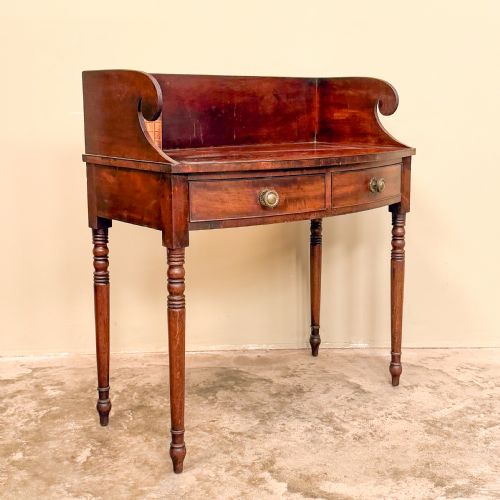
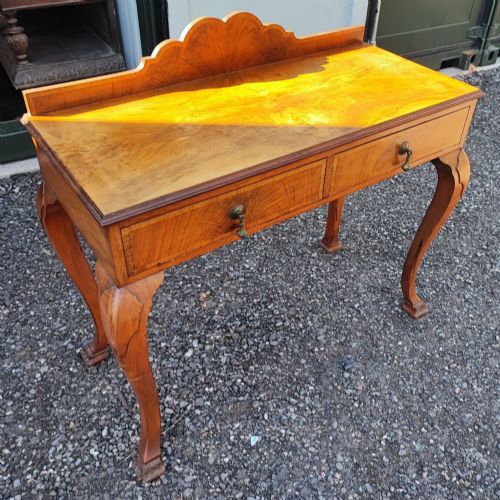
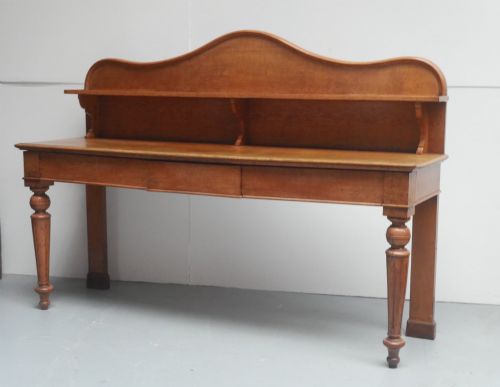
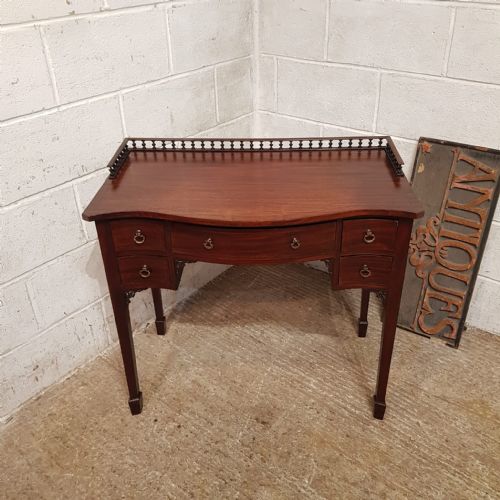
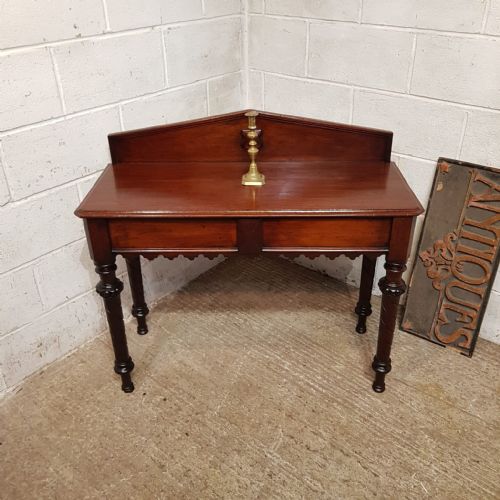
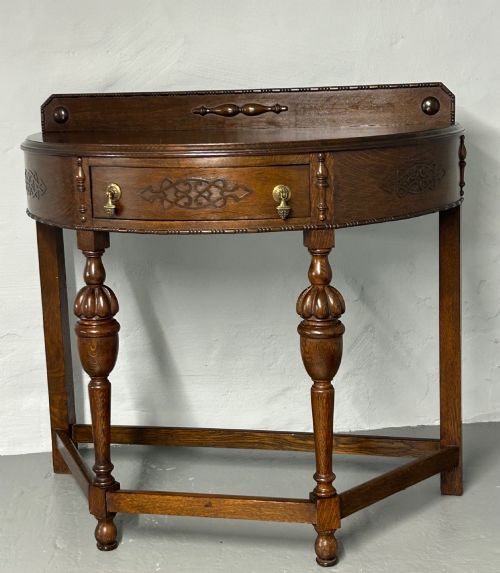

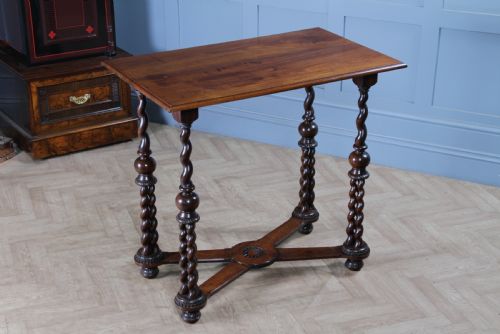


Carved Gallery Console Table
A carved gallery console table brings architectural presence to a hallway, offering a surface framed by decorative timber and raised backs.
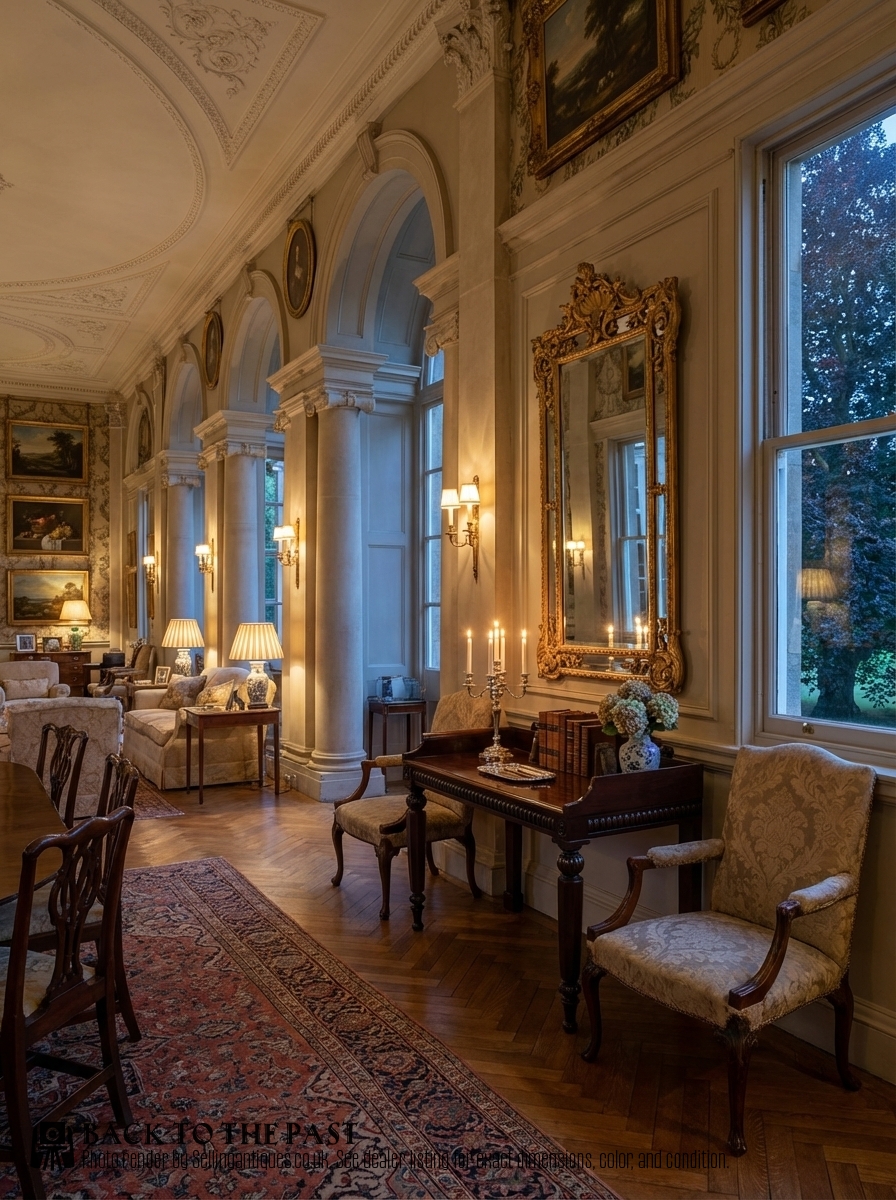
Carved Gallery Console Table
A carved gallery console table unites the functional role of a hall or serving table with decorative woodwork and a low rear upstand or gallery. You meet examples spanning the nineteenth century, Regency, Victorian, and Edwardian eras, alongside revival pieces in Jacobean and Queen Anne styles.
The primary forms on this page include console tables, side tables, serving tables, and hall tables, occasionally crossing into washstands, desks, and buffets. These items function as principal focal points in entrance halls and reception rooms, designed to stand flat against a wall.
Timbers such as mahogany, oak, walnut, rosewood, and teak dominate the selection, sometimes enhanced by burr walnut, satinbirch, or satinwood. Regional variations appear too, including Irish Regency, Scottish oak, and Anglo-Indian production.
Materials and construction
Cabinet makers utilised dense hardwoods like mahogany, oak, and walnut to build sturdy frames capable of supporting heavy marble tops or solid timber surfaces. Figured veneers such as burr walnut and satinwood were applied to primary display areas to catch the light.
Carving and turning techniques define the period details, ranging from triple barley twist legs and bobbin turned supports to gothic revival motifs and serpentine fronts. Brass fittings frequently complete the construction on drawers and galleries.
Object forms recorded here range from standard console and hall tables to serving tables, washstands, and writing desks with integrated galleries.
Distinctions in quality
The distinction between standard production and top tier work rests on the depth and crispness of the timber carving and the selection of figured veneers. Pieces attributed to notable makers or specific regional workshops display superior joinery and thoughtful proportions.
Patina and original surface finishes dictate the visual appeal of older wood, where a rich, untouched polish elevates the piece above later refinishing attempts. Integrated galleries and secondary woods chosen for drawer linings further signal higher standards of craftsmanship.
Mack Williams And Gibton·Charles Bevan
The Carved Gallery Console Table Glossary
- Gallery
- A raised wooden or brass rail running along the back or sides of a table top. It prevents objects from sliding off and adds a distinct vertical silhouette.
- Console table
- A table designed to stand against a wall, traditionally supported by wall brackets or decorative legs. It offers a narrow surface suited to tight hallways and reception rooms.
- Serving table
- A large utilitarian or formal table used in dining rooms for food preparation or service. These items often feature robust timber construction and generous length.
- Barley twist
- A decorative turning technique resembling a twisted rope. This style appears frequently on table legs during the nineteenth century.
- Serpentine front
- A curved furniture front featuring a convex centre flanked by concave curves. It requires advanced woodworking skill to shape accurately.
- Patina
- The surface sheen and colour acquired by wood through age, handling, and regular waxing. A desirable patina shows depth and warmth unique to older furniture.
Carved Gallery Console Table: Frequently Asked Questions
Where should I place a console table?
These tables find a natural home in entrance halls, corridors, and reception rooms where floor space is limited. Their narrow footprint allows them to sit flush against a wall without obstructing pathways.
Position a mirror or a piece of artwork above the table to anchor the piece visually. They also serve well behind sofas or in dining rooms as auxiliary serving surfaces.
What is the purpose of a gallery?
The gallery serves both a practical and an aesthetic function on these tables. Originally, the low rail prevented decorative objects, books, or tableware from sliding off the back.
Over time, makers used galleries to frame the surface and add architectural height. They distinguish hall tables from standard side tables by giving the piece a finished rear boundary.
How do I distinguish Regency from Victorian pieces?
Regency furniture, produced in the early nineteenth century, tends to favour clean architectural lines inspired by classical antiquity. Mahogany and rosewood predominate, often highlighted by restrained brass mounts.
Victorian pieces, emerging after eighteen thirty-seven, frequently showcase heavier proportions and exuberant carving. You will notice richer surface textures, varied revival styles, and bolder turned legs like bobbin or barley twist forms.
How do I care for antique wood surfaces?
Maintain antique timber by keeping it away from direct sunlight and sudden temperature changes. Excessive heat causes wood to dry out and split.
Apply a quality beeswax polish periodically to nourish the grain and preserve the patina. Avoid modern silicone sprays that build up and dull the finish over time.