
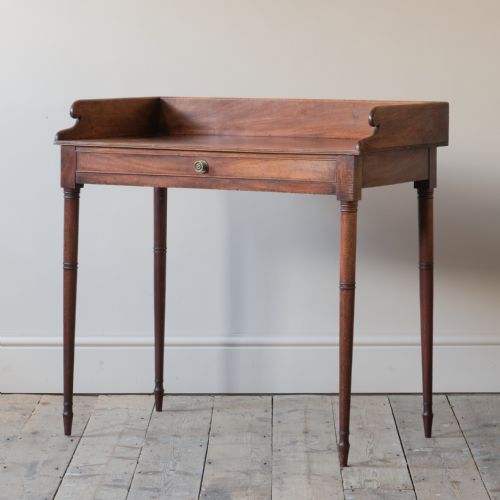
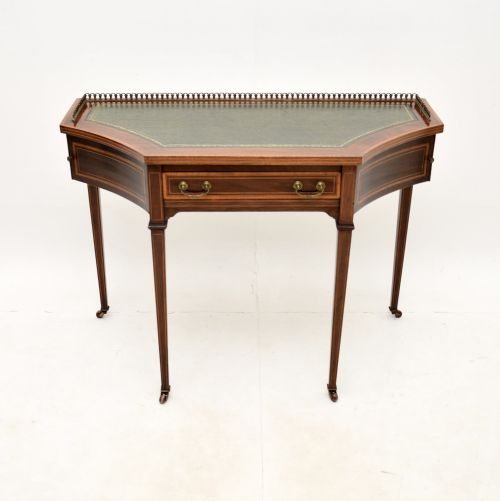
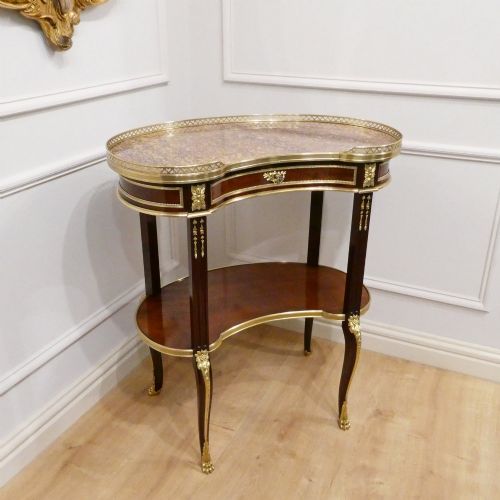
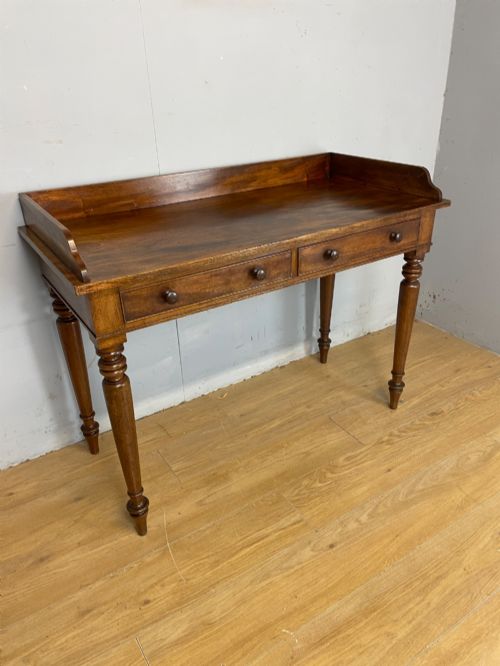


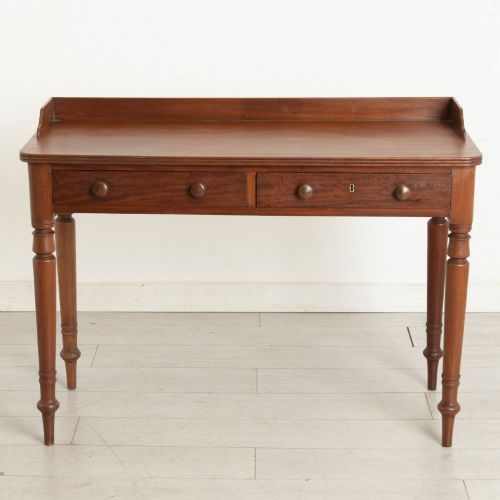
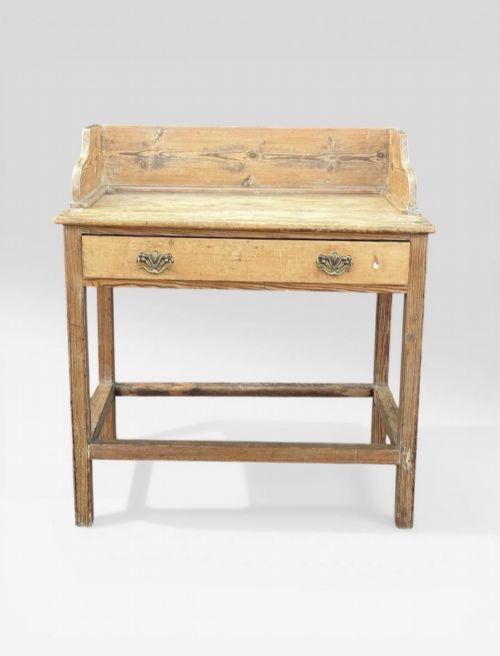
Antique Console Table Gallery
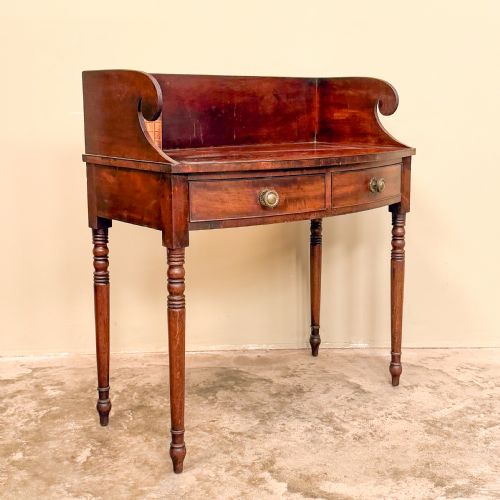
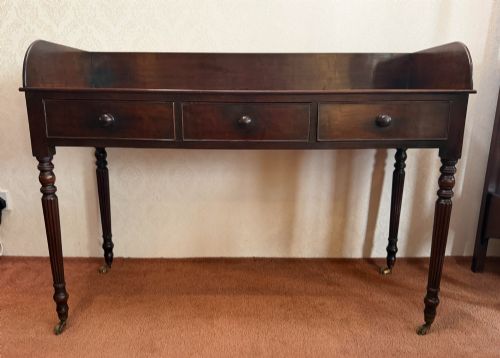
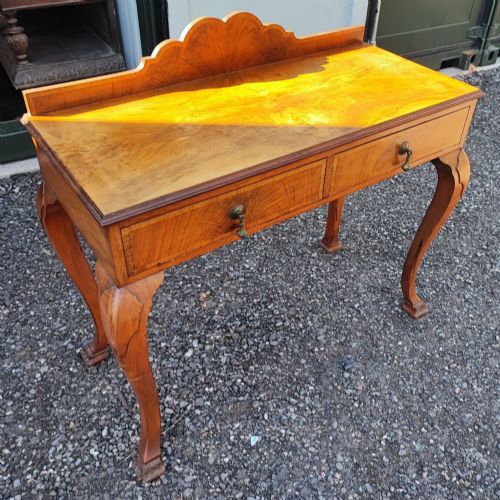
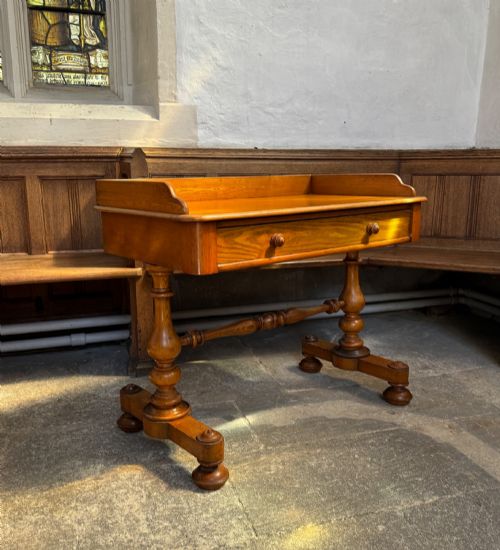
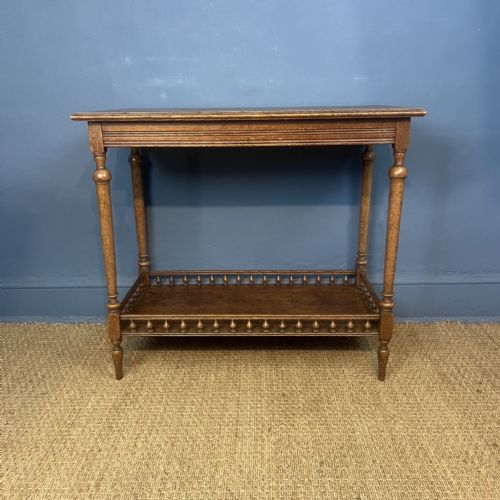
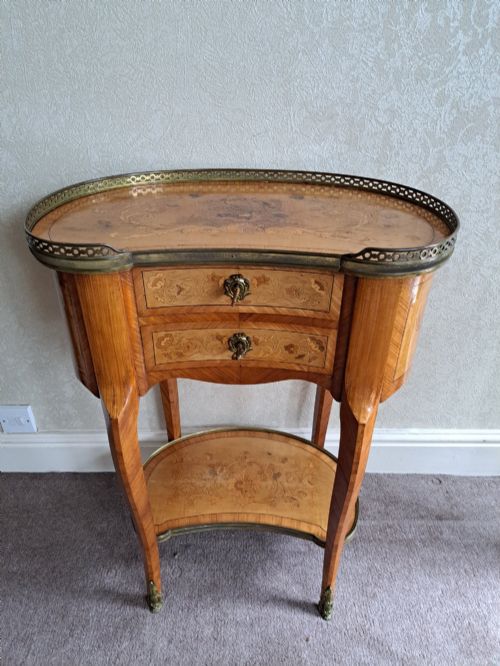
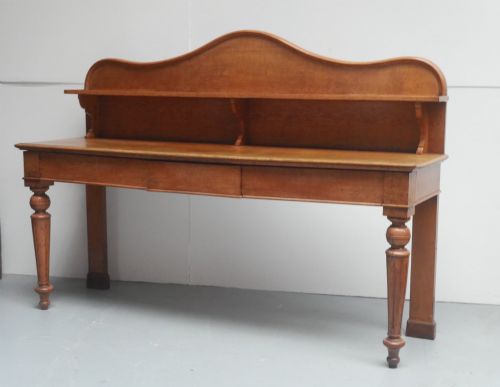
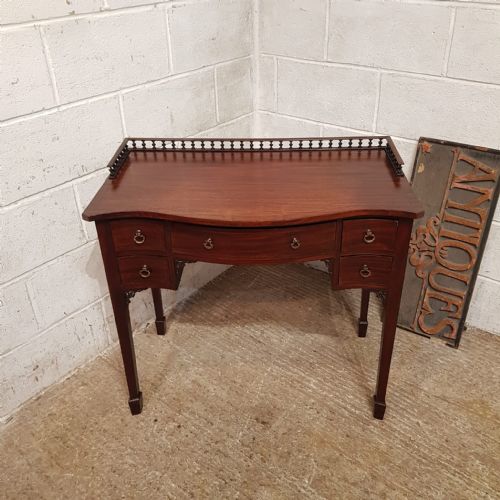
These pieces form an antique console table gallery, uniting architectural side furniture and writing tables designed for hallways, drawing rooms and chambers.
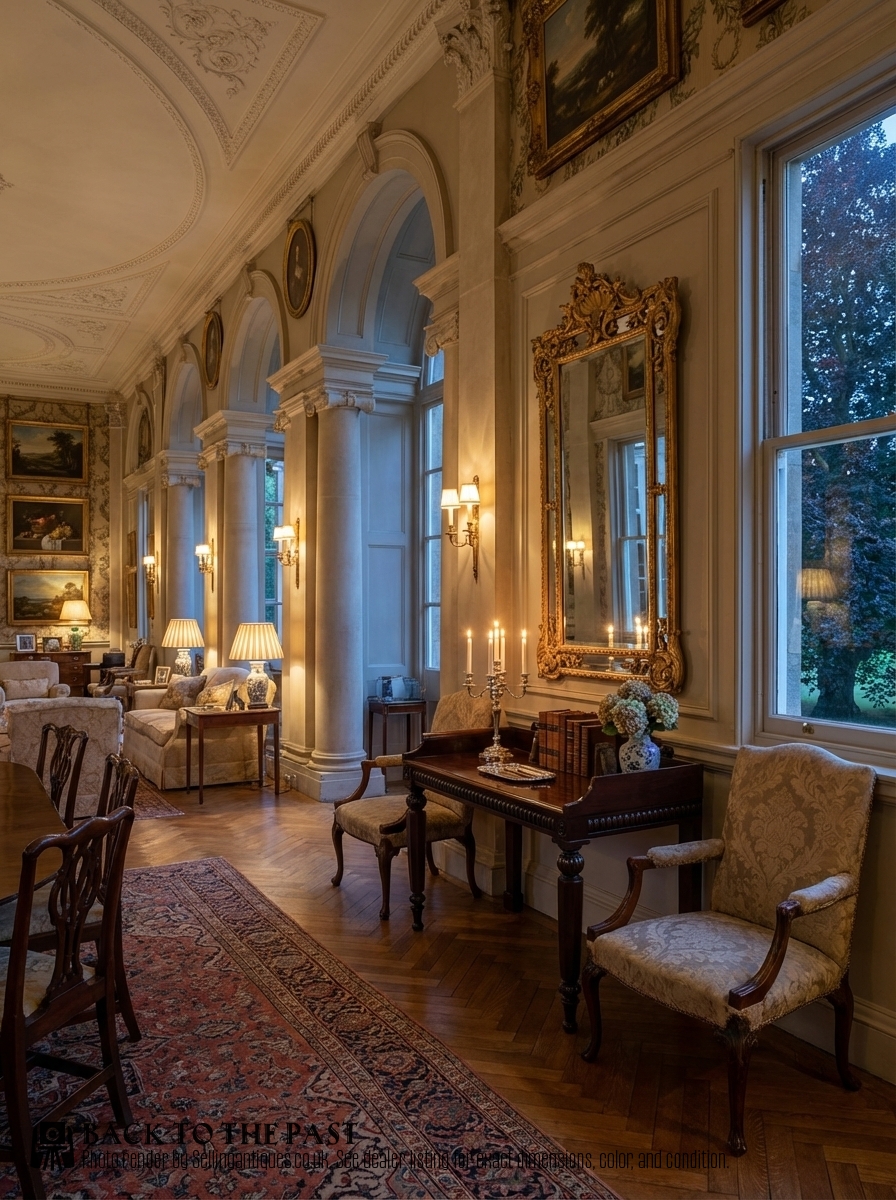
Antique Console Table Gallery
An antique console table gallery brings together side tables, serving tables, washstands and writing desks spanning the Georgian, Regency, Victorian and Edwardian eras. Buyers searching this phrase meet a diverse selection of occasional tables shaped by the stylistic shifts of the nineteenth and early twentieth centuries.
Mahogany predominates among the surviving pieces, accompanied by oak, walnut, pine, rosewood and satinwood. Forms range from simple two-drawer side tables to elaborate marble-topped hall tables and serpentine-fronted writing desks.
Regional and stylistic variations include Scottish oak serving tables, Anglo-Indian tables, French cabinets and Aesthetic Movement designs in ebonised wood or oak. Pieces from the Regency and William IV periods sit alongside rustic pine washstands and refined satinwood tables.
Materials and Construction
Cabinetmakers relied heavily on solid timbers and flame mahogany veneers, often incorporating contrasting stringing, satinwood inlays or painted decoration on lighter woods. Structural integrity depended on sturdy framing, secure drawer dovetailing and occasionally marble inserts for washstands and hall tables.
Turned supports such as triple barley twists or bobbin legs appear alongside carved oak underframes and classical pillar legs. The finishing techniques range from French polishing on walnut and mahogany to original paint on rustic pine surfaces.
Several pieces include maritime-inspired ships galleries, proving that even nineteenth-century furniture occasionally needed to brace itself against rolling seas.
Evaluating Craftsmanship and Design
Quality rests upon the selection of timber figures, such as flame mahogany or burr walnut, and the crispness of any carved or turned detailing. Finer examples display meticulous joinery, balanced proportions and harmonious integration of brass hardware or marble tops.
The distinction between standard utility furniture and superior pieces lies in the subtlety of the design, whether through a serpentine front, inlaid satinwood borders or architectural gallery rails. Original surfaces and untouched hardware elevate a piece far above heavily restored alternatives.
Maison Millet·Maples·Mack Williams and Gibton
The Antique Console Table Gallery Glossary
- Console table
- A table designed to stand against a wall, traditionally supported by brackets or legs. Many historical examples served as decorative hall or gallery tables.
- Gallery
- A raised rail or lattice border surrounding the top of a table or desk. This feature prevented small objects or papers from sliding off the surface.
- Flame mahogany
- A veneer cut from the fork of the mahogany tree where branches meet the trunk. It yields a distinctive, fiery grain pattern highly prized in high-end cabinetmaking.
- Demi-lune
- A half-moon shape characteristic of certain side and console tables designed to fit flush against a wall.
- Aesthetic Movement
- A late nineteenth-century design style that emphasised visual beauty over narrative content. Pieces from this movement often feature ebonised finishes or geometric oak construction.
Antique Console Table Gallery: Frequently Asked Questions
How do I distinguish Georgian from Victorian tables?
Georgian tables generally exhibit restrained classical proportions, simpler mahogany or oak construction, and clean structural lines. The decoration relies on subtle veneers and understated hardware rather than heavy carving.
Victorian pieces often display bolder forms, darker finishes, and more elaborate turnings like barley twists or bobbin legs. Introduction of pine washstands and walnut serving tables also characterises the later nineteenth-century output.
What is the purpose of a table gallery?
A gallery rail adds a decorative raised border around the perimeter of a table or desk top. Historically, this prevented decorative objects, toilet items or writing materials from falling.
On hall tables and washstands, the gallery also provides an architectural frame that accentuates the proportions of the piece. Buyers often seek out gallery tables for their distinctive silhouette.
How do I care for antique wood surfaces?
Maintain timber surfaces by dusting with a soft, dry cloth and avoiding modern silicone-based polishes. Occasional application of a quality beeswax helps nourish the grain without buildup.
Keep tables away from direct heat sources and strong sunlight to prevent timber splitting and veneer lifting. Marble-topped pieces require gentle wiping with a damp cloth and mild soap.