




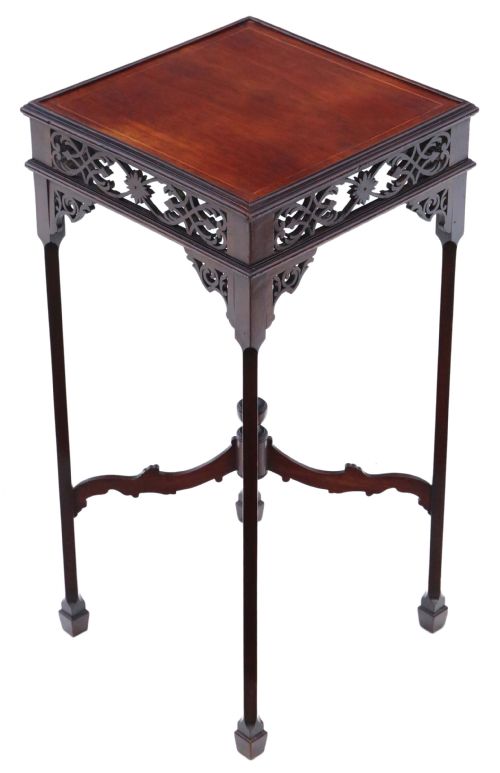


Carved Fretwork Plant Table
These carved fretwork plant tables bring intricate woodwork and varied cultural styles into domestic spaces.
Carved Fretwork Plant Table
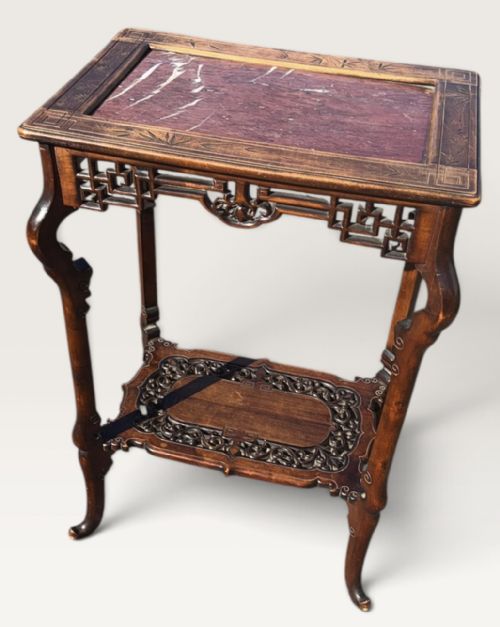
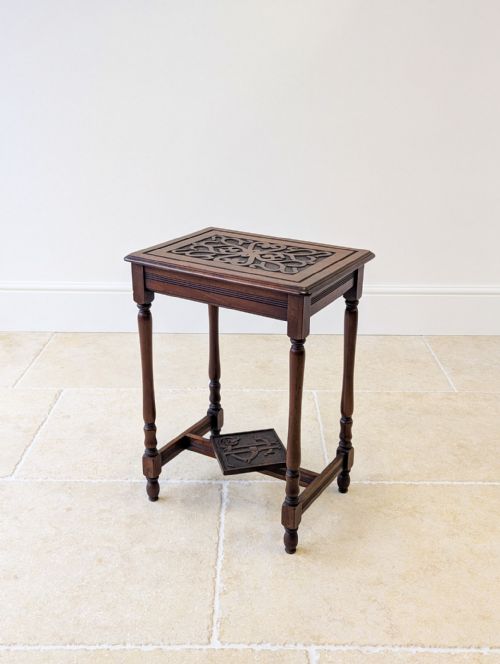
A carved fretwork plant table serves as an elevated platform for horticulture and display, combining functional surface area with pierced decorative woodwork. When searching for a carved fretwork plant table, buyers encounter a diverse selection of forms spanning from the late nineteenth century into the twentieth century, including octagonal lamp tables, torcheres, and side tables.
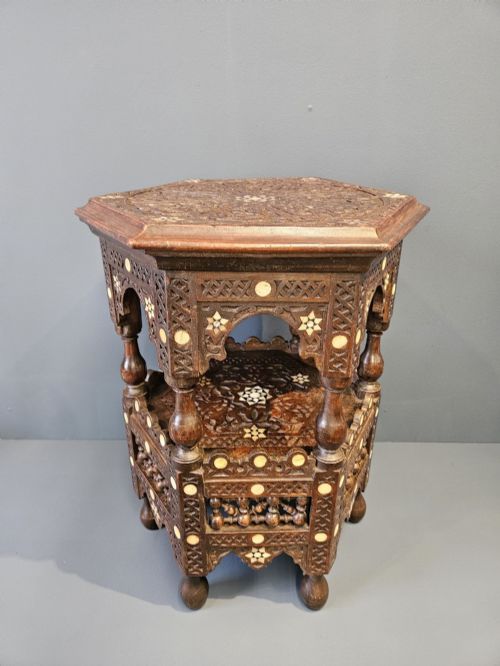
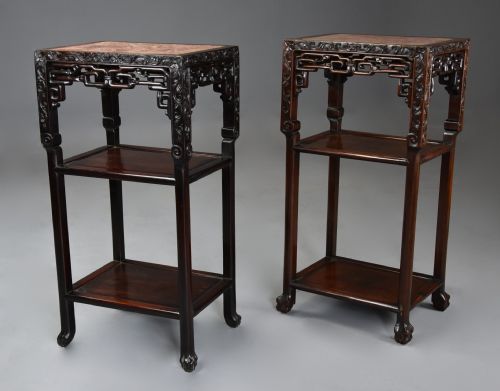
The objects on this page originate from multiple design traditions, notably Anglo-Indian, Chinese Traditional, and Moorish Revival styles. Pieces range from Victorian walnut occasional tables to Edwardian arts and crafts designs and Chinese hardwood pot stands.
Octagonal shapes and tripod torcheres dominate the forms, frequently utilising surface ornamentation such as bone inlay, brass inlay, and intricate piercing. These tables function equally well as standalone decorative items or as functional stands for plants and lamps.
Materials and construction methods
Craftsmen utilised dense timbers such as teak, mahogany, walnut, oak, and exotic hardwoods to construct these stands, ensuring stability for elevated displays. These woods were selected for their grain and their ability to hold intricate pierced work without splitting.
Fretwork involves piercing and carving timber to create openwork patterns, demanding precise hand tool work by makers across different regions. Additional decorative techniques include bone inlay and brass inlay set flush into the wooden surfaces, alongside traditional joinery appropriate to each period style.
Carved Fretwork Plant Table Retail Price Guide 2026
Typical asking prices for carved fretwork plant table among the pieces listed under this phrase on Sellingantiques today, from the lower quarter to the upper quarter. They describe what is for sale here now, not the wider market.
Many octagonal tables were engineered to fold flat, proving that Victorian travellers packed their geometric fretwork habits in luggage.
Assessing quality in carved fretwork
Quality rests in the crispness and depth of the hand carving within the fretwork panels, where sharper execution distinguishes finer examples from simpler production. The integration of decorative elements like inlay work also indicates the maker's level of skill and attention to detail.
Structural integrity matters significantly, particularly in tall torcheres and plant stands where slender legs and pierced aprons must support weight without wobbling. The selection and seasoning of the underlying hardwood determine how well the piece endures structural stress over time.
The Carved Fretwork Plant Table Glossary
- Fretwork
- Ornamental perforated woodwork created by cutting patterns through thin panels. This technique defines the visual character of the category.
- Torchere
- A tall stand designed to hold a lamp, candle, or plant. These tall supports elevate decorative objects above floor level.
- Hoshiarpur
- A Punjabi town renowned for intricate wood carving and bone inlay work. Pieces from this region often feature dense floral and geometric motifs.
- Hongmu
- A category of dense, dark Chinese hardwoods used for traditional furniture. The term translates to red wood and denotes high-status materials.
- Occasional table
- A small, movable table used for specific, temporary purposes in a room. They offer versatility in placement and design.
Carved Fretwork Plant Table: Frequently Asked Questions
What is a plant table used for?
These tables were originally designed to elevate potted plants, ferns, or lamps off the floor to showcase them within Victorian and Edwardian interiors. Their raised surfaces allowed foliage to catch more light and protected flooring from moisture.
Today, they serve similar decorative functions in modern rooms, acting as pedestals for sculptures, vases, or drinking glasses beside seating.
How do I identify an Anglo-Indian table?
Anglo-Indian tables typically feature dense, all-over floral carving, pierced fretwork panels, and often incorporate bone or brass inlay into teak woods. These pieces reflect the cross-cultural design exchange during the nineteenth century.
They frequently adopt octagonal forms which fold or disassemble easily, combining traditional Indian woodworking with British domestic furniture requirements.
Are these tables sturdy enough for plants?
Most solid hardwood tables possess adequate structural strength for standard household plants, provided the joints remain tight. Heavier pots require careful placement on tables with wider bases and solid leg construction.
Tall torcheres demand more caution due to their narrow footprint, making them better suited to stable corner locations away from heavy traffic.
How do I date an antique plant stand?
Dating relies on examining the timber species, joinery methods, tool marks, and stylistic indicators associated with periods like the Victorian or Edwardian eras. Aesthetic Movement and Arts and Crafts examples often display characteristic geometric simplicity or naturalistic motifs.
Comparing the wear patterns and the oxidation of the wood helps confirm the age of the piece alongside stylistic benchmarks.