




Victorian Plant Display Table
These pieces are a victorian plant display table, designed to hold indoor flora and elevate greenery within period interiors.
Victorian Plant Display Table
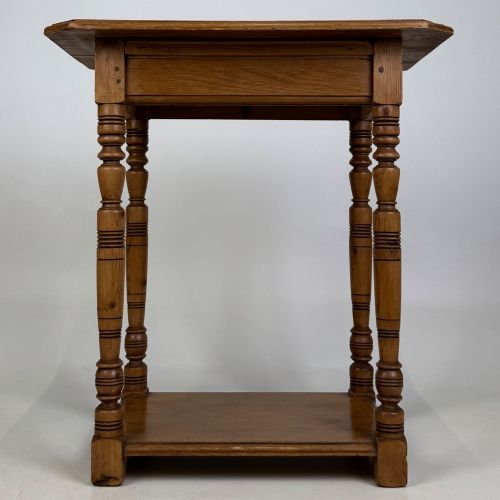
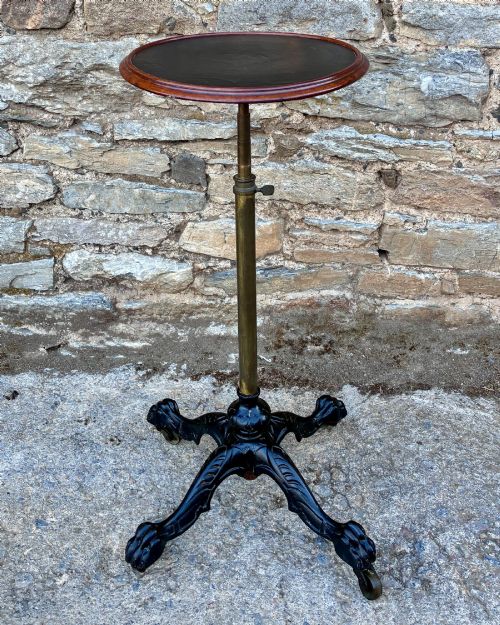
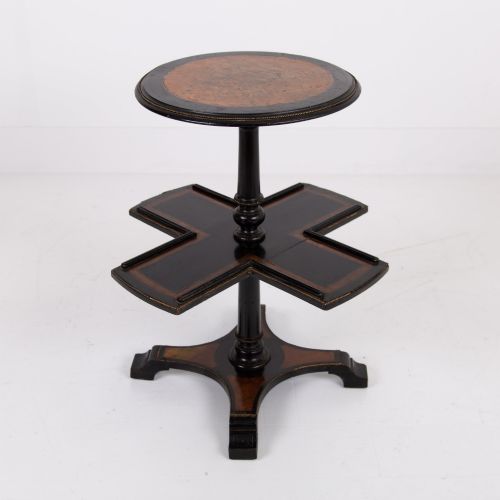
A victorian plant display table serves as a functional surface for indoor greenery, incorporating plant stands, jardiniere stands, pedestals, and occasional tables designed during the nineteenth century. These forms vary from tall carved wooden columns to multi-tiered tables intended to hold pots and decorative urns.
The selection includes pieces spanning the Victorian era alongside Chinese export items, Aesthetic Movement designs, and French Rococo Revival examples. Forms range from simple tripod bases to elaborate ebonised amboyna tables and marble-topped stands.
How they were made
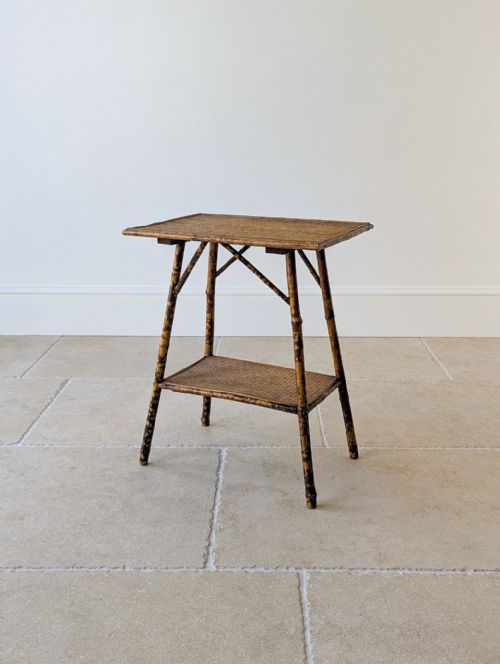
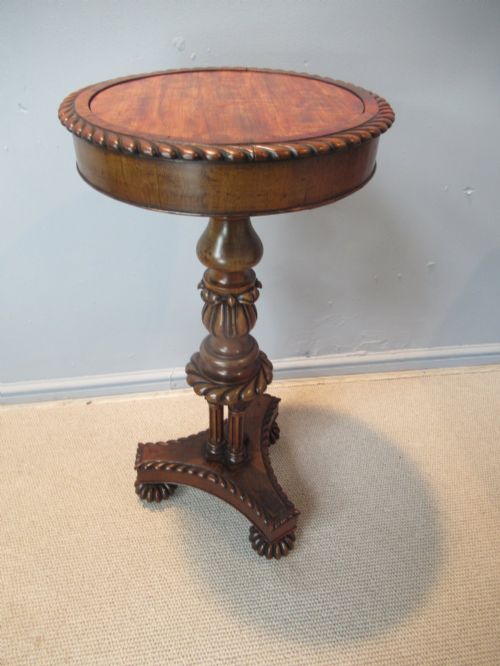
Construction relies on a variety of hardwoods including mahogany, walnut, oak, rosewood, and padouk, alongside bamboo, brass, iron, and gilt wood. Surfaces often incorporate inset marble or onyx panels designed to resist water damage from potted plants.
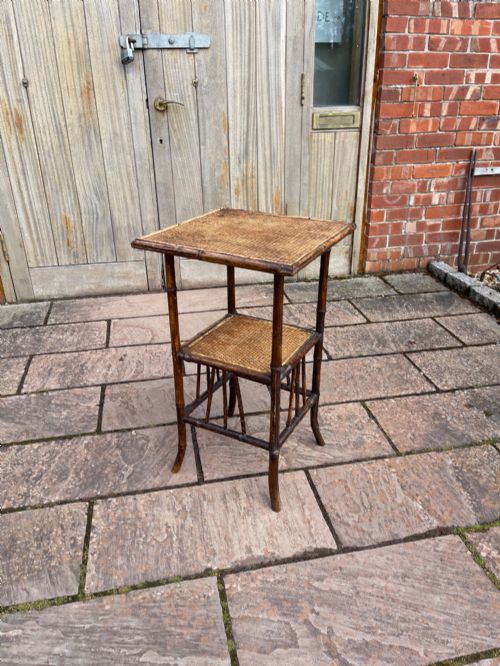
Techniques range from hand-carved ornamentation on Chinese hardwood stands to ebonising and precise joinery on Aesthetic Movement and bamboo pieces. Brass mounts and decorative inlays appear frequently across English and imported examples.
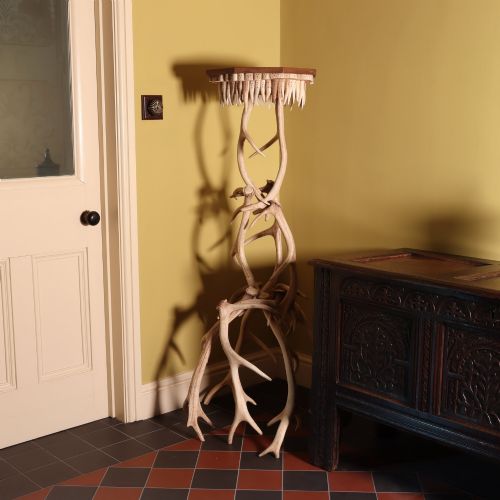
A solitary taxidermy antler torchiere waits among the wooden stands to hold foliage.
What varies in quality
The standard of carving and the selection of materials define the upper tier of these pieces, particularly in dense hardwoods, intricate floral motifs, and substantial marble tops. Finer examples display precise joinery and well-balanced proportions on tripod or pillar bases.
Makers and stylistic execution also influence the distinction between standard production items and pieces attributed to specific design houses or distinct cultural traditions such as Chinese export work.
Shoolbred·Gabriel Viardot·Liberty and Co
The Victorian Plant Display Table Glossary
- Jardiniere stand
- A tall table or pedestal specifically constructed to support a decorative pot or planter holding flowers or foliage. These often feature water-resistant tops such as marble or brass linings.
- Ebonised
- Wood treated with a dark stain or finish to imitate the appearance of ebony. This finish is common on nineteenth-century Japanese-inspired and Aesthetic Movement tables.
- Torchiere
- A tall, slender stand or pedestal originally designed to hold a torch or candle lamp, later adapted for plant display or lighting. They typically feature a small top supported by a single central pillar or tripod base.
- Aesthetic Movement
- A late nineteenth-century design style that emphasised visual beauty over narrative subject matter, often incorporating Japanese motifs, bamboo, and ebonised surfaces.
- Tripod base
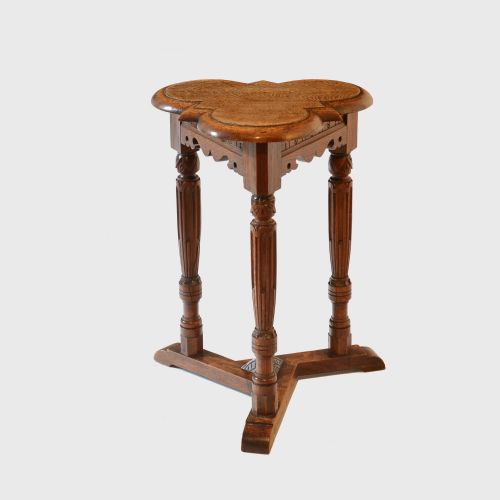
- A support structure utilising three legs radiating from a central pillar. This configuration provides stability on uneven nineteenth-century flooring.
Victorian Plant Display Table: Frequently Asked Questions
What is a victorian plant display table?
A victorian plant display table is a nineteenth-century furniture form created to elevate indoor plants, ferns, and floral arrangements within domestic rooms and conservatories.
These pieces encompass various forms including tall pedestals, multi-tiered occasional tables, and low stands with inset marble or brass tops designed to handle damp pots.
How were these tables used originally?
Households during the Victorian period used these stands to bring outdoor greenery inside, placing them in bay windows, drawing rooms, and hallways.
They functioned as decorative platforms for potted palms, flowering plants, and ornamental jardiniere bowls rather than heavy utilitarian furniture.
How do I identify different styles?
Styles range from traditional English mahogany and oak tripod tables to imported Chinese export padouk stands and Japanese-influenced ebonised bamboo pieces.
Examining the materials, carving techniques, and decorative motifs such as Aesthetic Movement details helps distinguish between regional workshops and standard Victorian production.
How do I live with a plant stand?
These stands integrate easily into modern interiors as display surfaces for potted plants, lamps, or decorative objects in living spaces and hallways.
Care should be taken to protect sensitive wood or ebonised surfaces from moisture by using waterproof saucers underneath live plants.