


Carved Jardiniere Pedestal
A carved jardiniere pedestal elevates greenery and porcelain, bringing height and structural detail to a room through turned timber and stone.
Carved Jardiniere Pedestal
A carved jardiniere pedestal functions primarily as a display surface for heavy planters, vases, and urns. Buyers search for this phrase to find sturdy columns that lift greenery or decorative objects to eye level.
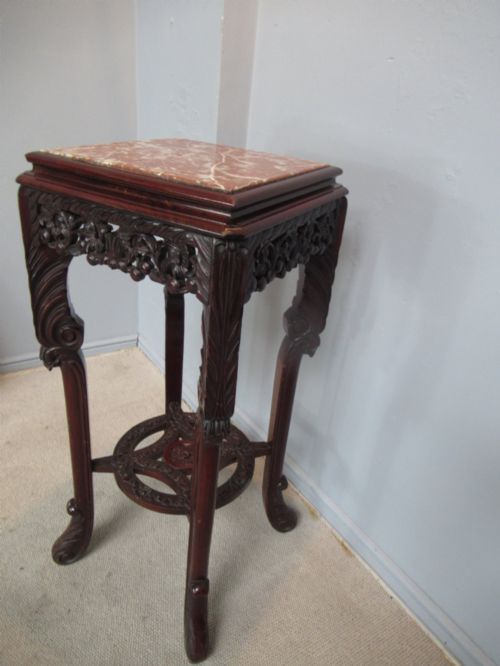
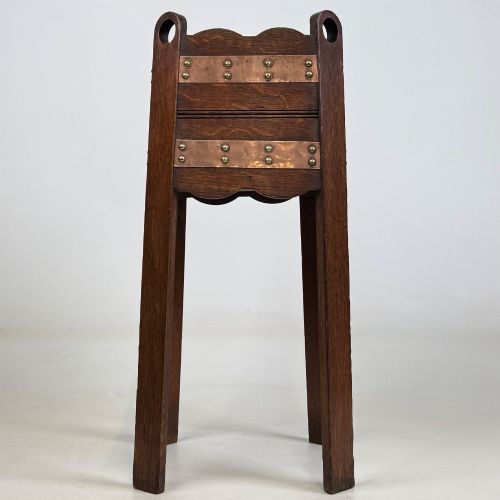
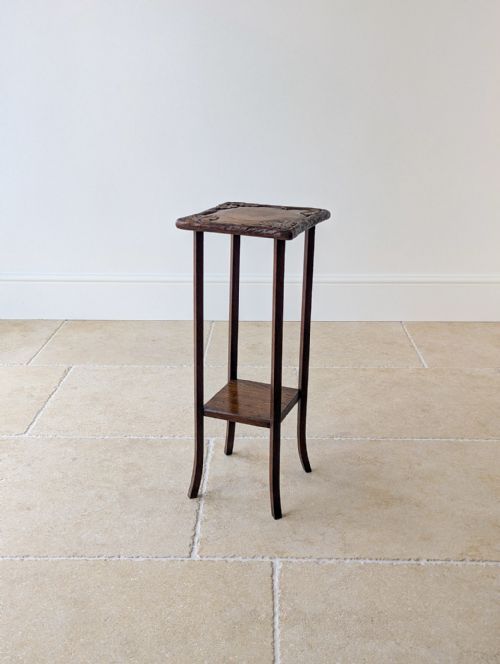
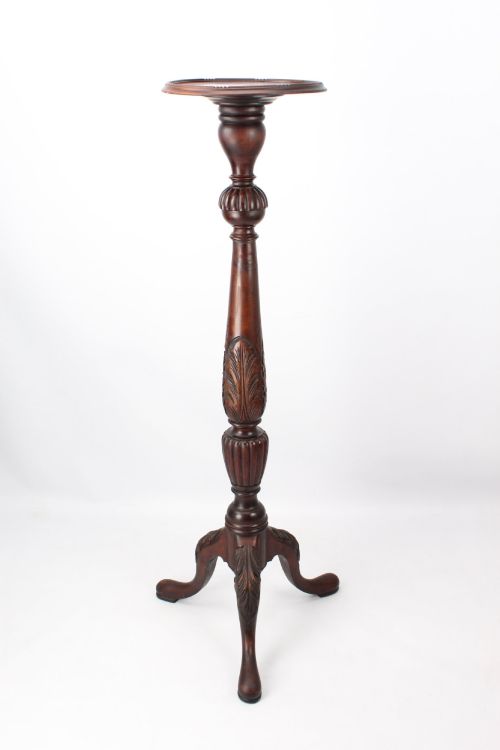
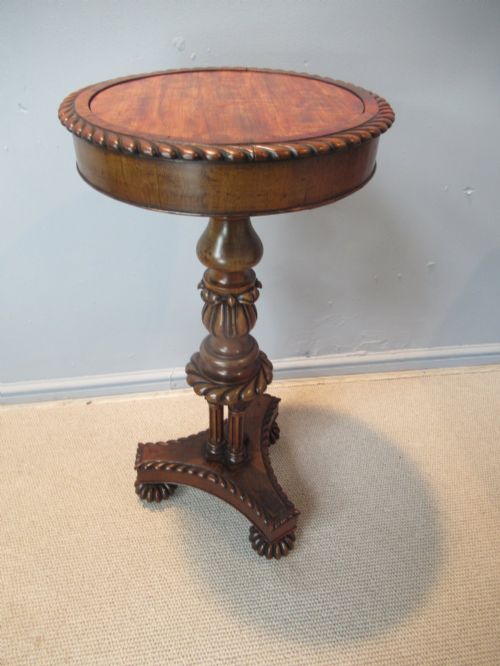
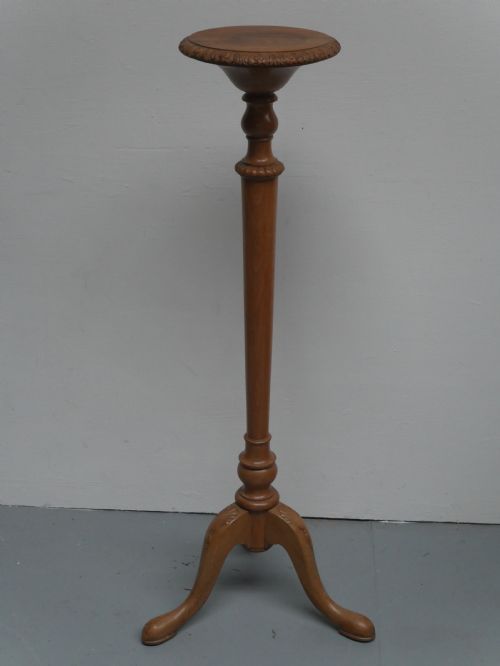
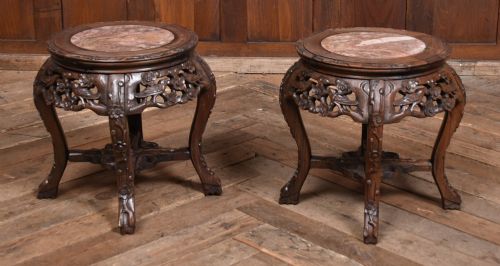
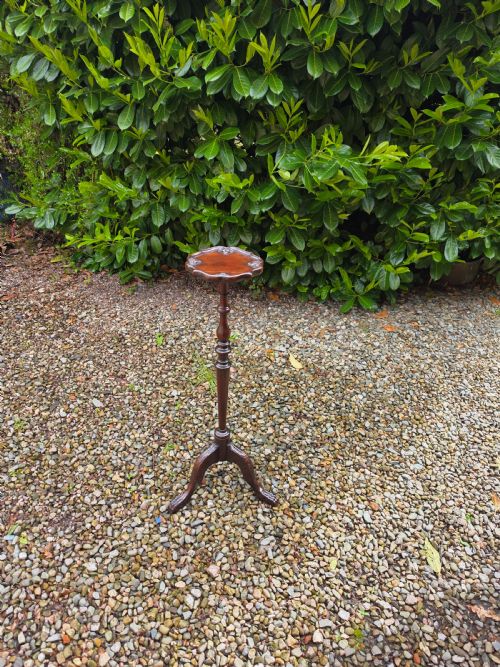
The versions most common on this page span the Victorian and Edwardian eras alongside Chinese Export pieces. They appear as round or square-topped tables and slender columns intended for corners or window spaces.
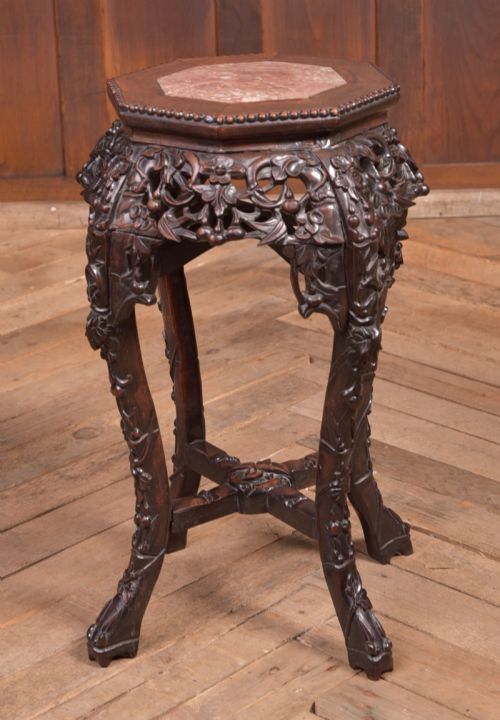
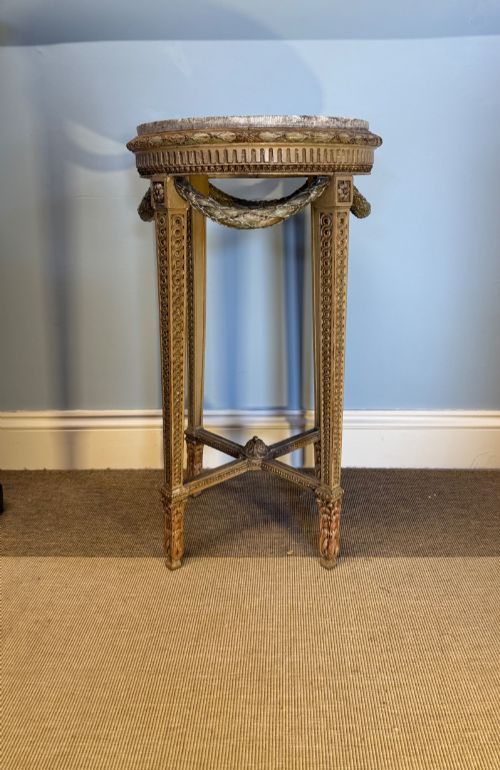
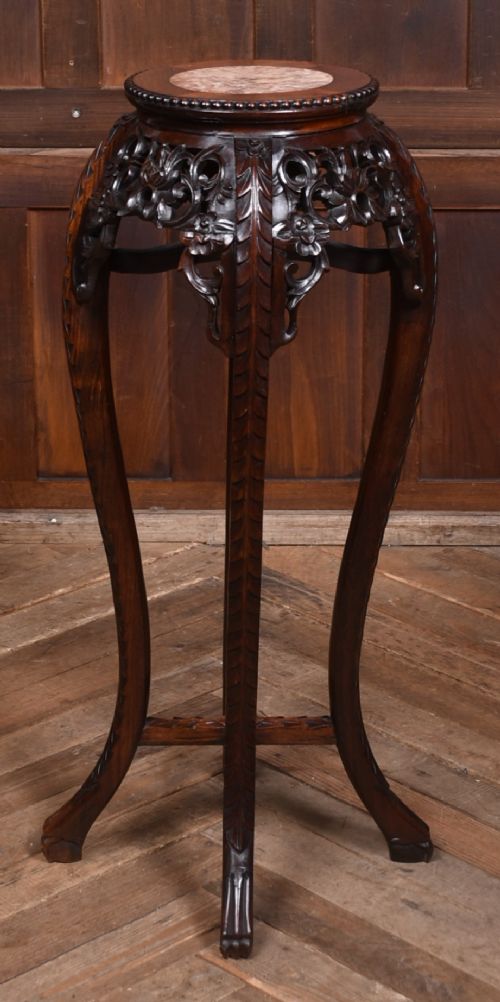
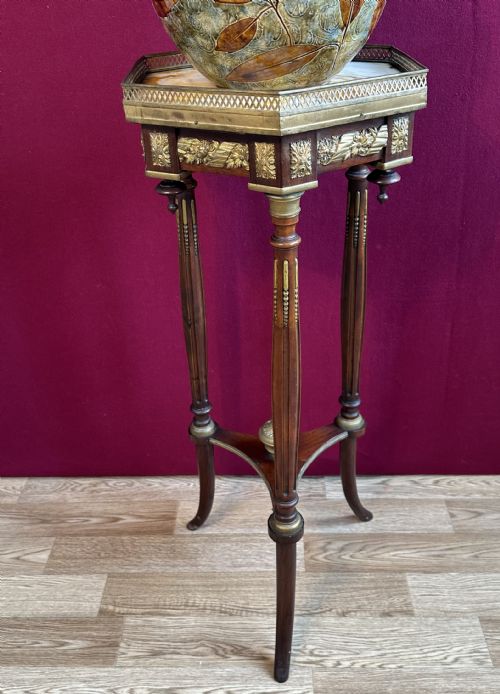
Makers constructed these supports using dense timbers like mahogany, oak, and walnut, frequently pairing the wooden frames with inset marble tops. This combination provided the necessary weight to balance tall arrangements safely.
How They Were Made
Cabinet makers utilised dense hardwoods such as mahogany, walnut, rosewood, and padouk to construct the structural columns and legs. These timbers resisted the downward pressure and lateral stress of heavy ceramic planters.
Stone inserts, particularly rouge marble and vert de patricia, were precisely fitted into the timber frames to create moisture-resistant surfaces. This prevented water damage from overflowing plant pots during routine watering.
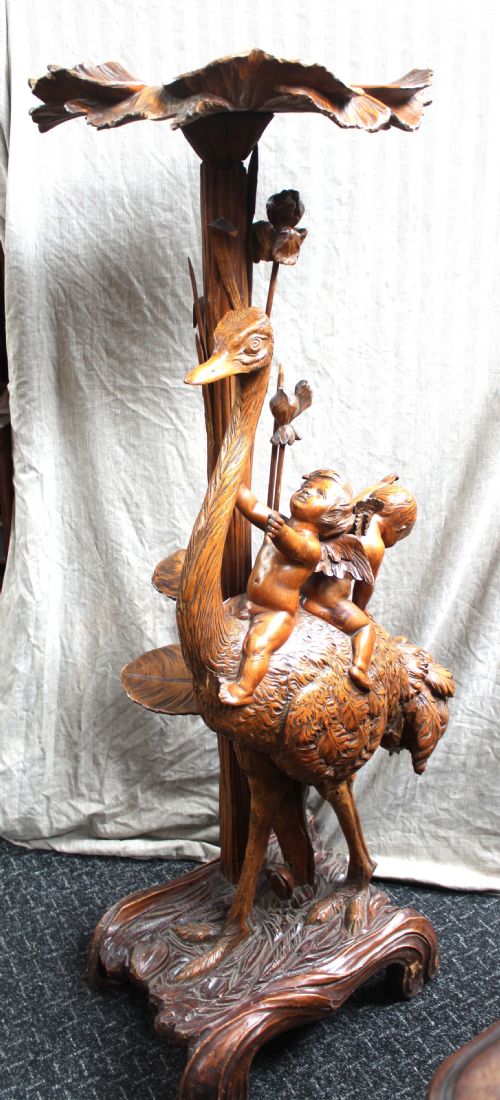
Chisels and hand tools shaped intricate floral motifs, claw feet, and fluted columns directly into the solid wood. Carpenters joined sections using traditional mortise and tenon construction to ensure lasting rigidity.
Listings feature 19th-century Chinese export pieces alongside Victorian and Edwardian British examples in hardwood and marble.
What Varies In Quality
The crispness of the hand-carved detail distinguishes finer examples from simpler production pieces. Deeply undercut foliage and well-defined animal motifs indicate a higher level of artisan skill.
The selection of materials dictates the baseline quality of the frame and inset. Solid exotic hardwoods and thick, unblemished marble tops demonstrate superior material sourcing compared to thin veneers or softwoods.
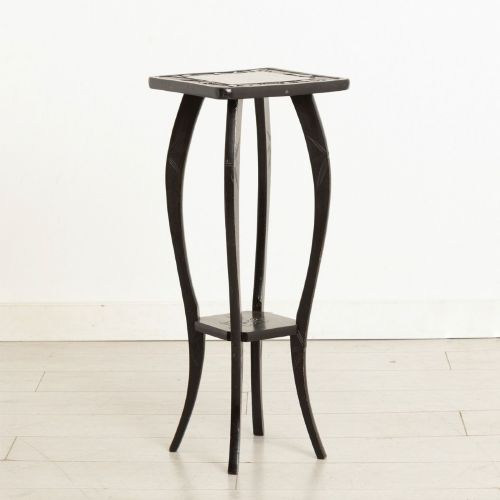
Structural stability depends on the integrity of the joints and the weight distribution of the base. Tripod designs and heavy four-legged frames require precise alignment to support heavy loads without tipping.
Liberty of London
The Carved Jardiniere Pedestal Glossary
- Jardiniere
- An ornamental pot or stand for holding plants or flowers. These vessels often sit atop dedicated pedestals.
- Pedestal
- An upright architectural support or column designed to elevate a sculpture, vase, or plant. They provide vertical emphasis within an interior scheme.
- Padouk
- A heavy tropical hardwood known for its strength and reddish tint. Makers utilised this timber for durable carved stands.
- Ebonised
- Wood treated with a dark finish to imitate ebony. This technique was popular in nineteenth-century cabinet making.
- Torchere
- A tall ornamental stand originally intended to carry a candle or light. Later examples served general display purposes.
Carved Jardiniere Pedestal: Frequently Asked Questions
What is a carved jardiniere pedestal?
A carved jardiniere pedestal is a decorative stand designed to elevate potted plants, urns, or vases off the floor. These pieces combine structural timber columns with display surfaces to feature indoor greenery.
Craftsmen built them in various heights to suit room corners and window placements, often incorporating inset stone tops to handle moisture from plants.
How were these stands used historically?
Victorian and Edwardian households utilised these stands to display prized ferns, palms, and floral arrangements in principal reception rooms. Raising plants improved light exposure and protected flooring from water.
They also served as display furniture for decorative porcelain vases, bronze figures, and table lamps when plants were absent.
How do I date a wooden pedestal?
Dating relies on examining the timber species, construction joints, and decorative carving styles recorded in the piece. Victorian examples often feature dark ebonised finishes or heavy walnut.
Edwardian pieces tend to display lighter mahogany or oak with Arts and Crafts influences, while nineteenth-century Chinese imports utilise dense padouk and marble.
Are marble tops original to the stands?
Original marble inserts fit snugly into recessed wooden frames designed specifically to bear their weight. These stone slabs provided a waterproof surface for damp plant pots.
Replacements typically show discrepancies in thickness, edge profiling, or fit against the surrounding timber moulding.