






Carved French King Bed
When you search for a carved french king bed, you are looking at substantial wooden frames from the nineteenth and early twentieth centuries bearing traditional continental ornamentation.

Carved French King Bed
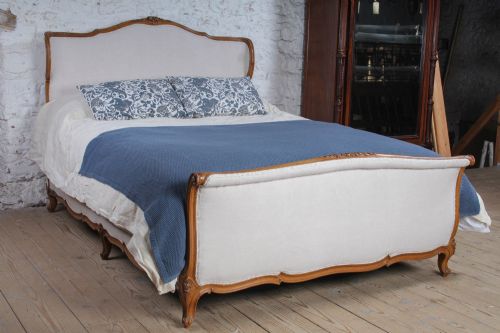
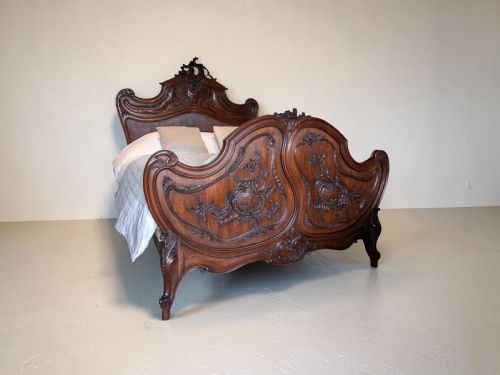
A carved french king bed is a large sleeping frame originating from continental workshops, most frequently encountered in styles reflecting the reigns of Louis XV and Louis XVI, as well as broader French Chateau and Rococo revivals. These pieces span from the late nineteenth century through to the early decades of the twentieth century, appearing both as standalone bedsteads and as components of larger bedroom suites that include matching bedside cabinets.
Buyers will find that the physical proportions of these frames often diverge from modern standard mattress sizes, frequently requiring careful attention to internal dimensions before fitting contemporary bases. The framework typically relies on monumental headboards paired with lower footboards, though low-end and no-end variants also feature across the inventory. Surviving examples demonstrate the enduring appeal of traditional French cabinet-making traditions adapted for grand domestic sleeping quarters.
How They Were Made
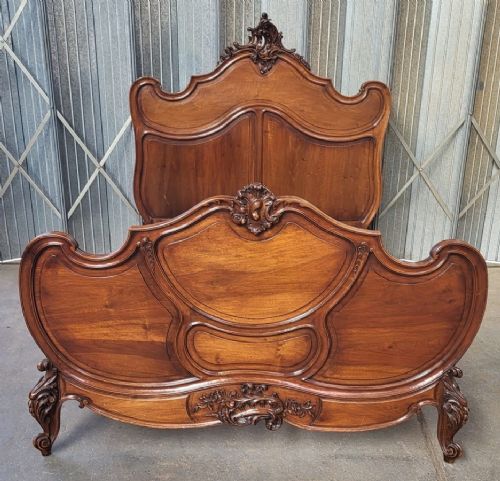
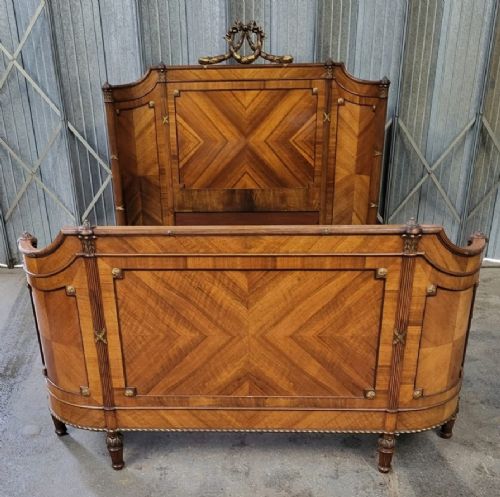
Construction principally relies upon solid timbers such as walnut, oak and mahogany, shaped through manual carving to achieve deep relief scrollwork, floral motifs and fluted columns. Many frames incorporate quarter-veneered panels to display intricate wood grain patterns across expansive headboards.
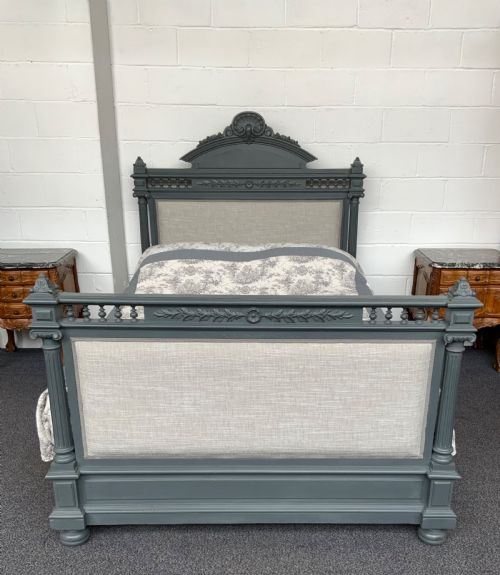
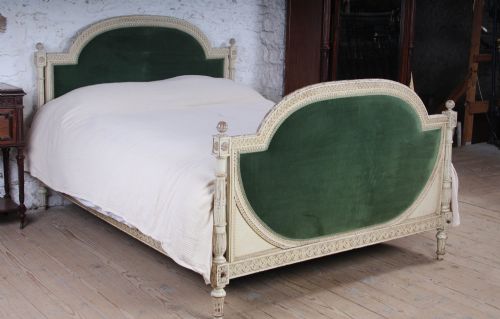
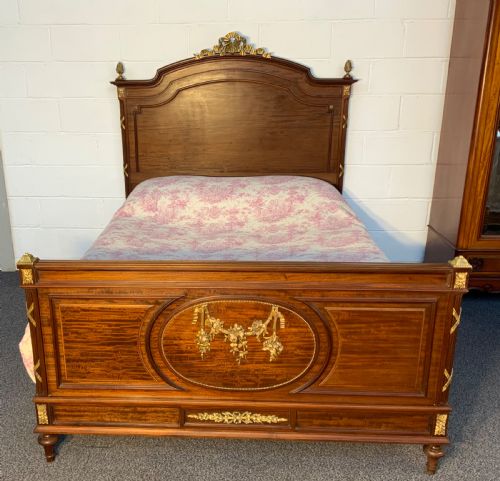
Alternative surfaces utilise painted finishes, parcel gilt detailing and applied brass hardware to highlight the carved contours. Where open framework is desired, makers employed woven cane panels, creating light-weight yet resilient backdrops within the dense wooden structures.
Listings demonstrate that walnut is the predominant solid timber utilised for nineteenth-century French bedsteads.
What Varies in Quality
Quality reveals itself primarily in the crispness and depth of the manual carving, where superior examples exhibit sharp, undercut details rather than shallow, machine-routed stamping. The choice of primary timber also dictates merit, with dense figured walnut and quarter-veneered surfaces sitting at the upper end of the scale compared to plain painted softwood frameworks.
Structural integrity and the retention of original matching elements define the distinction between ordinary pieces and high-end survivals. The presence of undamaged natural cane work, integrated brass mounts and complete original bedroom suite groupings elevates the standing of an individual bedstead.
The Carved French King Bed Glossary
- Bergere
- An enclosed upholstered armchair or bed head panel with wooden framing, often featuring woven cane sides. This style provides a lighter visual weight while maintaining structural solidity.
- Caning
- A method of weaving rattan or reed material to create a patterned, breathable panel insert. It appears frequently on headboards to offer textural contrast against solid wood.
- Louis XV Style
- A design vocabulary characterised by asymmetrical scrollwork, cabriole legs and organic floral motifs. It flourished during nineteenth-century revivals of eighteenth-century French aesthetics.
- Louis XVI Style
- A classical revival movement defined by straight lines, symmetrical geometry, fluted columns and neoclassical restraint. It offers a more architectural appearance than its Rococo predecessor.
- Quarter Veneer
- A technique where thin slices of wood grain are arranged in symmetrical quadrants to create decorative geometric patterns. This method enhances the visual appeal of large flat surfaces on headboards.
Carved French King Bed: Frequently Asked Questions
Will modern mattresses fit antique French beds?
Antique French bed dimensions often differ slightly from contemporary standard sizes, meaning mattresses may require bespoke sizing or minor adjustments to the internal rails.
Buyers should measure the exact internal width and length of the wooden frame before purchasing modern bedding components.
How are these large wooden bedframes assembled?
Most pieces utilise traditional side rails that lock into the headboard and footboard posts using metal bolts or sturdy wooden tenons. This knock-down construction allowed historical makers to transport monumental furniture through narrow domestic stairwells.
Careful alignment during assembly ensures the frame remains square and structurally stable under weight.
How do I distinguish Louis XV from Louis XVI styles?
Louis XV pieces are defined by flowing, asymmetrical curves, cabriole supports and exuberant organic carving inspired by nature. They present a softer, more undulating silhouette overall.
In contrast, Louis XVI items embrace strict symmetry, straight fluted pillars, and crisp geometric neoclassical detailing.
Can painted French beds be repainted safely?
Many surviving examples feature aged painted finishes, sometimes layered over decades, which contribute to their decorative character. Applying new paint is possible, but conservation-minded owners prefer preserving original patination where surface integrity permits.