

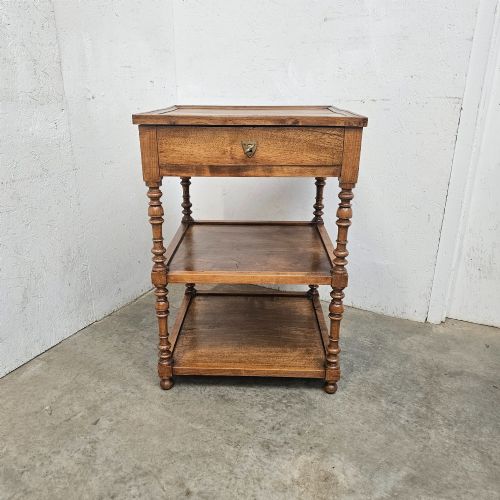
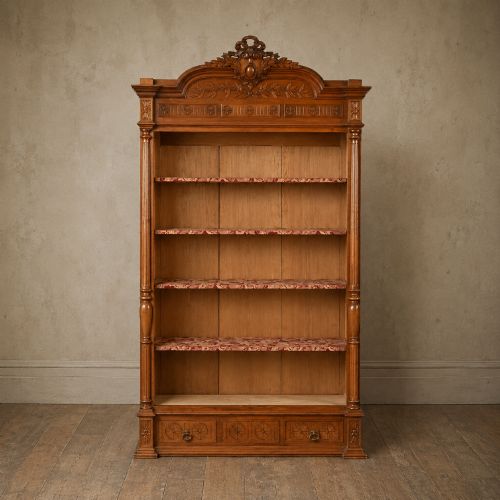
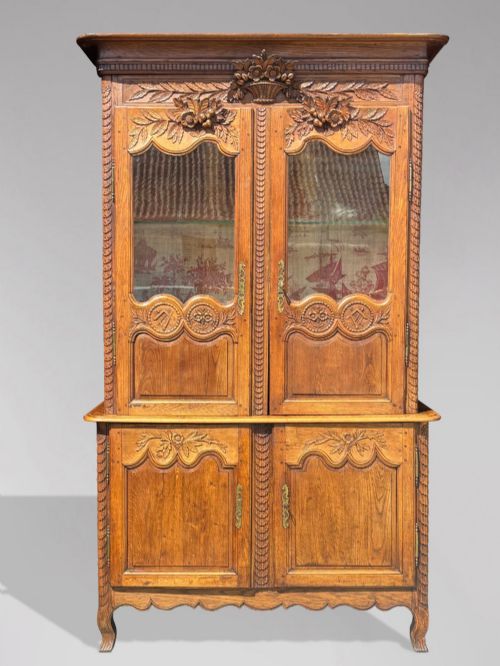
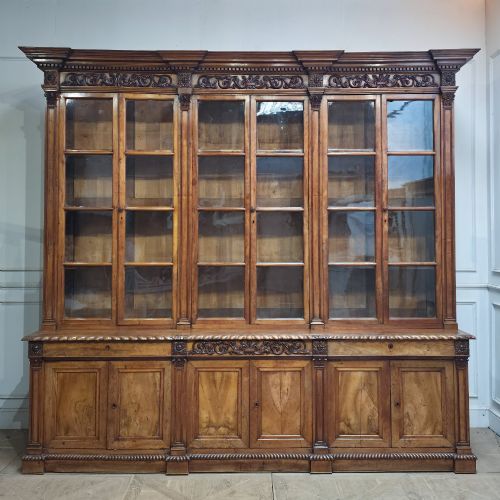
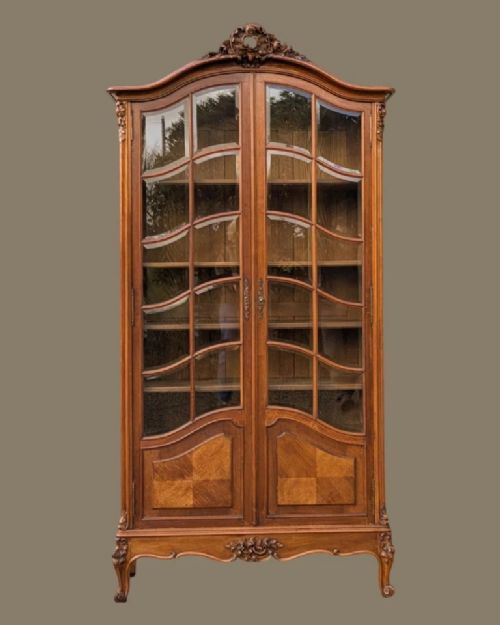


Carved French Display Cabinet
A carved french display cabinet brings warmth and structure to a room while holding porcelain, books, or curios behind glass.
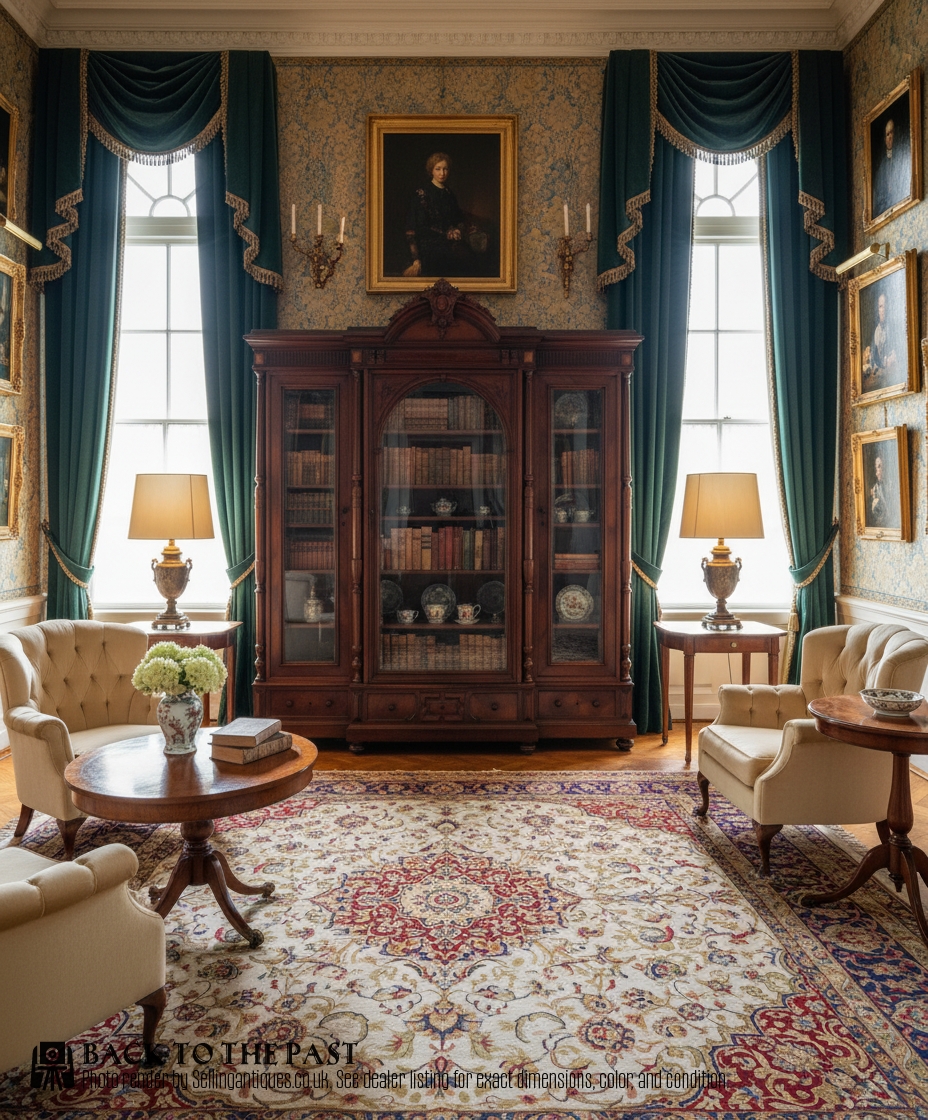
Carved French Display Cabinet
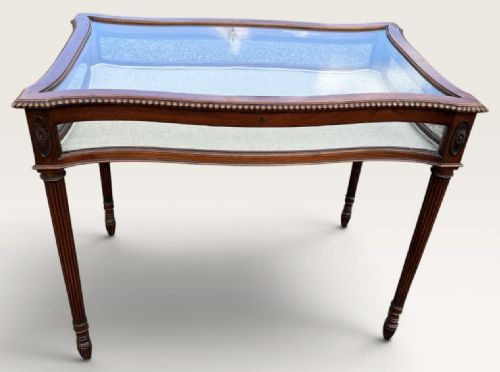
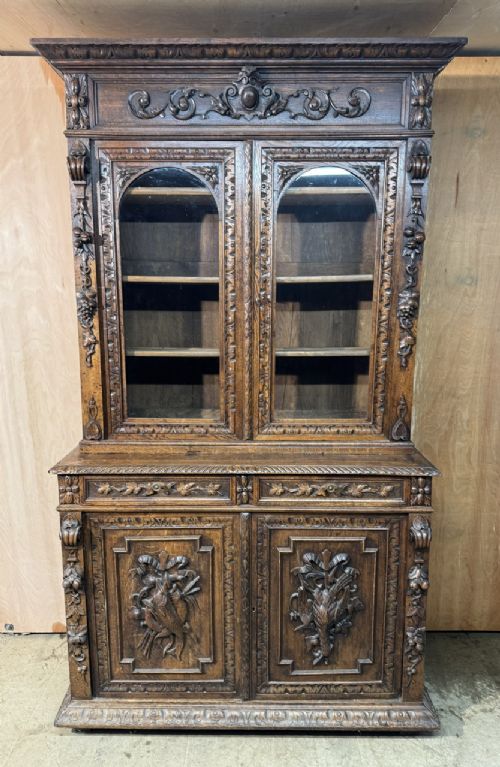
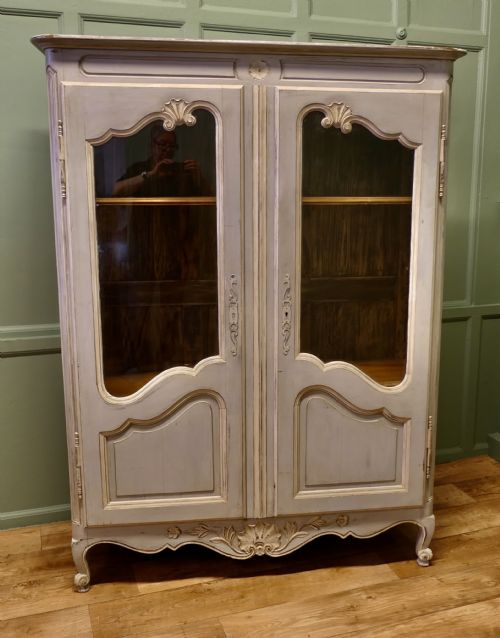
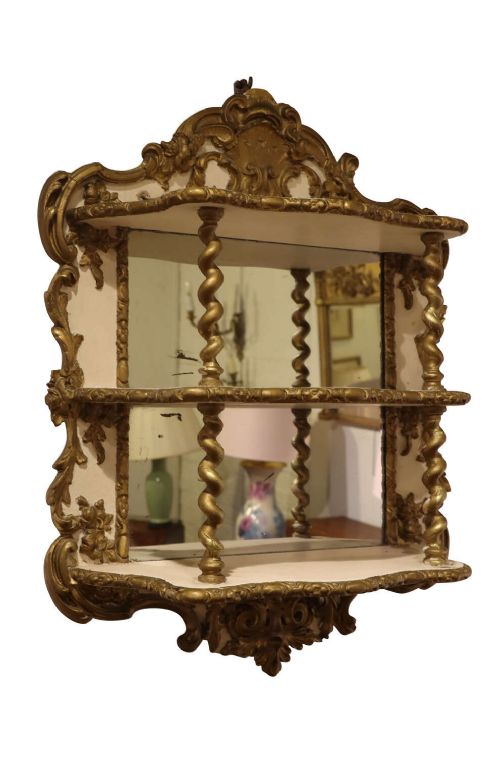
A carved french display cabinet brings together timber, glass, and metal mounts to showcase valued possessions. These pieces take forms such as vitrines, bookcase cabinets, corner cupboards, and etageres.
The pieces span periods from the 18th century through to the early 20th century. Styles range from French Provincial and Rococo Revival to Japonisme and Louis XVI.
Walnut, oak, and mahogany appear most frequently alongside painted finishes and giltwood. Buyers will encounter both grand exhibition pieces and rustic provincial furniture.
How They Were Made
Cabinet makers utilised solid woods like walnut, oak, mahogany, and cherrywood for the primary structure of each cabinet. Veneers of kingwood and rosewood were applied to create decorative patterned surfaces.
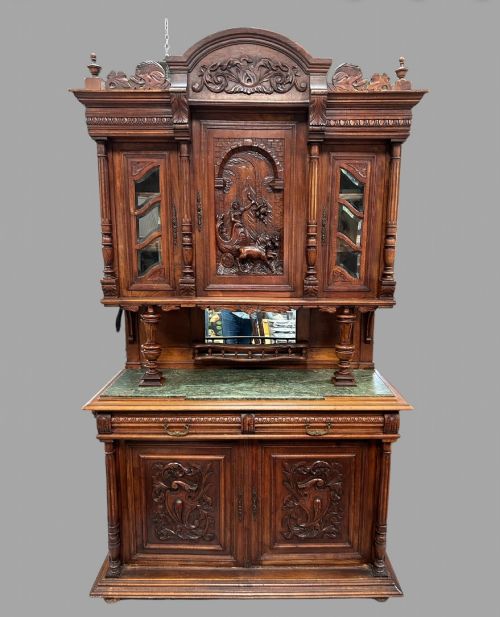
Glazing panels enclosed the display spaces, supported by carved wood framing or brass and ormolu mounts. Marble tops provided durable, polished surfaces on selected pieces.
Carving, marquetry, and turned legs defined the decorative vocabulary. Painted and gilt finishes added colour and surface texture to softwood and hardwood bodies.
Listings feature walnut, oak, and mahogany alongside painted wood and exotic veneers.
What Varies in Quality
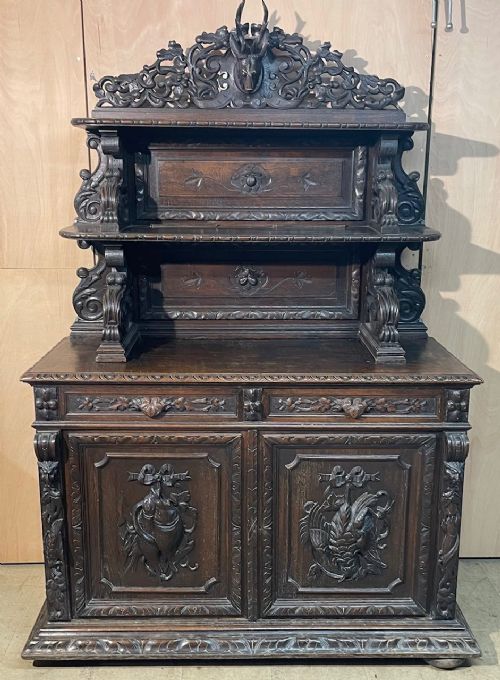
Depth and precision in hand carving distinguish standard production from exceptional work. Crisp floral motifs, scrolls, and figures show the hand of a skilled artisan.
The choice of primary timber and secondary framing affects stability and weight. Selected grain patterns in walnut and mahogany indicate careful material selection by the maker.
Integration of cast bronze or ormolu mounts and porcelain panels separates high-status exhibition furniture from simpler regional pieces.
Gabriel Viardot·Gabriel Frederic Viardot
The Carved French Display Cabinet Glossary
- Vitrine
- A glass-fronted cabinet designed for displaying porcelain, glassware, and small ornaments. These pieces feature glazed doors and sides to maximise light penetration.
- Ormolu
- Gilt bronze mounts applied to furniture for decorative accent. This technique involves coating cast bronze with a layer of gold.
- Japonisme
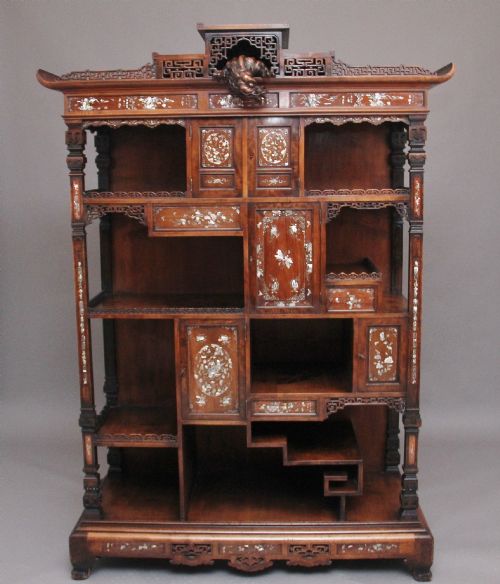
- A late 19th-century style influenced by Japanese art and design. Pieces in this aesthetic incorporate asymmetric shelves and exotic wood tones.
- Marquetry
- Inlaid wood veneers arranged in geometric or pictorial patterns across a surface. Craftsmen cut thin slices of different timbers to create contrasting designs.
- Buffet Deux Corps
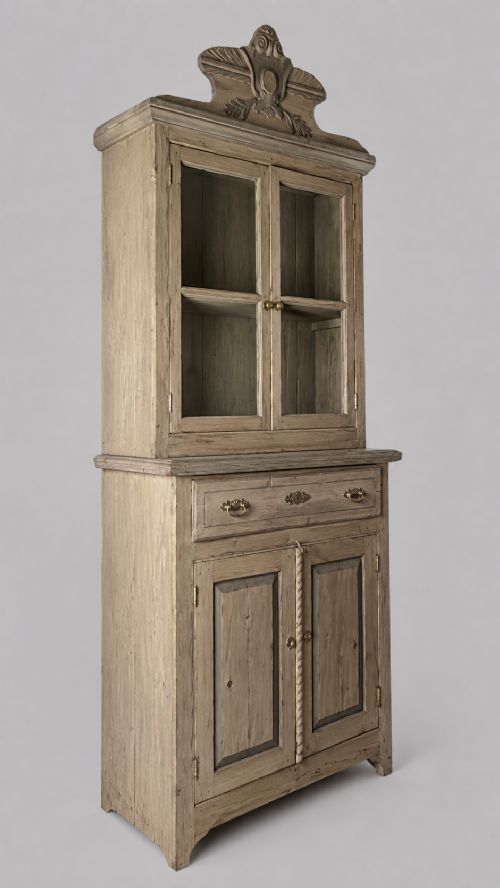
- A traditional two-section cabinet comprising a lower cupboard base and an upper display or storage section. These substantial pieces provide significant storage capacity.
Carved French Display Cabinet: Frequently Asked Questions
Where should I place a display cabinet?
These cabinets suit living rooms, dining spaces, or hallways where they can safely house collections behind glass doors.
Position them away from direct sunlight to protect timber finishes and fabric linings from fading over time.
How do I care for antique wood?
Maintain the timber by dusting regularly with a soft, dry cloth and applying natural beeswax periodically to nourish the surface.
Keep the cabinets away from sudden temperature shifts and moisture to prevent wood movement and veneer lifting.
How do I identify a revival style?
Revival pieces borrow decorative vocabulary from earlier periods like the Louis XV or Louis XIII eras.
Look at the proportions, hardware, and carving style to determine whether a piece originates from the 18th century or a 19th-century revival.