
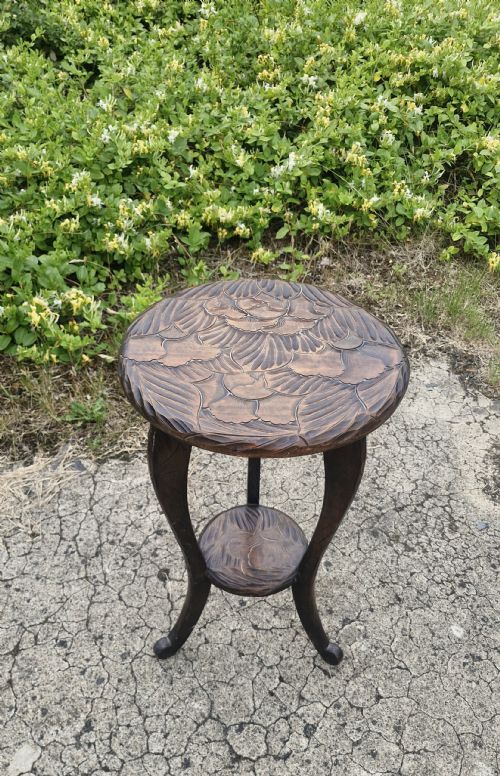
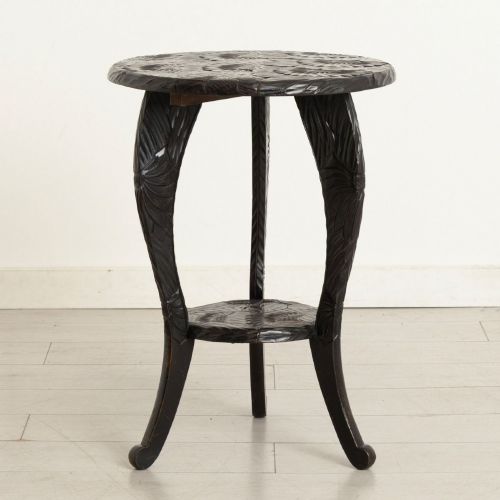
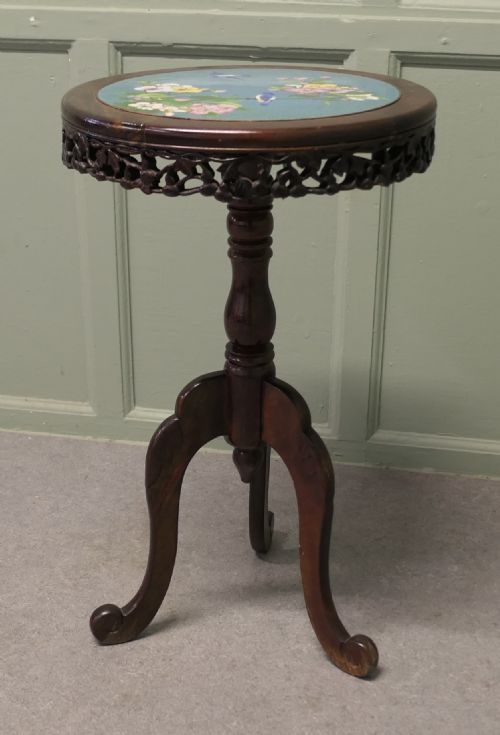


Carved Floral Wine Table
A carved floral wine table brings intricate craftsmanship and rich timber into a room, serving as a compact surface for drinks or display.
Carved Floral Wine Table
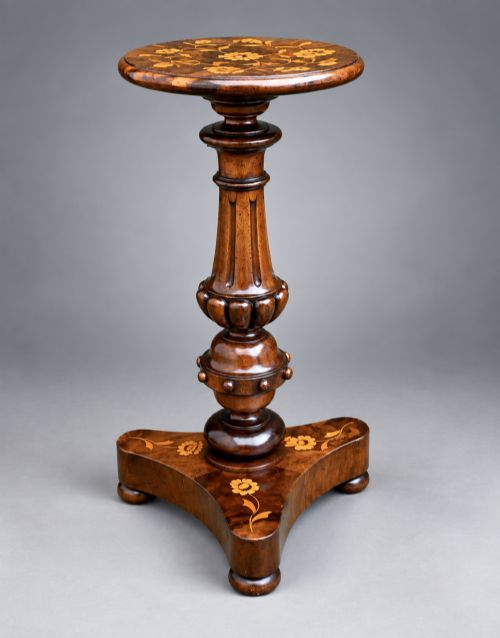
A carved floral wine table is typically a compact occasional piece designed for holding glasses or displaying decorative objects in a reception room. These tables appear across several distinct historical periods, most notably the Victorian era and the early twentieth century.
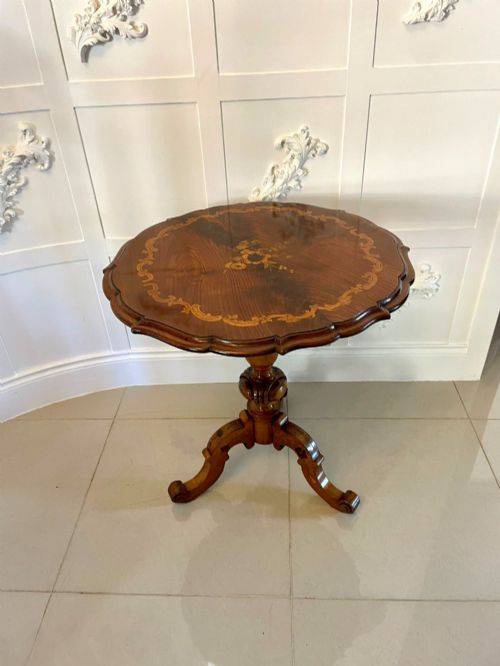
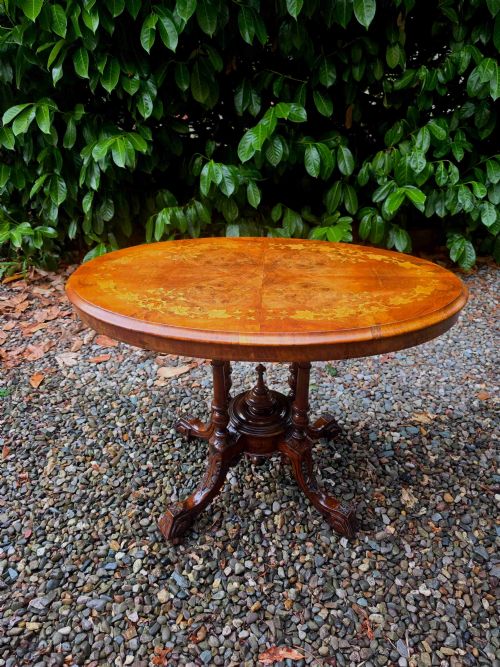
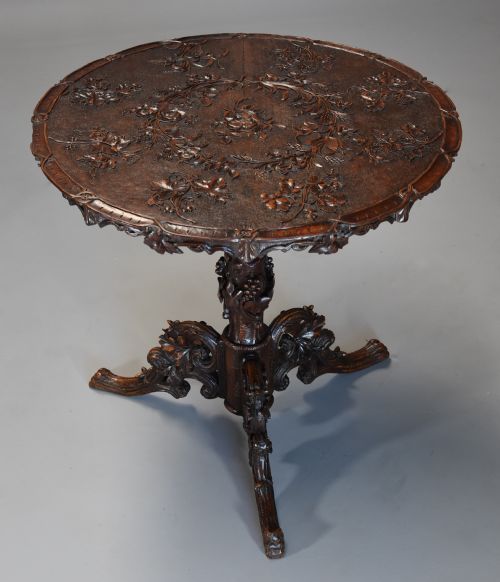
The forms span tripod designs, tilt-top tables, and small centre stands, frequently intersecting with related categories like lamp tables and jardiniere stands. The version most commonly met on this page combines a modest circular top with detailed botanical decoration carved directly into the timber or inlaid via marquetry.
Origins in the evidence stretch from English workshops to continental Europe and further afield, encompassing Anglo-Indian, Dutch marquetry, Black Forest, and Chinoiserie styles. Buyers select these small tables for their versatility in modern interiors and the rich variety of regional decorative traditions they represent.
How they were made
Cabinet makers utilised a range of dense hardwoods including walnut, mahogany, oak, olive wood, teak, and rosewood as the primary structural foundation for these small tables. Lenden wood also appears in specific continental work, chosen for its receptiveness to deep, highly detailed carving.
Surface ornamentation relies heavily on contrasting techniques such as marquetry inlay and pietra dura marble work, alongside hand-carved floral motifs. Tripod bases and tilt-top mechanisms require precise joinery to ensure stability despite the slender proportions of the stands.
Listings feature woods spanning walnut, mahogany, oak, teak, rosewood, and olive wood, alongside marble and linden wood.
What varies in quality
Quality in a carved floral wine table depends on the depth, crispness, and hand of the carving or inlay rather than the mere presence of decoration. Pieces featuring complex marquetry panels or deep, undercut floral relief demonstrate a higher level of artisan skill than simpler stamped or shallowly incised versions.
The selection of timber grain and the integrity of the underlying construction also separate standard examples from superior ones. Well-executed pivot mechanisms on tilt-top tables and tightly fitted joints reflect greater care during original production.
Liberty of London
The Carved Floral Wine Table Glossary
- Marquetry
- The art of forming decorative patterns by fitting together small pieces of veneer. This technique creates detailed floral and pictorial scenes across tabletop surfaces.
- Tilt-top table
- A table designed with a hinged top that folds into a vertical position when not in use. This allowed the piece to be stored against a wall to save space in period rooms.
- Tripod base
- A support structure consisting of three legs radiating from a central pillar. It provides stable footing for small round tables on uneven historic floorboards.
- Pietra dura
- An inlay technique using cut and fitted polished coloured stones to create geometric or floral designs. It appears on select Victorian stone-topped tables.
- Jardiniere stand
- A tall, slender piece designed to elevate a plant pot or flower arrangement. These share similar decorative vocabularies and proportions with small wine tables.
Carved Floral Wine Table: Frequently Asked Questions
What is a wine table used for?
A wine table provides a small, movable surface traditionally intended for holding glasses and bottles during evening gatherings.
In modern rooms, they function well beside armchairs or sofas as convenient spots for lamps, books, or small decorative items.
How do I date a Victorian table?
Dating relies on examining the timber species, construction methods, and prevailing decorative styles recorded in the piece.
Victorian examples often combine mahogany or walnut with characteristic turning, bracket forms, or specific revival motifs popular during the nineteenth century.
What is the difference between marquetry and inlay?
Marquetry involves covering the entire surface of a table with a mosaic of fitted wood veneers to form a complete picture or pattern.
Inlay generally refers to setting individual pieces of contrasting material into recessed cavities cut directly into the solid wood background.
Where should I place a tilt-top table?
A tilt-top table works effectively both functioning horizontally as a regular surface and standing vertically against a wall.
When folded flat, the decorative tabletop remains visible as a piece of wall art, making them ideal for smaller spaces.