
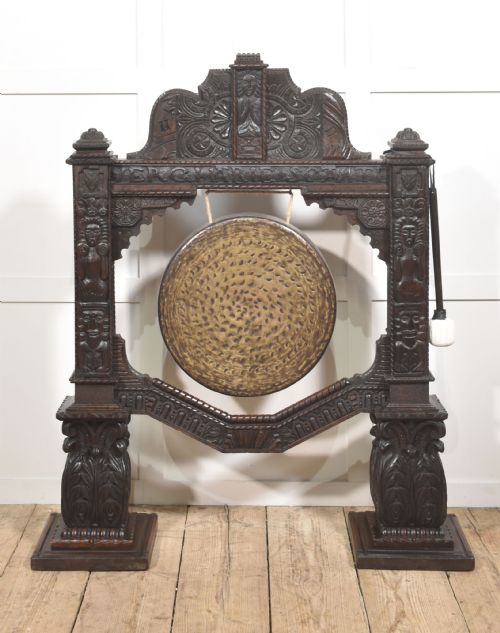


Carved Floor Gong
A carved floor gong brings deep resonance and striking architectural presence into a room, combining rich timber frames with resonant metal.
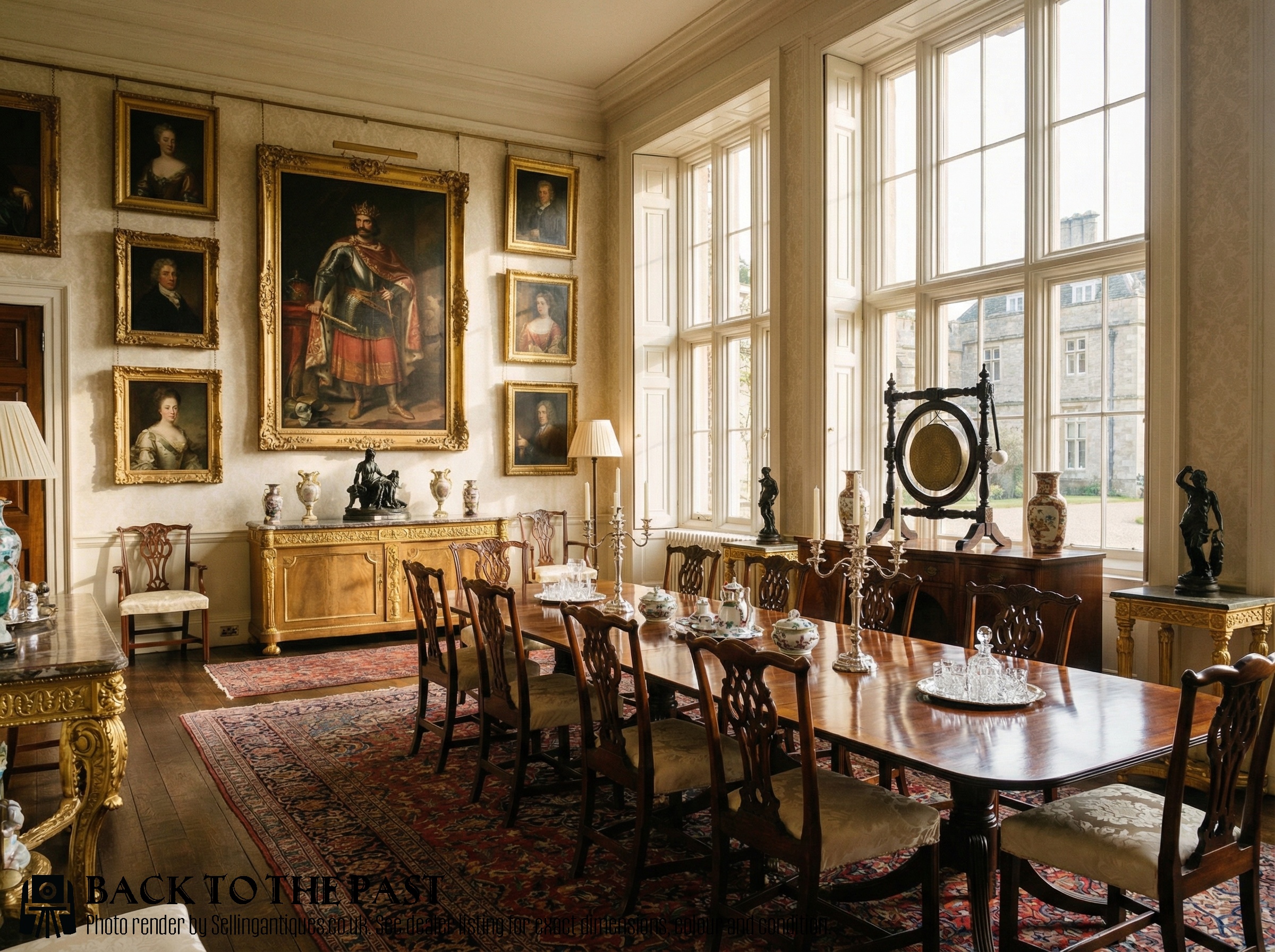
Carved Floor Gong
When you search for a carved floor gong, you are looking at substantial freestanding percussion pieces designed to summon guests to meals or mark the hours in large houses. These pieces combine robust timber framework with a suspended metal disk, built to stand directly on the floor.
The versions you meet most frequently on this page date from the nineteenth century and the early twentieth century. They appear primarily in forms influenced by Victorian taste and Gothic Revival design, making them solid additions to period interiors.
Makers constructed these examples using sturdy woods including oak, walnut, and mahogany, often pairing them with brass hanging elements. They function simultaneously as decorative furniture and working instruments.
How they were made
Cabinetmakers built the supporting frames from dense hardwoods like oak, walnut, and mahogany, shaping the timber with deep mouldings and carved architectural details. These wooden structures needed immense stability to bear the swinging weight of a heavy metal disk.
The sound-producing elements consist of cast brass gongs suspended within the frames by cord, rope, or leather straps. Craftsmen selected these durable hanging materials to allow the metal to vibrate freely without dampening the tone.
Current listings feature pieces spanning the nineteenth century up to nineteen-ten, constructed primarily from oak, walnut, and mahogany.
What varies in quality
Quality rests principally in the depth and crispness of the timber carving, alongside the architectural ambition of the frame. Monumental examples with intricate Gothic Revival motifs sit far above plain, utilitarian structures in both presence and execution.
The choice of secondary materials also separates standard production from finer work, visible in the selection of heavy brass for the gong itself and the durable leather or twisted cord used for suspension.
The Carved Floor Gong Glossary
- Gothic Revival
- A design style drawing on medieval architecture, featuring pointed arches, trefoils, and heavy carved tracery. This style dominates the woodwork on nineteenth-century examples.
- Dinner Gong
- A freestanding or wall-mounted percussion instrument used in large households to announce meals. They range from small domestic pieces to monumental floor-standing versions.
- Brass
- A copper and zinc alloy used to cast the resonant circular plates. The composition and thickness determine the sustaining tone of the instrument.
- Victorian
- Pertaining to the reign of Queen Victoria, encompassing a period of diverse revivalist design movements. Pieces from this era often display heavy, dark timber frames.
Carved Floor Gong: Frequently Asked Questions
How do you strike a floor gong?
These instruments are typically played using a dedicated mallet with a padded head. Striking the centre of the brass disk produces a deep, resonant tone that carries through a large space.
Striking nearer the rim alters the pitch and overtones, allowing the player to control the volume and duration of the sound.
What woods were used for the frames?
Makers relied on durable hardwoods such as oak, walnut, and mahogany to support the heavy metal hanging plates. Oak appears most frequently, often featuring deep nineteenth-century carving.
These timbers were chosen for their structural strength and ability to complement traditional interior decoration.
How do you date a carved floor gong?
Dating relies on examining the timber species, the style of carving, and the hanging hardware. Pieces bearing Gothic Revival motifs typically point to the nineteenth century.
Construction methods and the presence of period fixings like leather straps or twisted cord further help narrow the era of production.
Where should a floor gong be placed?
Because of their substantial size and heavy timber frames, these pieces require adequate floor space and a secure setting. They suit hallways, large reception rooms, or libraries.
Ensure the frame stands on a level surface so the suspended brass disk hangs evenly and swings freely without striking the woodwork.