
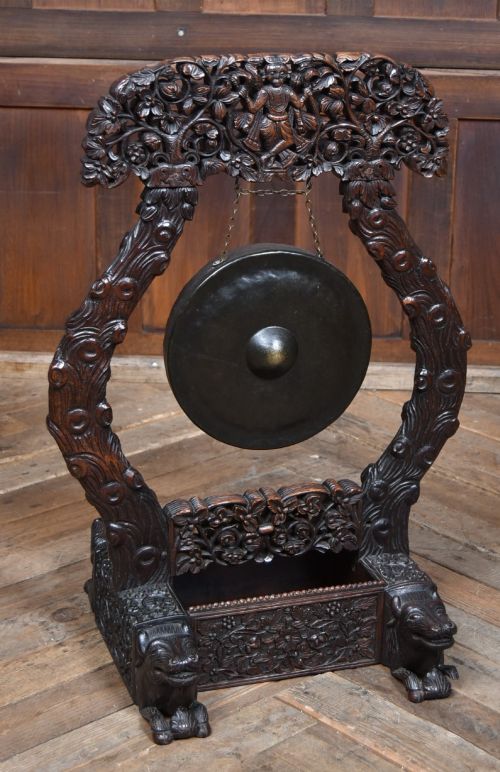
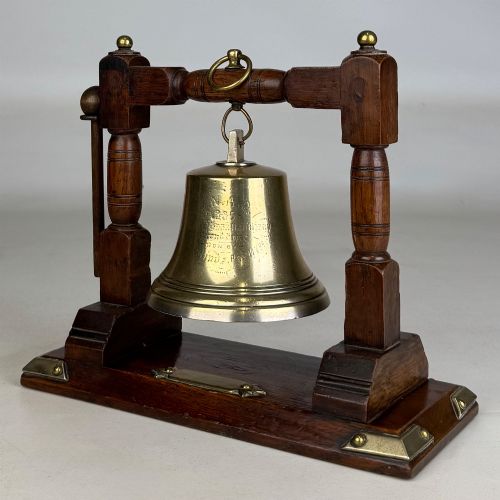
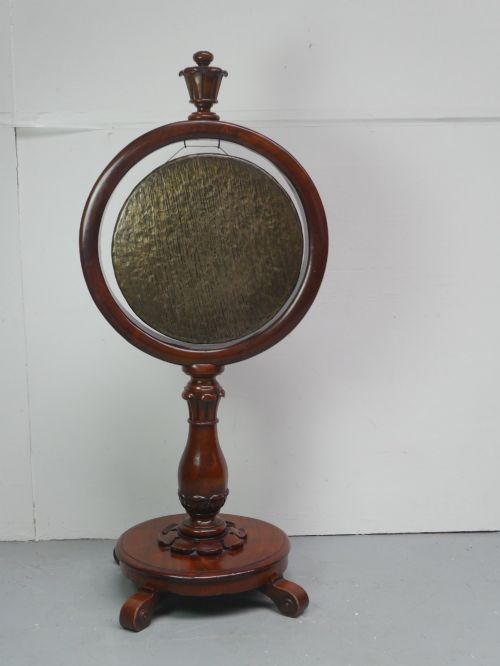
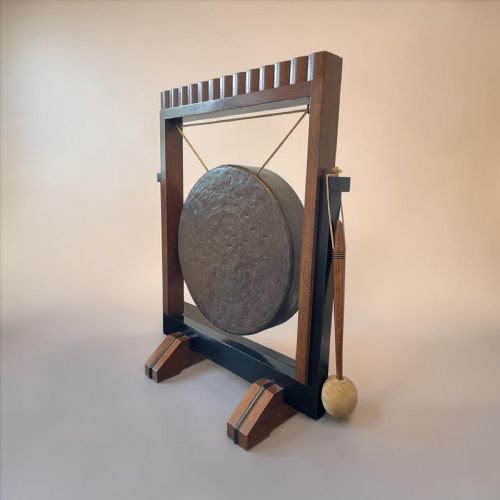

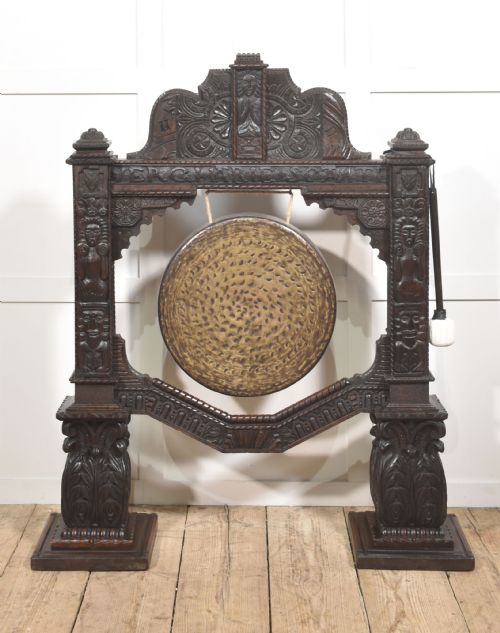


Brass Standing Dinner Gong
A brass standing dinner gong brings a rich, resonant tone to a hallway, marking the hour with a traditional British resonance.
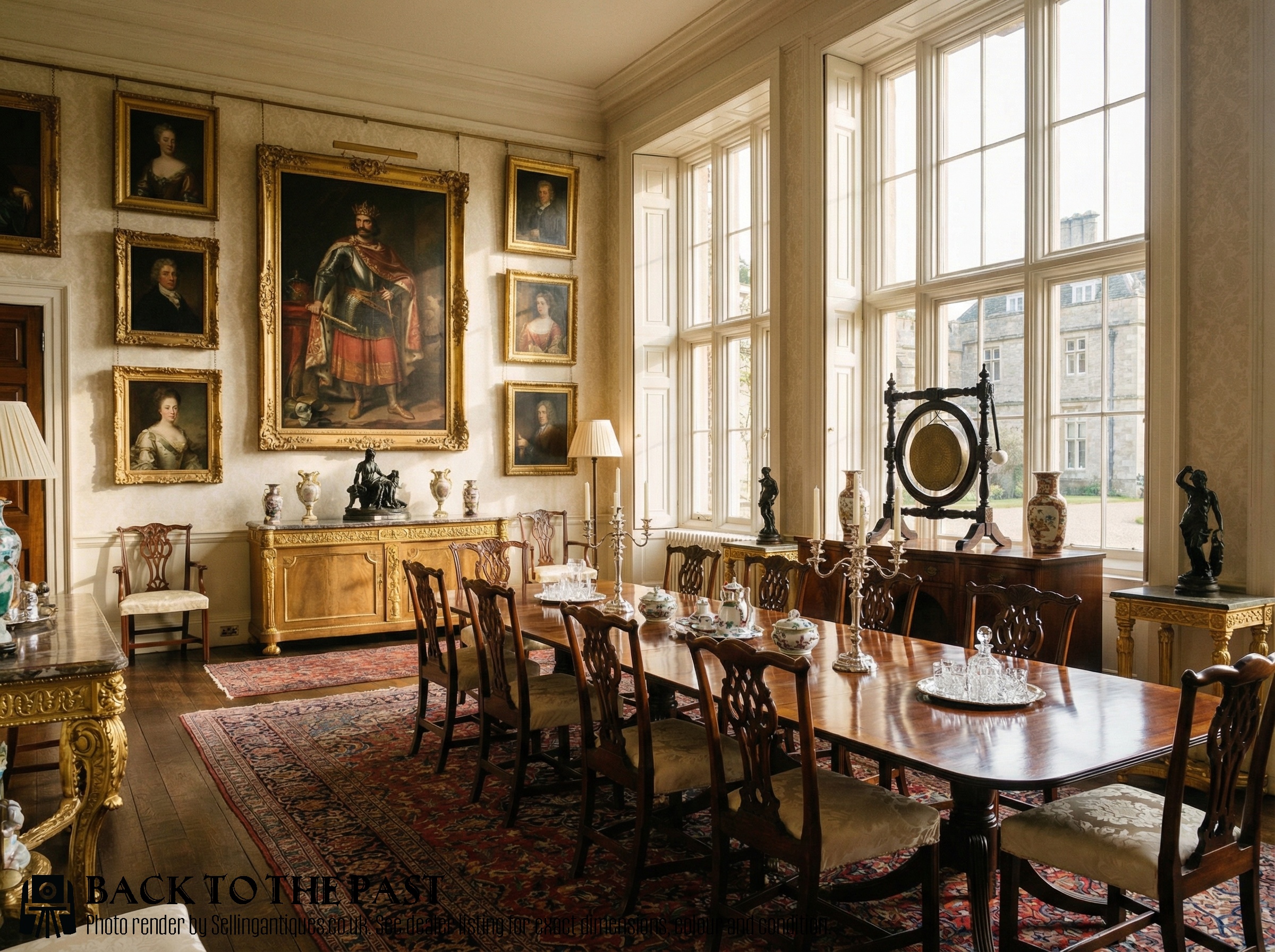
Brass Standing Dinner Gong
A brass standing dinner gong combines a metal disc or bowl suspended within a wooden or iron frame, designed to summon guests to a meal. When you search for a brass standing dinner gong, you encounter robust floor-standing and table-top examples shaped by Victorian and Edwardian tastes.
The pieces seen here span the nineteenth century through the nineteen-thirties, encompassing Gothic Revival, Arts and Crafts, Art Nouveau, and Oriental export styles. Oak and mahogany frames predominate, often paired with wrought iron supports.
While many forms are compact, floor-standing iterations command significant presence in a room. Carved wooden stands frequently display Chinese, Burmese, or Anglo-Indian decorative motifs alongside domestic British designs.
Materials and construction
The metal components rely on brass, bronze, and cast iron, hammered or cast to produce a clear, sustained resonance when struck. Frames utilise dense hardwoods such as oak, walnut, and mahogany, chosen for structural stability and visual depth.
Joinery techniques reflect traditional cabinet-making standards, incorporating mortise and tenon joints to bear the weight of suspended metal. Cord and leather fastenings support the gong securely while allowing the metal to vibrate freely.
Listings demonstrate a strong preference for oak frames throughout the nineteenth century, alongside mahogany and walnut.
Assessing quality and craftsmanship
Quality rests upon the purity of the metal alloy and the harmonic resonance of the disc itself. Thicker brass plates yield a deeper, more resonant tone that lingers in the air.
Cabinet work separates standard production from superior pieces. Deep, crisp hand-carving on oak or walnut frames indicates higher workshop standards than simple turned supports.
The Brass Standing Dinner Gong Glossary
- Gong
- A percussion instrument consisting of a flat or shaped metal disc that produces a resonant sound when struck with a mallet.
- Gothic Revival
- An architectural and decorative style popular in the nineteenth century, characterised by pointed arches, trefoils, and heavy carved woodwork.
- Arts and Crafts
- A design movement of the late nineteenth and early twentieth centuries championing traditional craftsmanship and simple, honest construction.
- Art Nouveau
- A decorative style from around nineteen hundred defined by fluid, organic lines and stylised natural motifs.
Brass Standing Dinner Gong: Frequently Asked Questions
How do you strike a dinner gong properly?
Strike the centre of the brass disc firmly with a padded mallet to draw out the deepest fundamental tone without harsh metallic clatter.
Allow the vibration to decay naturally rather than dampening the metal with your hand immediately after the strike.
Where were dinner gongs typically placed?
These pieces traditionally stood in large entrance halls or corridors so the sound could carry clearly across multiple reception rooms.
They served both a practical domestic purpose and a decorative function, often matching the heavy furniture of the hall.
How do you distinguish Gothic Revival from Arts and Crafts gongs?
Gothic Revival stands rely on architectural motifs like tracery, pointed arches, and dark, heavy oak framing.
Arts and Crafts examples favour simpler lines, visible construction details, and often incorporate hammered metal surfaces.
Can you polish the brass safely?
Gentle dusting with a soft cloth preserves the existing surface, while mild metal cleaners remove active corrosion without stripping historical character.
Avoid abrasive compounds that can alter the aged colour of the metal and diminish the subtle patination built up over decades.