

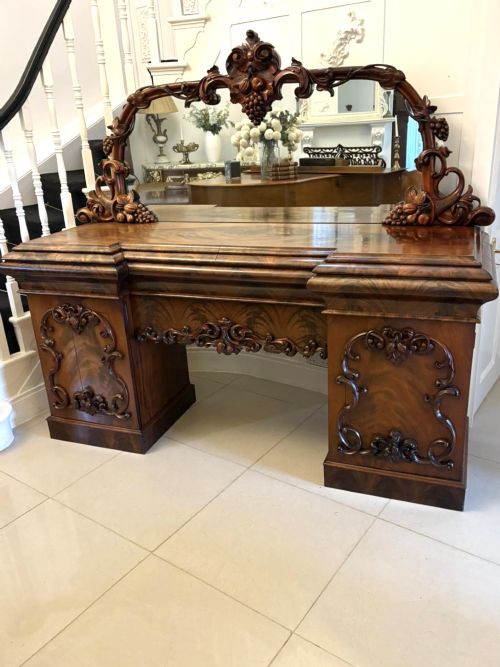
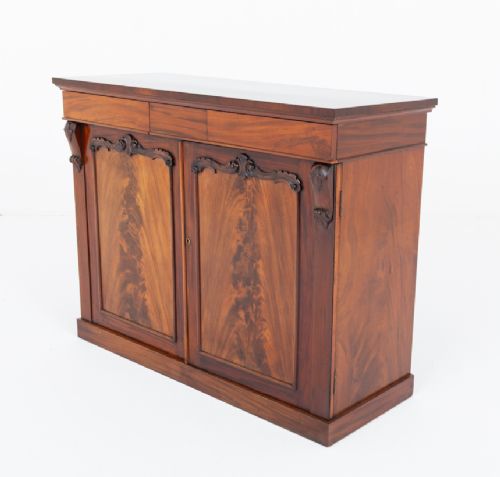
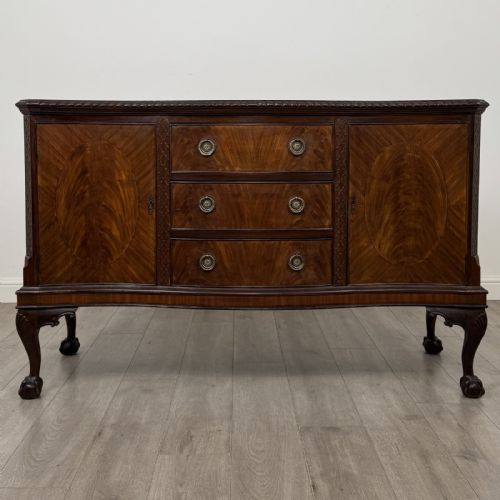
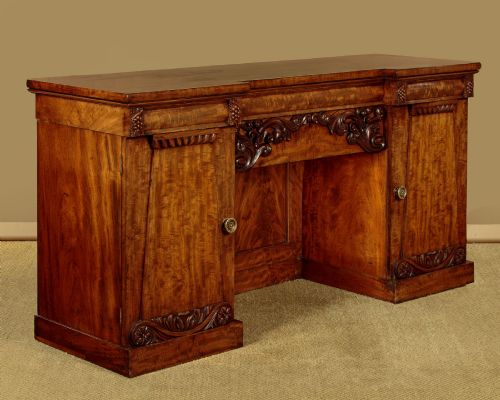
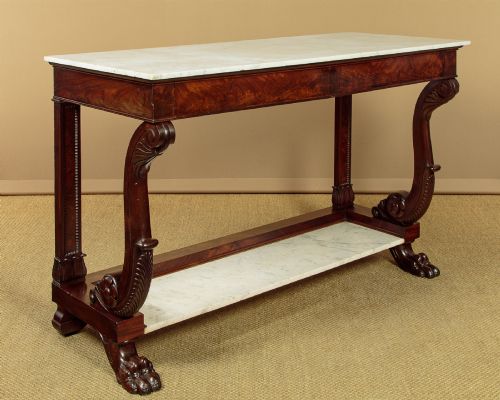
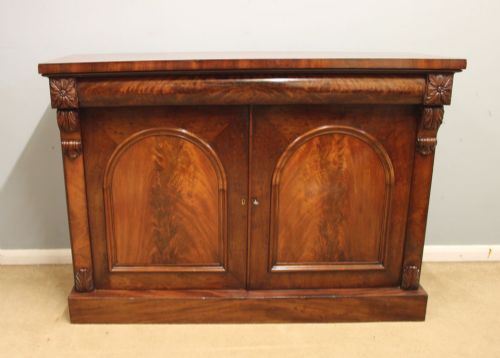
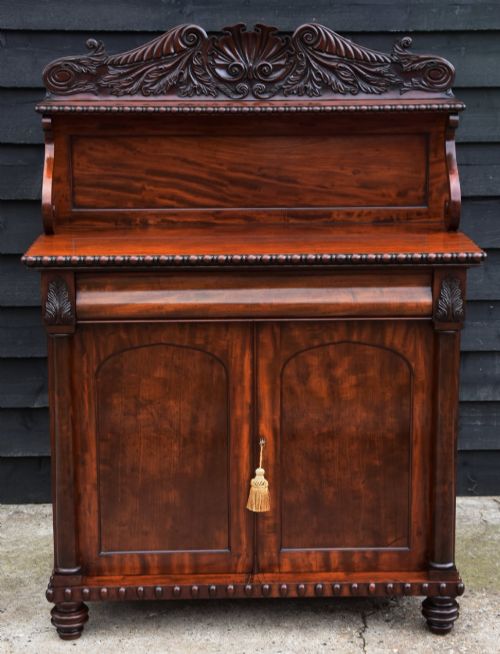
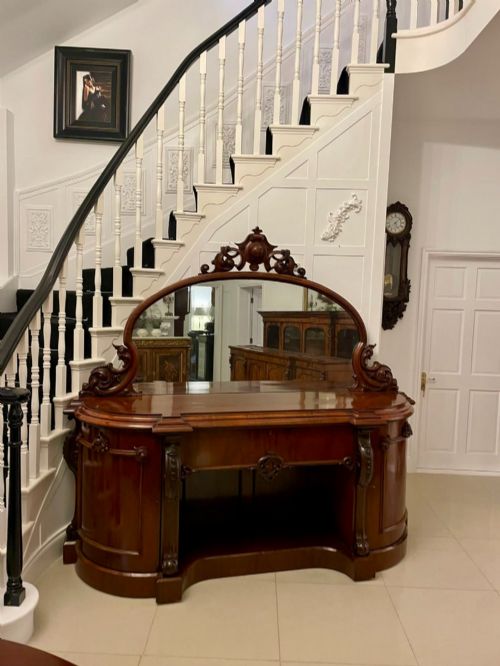
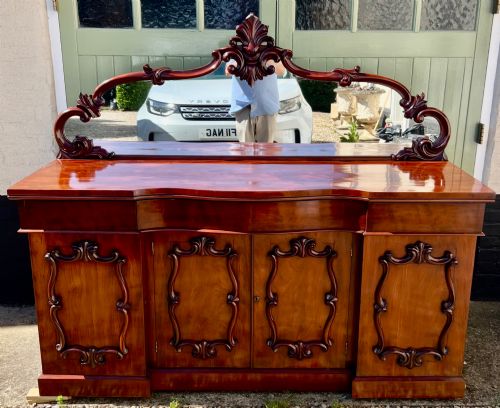

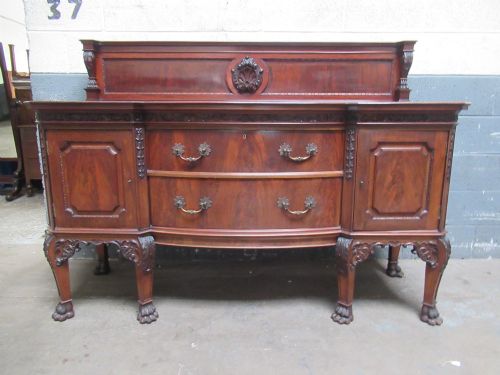

Carved Flame Mahogany Buffet
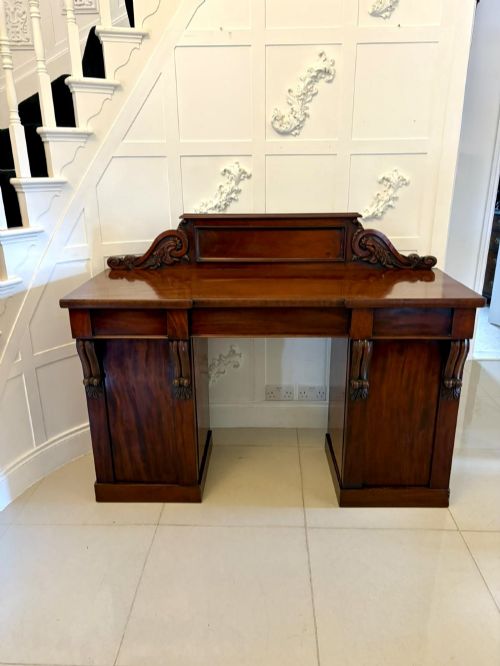
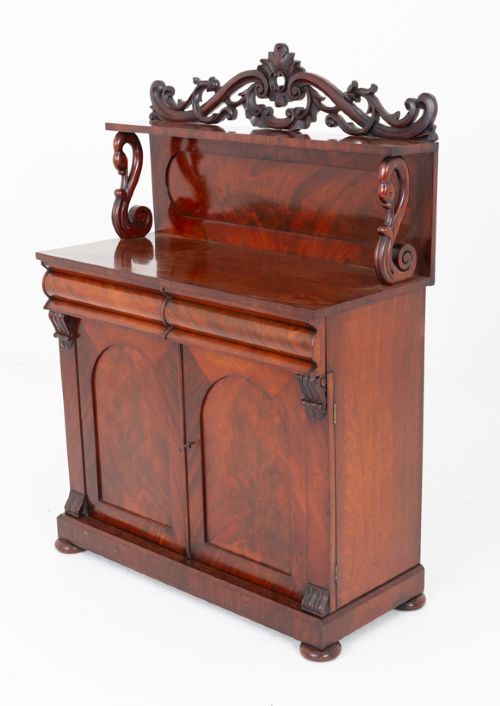
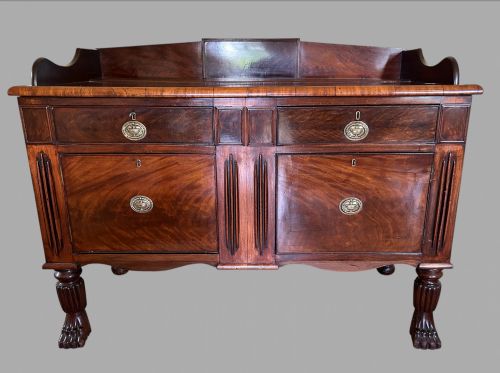
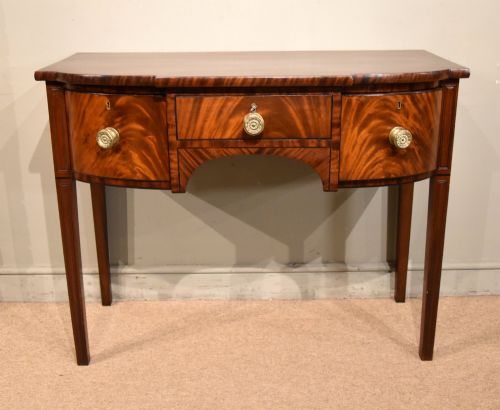
A carved flame mahogany buffet brings rich timber grain and substantial storage to a dining room or hallway.
Carved Flame Mahogany Buffet
A carved flame mahogany buffet sits within a broad family of dining and serving furniture, appearing across the Regency, Victorian, and Edwardian periods alongside sideboards, chiffoniers, and pedestals. Buyers looking for this specific form encounter robust timber structures designed to serve food and display plate in formal rooms.
The selection ranges from early nineteenth century pedestals to later breakfront designs and mirror-backed chiffoniers. These storage pieces function as focal points in period interiors while offering deep cupboards and drawers for modern use.
How they were made
Cabinet makers utilised solid mahogany frameworks overlaid with figured flame mahogany veneer to achieve striking ripple patterns across the doors and drawer fronts. Secondary timbers provide structural stability to the heavy pedestals and breakfront carcasses.
Carved details such as scrollwork, foliage, and gadroon mouldings are worked directly into the solid mahogany framing by hand. Brass hardware, mirrored glass panels, and satinwood stringing appear as complementary decorative elements across the various periods.
Carved Flame Mahogany Buffet Retail Price Guide 2026
Typical asking prices for carved flame mahogany buffet among the pieces listed under this phrase on Sellingantiques today, from the lower quarter to the upper quarter. They describe what is for sale here now, not the wider market.
Current listings feature mahogany furniture spanning from the Regency period through to Edwardian revivals, incorporating glass, brass, and mirror elements.
What varies in quality
Quality rests primarily in the selection and bookmatching of the flame mahogany veneer, where superior examples display symmetrical, fiery grain patterns across large unbroken surfaces. The depth and crispness of the hand carving also separate standard utility pieces from exceptional workshop output.
Construction methods dictate longevity, with high-tier pieces featuring heavy pedestal bases, substantial secondary timbers, and well-fitted drawer linings that operate smoothly despite the weight of the dense wood.
The Carved Flame Mahogany Buffet Glossary
- Flame mahogany veneer
- A thin slice of wood sawn from the fork of the mahogany tree to create a distinctive, flickering grain pattern. This highly decorative veneer is applied to the primary display surfaces of the buffet.
- Breakfront
- A cabinet design where the central section projects forward from the flanking outer cupboards. This architectural arrangement creates depth and visual balance.
- Chiffonier
- A low sideboard or cabinet featuring enclosed shelving beneath, frequently topped with a mirror or a raised superstructure. They developed during the nineteenth century for smaller dining spaces.
- Pedestal sideboard
- A heavy dining room server supported by two substantial box pedestals resting on the floor. These forms offer maximum internal cupboard storage.
- Satinwood
- A luminous, yellowish exotic timber used for contrasting inlay and stringing lines on late nineteenth and Edwardian furniture. It highlights the darker surrounding mahogany.
Carved Flame Mahogany Buffet: Frequently Asked Questions
How do I style a buffet in a modern room?
A carved flame mahogany buffet works well against neutral walls where the intense wood grain can act as a natural focal point in the room. Pair the dark timber surface with simple ceramics or contemporary art to balance the historical weight of the piece.
Keep the surrounding space uncluttered to allow the pedestals and carved details to stand out without competing with other heavy furniture. The deep cupboards also provide practical enclosed storage for modern dining ware and glassware.
What is the difference between a sideboard and a buffet?
The terms are often used interchangeably in trade titles, but sideboards traditionally served formal dining rooms for food preparation and storage. Buffets share this serving function and frequently incorporate heavy pedestals or enclosed cupboards beneath a flat top.
On this page, pieces labelled as buffets or sideboards span similar nineteenth century periods and share identical mahogany construction methods. Your choice depends entirely on the specific proportions and cupboard configurations you prefer.
How do I identify a Regency period buffet?
Regency pieces typically display classical architectural lines influenced by Greek and Roman design, often featuring restrained brass inlay and simpler pedestal supports. The timber tends to be dense dark mahogany without the heavier carved backsplashes seen later in the Victorian era.
Check the secondary woods and construction joints underneath and inside the drawers for hand-cut dovetails typical of the early nineteenth century. These structural clues help separate genuine Regency items from later Edwardian revival copies.
Can I use a Victorian mirror back sideboard for serving?
The raised mirror back provides a decorative backdrop while protecting the wall behind the serving surface from splashes. The lower marble or timber top remains fully functional for placing dishes and serving food during meals.
These pieces were built specifically for nineteenth century dining rooms to combine display shelving with heavy storage capacity. The large lower cupboards easily accommodate large serving platters and heavy tableware.