


Carved Ebony Cane
A carved ebony cane is a dense, dark walking stick or chair work of striking presence, prized for intricate regional detail.
Carved Ebony Cane
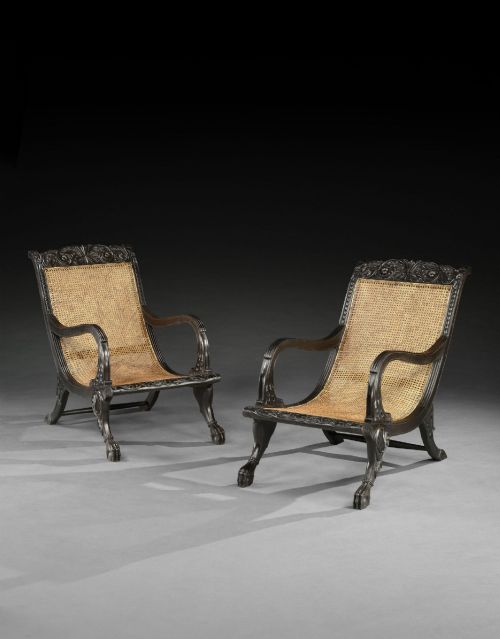
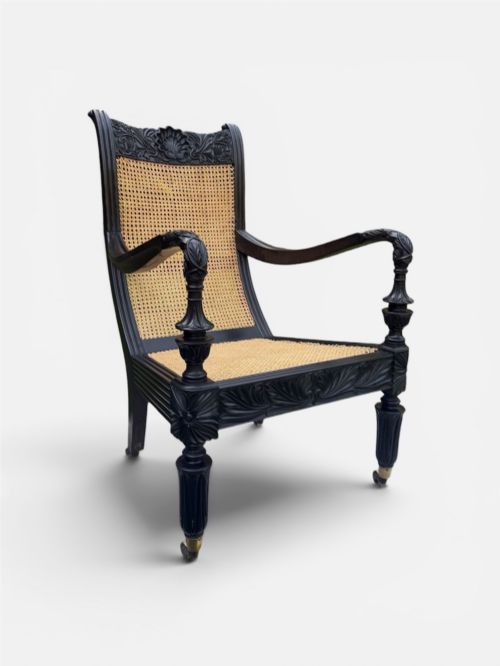
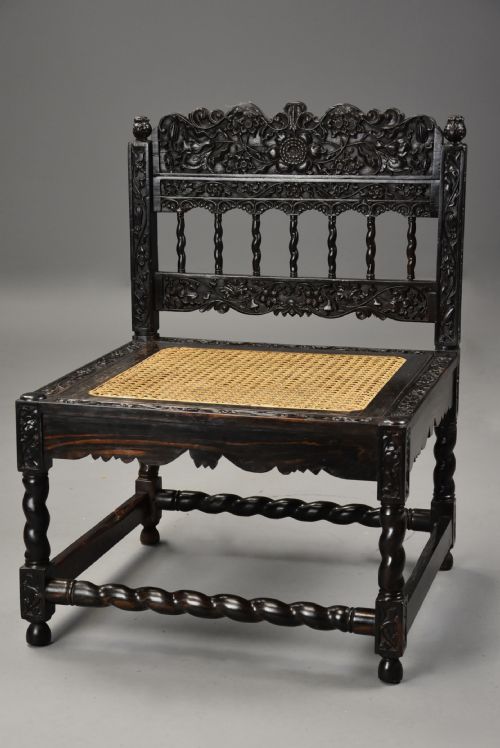
The walking sticks and canes take multiple forms, including gadget canes with snuff box handles, sword sticks, and pieces featuring silver or eighteen-carat gold pommels and embossed silver handles. Alongside these portable items, solid ebony chairs appear frequently, demonstrating the same deep relief carving found on the walking sticks.
Anglo-Indian, Victorian, Indo-Portuguese, and African styles dominate the selection, showing deep floral, figural, and geometric carving. A buyer is most likely to meet nineteenth-century examples, though scarce seventeenth-century solid ebony items also emerge.
How they were made
Makers utilised solid ebony and various hardwoods, shaping the dense timber with hand tools to achieve deep relief carving. Metal mounts in silver, brass, and eighteen-carat gold were integrated into walking sticks and canes as pommels, collars, or functional compartments.
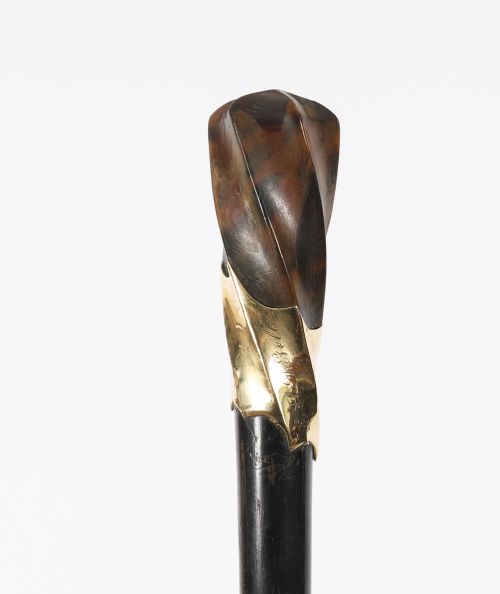
Organic materials such as horn complemented the wood in specific walking stick examples, contrasting the dark timber with lighter tones. Artisans working in regional traditions across Ceylon, the Coromandel Coast, and Africa applied meticulous surface decoration directly to the heavy wood.
Listings feature items spanning the seventeenth to the twentieth century, utilising ebony, silver, brass, horn, and eighteen-carat gold.
What varies in quality
Depth and crispness of the carving separate the standard pieces from the finest works, as skilled hands achieved sharper relief and greater complexity in floral and figural motifs. The integration of precious metals, such as eighteen-carat gold or hallmarked silver pommels, elevates the status of a walking stick.
The integrity of the solid ebony timber and the survival of original mounts determine the standing of each piece. Items retaining original handles, functioning mechanisms in gadget canes, and unblemished carved surfaces represent the upper echelon of the range.
Brigg·Henry Borlase Stevens
The Carved Ebony Cane Glossary
- Ebony
- A dense black or very dark brown hardwood obtained from trees native to tropical regions. It is heavy enough to sink in water and takes a fine polish.
- Pommel
- The rounded knob or decorative handle fitted to the top of a walking stick or cane. It can be plain wood or fashioned from silver, gold, or horn.
- Gadget cane
- A walking stick containing a concealed utility, such as a sword blade, a snuff box, or another hidden compartment. These pieces combined gentlemanly fashion with practical function.
- Anglo-Indian
- A style describing furniture and decorative objects made in India during the British colonial period, often combining European forms with local carving techniques.
- Coromandel Coast
- The southeastern coast of India, historically known for producing distinctive carved furniture and woodwork in dense timbers like ebony.
Carved Ebony Cane: Frequently Asked Questions
What is a carved ebony cane?
A carved ebony cane is a walking stick fashioned from heavy, dark tropical hardwood and decorated with hand-carved floral, geometric, or figural motifs. Many incorporate metal pommels or functional compartments.
These pieces served both as supports for walking and as status symbols for gentlemen and travellers during the nineteenth century and earlier.
How were gadget canes used?
Gadget canes concealed hidden tools or compartments, such as sword blades or snuff box handles, beneath a standard walking stick exterior. Gentlemen carried them for personal defence or social convenience.
The hidden mechanisms required careful release buttons or screw joints operated by the owner.
Where did Anglo-Indian ebony work originate?
Anglo-Indian ebony work originated in workshops across regions like Ceylon and the Coromandel Coast of India during the colonial period. Local artisans applied intricate traditional carving to forms requested by British residents.
The resulting walking sticks and armchairs merged European shapes with dense tropical timber and deep relief work.
How do you date a carved ebony cane?
Dating relies on the style of the carving, the fashion of any metal mounts, and the materials used for handles such as silver, gold, or horn. Seventeenth-century pieces show different joinery and motifs compared to Victorian or Edwardian examples.
Maker stamps on metal pommels also help establish a precise period of manufacture.