

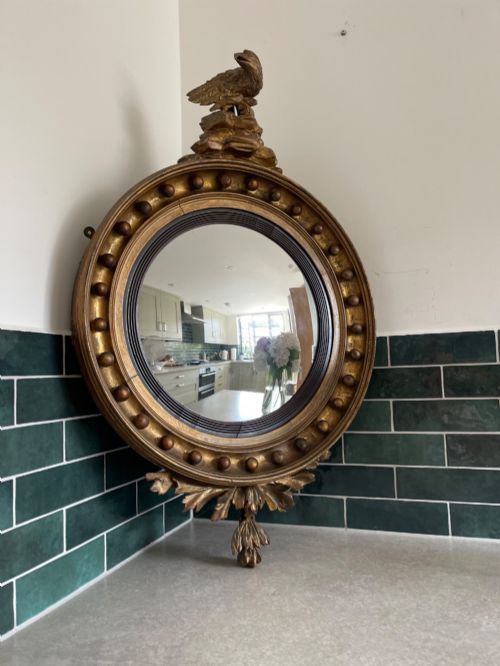

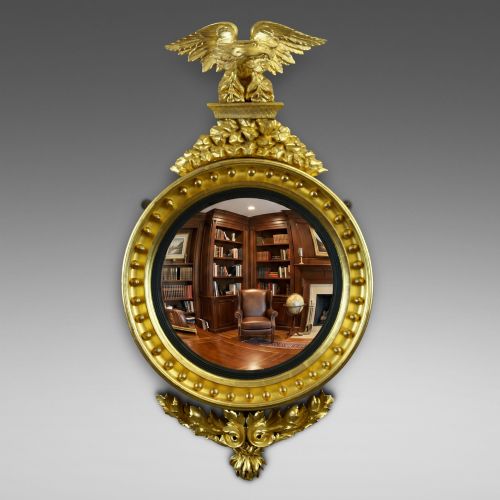
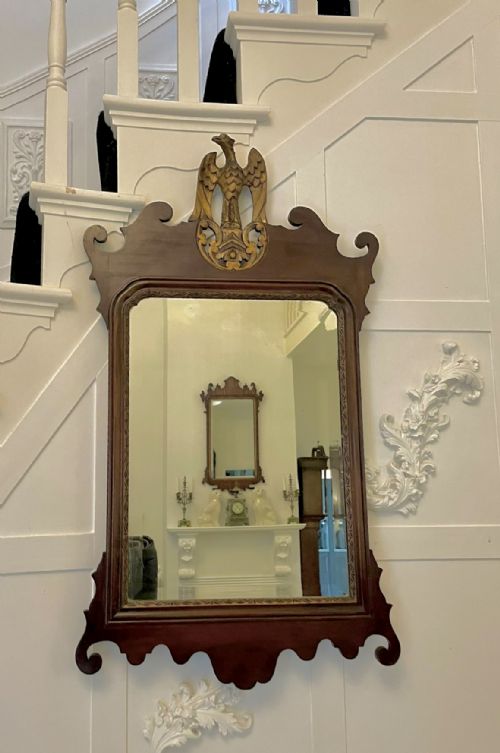
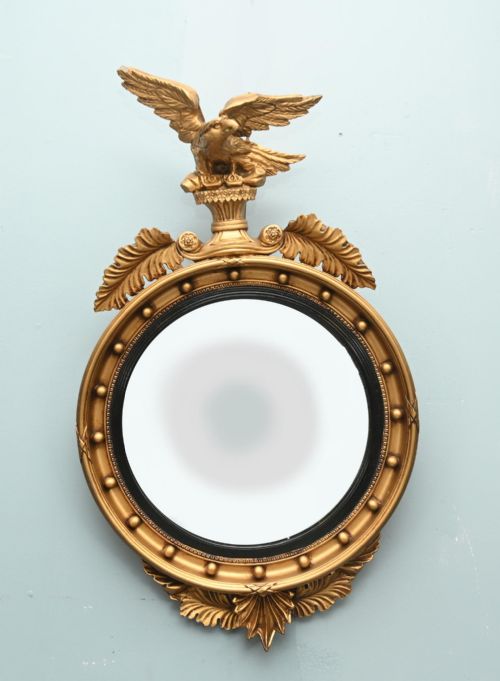
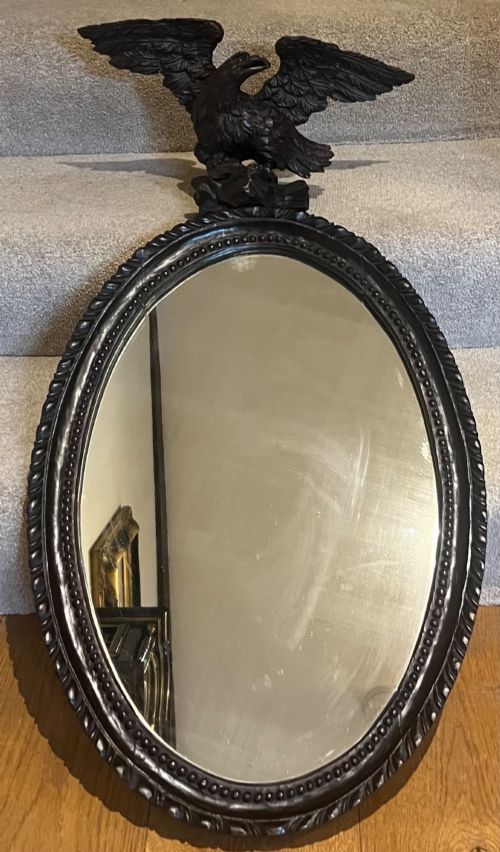


Carved Eagle Cresting Mirror
A carved eagle cresting mirror brings dramatic height and classical authority to a room, drawing the eye upward with its striking bird surmount.
Carved Eagle Cresting Mirror
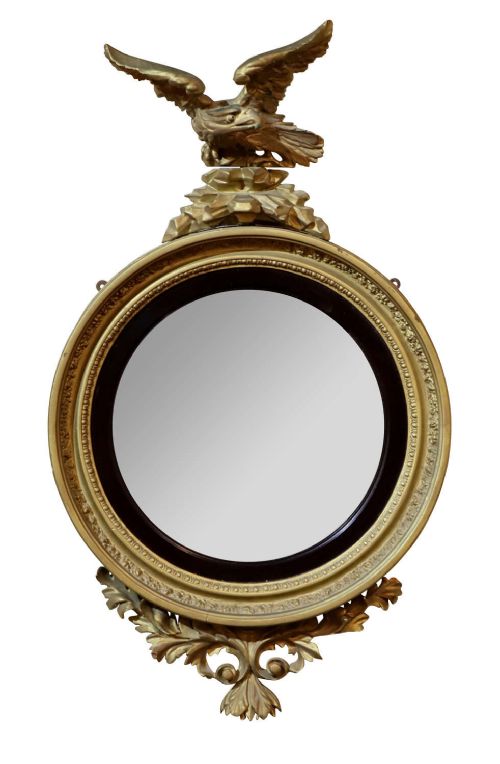
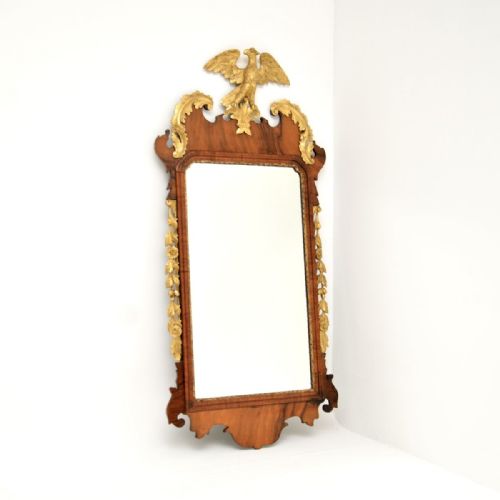
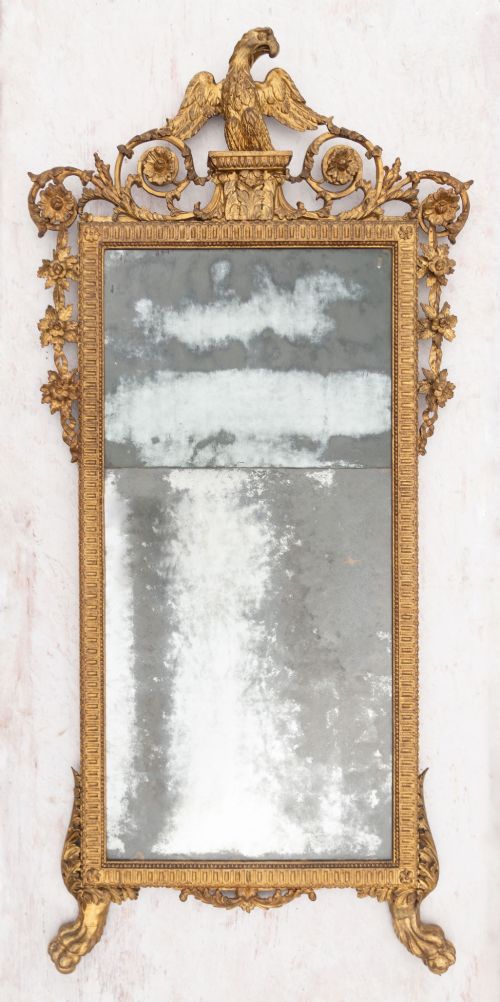
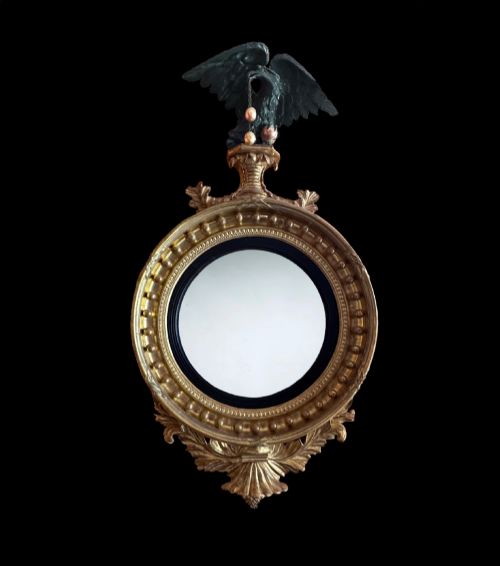
A carved eagle cresting mirror stands out through its prominent avian surmount, combining functional glass with sculptural woodwork that anchors a wall scheme. You encounter these pieces across Georgian, Regency, and Victorian periods, often framed by circular giltwood or rectangular mahogany structures.
The convex mirror form dominates the selection, frequently paired with gilded frames and circular formats that reflect curved expanses of a room. Alternatively, rectangular overmantel and pier mirrors utilise walnut, mahogany, and gesso to present flatter glass surfaces beneath the characteristic bird motif.
Originating largely from British and European workshops, these items span the eighteenth, nineteenth, and early twentieth centuries, including revival pieces from the Edwardian era. Buyers look to these mirrors to introduce period character and a focal point of height to traditional interiors.
Materials and construction
Makers shaped these frames from solid timbers such as mahogany, walnut, and ebonised wood, frequently applying gesso to build up intricate relief details before gilding. Gold leaf provided a brilliant metallic finish to the carved foliage, scrolls, and eagle crests atop convex and pier mirrors.
Glass production relied on traditional techniques, yielding mirror plates that often retain historical imperfections, whilst separate carved wooden elements were pinned or joined to the main frame body. Parcel gilt highlights added visual depth to dark wood surfaces, contrasting polished timber grain with gleaming gold accents.
Carved Eagle Cresting Mirror Retail Price Guide 2026
Typical asking prices for carved eagle cresting mirror among the pieces listed under this phrase on Sellingantiques today, from the lower quarter to the upper quarter. They describe what is for sale here now, not the wider market.
The fierce eagles perched atop these mirrors have watched over parlours for centuries without ever dropping a single wooden feather.
Evaluating craftsmanship and condition
The refinement of the carved eagle cresting sets the artistic standard of the piece, separating dynamic, deeply undercut bird sculptures from stiffer, simplified forms. Crisp detailing in the surrounding gesso work, crisp leaf scrolls, and well-proportioned frames indicate superior workshop execution.
Originality of the components dictates value among collectors, noting whether the mirror glass, gilding, and structural timber retain their initial period integrity. A harmonious balance between the weight of the eagle mount and the circular or rectangular frame demonstrates the maker's structural confidence.
William Kent
The Carved Eagle Cresting Mirror Glossary
- Convex mirror
- A circular mirror with an outward-curving glass plate designed to reflect a wide, panoramic view of an interior space. These glasses are often set within deep giltwood frames surrounded by decorative spheres.
- Giltwood
- Timber that has been coated with a thin layer of gold leaf over a prepared gesso ground. This finish provides a bright, reflective surface characteristic of formal period looking glasses.
- Gesso
- A plaster-like mixture applied to wood frames and carved to create raised decorative motifs before gilding. It allows for sharp, intricate relief work around the mirror edge.
- Parcel gilt
- A decorative treatment where selected portions of a wooden frame are gilded with gold leaf while the remaining timber grain stays exposed. This technique highlights specific carved details against a dark wood background.
- Pier mirror
- A tall, narrow mirror traditionally hung on the stretch of wall between two windows. These pieces often incorporate elaborate crests and matching console tables.
- Girandole
- A decorative mirror equipped with attached candle sconces projecting from the frame. The polished branches help amplify candlelight within a room.
Carved Eagle Cresting Mirror: Frequently Asked Questions
Where should I hang a convex mirror?
Convex mirrors work best on principal walls in reception rooms or hallways where their wide-angle reflection can capture the entire space. Hanging them at eye level ensures the curved perspective functions correctly as a decorative focal point.
Because these mirrors are heavy, secure fixings into solid masonry or substantial wall studs are essential to support the combined weight of the timber and glass.
What is a pier mirror used for?
Pier mirrors were designed to hang on the narrow pier of wall between two windows, a placement that maximised natural light in eighteenth and nineteenth-century parlours. They often coordinate with console tables placed directly beneath them.
Their elongated vertical proportions help draw the eye upward and create an illusion of greater ceiling height in formal drawing rooms.
How do I care for giltwood frames?
Giltwood frames require gentle maintenance using a soft, dry ostrich feather duster to remove surface dust without disturbing the delicate gold leaf surface. Moisture and chemical cleaners must be avoided entirely.
Placing the mirror away from direct sunlight and damp environments helps preserve the original gesso and prevents the timber frame from warping over time.