





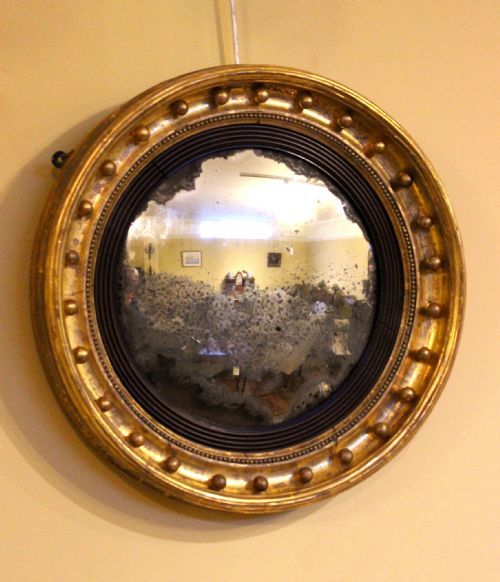
Vintage Bullseye Mirror
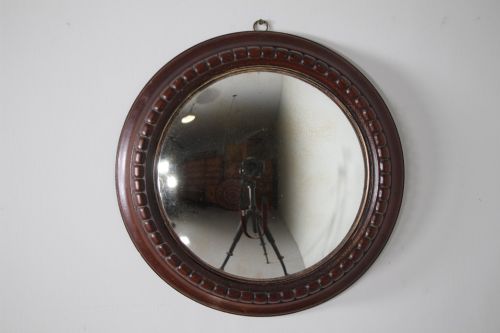
A vintage bullseye mirror bends light across a room, capturing the entire interior in a single, curved convex glass.
Vintage Bullseye Mirror
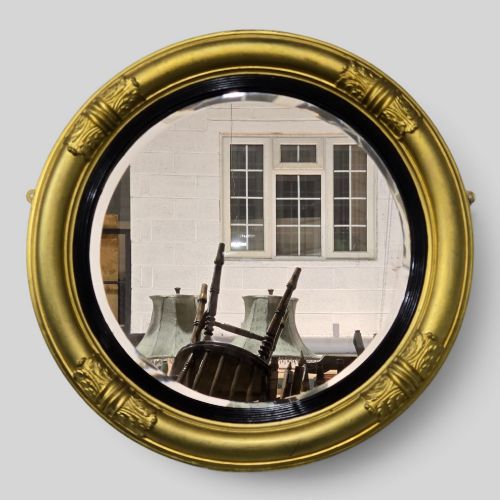
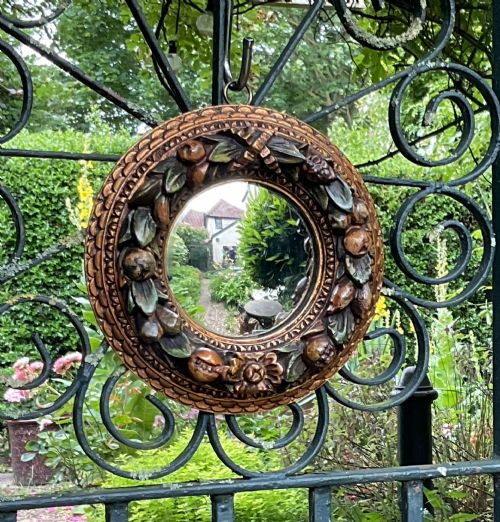
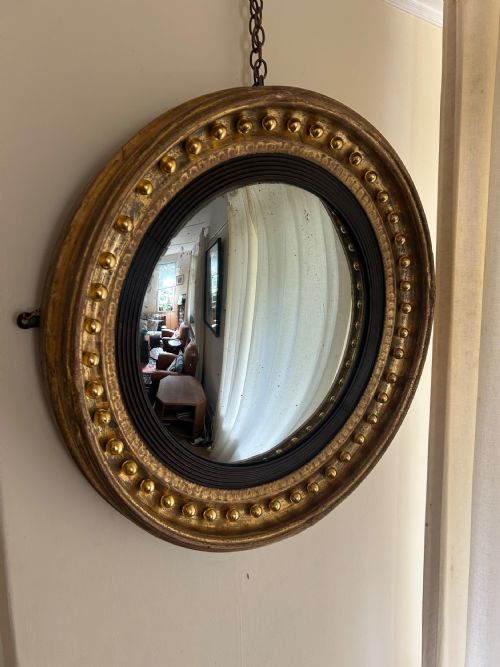
A vintage bullseye mirror is a circular wall hanging designed to reflect a wide angle of a space through its distinct spherical glass plate. These convex glasses sit deep within a round frame, often framed by decorative mouldings and traditional ornament.
The pieces available here span several distinct periods, drawing heavily on classic Regency designs alongside later twentieth-century interpretations from the nineteen-twenties and nineteen-thirties. Regency and nineteenth-century examples dominate the selection, appearing alongside Victorian interpretations of the form.
Buyers will encounter both grander architectural wall mirrors featuring carved crests like eagles and smaller, more intimate domestic pieces. The core function remains decorative and optical, expanding the sense of space in a hall or drawing room.
How they were made
Makers constructed these frames using carved wood, composition ornament, and ebonised wood to build up the intricate circular profiles. Giltwood and gold leaf finishes were then applied over gesso to catch and amplify the daylight.
The central convex glass plates required specialist blowing and shaping techniques to achieve their distortion-free curved surfaces. Plaster and composition details were frequently moulded and applied to wooden carcases before gilding.
Vintage Bullseye Mirror Retail Price Guide 2026
Typical asking prices for vintage bullseye mirror among the pieces listed under this phrase on Sellingantiques today, from the lower quarter to the upper quarter. They describe what is for sale here now, not the wider market.
Several Regency examples include watchful wooden eagles perched on top, keeping a sharp eye on everyone in the room.
What varies in quality
Quality rests in the crispness of the carved wood and composition ornaments, where sharper detailing denotes superior craftsmanship. The richness of the original gold leaf and the depth of the gilding also separate finer examples from simpler pieces.
The clarity and weight of the glass plate influence the overall presence of the mirror on the wall. Frames featuring carved eagles or elaborate crests demonstrate a higher tier of period design.
The Vintage Bullseye Mirror Glossary
- Convex glass
- Curved outward like the exterior of a sphere, this glass reflects a wide-angle, miniature view of the surrounding room.
- Giltwood
- Timber that has been coated with a thin layer of gold leaf or gilt. It provides a bright, reflective surface that ages with a warm patina.
- Composition
- A moulded mixture of whiting, resin, glue, and linseed oil pressed into decorative shapes. It is commonly found on nineteenth-century mirror frames.
- Ebonised wood
- Timber treated with a chemical stain or dark finish to imitate ebony. This dark contrasting finish was frequently paired with gilt sight edges.
Vintage Bullseye Mirror: Frequently Asked Questions
How do I hang a heavy convex mirror?
These pieces require secure wall fixings due to the substantial weight of the timber frame and thick glass. Use heavy-duty wall anchors suited to your plaster or brick construction.
Ensure the cord or mounting bracket on the reverse is fully rated for the load before hanging it in a hallway or living space.
Where should I place a bullseye mirror?
Position the piece opposite a window or light source to maximise the panoramic reflection across the interior. Placing it at eye level allows the curved glass to capture the movement of the room.
Avoid direct, harsh sunlight that might degrade older gilt surfaces over extended periods.
How do I clean the curved glass?
Use a soft, dry microfibre cloth to gently remove dust from the surface of the glass. Avoid spraying liquid cleaner directly onto the mirror, as moisture can seep behind the plate.
Apply a minimal amount of cleaner to the cloth if necessary, keeping it well away from the antique gilt frame.
How do I date a vintage mirror?
Examine the construction methods visible on the reverse of the wooden frame and the composition of the plaster ornaments. Nineteenth-century pieces typically exhibit hand-carved elements and older backboards.
Later twentieth-century examples from the nineteen-twenties or thirties often display different backing materials and more uniform machine-finished mouldings.