




Carved Dragon Side Table
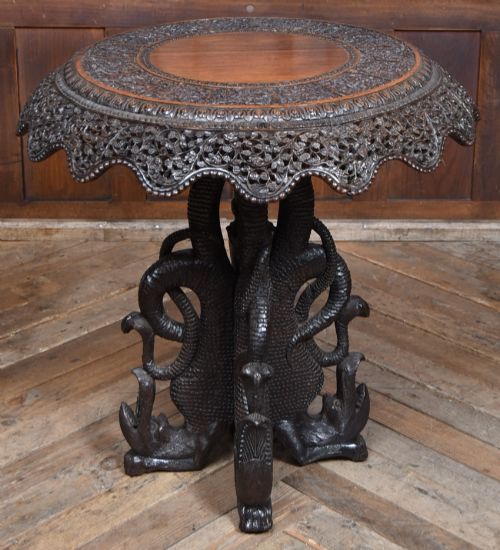
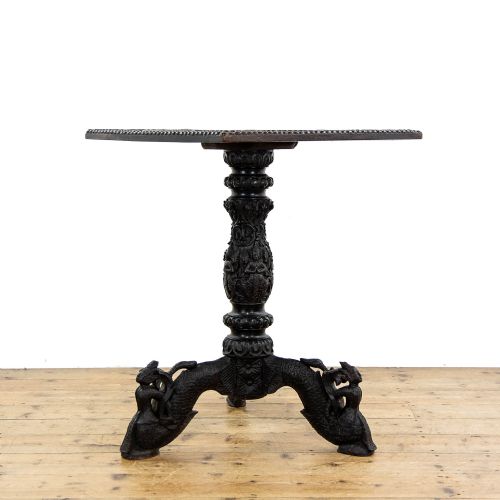
These carved dragon side table examples bring fierce creature carving and rich dense timbers straight from Victorian workshops and far eastern export routes into modern rooms.
Carved Dragon Side Table
A carved dragon side table appears across several forms including occasional tables, plant stands, console tables, nests of tables, and centre tables. You will most frequently meet pieces fashioned from dense hardwoods during the nineteenth century, nineteenth-century far eastern export periods, and the early twentieth century.
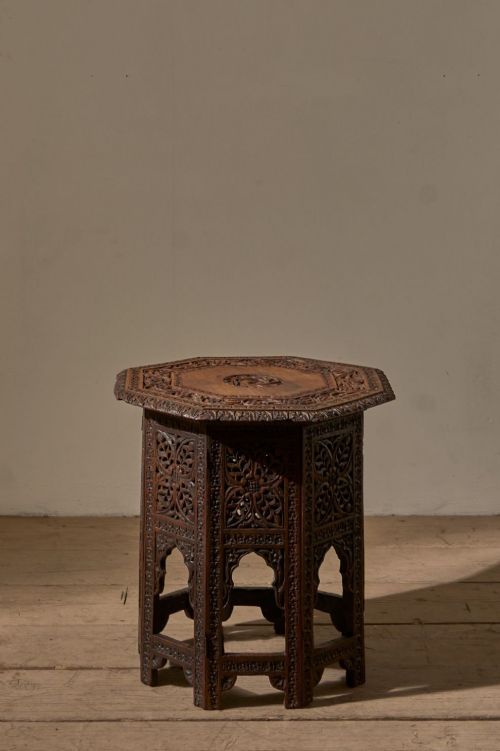
These works range from compact octagonal occasional pieces and small vase stands to longer console tables and multi-tiered nests. Their primary purpose is to provide a functional surface whilst displaying intricate figural and floral carving rooted in Chinese export, Chinoiserie, Anglo-Indian, and Anglo-Burmese traditions.
How they were made
Cabinet makers utilised heavy exotic timbers such as rosewood, teak, padauk wood, and general hardwoods, frequently employing hand carving to bring scale, claw, and serpentine dragon motifs into high relief. Selected examples incorporate contrasting inset rouge marble tops or glass surfaces fitted securely within sturdy timber frames.
Joinery methods reflect traditional regional construction, combining mortise and tenon joints with deeply undercut surface decoration. Certain pieces receive ebonised finishes or Cinnabar lacquer treatments that accentuate the detailed hand-carved relief work across the aprons, legs, and borders.
Listings feature various forms including nests of tables, console tables, and occasional stands spanning Victorian and early twentieth-century periods.
What varies in quality
Material selection also dictates overall quality, with dense timbers like padauk and rosewood, alongside heavy inset marble panels, creating heavier and more stable structures. The integration of complex forms such as nests of tables or multi-tiered plant stands requires precise joinery to maintain rigidity across repeated use.
Liberty
The Carved Dragon Side Table Glossary
- Padauk wood
- A heavy, durable reddish-brown tropical hardwood prized for furniture construction. It accepts fine hand carving exceptionally well.
- Cinnabar lacquer
- A decorative coating made from the mineral cinnabar applied in multiple layers and carved while soft. It yields a distinctive red finish.
- Chinoiserie
- European artistic style reflecting Chinese motifs and techniques. Makers applied these designs to furniture and decorative objects.
- Anglo-Indian
- Furniture made in India during the British colonial period combining local timbers and carving styles with European forms. These pieces often feature dense foliate and animal motifs.
- Occasional table
- A small, versatile table designed for intermittent use around a room. Examples include plant stands and small display tables.
Carved Dragon Side Table: Frequently Asked Questions
How are these tables cleaned?
Dust the hand-carved surfaces regularly with a soft brush to prevent dirt accumulation within the deep recesses of the dragon relief work. Avoid harsh chemical cleaners that might strip the original polish or damage delicate lacquer and wood grains.
Condition the timber periodically using appropriate wax formulated for antique hardwoods. Take extra care around inset marble or glass panels to prevent moisture from seeping into surrounding joints.
Where should a side table go?
Position these compact surfaces beside seating arrangements or use them as individual plant and vase stands in corners. Their detailed carving makes them suitable as standalone focal points within a hallway or living space.
Ensure the table sits away from direct heat sources and strong sunlight to protect sensitive timbers and lacquer finishes from drying or fading over time.
How do I spot a reproduction?
Examine the timber shrinkage, tool marks, and overall wear patterns across the undersides and joints. Genuine nineteenth-century and early twentieth-century examples exhibit authentic age patination and hand-carved inconsistencies absent in modern machine-made copies.
Check whether the carving is crisp and deeply undercut rather than cast from resin or soft synthetic substitutes. Traditional construction methods such as pegged joints offer further clues to period authenticity.
What is a nest of tables?
A nest consists of multiple graduated tables designed to slide neatly beneath one another when not in use. This clever space-saving arrangement gained popularity in export furniture production.
Individual tables can be pulled out separately to serve multiple guests or display objects across a room before being stacked back together.