
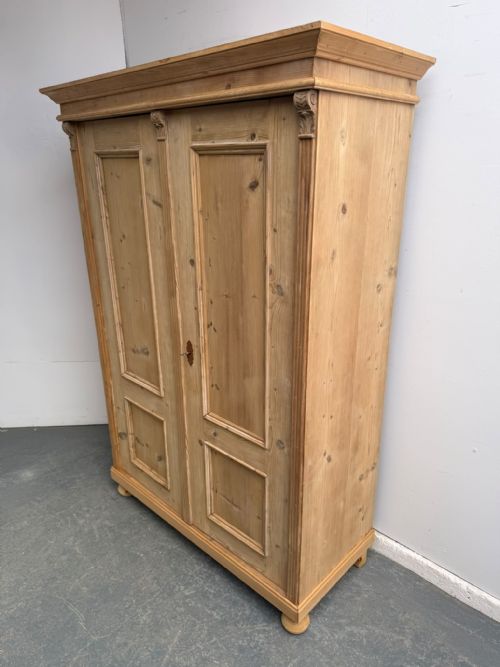
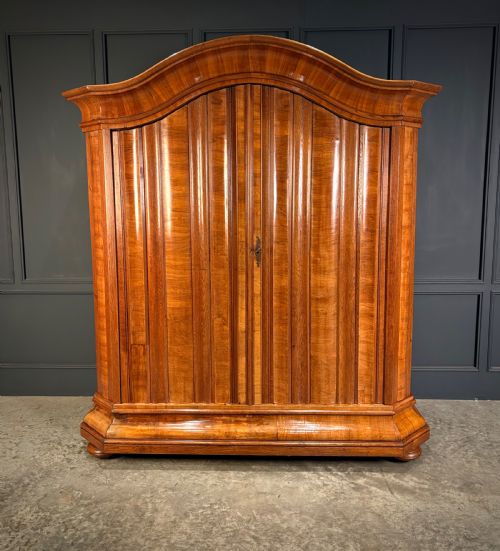
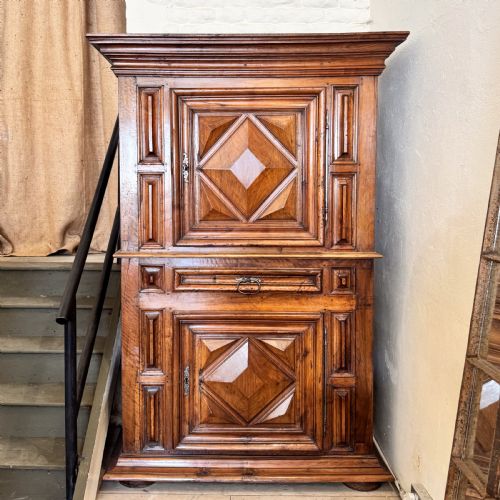
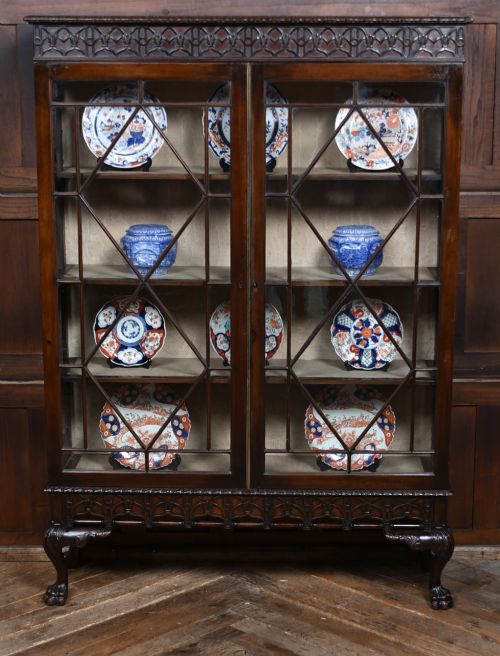


Carved Double Door Cabinet
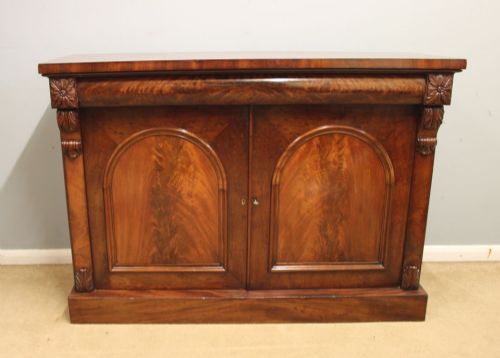
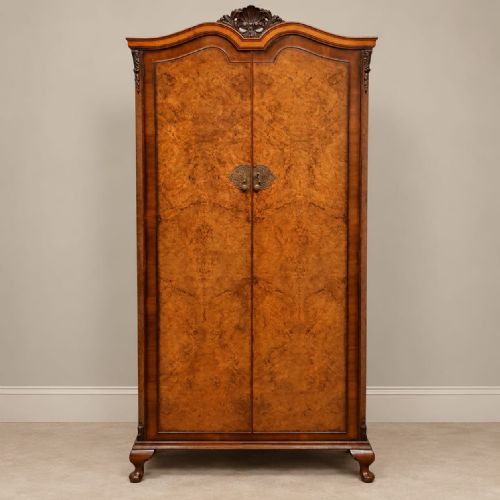
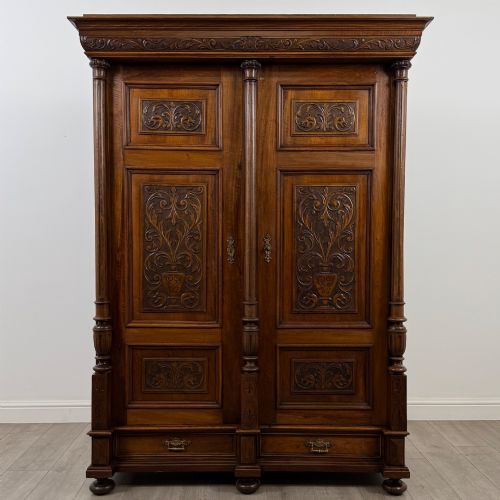
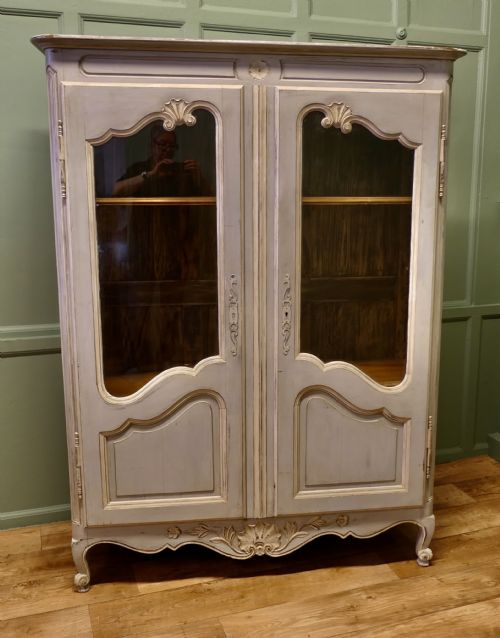
A carved double door cabinet provides substantial storage while anchoring a room with period presence and timber character.

Carved Double Door Cabinet
A carved double door cabinet encompasses a wide variety of storage and display furniture, from large Continental armoires to compact cocktail cabinets and chiffoniers. These pieces emerge predominantly from the Victorian and nineteenth century, alongside eighteenth-century examples and early twentieth-century revivals.
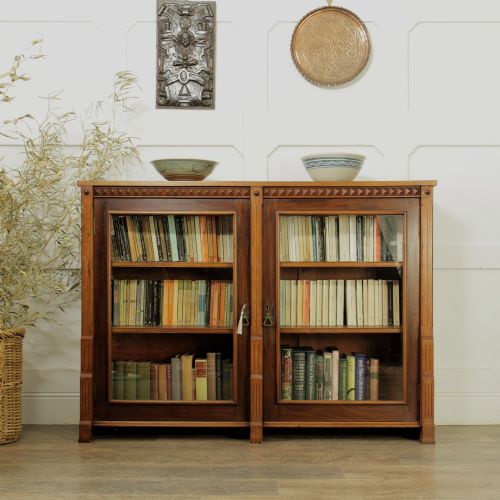
Buyers encountering this search phrase find diverse forms including wardrobes, linen presses, sideboards, and glazed bookcases. Oak, walnut, and mahogany dominate the construction, often shaped by revival styles such as Queen Anne, Chippendale, and French Rococo.
Materials and Construction
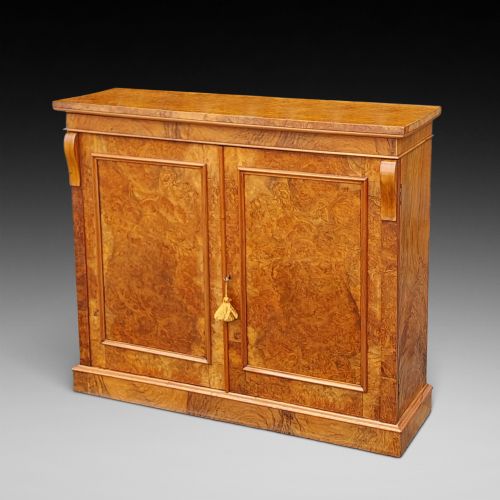
Cabinetmakers utilised solid hardwoods like oak, mahogany, and walnut, frequently applying burr walnut and flame mahogany veneers to principal surfaces for visual depth. Brass hardware, iron fittings, and occasional glass panels complete the structural and decorative assembly.
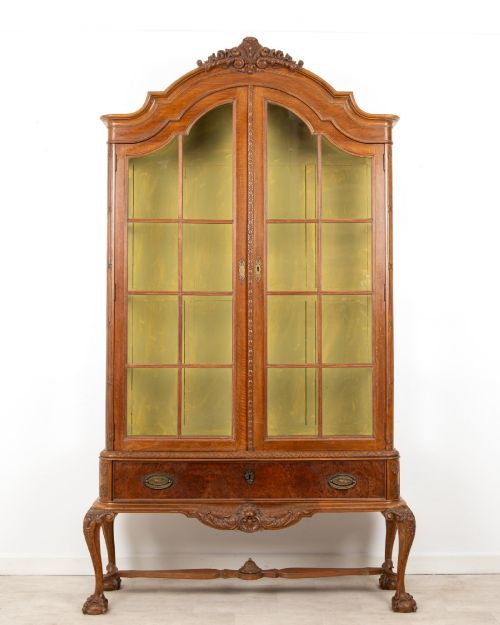
Carving serves as the primary ornamentation, executed directly into the solid timber or onto applied mouldings. Joinery relies on traditional framing methods to support heavy double doors across armoires, bookcases, and large storage cupboards.
Walnut, oak, and mahogany appear across multiple object types, including bookcases, armoires, and cocktail cabinets.
Distinctions in Quality
Quality rests on the selection of timber figures, particularly the grain matching in burr walnut and flame mahogany veneers across the two doors. Finer examples display crisp, deep relief carving rather than shallow or mechanical decoration.
Structural integrity and original proportions set superior cabinets apart, visible in the alignment of doors, the weight of the timber, and the subtlety of period styling such as Queen Anne or Chippendale revivals.
Maple and Co
The Carved Double Door Cabinet Glossary
- Armoire
- A large freestanding cupboard or wardrobe with two doors, originating in continental Europe. These pieces often feature deep carved detailing and substantial proportions.
- Chiffonier
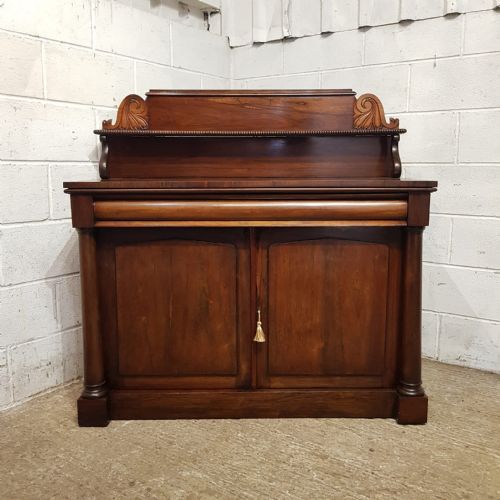
- A low sideboard or cabinet developed in the nineteenth century, typically featuring drawers and doors beneath a raised shelf or back. They appear frequently in mahogany and rosewood.
- Compactum
- A fitted wardrobe or multisectional storage cabinet designed to maximise interior space with drawers, hanging areas, and shelves behind double doors.
- Vitrine
- A glass-fronted display cabinet used for showing porcelain, books, or curiosities. They often incorporate painted or carved wooden frames in French styles.
- Linen press
- A tall cupboard traditionally used for storing folded textiles, featuring upper double doors enclosing sliding trays and lower drawers.
Carved Double Door Cabinet: Frequently Asked Questions
What rooms suit a double door cabinet?
These cabinets suit dining rooms for tableware, living rooms for books and drinks, or bedrooms as wardrobes and linen storage.
Their substantial presence requires measuring both floor space and ceiling height before placement.
How do I distinguish eighteenth-century from Victorian pieces?
Eighteenth-century examples often display regional Continental or British vernacular characteristics in heavy oak and walnut construction.
Victorian pieces frequently utilise richer veneers like burr walnut and employ machine-assisted precision alongside traditional hand carving.
Are these cabinets difficult to move?
Many larger armoires and linen presses dismantle into sections, including cornices, base units, and the main double door frame.
Checking the construction method helps determine whether professional removal is necessary for transit.
How do I care for antique timber surfaces?
Routine maintenance involves dusting with a dry, soft cloth and applying traditional beeswax periodically to nourish the grain.
Keep timber away from direct heat sources and strong sunlight to prevent veneer cracking or fading.