
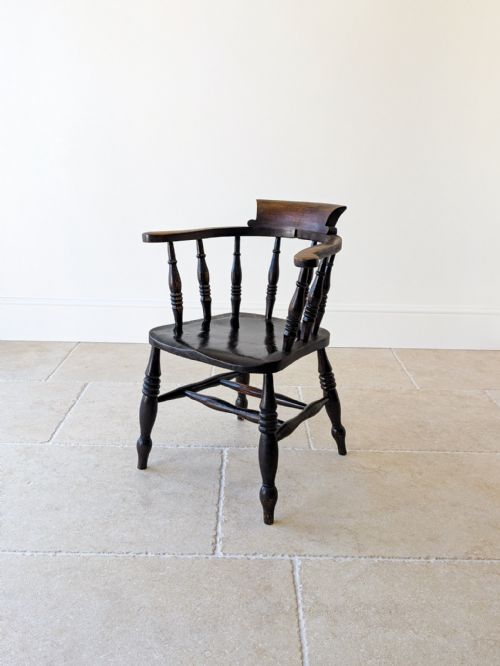
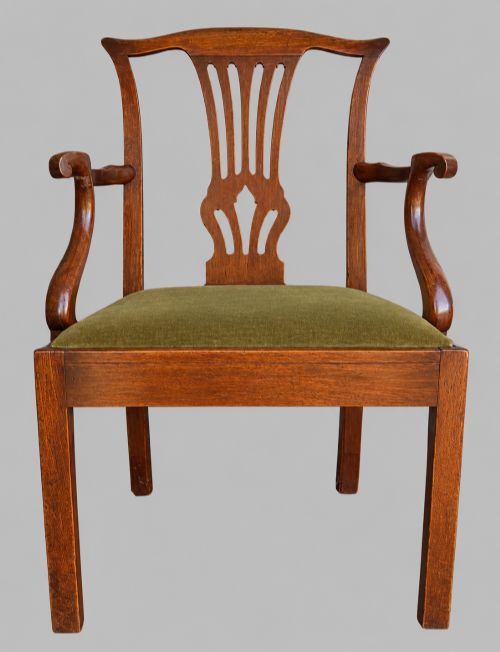
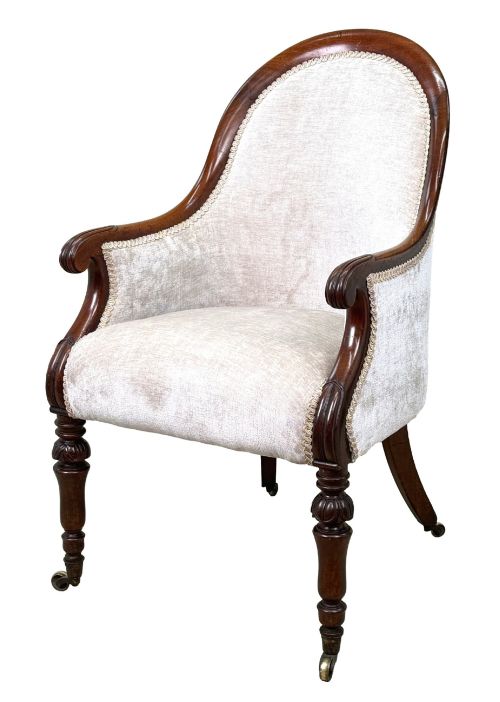
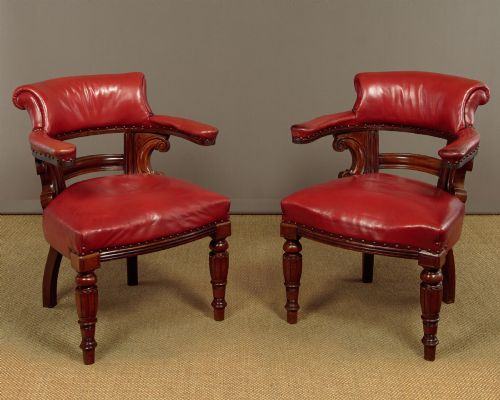

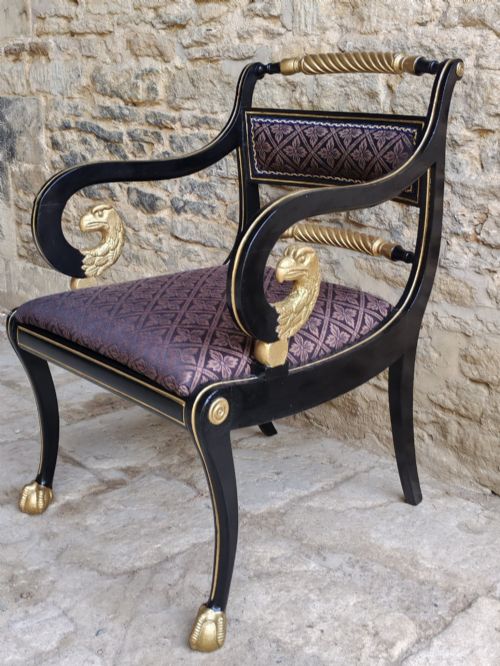
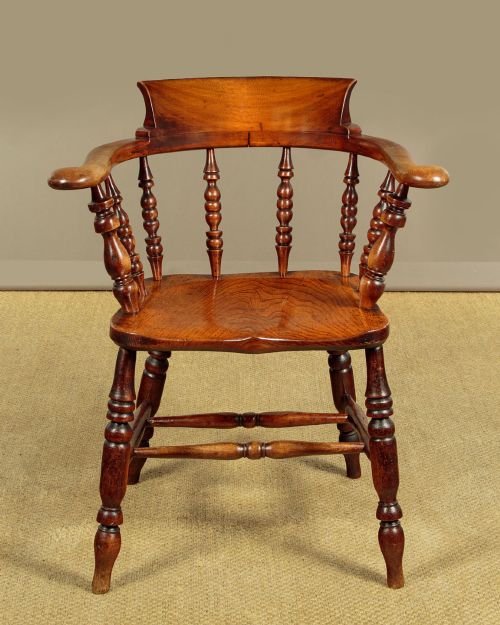
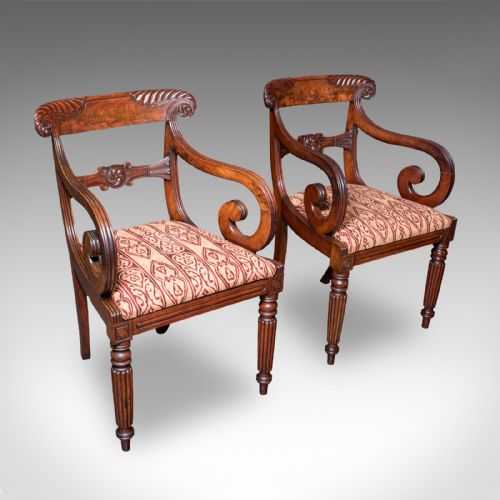
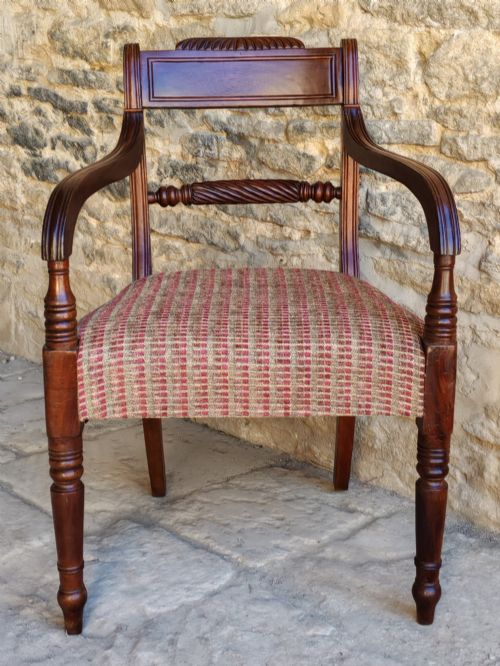
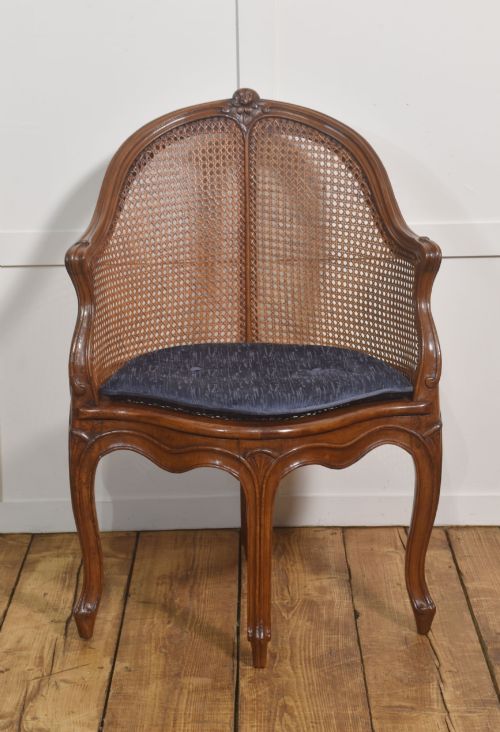
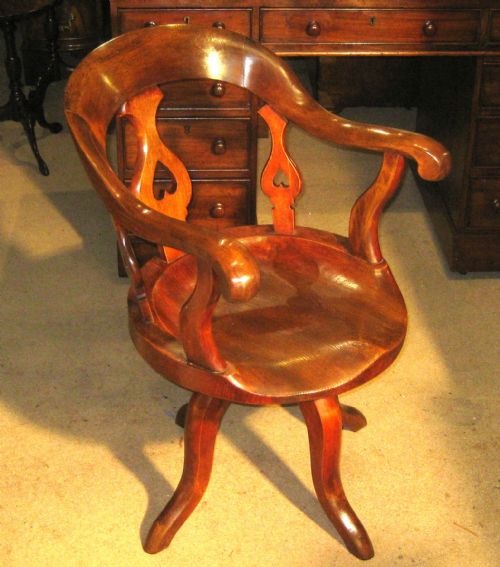
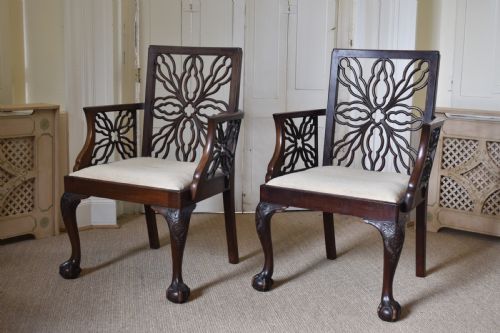
Carved Desk Armchair
A carved desk armchair brings solid timber work and sensible support to a study, offering the right seat for working at a writing table.
Carved Desk Armchair
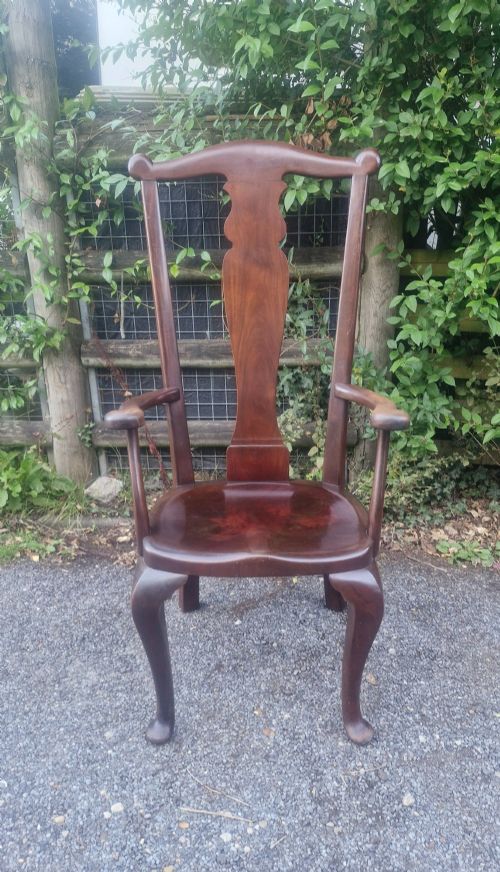
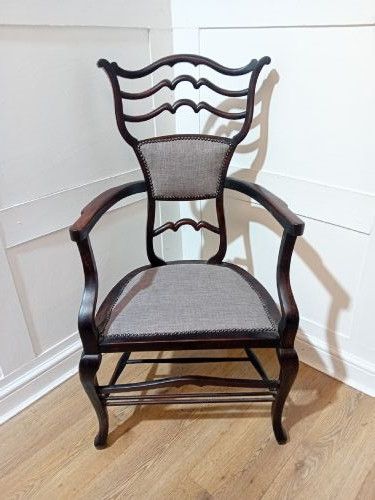
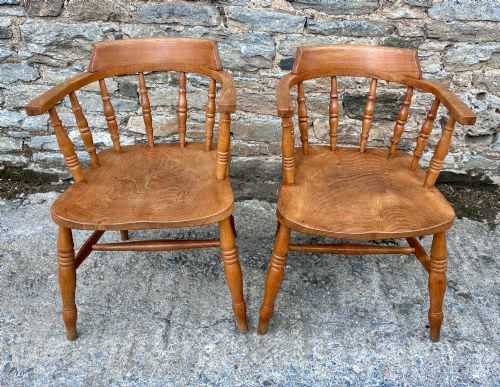
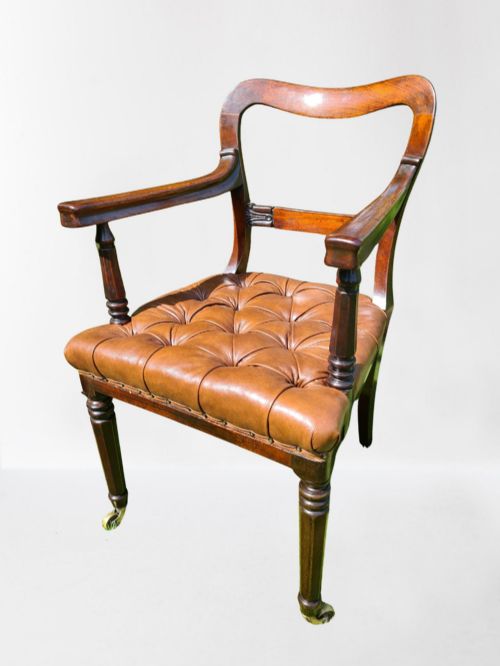
When you search for a carved desk armchair, you are looking at substantial timber seating designed for the study, library or office. These pieces range from sturdy captain's chairs and revolving desk seats to elegant library armchairs and open carvers intended for writing tables.
The versions you are most likely to meet on this page span the Georgian, Victorian and Edwardian periods, alongside later twentieth-century interpretations. They appear in forms such as tub chairs, highback models and Windsor-derived smokers bows, often retaining traces of earlier revival styles.
Originating predominantly from British workshops and country houses, these chairs combine functional seating heights with decorative carving along the backsplats, arms or crest rails. They serve as practical furniture that maintains craftsmanship while providing daily utility in a modern workspace.
Materials and construction methods
Makers relied heavily on dense hardwoods like mahogany, walnut and oak, selecting them for structural strength and the ability to hold sharp carved details. Elm and ash appear frequently in country-made captain's chairs and smokers bows, offering resilience against daily wear.
Carpenters utilised traditional joinery techniques, securing frames with mortise and tenon joints to withstand the twisting forces inherent in swivel or office seating. Surfaces were finished with polish or wax to bring out the natural grain of the timber.
Upholstered elements incorporated leather, fabric or cane inserts, fastened with brass tacks or cane weaving techniques that provided flexible support for the user.
Several Victorian models feature carved Green Man motifs or fierce lion heads staring out from the arm terminals to deter distracted scribes.
Factors separating standard pieces from the finest examples
The distinction between standard workshop output and the finest examples rests on the depth and crispness of the hand-carving. Superior pieces display intricate detailing on the arms, crest rails and backsplats, executed by skilled carvers rather than cast in mould or applied mechanically.
Proportion and structural integrity define the upper tier of these chairs, ensuring the seat height and arm clearance align correctly with writing desks without feeling cumbersome. Timber selection also dictates quality, with well-figured mahogany or richly patinated walnut elevating the piece far beyond utilitarian office seating.
Alfred Allen of Birmingham
The Carved Desk Armchair Glossary
- Captain's chair
- A low-backed wooden armchair designed with a rounded top rail supported by spindles, originating in the nineteenth century for office and shipboard use.
- Carver
- An armchair, usually dining or desk height, designed to match a set of smaller side chairs.
- Backsplat
- The central vertical slat of wood running from the seat to the top rail of a chair back, frequently decorated with carving.
- Tub chair
- An armchair with a continuous curved back and arms that form a semicircular enclosure, often upholstered or fitted with cane.
- Patina
- The surface sheen and mellowing developed by timber and leather over decades of handling and exposure to light.
Carved Desk Armchair: Frequently Asked Questions
What makes a desk armchair different from a standard dining chair?
A desk armchair is built for extended periods of sitting at a writing table, featuring lower arms that slide beneath desk drawers and wider seats for comfort.
Many examples incorporate swivelling mechanisms, castors or robust timber frames to handle the shifting movements associated with working.
How were these chairs used historically?
They served primarily in libraries, private studies, offices and counting houses as practical seating for writing, reading and administrative tasks.
Owners selected them to project authority and status while providing the physical support needed for long hours at a desk.
How do I care for leather upholstery on an antique chair?
Keep leather conditioned with appropriate balms to prevent it from drying out or cracking under normal room temperatures.
Avoid placing the chair in direct sunlight, which fades the hide and dries out the underlying timber frame.
Can I use an antique desk armchair in a modern office?
These chairs fit well in contemporary workspaces, provided the seat height matches your modern desk requirements.
Their solid timber construction and traditional joinery often outlast modern mass-produced office furniture while adding character to the room.