
Carved Dark Wood Buffet
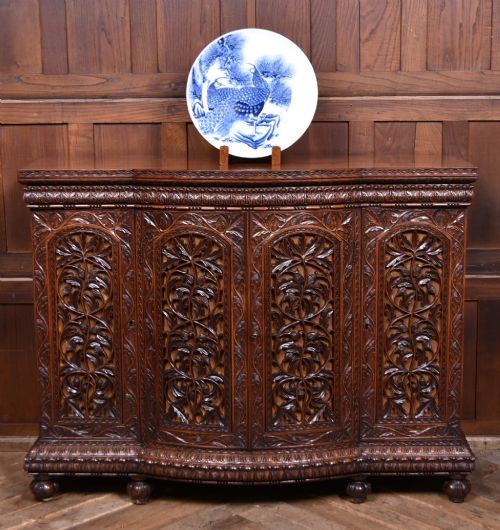
A carved dark wood buffet brings substantial presence to a dining space, offering deep grain and intricate relief work that anchors the room.
Carved Dark Wood Buffet
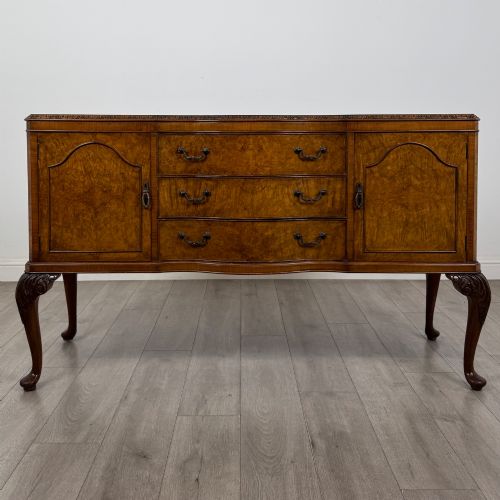
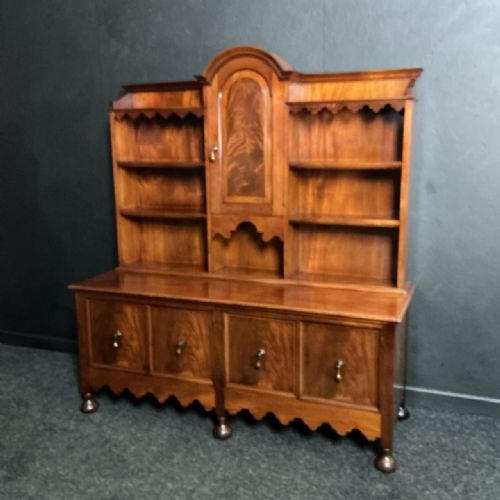
A carved dark wood buffet encompasses robust dining furniture designed for serving and storage, appearing primarily as sideboards, servers, and dresser bases across this selection. These pieces frequently emerge from the Victorian and Edwardian eras, spanning from the mid nineteenth century into the early twentieth century.
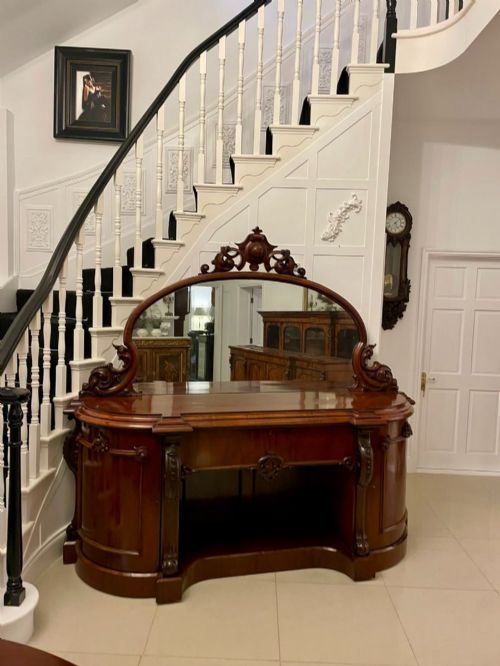
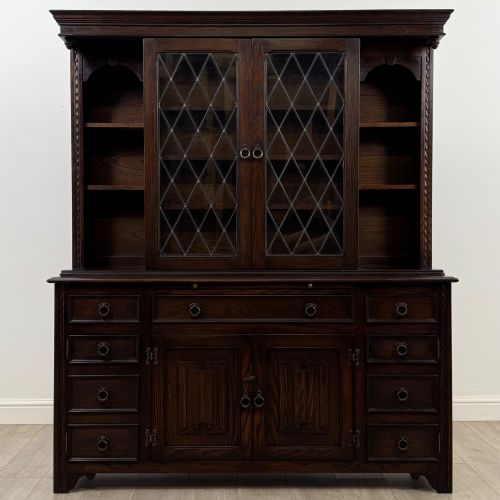
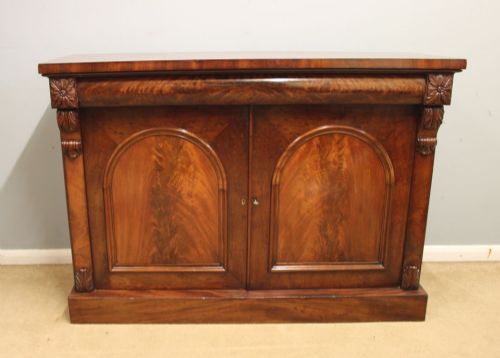
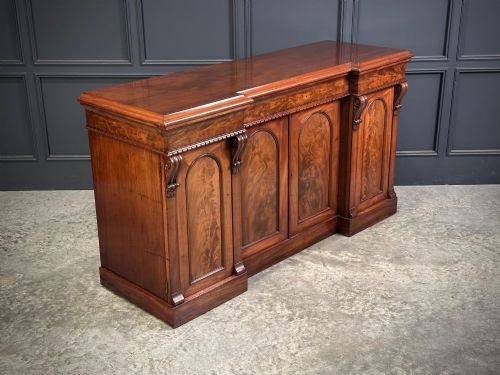
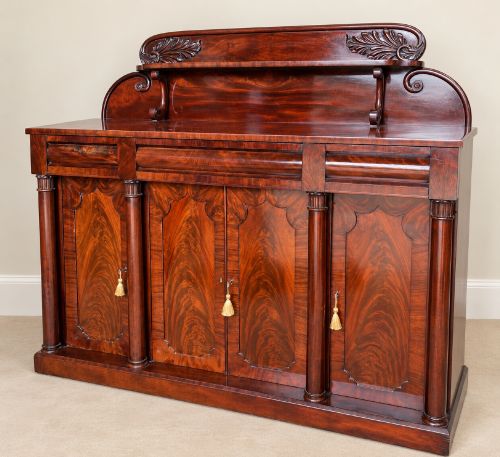
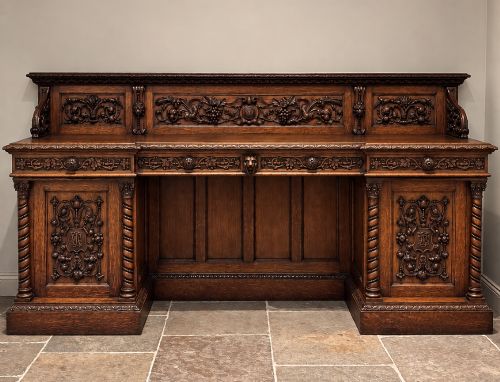
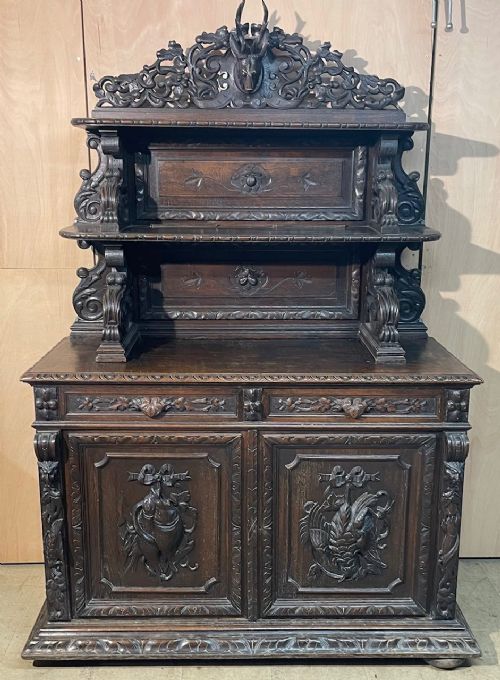
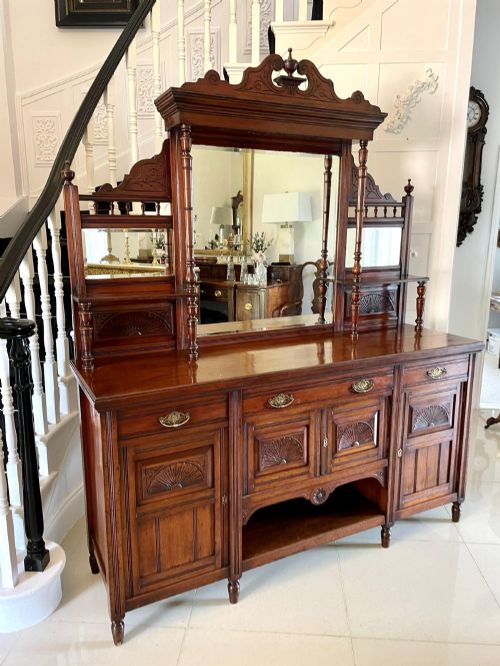
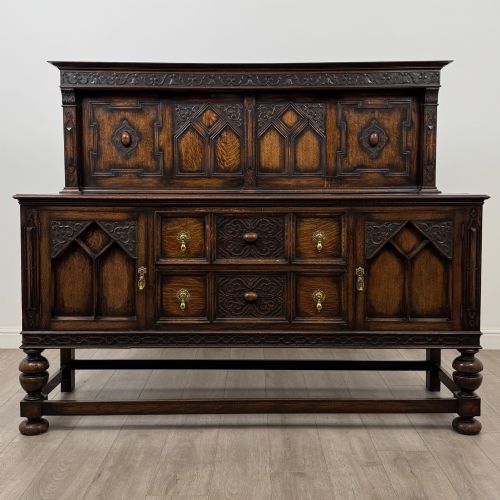
The dominant forms include heavy oak and mahogany constructions shaped by revival movements such as Jacobean, Gothic, and French Renaissance styles. Buyers encounter both mirror back consoles and low four door cabinets intended for formal dining rooms.
Materials and Construction
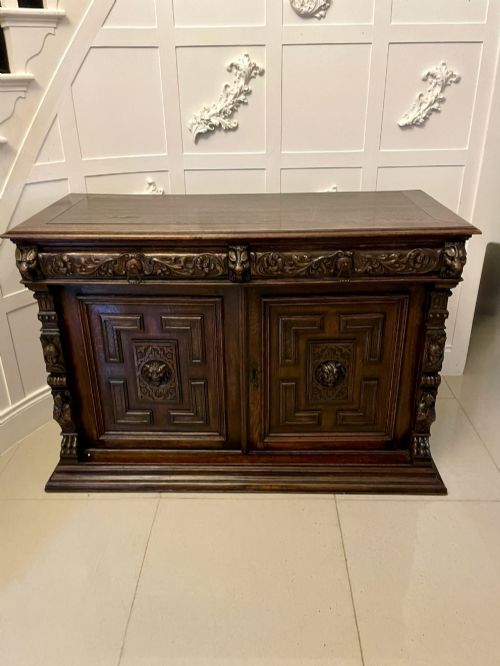
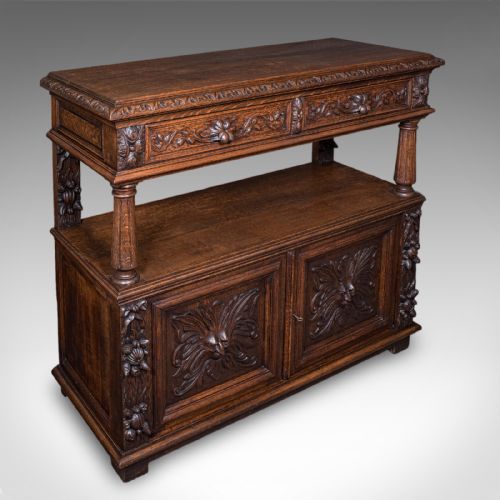
Cabinet makers utilised solid timber alongside flame mahogany veneer, shaping dense oak and rich mahogany into large structural frames. Surfaces received deep chisel work to render panelled doors, geometric mouldings, and figurative carvings.
Hardware integration involved brass handles and hinges fixed securely to heavy timber bodies. Structural stability relied on thick plank construction, mortise and tenon joinery, and substantial plinths or paw feet.
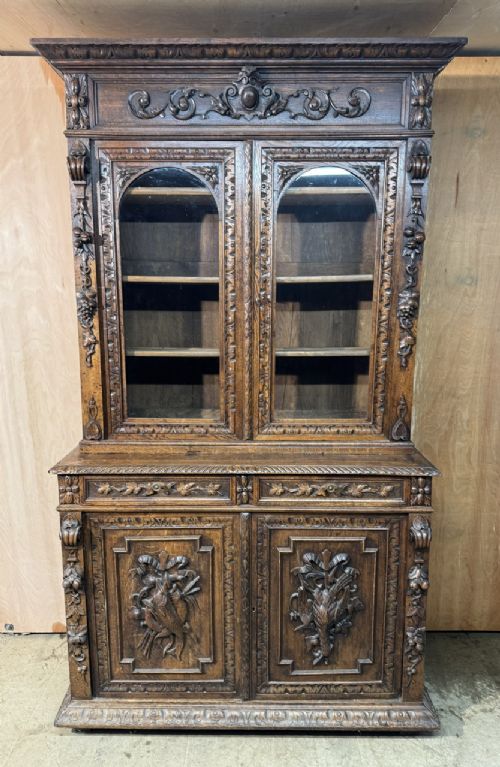
French hunting cabinets bring woodland motifs indoors, letting stern carved stags and wild boars supervise the dining room.
Assessing Quality
The depth and crispness of the hand carving separate standard production from superior examples, where relief work remains sharp and well defined across the timber. Superior pieces display carefully matched veneer grains and solid timber framing that withstands heavy daily use.
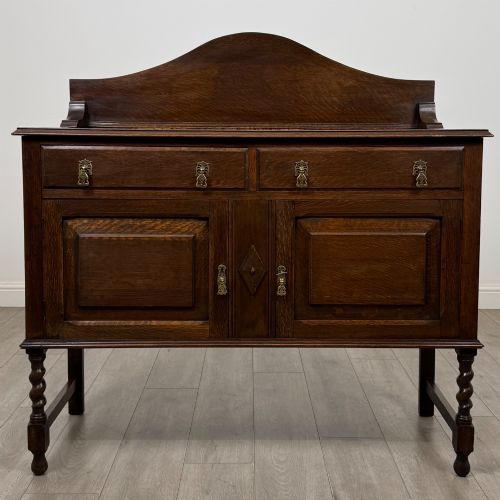
Proportion and architectural balance dictate the overall standing of an individual sideboard, with finer items integrating complex design elements like mirror backs or barley twist supports without appearing crowded.
The Carved Dark Wood Buffet Glossary
- Chiffonier
- A compact sideboard or cabinet developed during the nineteenth century, typically featuring enclosed shelving below and sometimes a raised superstructure.
- Dresser Base
- The lower section of a traditional kitchen or dining dresser, comprising cupboards and drawers beneath a solid wooden serving top.
- Flame Mahogany
- Timber cut from the fork of the mahogany tree to reveal a distinctive, fiery grain pattern. Furniture makers utilised this veneer on prominent door panels and drawer fronts.
- Mirror Back
- A tall wooden superstructure incorporating a central mirror plate, positioned above the main sideboard surface. This feature gained popularity during the Victorian period to reflect light in dining spaces.
Carved Dark Wood Buffet: Frequently Asked Questions
Where should I place a large sideboard?
These substantial pieces require a dedicated wall in a dining room or spacious hallway where their depth and height do not obstruct movement.
Allow sufficient clearance around the cabinet doors and drawers so they open fully without touching adjacent furniture.
How do I maintain dark wood surfaces?
Apply a quality beeswax polish periodically to nourish the timber and maintain a soft natural sheen across the carved details.
Avoid placing these cabinets in direct sunlight or near heat sources to prevent the solid wood and veneers from drying out.
What is the difference between a sideboard and a buffet?
While both terms describe serving furniture, a buffet traditionally emphasises low storage and surface space for food presentation.
Sideboards often incorporate a wider variety of specialised compartments, including cutlery drawers and larger cupboards.
How do I identify a Victorian piece?
Look for dense mahogany or oak construction combined with heavy proportions and revival motifs like Gothic arches or Jacobean panelling.
Many examples from this era include elaborate mirror backs and deep hand carved mouldings that reflect nineteenth century tastes.