
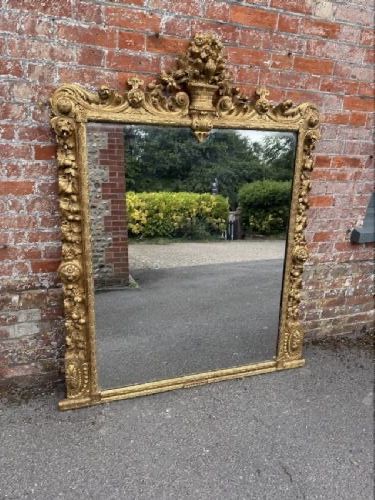
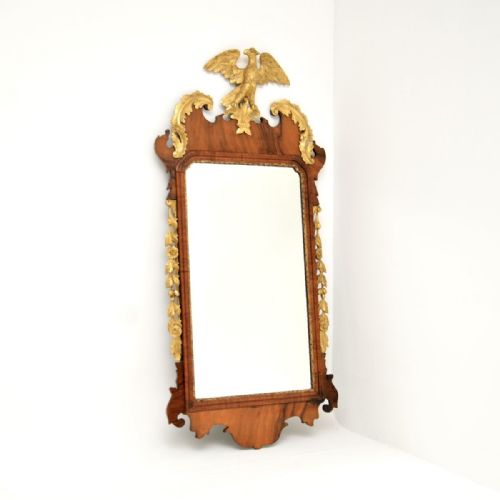
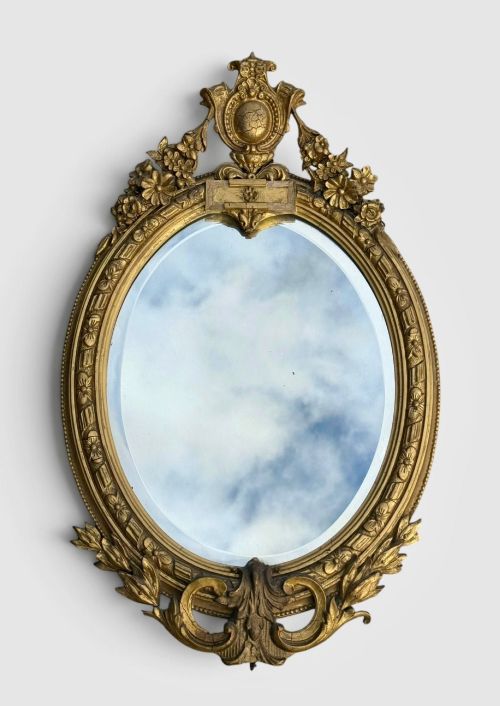
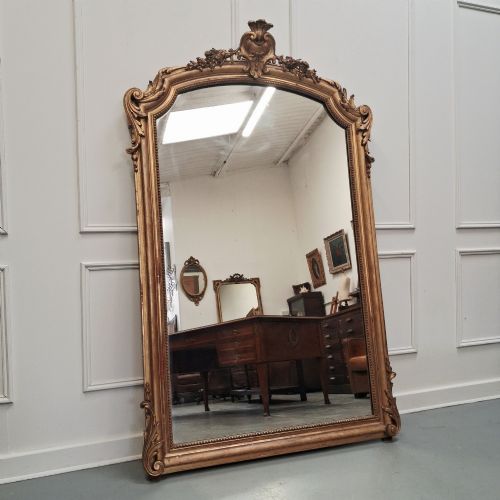
Carved Crest Gilt Mirror
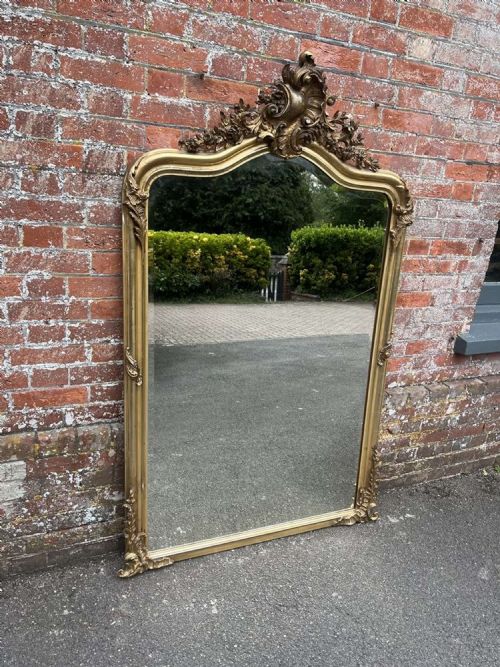
A carved crest gilt mirror brings dramatic focal height and reflective warmth to a room, drawing the eye upwards with ornate sculptural detail.
Carved Crest Gilt Mirror
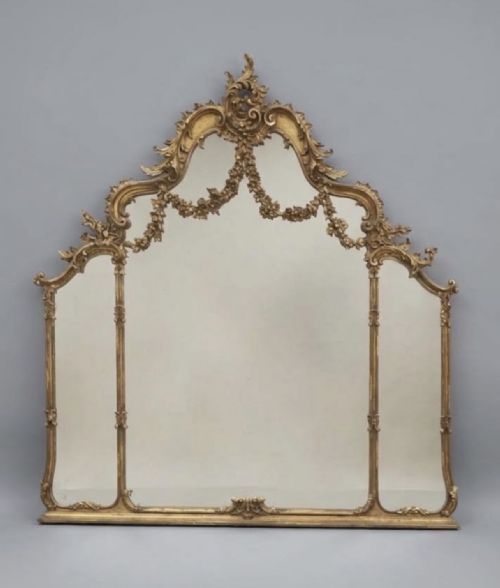
When searching for a carved crest gilt mirror, buyers encounter wall hanging pieces, large overmantels, and convex circular frames designed to reflect light and expand interior spaces. These items span periods from the 18th century through the Victorian era and the 20th century, encompassing English and continental designs.
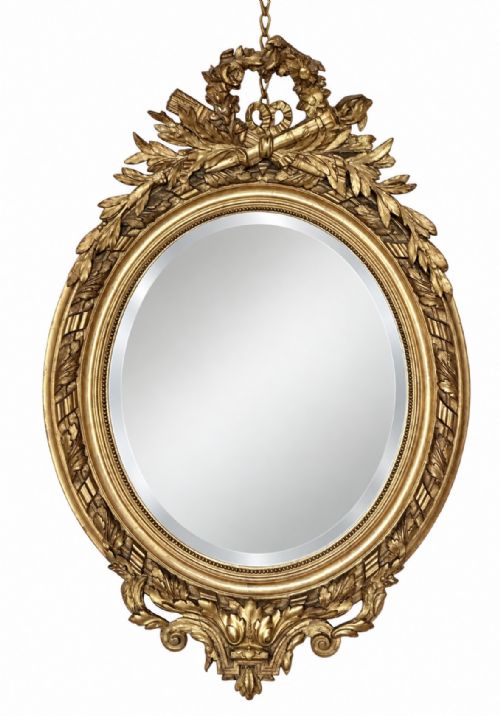
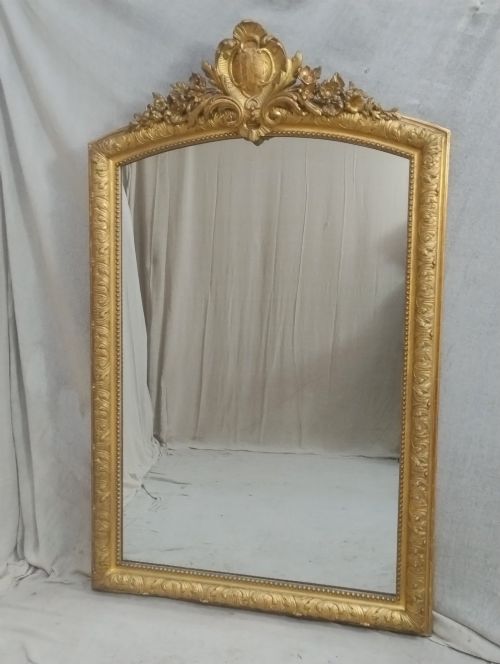
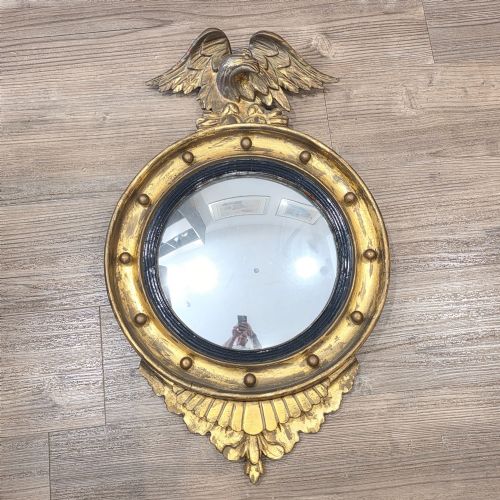
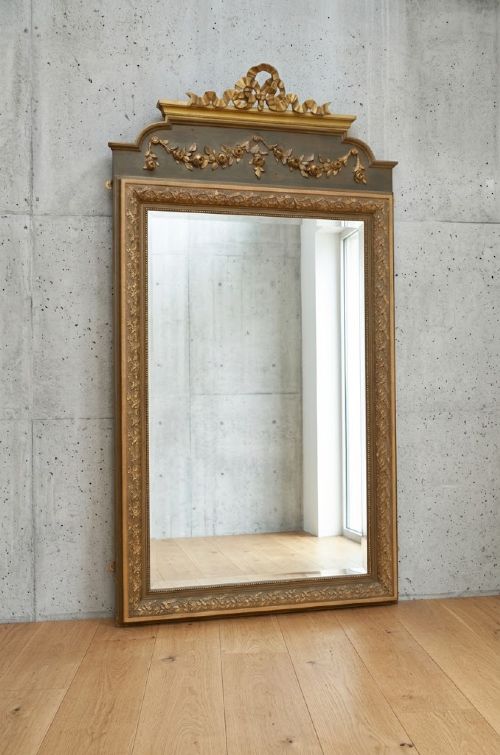
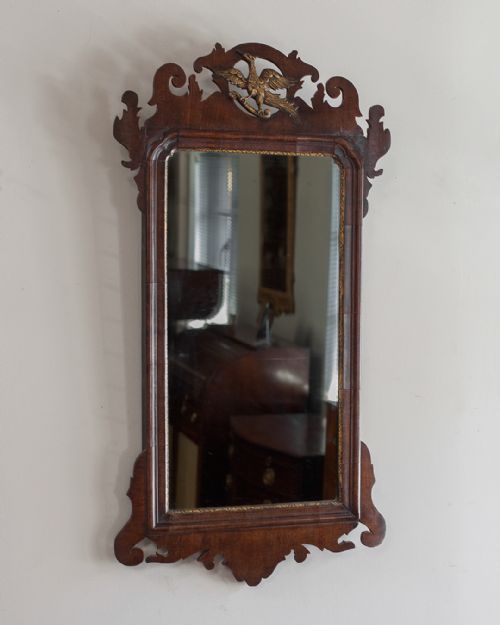
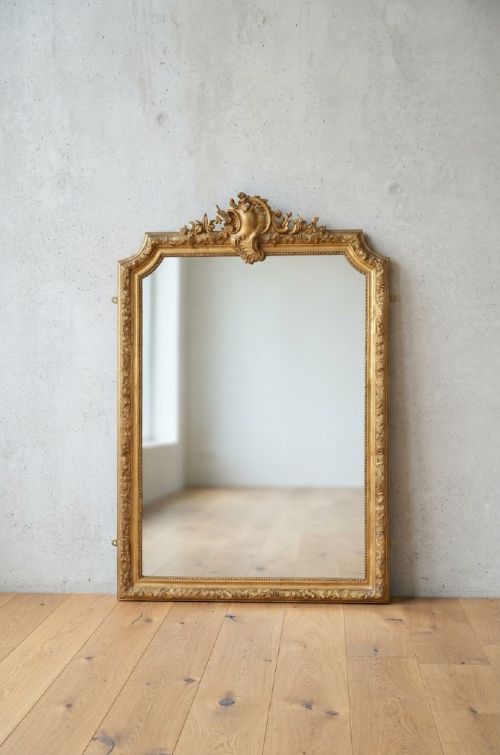
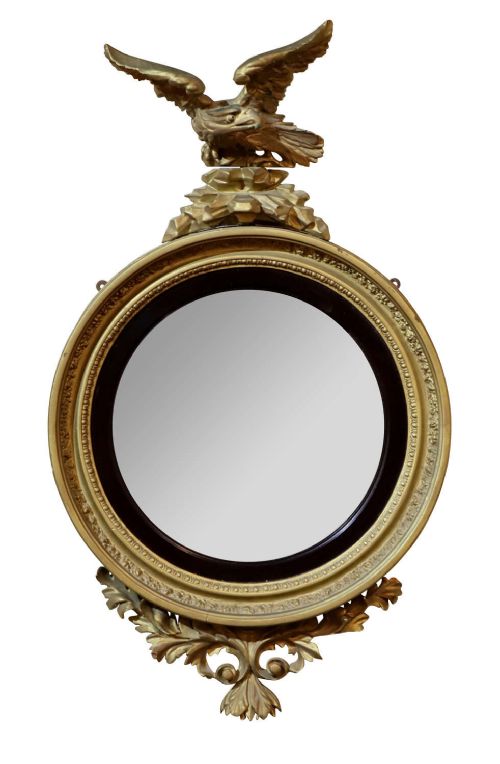
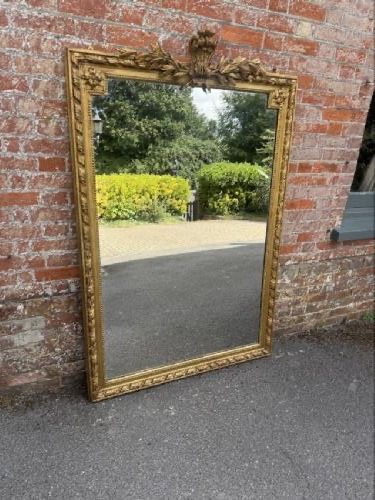
The most common examples on this page are 19th-century French and English pieces utilising gesso, wood, and gold leaf. Many incorporate distinct crests such as spread eagles, ribbons, and foliage.
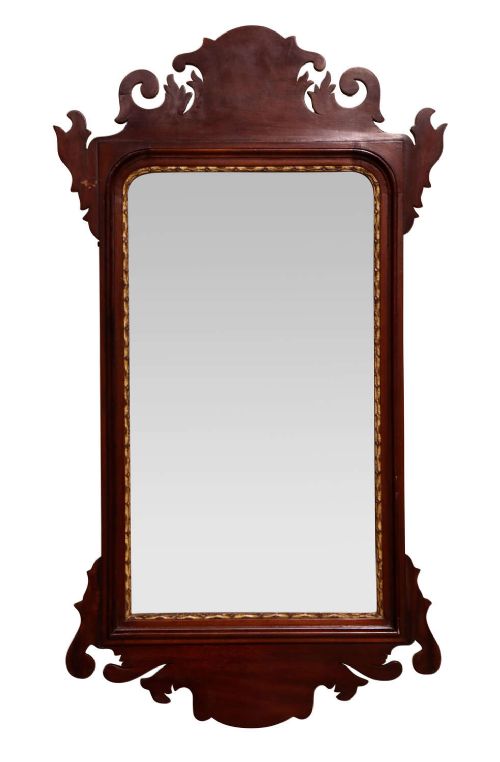
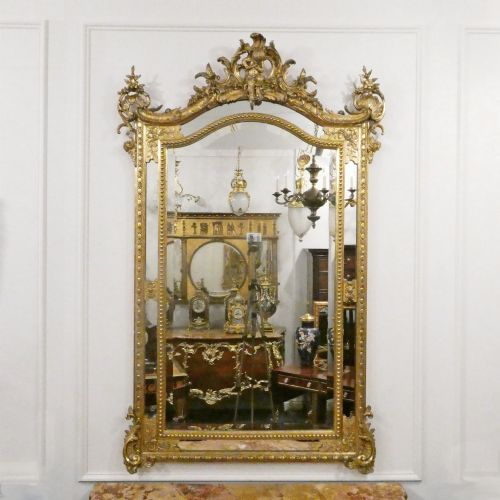
From Georgian mahogany fretwork to Napoleon III pier glasses and Louis XV styles, the selection ranges from intimate dressing mirrors to grand architectural wall mirrors.
How they were made
Carved crest gilt mirrors rely fundamentally on wooden substrates, frequently pine or mahogany, shaped by hand before receiving decorative enrichment. Artisans built up surface relief using gesso, a mixture of plaster and glue, which was then carved and punched to receive fine layers of gold leaf or metal leaf.
Earlier examples often feature mercury glass plates with characteristic foxing and spotting, whilst later Victorian and 19th-century pieces utilise machine-rolled mirror glass, sometimes with bevelling along the edges.
Several mirrors feature vigilant spread eagles perched atop their crests, keeping a watchful glass eye over the drawing room for centuries.
What varies in quality
The depth and crispness of the carved crest define the upper tiers of quality, separating mechanically stiff mouldings from spirited, deeply undercut wooden and gesso ornaments. Superior examples display meticulous hand-tooling on the gesso prior to gilding, ensuring the gold leaf catches ambient light from multiple angles.
Originality of components also dictates value, particularly the retention of the original mirror plate, whether silvered glass or mercury plate, alongside undisturbed backboards and gilding that has aged with a soft, warm patina rather than harsh modern repainting.
The Carved Crest Gilt Mirror Glossary
- Gesso
- A preparation mixture consisting of a binder mixed with chalk, gypsum, or pigment, applied to wood to create a smooth surface for carving and gilding. This layer provides the sharp relief seen on ornate mirror frames.
- Convex mirror
- A round mirror with a spherical outward-curving glass surface that offers a wide-angle panoramic reflection of the room. These frequently feature eagle surmounts and candle arms.
- Overmantel mirror
- A large horizontal mirror specifically designed to hang on the wall directly above a fireplace mantelpiece. They often dominate a room and reflect light from surrounding windows.
- Mercury glass
- A type of mirror plate made by pouring a liquid mercury amalgam behind the glass pane, popular before the mid-19th century. It develops characteristic dark spots known as foxing over time.
- Pier mirror
- A tall, narrow mirror designed to hang on the section of wall between two windows, often paired with a console table beneath. They maximise natural light in period drawing rooms.
Carved Crest Gilt Mirror: Frequently Asked Questions
How do I hang a heavy overmantel mirror safely?
Large overmantel mirrors carry significant weight from their wooden frames and glass plates, requiring professional wall anchors and fixings screwed directly into structural wall studs.
It is essential to distribute the load evenly across sturdy brackets rather than relying on standard picture hooks to prevent the mirror from pulling away from the plaster.
What is foxing on antique mirror glass?
Foxing refers to the small brown spots, speckles, and cloudy patches that develop behind the glass of older mirrors as the reflective backing oxidises over decades.
Many collectors prize this natural ageing process because it confirms the authenticity and age of mercury glass plates.
How do I clean an antique giltwood frame?
Giltwood frames require very gentle maintenance using a soft dry brush or feather duster to remove surface dust without disturbing delicate raised gesso and gold leaf.
Moisture and modern chemical cleaners must be avoided entirely, as they strip away the fragile metallic leaf and historical finish.
Where should I place a convex mirror?
Convex mirrors work best opposite a window or light source, where their curved glass captures and disperses light across the entire interior space.
Because they create a miniature fisheye perspective of the room, hanging them at eye level in hallways or reception rooms allows viewers to appreciate their optical effect.