

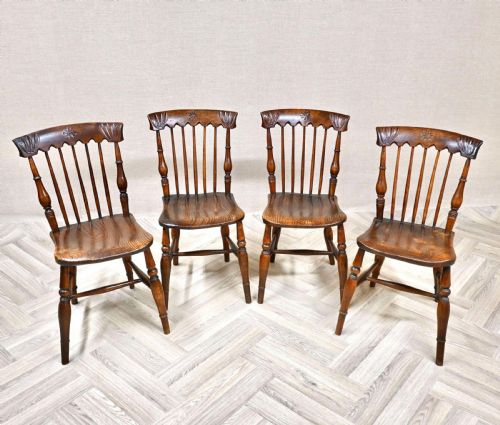


Carved Crest Back Chairs
These carved crest back chairs span centuries of woodworking, offering sturdy seats shaped by heraldry and regional joinery.
Carved Crest Back Chairs
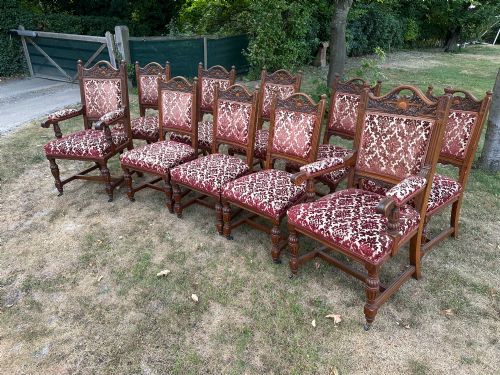
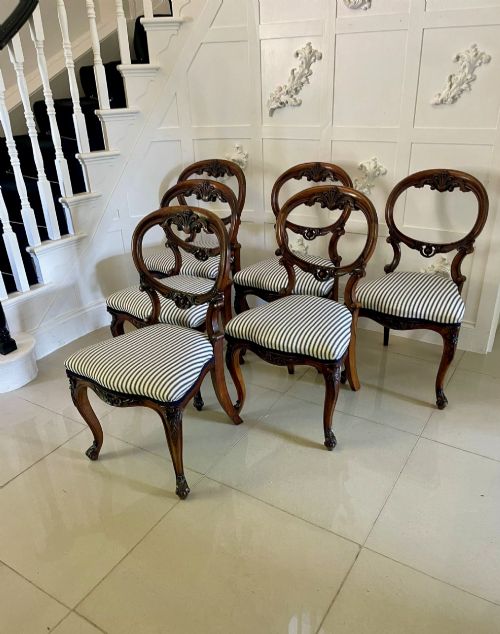
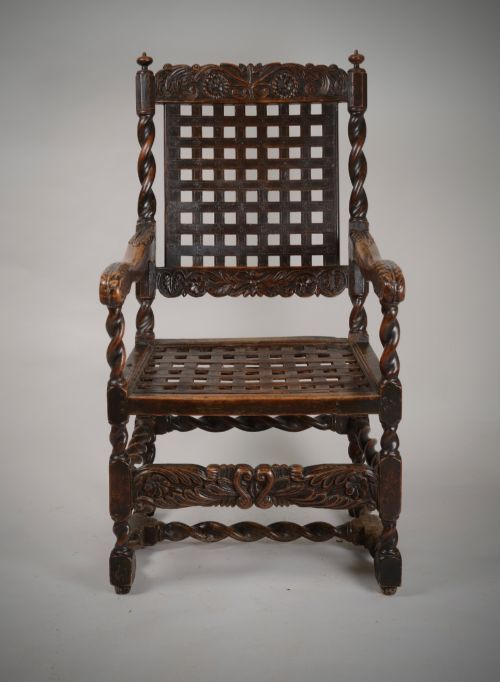
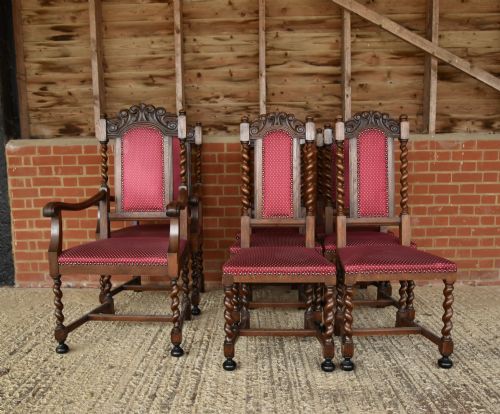
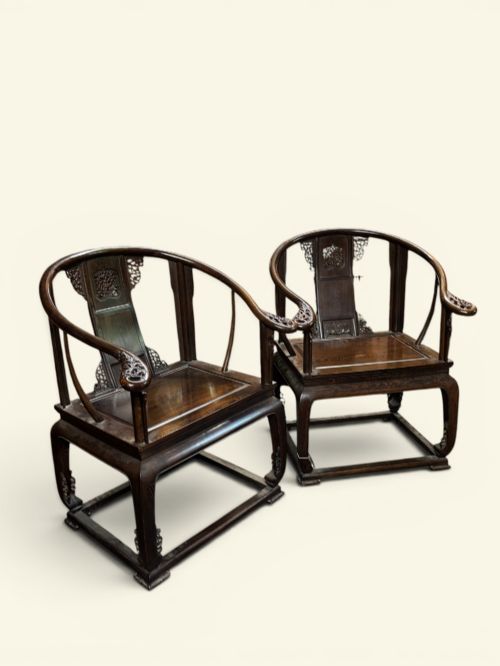
Carved crest back chairs appear in formats ranging from formal dining sets and single hall chairs to high backed library armchairs and sturdy wainscot seats. The examples found here span the seventeenth century through to the Edwardian period, capturing shifts in domestic seating over generations.
Oak and mahogany form the backbone of these selections, alongside walnut and beech frames. Buyers frequently encounter oak pieces from the seventeenth and nineteenth centuries, alongside mahogany examples produced during the Georgian, Regency, and Victorian eras.
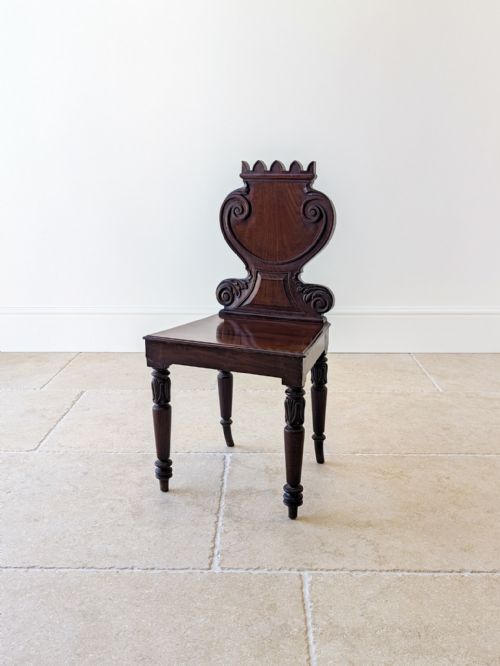
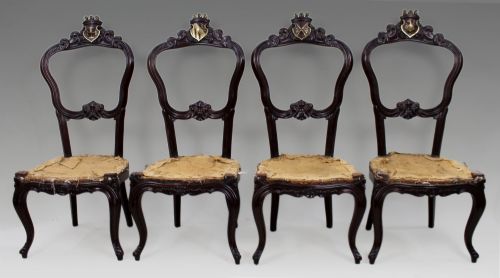
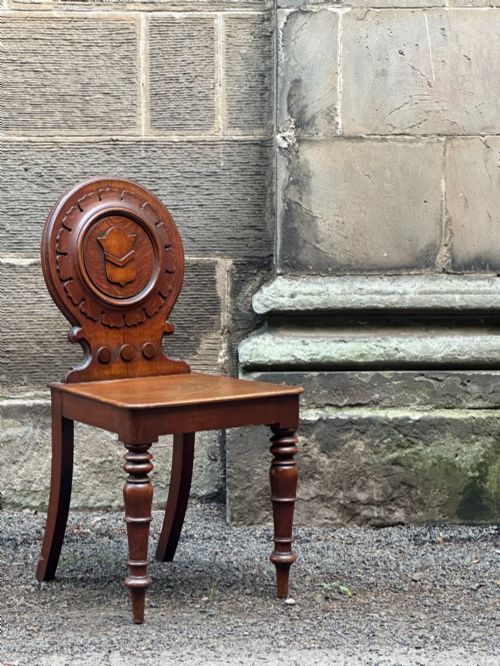
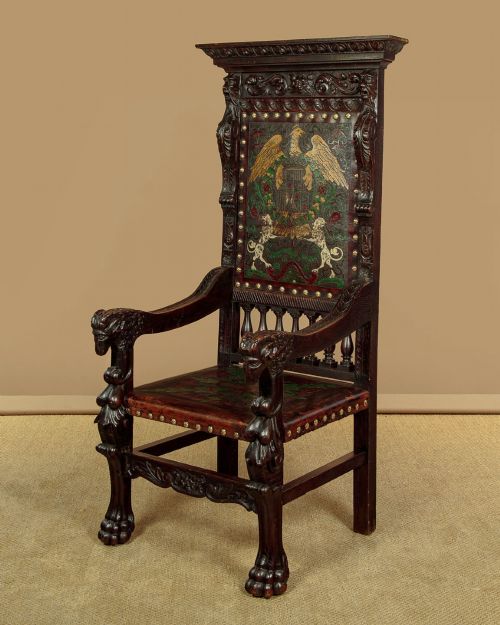
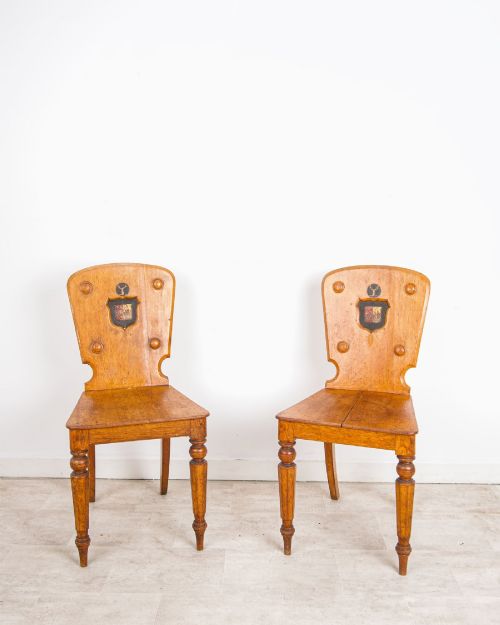
The defining characteristic across the group is the carved crest, which often incorporates heraldic shields, armorial bearings, or scrolling foliage. These details transform plain timber frames into statement furniture intended for reception rooms, halls, and dining spaces.
What varies in quality
The crispness of the carving on the upper crest dictates much of the visual distinction across these chairs. Sharp, deeply undercut foliage and distinct armorial details demonstrate superior bench work compared to softer, more rounded tool marks.
Timber selection and structural cohesion also separate standard utility chairs from finer reception pieces. Well figured mahogany or dense seventeenth century oak with original joinery commands greater appreciation than heavily restored or mismatched timber assemblies.
Listings feature timbers including oak, mahogany, walnut, beech, and rosewood across centuries of domestic seating.
Gillows·Waring and Gillow
The Carved Crest Back Chairs Glossary
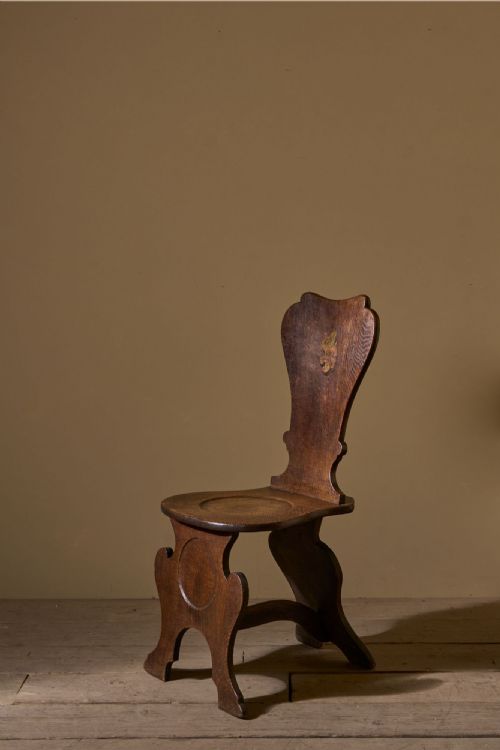
- Wainscot chair
- A heavy wooden armchair dating from the seventeenth century, constructed with panelled backs and solid timber seats. These pieces represent early domestic joinery before upholstered seating became widespread.
- Hall chair
- A rigid wooden seat, often featuring a painted or carved armorial crest on the back panel, designed for placement in entrance halls. They were primarily decorative indicators of lineage rather than comfortable lounging furniture.
- Barley twist
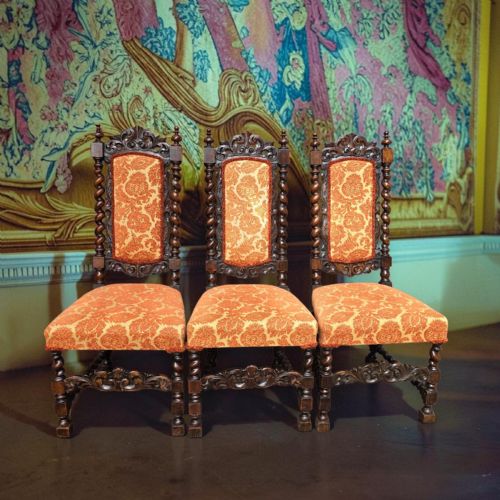
- A type of furniture turning resembling a twisted rope, carved into legs and stretchers during the seventeenth century and revived in later Victorian production. It adds texture and visual weight to oak and walnut frames.
- Bergere
- An enclosed upholstered armchair with wicker or cane panelling on the back and sides, originating in France. Examples here pair exposed wooden frames with woven cane support.
- Armorial
- Relating to heraldry, specifically depicting a family crest, shield, or coat of arms. These motifs are frequently carved into the crest rails of formal seating.
Carved Crest Back Chairs: Frequently Asked Questions
Where were hall chairs placed?
Hall chairs were traditionally positioned in the entrance halls of grand homes rather than domestic living spaces. Visitors would use them briefly while waiting to be announced.
Because they were meant for display and lineage rather than comfort, these chairs typically lack upholstery and feature rigid wooden seats paired with carved crest backs.
How do I identify a seventeenth century oak chair?
Seventeenth century oak chairs usually display pegged mortise and tenon joints, heavy timber scantlings, and patinated surfaces developed through centuries of handling. Elements like panelled backs and wainscot construction point directly to this early era.
Later Victorian revivals often mimic these forms, but examination of the timber dryness, tool marks, and construction methods reveals the true age of the joinery.
Can I use antique dining chairs daily?
Most sturdy antique dining chairs constructed from oak or mahogany remain entirely suitable for everyday use. Checking the stability of the joints and the security of the seat frame ensures they withstand normal seating.
Pieces with delicate cane work or antique leather require more mindful handling, whereas solid timber frames easily accommodate regular dining service.