


Traditional Dining Room Seating
Traditional dining room seating brings together sets of mahogany and oak chairs designed to gather people around a table in enduring style.
Traditional Dining Room Seating
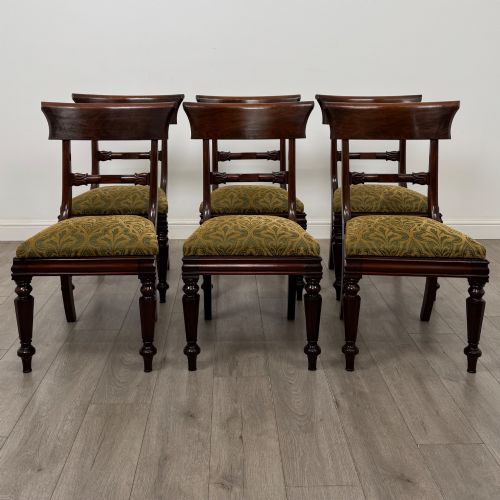
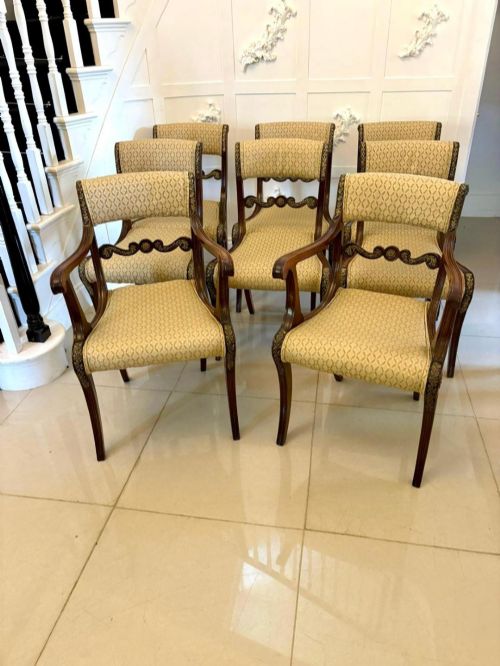
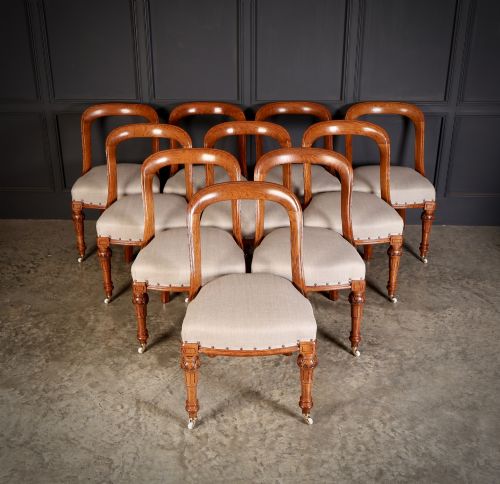
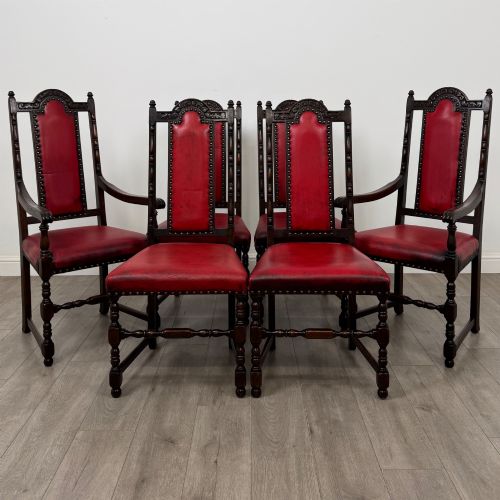
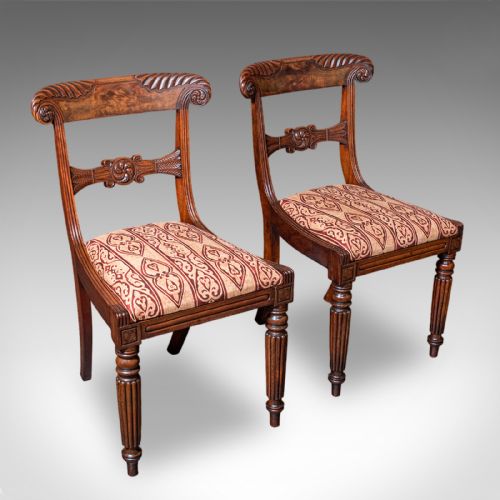
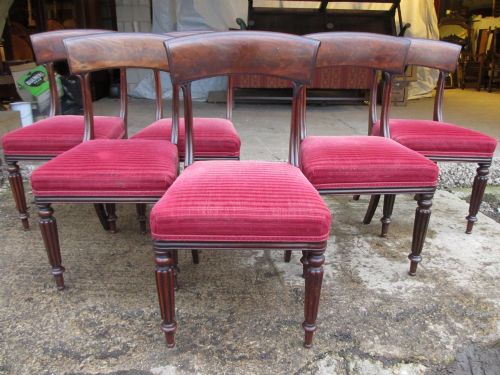
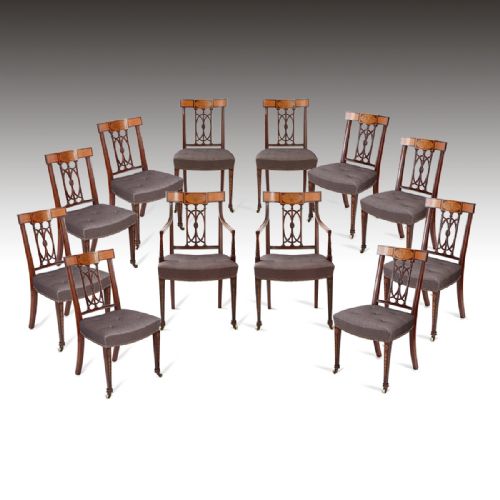
Traditional dining room seating consists principally of dining chairs and side chairs formed into matching sets or larger groupings. These pieces span periods from the Georgian era through the Victorian period and into the twentieth century, reflecting shifts in social dining habits over generations.
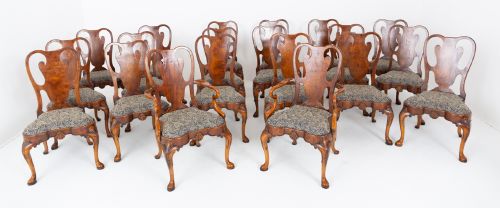
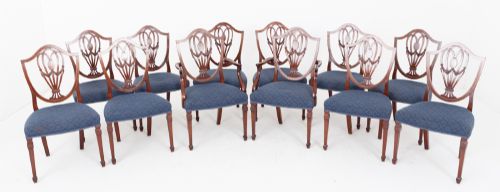
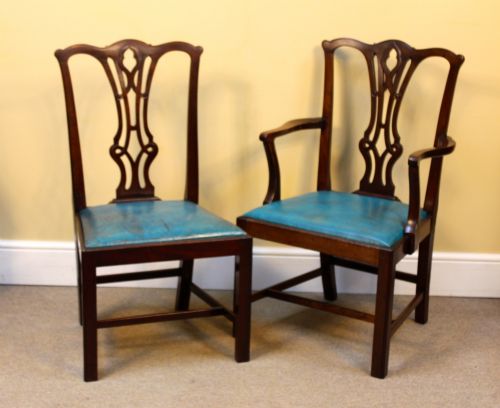
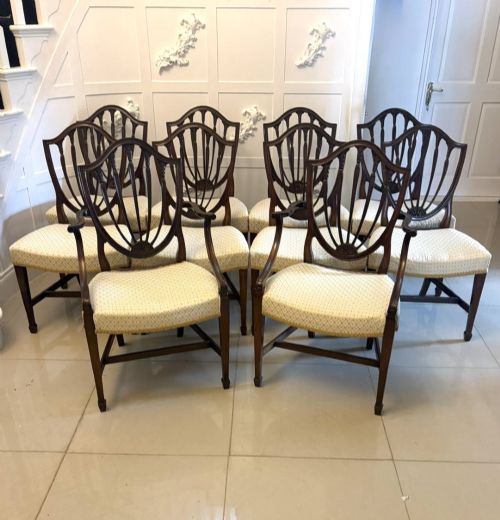
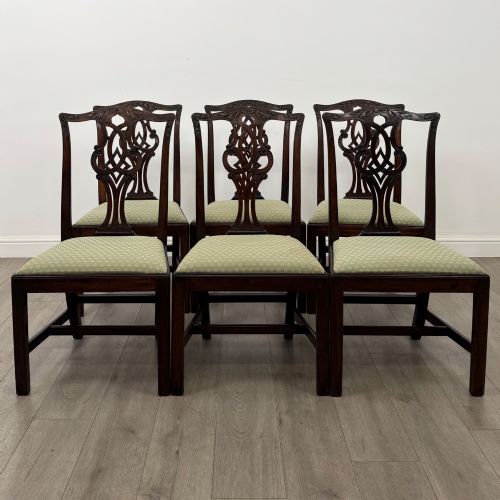
Buyers will most commonly encounter sets made from mahogany and oak, often styled after earlier aesthetic movements like Hepplewhite, Chippendale and Queen Anne. These suites frequently include carvers alongside single chairs to accommodate formal dining arrangements.
The selection ranges from intimate sets of four up to extensive matching groups of twelve or twenty pieces. Originating across the nineteenth and twentieth centuries, these chairs serve as both functional seating and historical examples of cabinet-making.
Factors that distinguish quality
The degree of hand-carving and the crispness of detail on wooden elements separate standard workshop output from exceptional cabinet-making. Cohesion across an entire set, where timber grain and colour match uniformly across every chair, dictates the upper tier of value.
The integrity of original frame construction and the survival of period upholstery materials influence the standing of a set. Greater numbers in a matching set, particularly those including armchairs or carvers, demonstrate superior original commission status.
Traditional Dining Room Seating Retail Price Guide 2026
Typical asking prices for traditional dining room seating among the pieces listed under this phrase on Sellingantiques today, from the lower quarter to the upper quarter. They describe what is for sale here now, not the wider market.
Maple and Co
The Traditional Dining Room Seating Glossary
- Carver
- An armchair designed to sit at the head of a dining table, usually matching the accompanying single dining chairs. These pieces feature integrated armrests for added comfort during formal meals.
- Shield back
- A chair back shaped in the outline of a heraldic shield, popularised during the Georgian period by designers such as Hepplewhite. This silhouette often incorporates pierced wooden splats.
- Balloon back
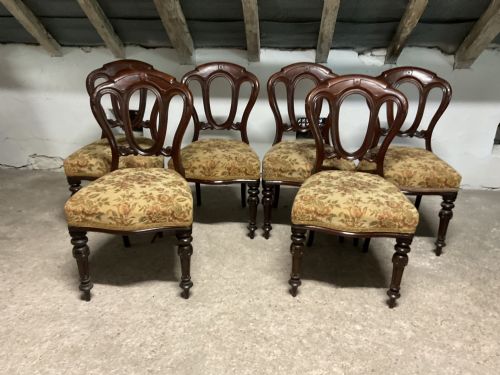
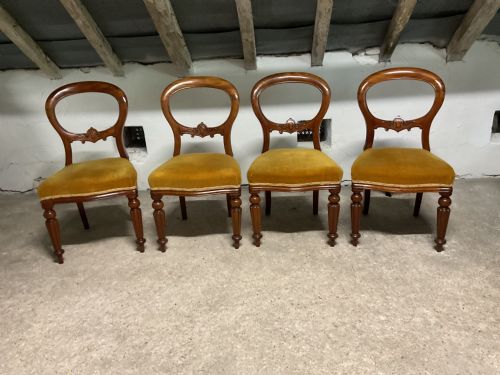
- A rounded, oval-shaped chair back that curves outward, prevalent in Victorian seating designs. This form offers ergonomic support through its continuous wooden frame.
- Splat
- The vertical wooden strip positioned down the centre of a chair back, connecting the crest rail to the seat. Makers frequently carved or pierced these elements to indicate specific styles.
Traditional Dining Room Seating: Frequently Asked Questions
How many chairs come in a typical set?
Sets generally range from four pieces up to twelve or twenty, often including a combination of standard single chairs and matching carvers with armrests.
Larger configurations suit extended dining tables, while smaller sets accommodate compact rooms or breakfast spaces.
What is the difference between mahogany and oak chairs?
Mahogany chairs tend to appear in formal Georgian, Regency and Victorian dining sets, offering a dark reddish-brown timber with fine grain. Oak chairs frequently align with country vernacular or Jacobean revival styles, displaying a robust and heavily grained surface.
Both timbers provide structural durability, but they project distinct aesthetic qualities within a dining room.
What are carver chairs used for?
Carvers are armchairs traditionally placed at the head and foot of the dining table for the hosts. Their integrated armrests provide a more commanding presence and additional support.
In larger antique sets, two carvers usually accompany a matching number of single side chairs.
How do I identify a Victorian dining chair?
Victorian pieces frequently feature balloon backs or elaborate carved walnut and mahogany frames. These designs often incorporate upholstered drop-in seats covered in fabric, leather or velvet.
Construction methods from this era reflect mechanised improvements alongside traditional hand-finishing techniques.