

Ball and Claw Dining Chairs
Ball and claw dining chairs anchor the room with substantial carved timber and distinctive grasping feet, bringing eighteenth-century presence to the modern table.
Ball and Claw Dining Chairs
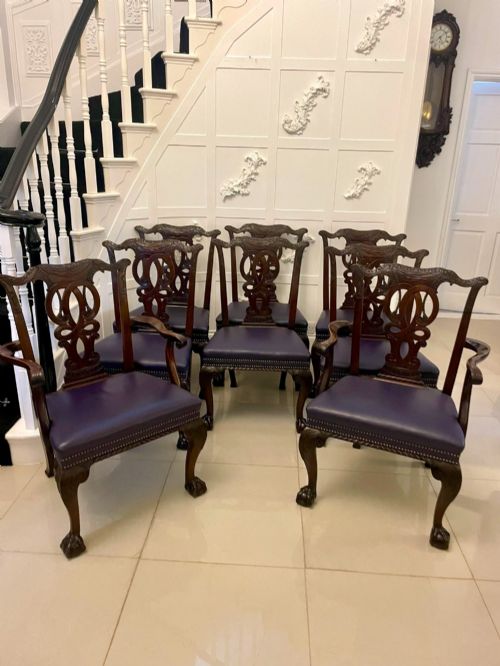
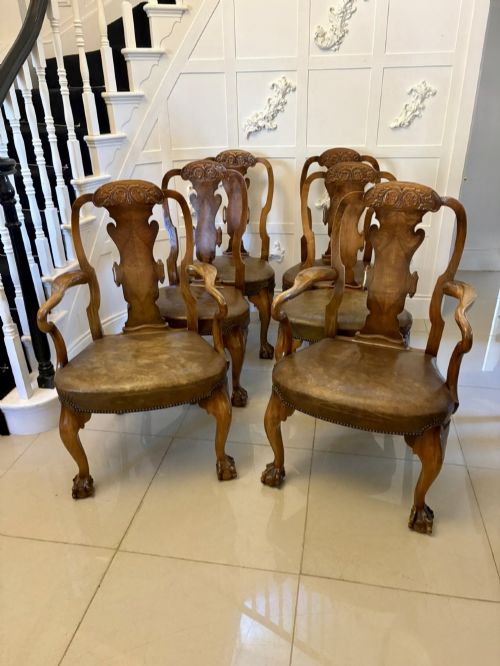
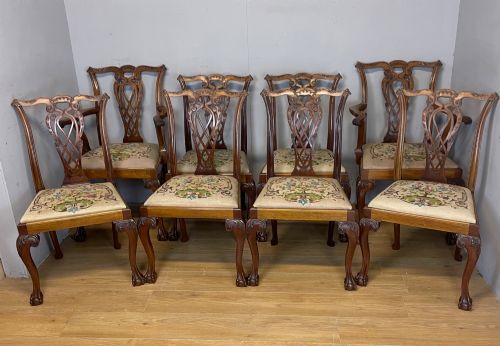
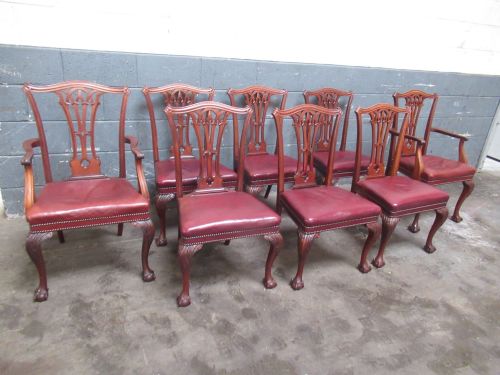
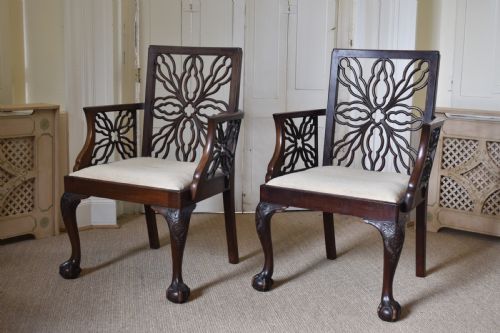
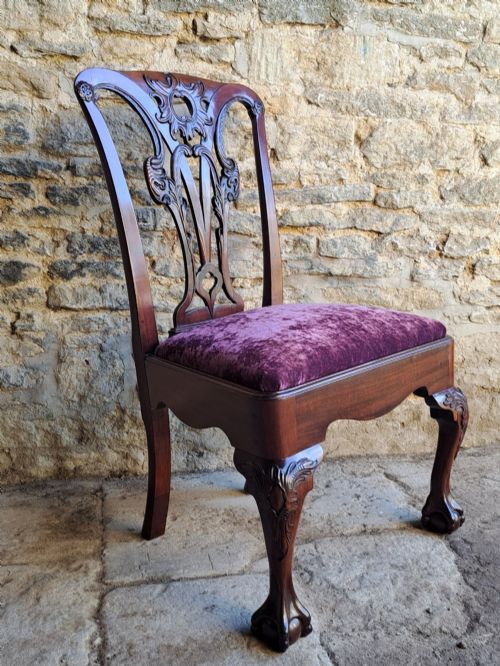
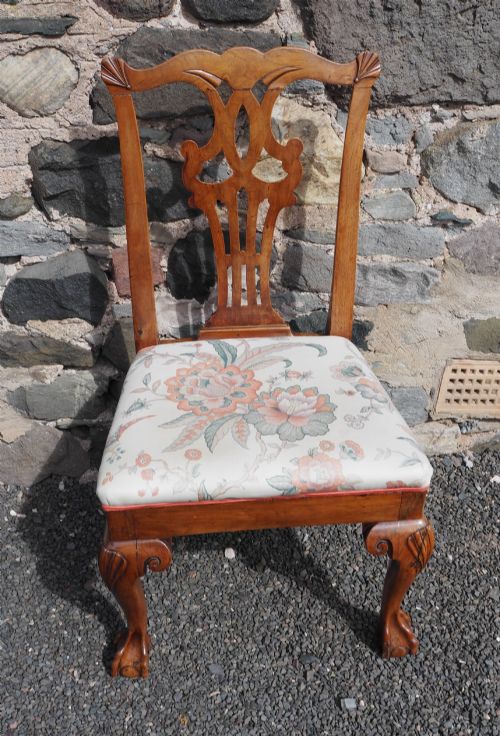
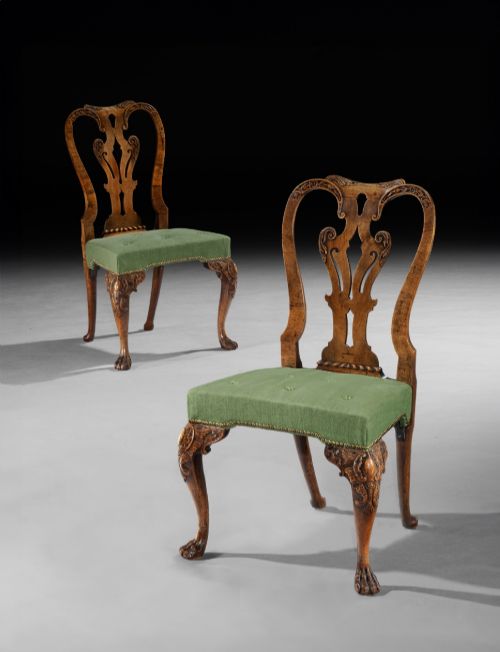
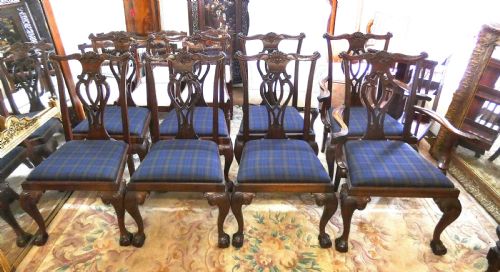
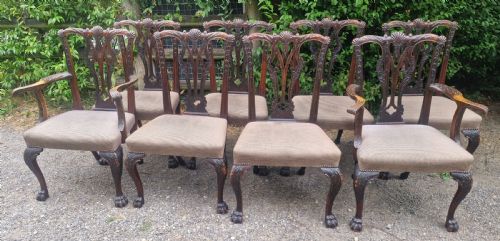
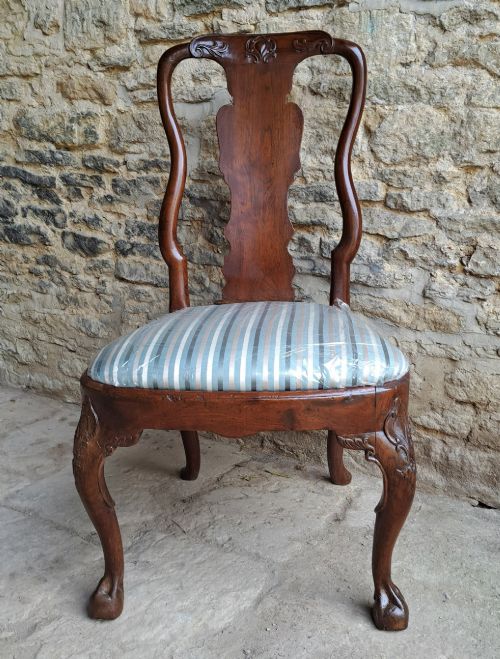
Ball and claw dining chairs represent a traditional form defined by carved feet gripping a spherical orb, appearing frequently in mahogany and walnut. Buyers examining ball and claw dining chairs encounter individual side chairs, pairs of open armchairs, and substantial dining sets spanning several periods.
The selections range from eighteenth-century originals to nineteenth-century interpretations and twentieth-century revivals. Chippendale style, Georgian revival, and Queen Anne influences dominate the designs seen across these listings.
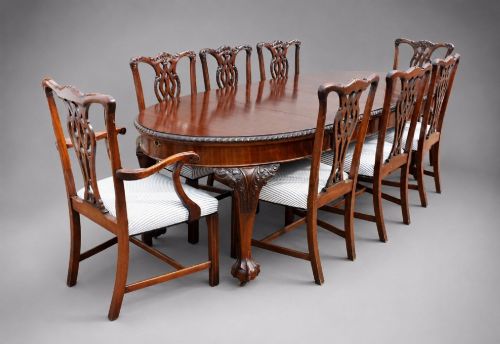
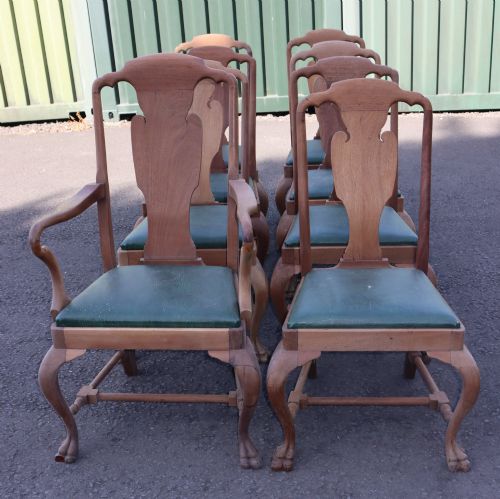
Sets vary from pairs to assemblies of eight, ten, or twelve chairs, often including armchairs alongside standard side chairs. These seating options emerge from periods such as the Georgian era, Victorian decades, and Edwardian years.
How They Were Made
Cabinetmakers utilised solid timbers, primarily mahogany and walnut, selected for grain density and structural strength to support carved elements. Cuban mahogany and red walnut appear in specific regional pieces.
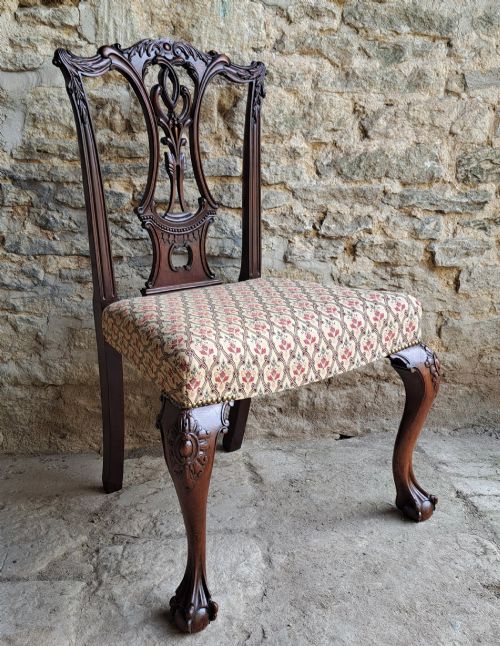
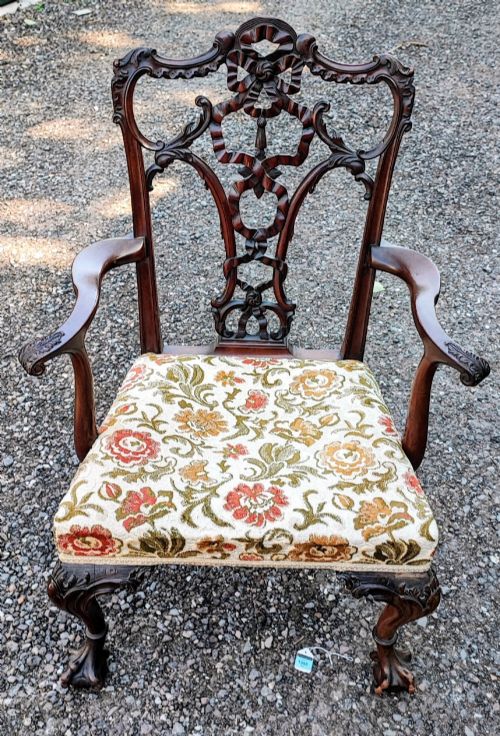
The distinctive feet require skilled hand-carving to shape the talons around the ball, often integrated into cabriole legs. Backrests and splats receive intricate piercing and relief carving, whilst seats are framed to hold upholstered pads or drop-in textiles.
Several sets include sturdy children's armchairs scaled down perfectly to match the full-sized dining chairs.
What Varies in Quality
The crispness of the foot carving distinguishes superior examples, where individual talons and knuckles are sharply defined rather than softened or blocky. Timber selection also dictates grade, with rich, figured mahogany and well-figured walnut achieving greater visual depth.
Structural integrity depends on the tightness of the joinery in the cabriole leg joints and the carved back splats. Original upholstery materials and tapestry seats preserved over generations add distinct character compared to later replacements.
Warings·Whytock and Reid
The Ball and Claw Dining Chairs Glossary
- Cabriole leg
- A furniture leg that curves outward at the knee and tapers inward toward the ankle, ending in a foot such as a ball and claw. This form derives from Chinese motifs adapted by European cabinetmakers.
- Chippendale style
- A design aesthetic reflecting the eighteenth-century pattern books of Thomas Chippendale, characterised by pierced splats and ornate carving. Revival versions emerged strongly during the nineteenth and early twentieth centuries.
- Carver chair
- An armchair designed to match a set of dining chairs, traditionally placed at the head of the table. These often feature open arms terminating in scrolled or carved handholds.
- Side chair
- A chair without arms, intended for placement along the sides of a dining table. These pieces match the timber and carved details of accompanying carver chairs in larger dining sets.
- Splat
- The vertical central strip of wood in the back of a chair. In these pieces, the splat frequently displays elaborate pierced or interlaced fretwork.
Ball and Claw Dining Chairs: Frequently Asked Questions
What periods do these chairs come from?
The pieces span from the mid-eighteenth century through the Victorian and Edwardian eras up to the early twentieth century. Many examples represent revival periods rather than original eighteenth-century production.
Cabinetmakers across these different decades reinterpreted earlier Georgian and Chippendale styles, applying traditional carving techniques to solid mahogany and walnut frames.
How do I care for antique wood?
Maintain stable indoor humidity levels and keep wooden frames away from direct heat sources and strong sunlight. Regular dusting with a soft cloth preserves the polished surface without harsh chemical polishes.
Inspect joinery periodically to ensure leg joints and carved back frames remain stable under daily use.
What is the difference between side chairs and carvers?
Side chairs lack arms and fit compactly along the straight edges of a dining table. Carver chairs feature open arms and are traditionally positioned at the head and foot of the table.
Both forms share matching timber, leg styles, and carved back designs within assembled dining sets.
Are large sets common?
Dining sets ranging from six to twelve chairs appear regularly across the listings. These often include a matching combination of standard side chairs and a pair of armchairs.
Assembled sets provide a uniform appearance for dining rooms, matching the timber and decorative carving throughout.