






Carved Crest Arm Chair
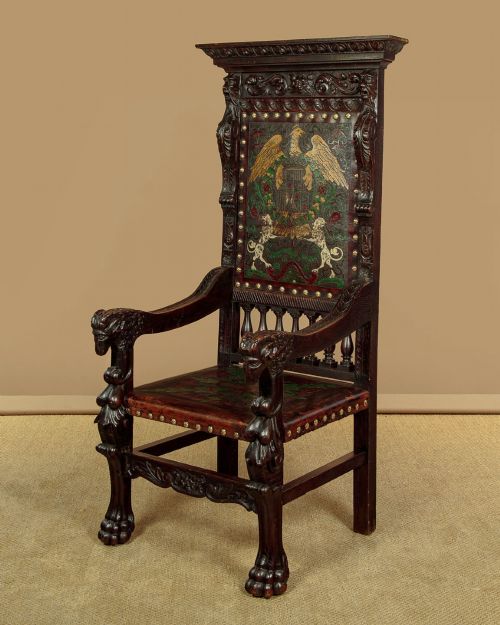
A carved crest arm chair brings immediate weight to a room, offering substantial timber frames and heraldic carving passed down through centuries.
Carved Crest Arm Chair
A carved crest arm chair covers robust seating forms spanning from the seventeenth century through to the early twentieth century. Buyers seeking this phrase encounter sturdy timber frames marked by prominent top rails and substantial arm supports.
The selection here draws heavily on Victorian interpretations alongside older seventeenth century and eighteenth century foundations. Oak and walnut predominate, often accompanied by mahogany and rosewood in later nineteenth century iterations.
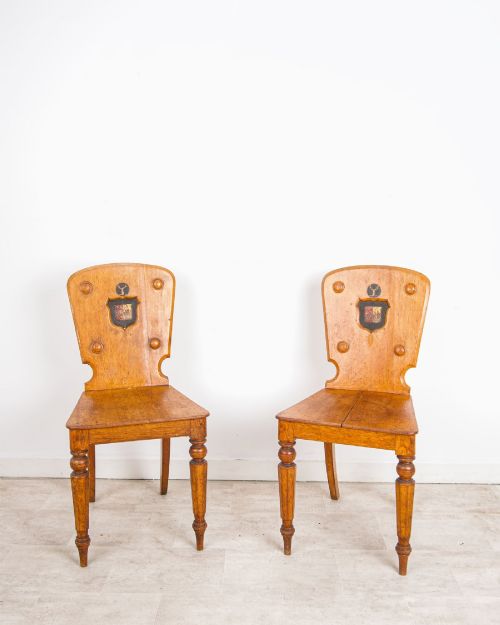
Forms range from high backed library seating and upholstered armchairs to hall chairs fitted with heraldic shield backs. These pieces serve as both functional seats and focal points displaying distinct regional and stylistic revivals.
How they were made
Cabinetmakers constructed these frames primarily in solid oak, walnut, mahogany, and rosewood using traditional joinery methods suited to heavy daily use. Turnings, barley twists, and plank backs provided structural stability alongside decorative presence.
Surface ornamentation relied on hand carving directly into the dense timber, frequently incorporating heraldic shields, crests, and classical revival motifs. Leather, tapestry, and textile upholstery were secured with brass tacks to padded frames.
Carved Crest Arm Chair Retail Price Guide 2026
Typical asking prices for carved crest arm chair among the pieces listed under this phrase on Sellingantiques today, from the lower quarter to the upper quarter. They describe what is for sale here now, not the wider market.
Several chairs on this page wear their heraldic shields with quiet dignity, pretending they still rule a small barony somewhere in Yorkshire.
What varies in quality
Depth and crispness of the timber carving dictate the visual impact of the upper crest and arm supports. Sharply defined heraldic details and balanced proportions distinguish finer workshop output from simpler vernacular production.
The choice and density of primary timbers, from richly grained walnut to dense seventeenth century oak, influence the structural integrity and longevity of the frame. Original surface patination and untouched timber ageing elevate the standing of a piece.
The Carved Crest Arm Chair Glossary
- Crest
- The uppermost decorative rail of a chair back, often carved with coats of arms or floral motifs. It anchors the visual weight of the design.
- Barley Twist
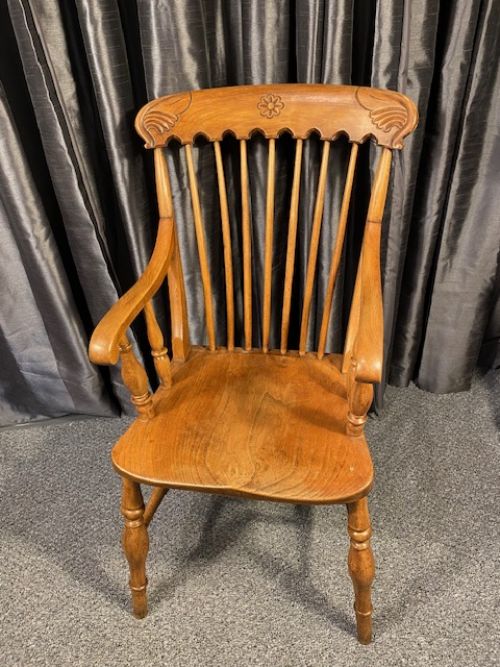
- A cylindrical furniture leg or stretcher carved in a spiral resembling twisted barley sugar. This turning style appears frequently on seventeenth century and revival pieces.
- Heraldic Shield
- A decorative emblem shaped like a medieval shield, frequently carved onto chair backs or crests to display familial coats of arms. These elements denote lineage and status.
- Carver
- An traditional term for an armchair, typically designed with arms to match a set of smaller side chairs intended for dining or hall use.
- Plank Back
- A solid vertical timber board forming the back of a chair rather than upholstered padding or open splats. This construction method provides robust support in early seating.
Carved Crest Arm Chair: Frequently Asked Questions
Where were carved crest arm chairs placed?
These chairs traditionally sat in entrance halls, libraries, and principal reception rooms where their heraldic crests and substantial timber frames signaled family lineage and social standing.
In modern interiors, they function effectively as standalone statement pieces beside fireplaces or desks, where their historical carved details remain fully visible.
How do I care for leather and wood?
Maintain the timber by applying traditional wax polish periodically to preserve the natural grain and prevent the surface from drying out over time.
Treat leather upholstery with a suitable conditioner to keep the material supple while avoiding direct exposure to strong sunlight.
Are these chairs comfortable for daily use?
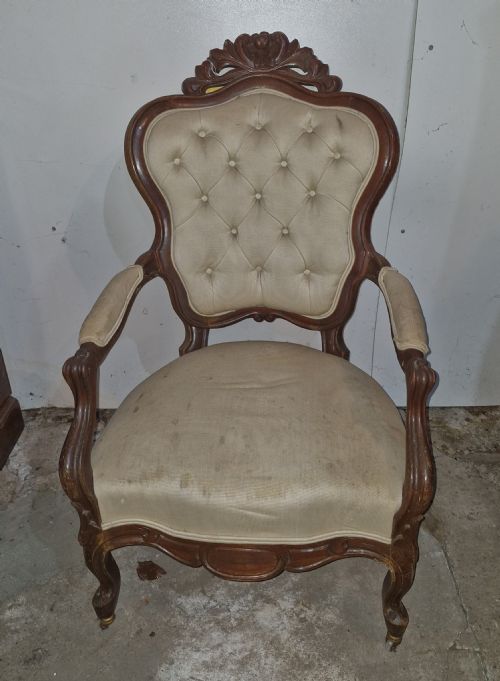
Seventeenth and eighteenth century forms tend to feature upright wooden backs and firm seats designed for posture rather than lounging. Later Victorian and Edwardian iterations often incorporate padded upholstery and supportive armrests suited to prolonged sitting.
Selecting a version with upholstered leather or textile pads provides a softer seat for library or living room environments.
How do I distinguish a seventeenth century chair from a revival piece?
Original pieces from the seventeen hundreds or earlier display authentic timber shrinkage, peg construction marks, and deep patination accumulated through centuries of handling. Revival pieces from the Victorian era or nineteen ten often exhibit machine-assisted joints and crisp, uniform surface treatments.
Examining the underside and interior joinery reveals the tool marks and ageing characteristics specific to each period.