



Gothic Leather Armchair
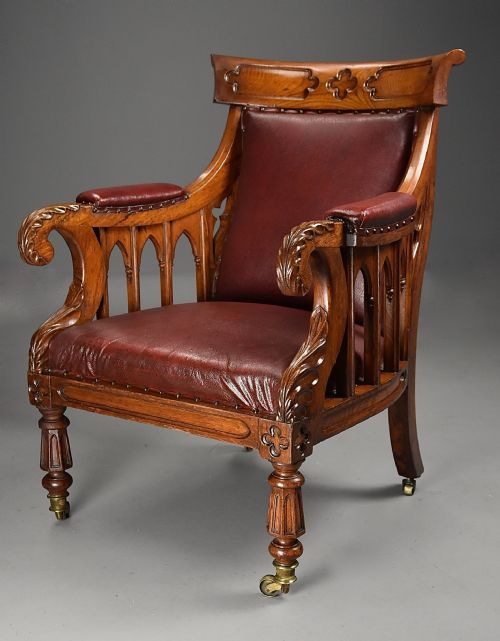
A gothic leather armchair combines heavy timber framing with upholstered hides, built for dark, imposing interiors during the nineteenth century.
Gothic Leather Armchair
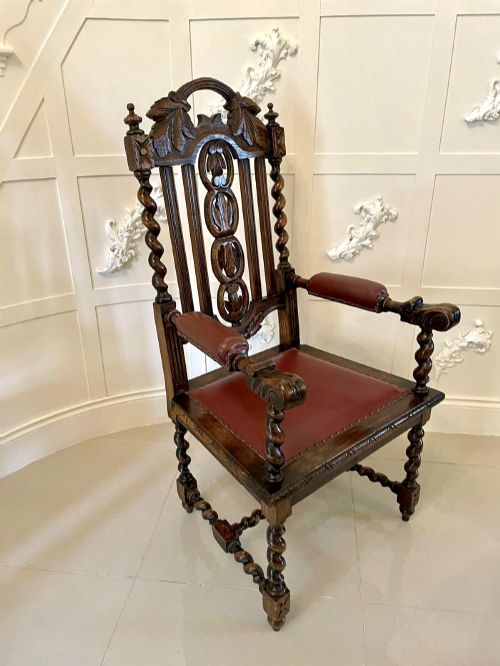
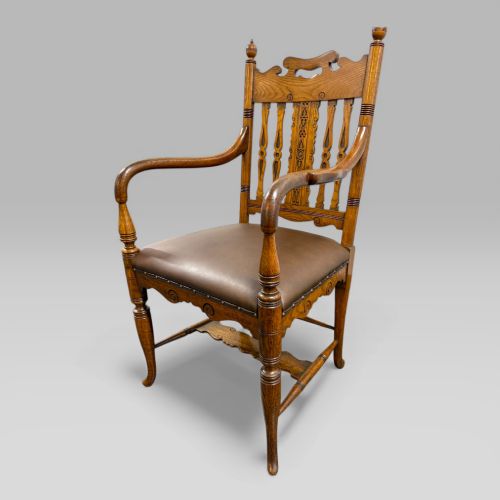
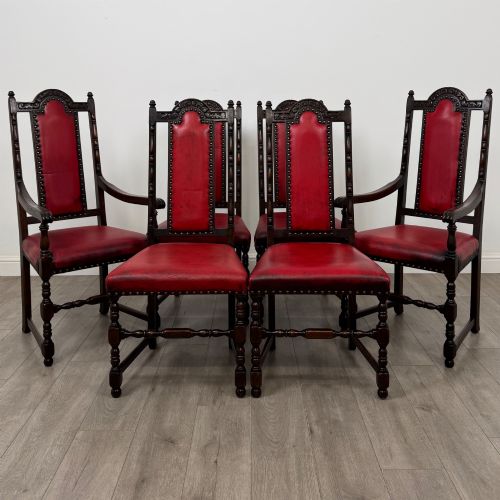
A gothic leather armchair typically emerges from nineteenth century revival movements, blending heavy timber construction with padded or embossed hides. When searching for a gothic leather armchair, buyers most commonly encounter Victorian examples rooted in Gothic Revival, Jacobean Revival, or Arts and Crafts styles.
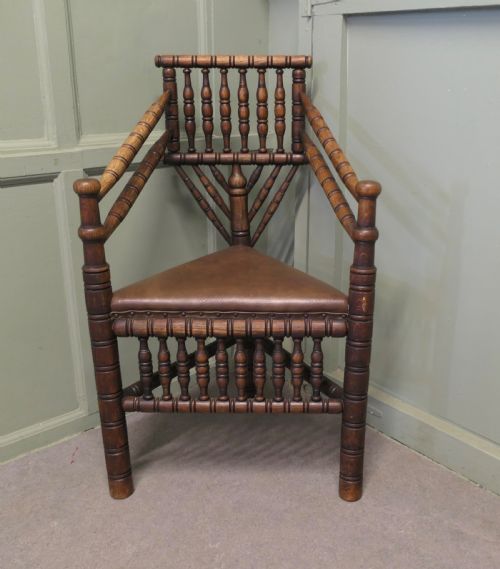
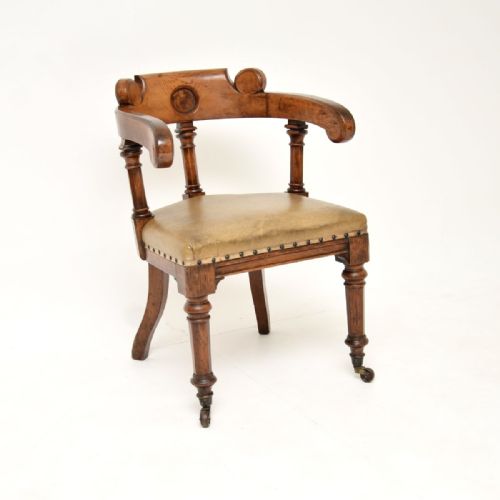
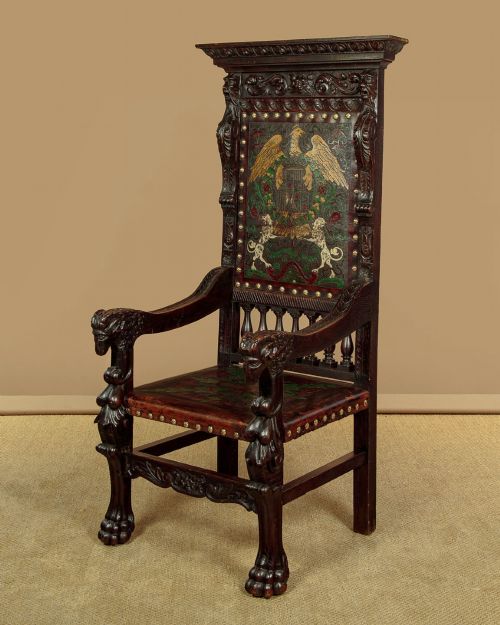
These seats appear primarily as library armchairs, desk chairs, or large throne carvers built from sturdy woods. The forms draw heavily on medieval and Renaissance motifs, utilising high backs, turned supports, and deep leather upholstery for substantial visual weight.
How they were made
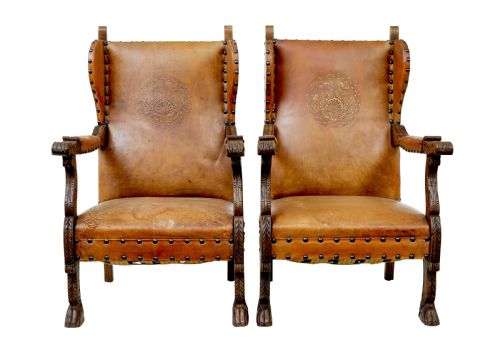
Makers constructed these frames predominantly from solid oak, walnut, or mahogany, often relying on deep carving, peg joints, and turned wooden components. The timber is frequently paired with leather panels, which are secured via brass studding, buttoning, or embossed ornamentation.
Surface treatment ranges from polished golden oak to painted leather and dark wax finishes, matching the revival tastes of the period. Workshops employed structural elements like X-frames, armorial panels, and carved tracery to emulate medieval joinery techniques.
Gothic Leather Armchair Retail Price Guide 2026
Typical asking prices for gothic leather armchair among the pieces listed under this phrase on Sellingantiques today, from the lower quarter to the upper quarter. They describe what is for sale here now, not the wider market.
Listings feature oak, walnut, and mahogany frames paired with brass, cane, and leather across the nineteenth century.
What varies in quality
The distinction between standard seating and superior examples rests in the depth and crispness of the timber carving. Elaborate tracery, figural carving, and substantial proportions indicate a higher grade of workshop production.
Material selection and upholstery execution also divide the range. Thick, high-grade leather panels with careful hand-tooling or deep buttoning elevate a piece above simpler utilitarian forms.
Gillows·S and H Jewell·Lamb Of Manchester
The Gothic Leather Armchair Glossary
- Gothic Revival
- An architectural and decorative style popular in the nineteenth century that revived medieval forms, pointed arches, and heavy structural framing.
- Throne Chair
- A tall-backed, imposing armchair designed to dominate a room, frequently featuring elaborate timber carving and armorial details.
- Turned Chair
- A seating form constructed primarily from cylindrical wooden members shaped on a lathe, common in early and revival periods.
- X-Framed Chair
- A form featuring intersecting diagonal supports forming an X shape when viewed from the side, drawing on Renaissance design.
- Embossed Leather
- Hide decorated with raised patterns pressed into the surface, often utilised for chair backs and seat panels.
Gothic Leather Armchair: Frequently Asked Questions
How do I identify a gothic leather armchair?
Look for heavy timber frames, pointed arch motifs, linenfold or tracery carving, and substantial leather upholstery.
These characteristics reflect the nineteenth century revival of medieval design principles in domestic seating.
Where were these armchairs placed originally?
Libraries, studies, and grand reception rooms housed these substantial seats to project authority and historical connection.
Their heavy construction suited formal interior spaces rather than casual everyday use.
Are these chairs comfortable for daily use?
Deep padding and wide wooden arms provide solid support, though the upright posture enforced by high backs differs from modern lounging seats.
Many library and desk variants were engineered for long periods of reading or writing.
How do I care for the leather panels?
Maintain the hide by avoiding direct sunlight and applying appropriate leather balms to prevent drying and cracking over time.
Gentle dusting preserves the surface finish without disturbing brass studding or embossed details.