



Carved Colonial Cabinet
A carved colonial cabinet brings dense tropical timber and intricate regional carving together into a substantial piece of storage furniture.

Carved Colonial Cabinet
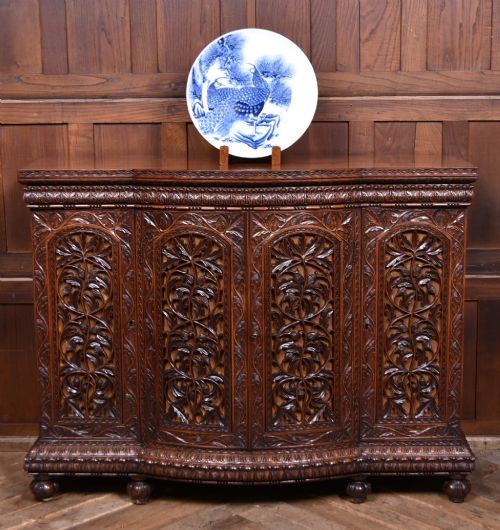
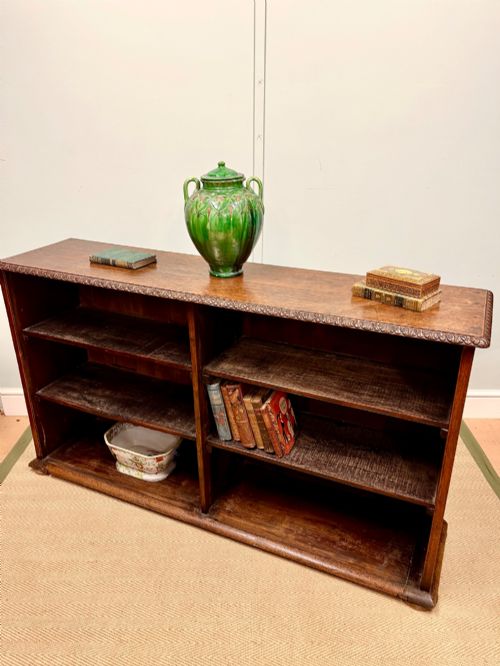
A carved colonial cabinet encompasses a range of storage forms produced during the nineteenth century and earlier, reflecting European furniture types adapted by overseas workshops. Sideboards, bookcases, desks and cabinets on stand dominate the selection, often carrying deep relief carving associated with Anglo-Indian or Portuguese colonial production.
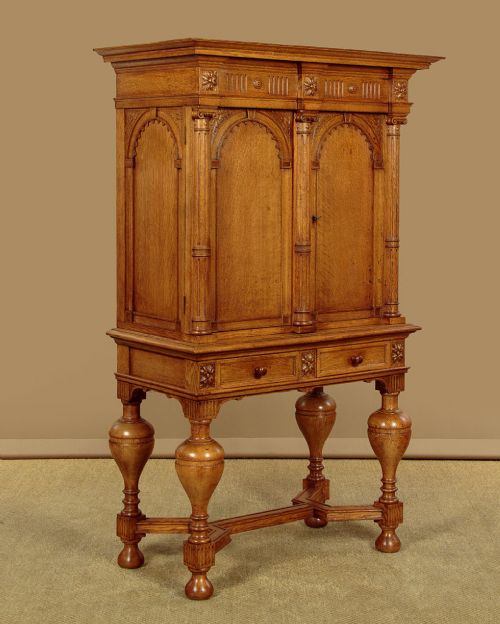
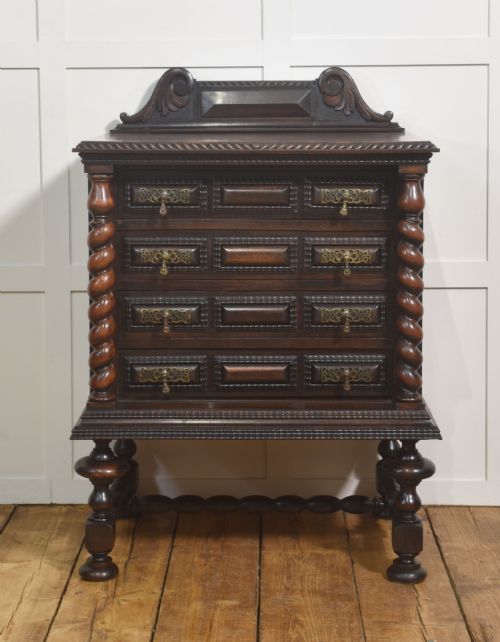
The materials and styles span varied geographical influences, from Anglo-Burmese padauk sideboards to Dutch oak cabinets and Spanish folk art altars. Pieces frequently combine regional motifs with standard European forms such as chests of drawers, linen presses and writing desks.
Buyers encounter sturdy side cabinets, corner cupboards and display furniture built for domestic utility in tropical or overseas postings. These items bridge multiple design traditions, uniting European cabinet-making skeletons with distinct indigenous ornamentation.
How they were made
Construction relies heavily on dense tropical hardwoods such as teak, padouk wood, rosewood and satinwood, alongside European oak and walnut. These timbers provide the structural stability required for deep chisel work and heavy ornamentation.
Surface decoration depends on skilled hand carving, relief work and occasional brass hardware integration. Woodworkers join solid timber panels using traditional joinery methods suited to humid climates and heavy daily use.
Listings feature 19th-century pieces alongside examples dated to 17th century, 1860, 1880, 1900, 1920, and 1930.
What varies in quality
Depth and crispness of the carving dictate much of the visual success in these pieces, separating fluid botanical relief work from stiff or shallow execution. The handling of secondary timbers and interior fittings also marks the distinction between standard utility items and ambitious commission work.
Proportion and timber selection play a major role, particularly where contrasting grain patterns in padouk or satinwood elevate the surface presence. Original hardware, stable stands and well-fitted doors or drawers ensure the piece retains its structural integrity.
The Carved Colonial Cabinet Glossary
- Padouk wood
- A heavy, durable tropical hardwood with a reddish hue used extensively in Anglo-Indian furniture. It takes fine, crisp detail under the carver's chisel.
- Cabinet on stand
- A freestanding storage compartment raised on a separate supporting base or frame. This form often lifts elaborate casework off the floor to display decorative legs and stretchers.
- Chiffonier
- A compact sideboard or low cabinet equipped with drawers and shelving. It serves as convenient living room storage for dining accessories or papers.
- Linen press
- A tall cupboard originally designed for storing folded textiles and garments on sliding trays. Interiors typically feature multiple internal shelves behind double doors.
Carved Colonial Cabinet: Frequently Asked Questions
What is a colonial cabinet?
A colonial cabinet is a storage piece made in European settlement regions, combining Western furniture shapes with local timber and carving styles.
These items range from sideboards and bookcases to small desk units and display cabinets.
Where were these cabinets made?
Production centres span diverse territories influenced by trade and administration, including India, Burma, Ceylon, and European outposts.
Workshops in these regions adapted domestic storage forms for colonial administrators and international export markets.
Which woods are used?
Construction primarily utilises dense tropical hardwoods like padouk, teak, rosewood, and satinwood. European timbers such as oak and walnut also appear in specific regional revivals.
These durable materials support intricate chisel work and resist heavy wear.
How do I style one at home?
These cabinets function well as focal points in hallways, living rooms, or dining spaces where their dense carving stands out against plain walls. Pair them with neutral surroundings to highlight the grain and relief work.
Use interior shelving for displaying ceramics, books, or everyday household items.