
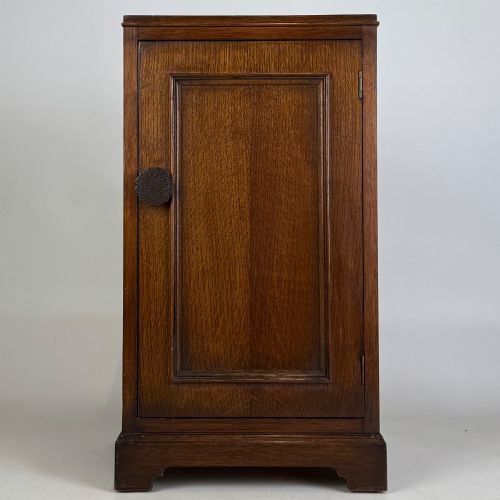
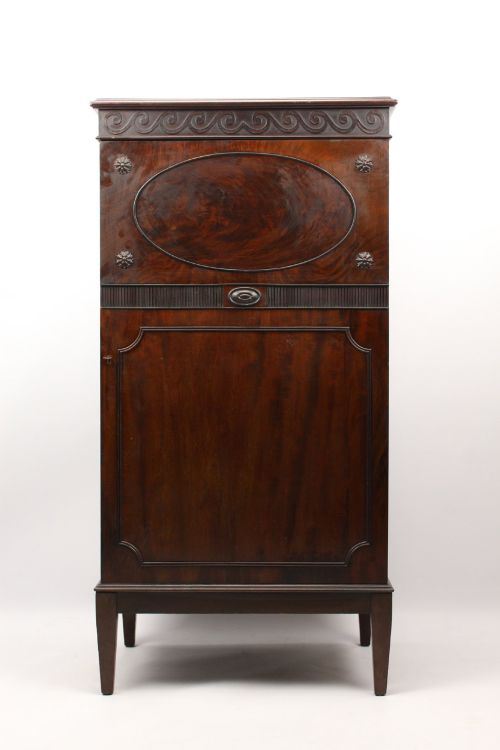
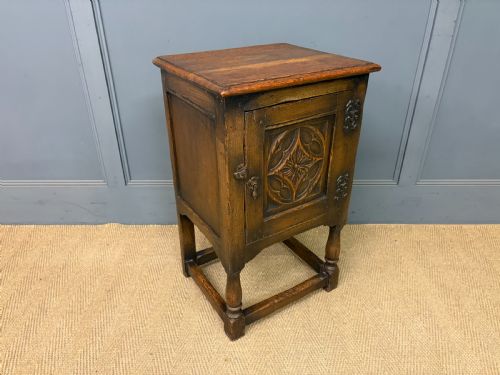
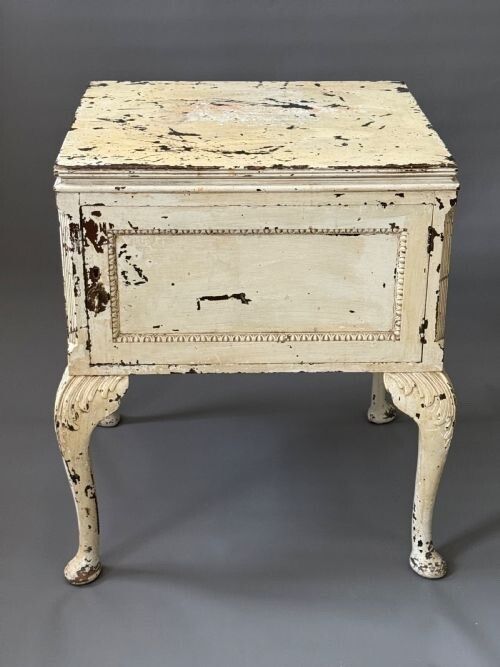
Carved Pedestal Cabinet
A carved pedestal cabinet brings architectural presence and concealed storage to a room, ranging from compact bedside cupboards to grand dining room sideboards.

Carved Pedestal Cabinet
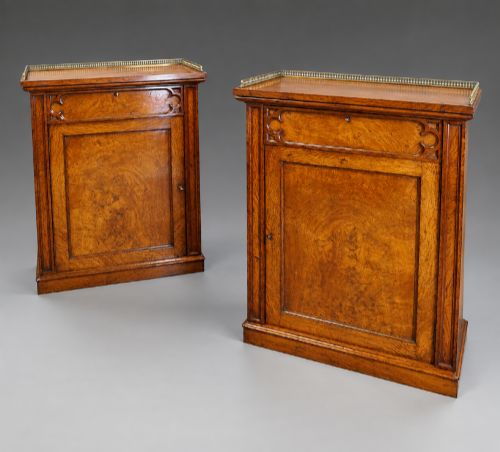
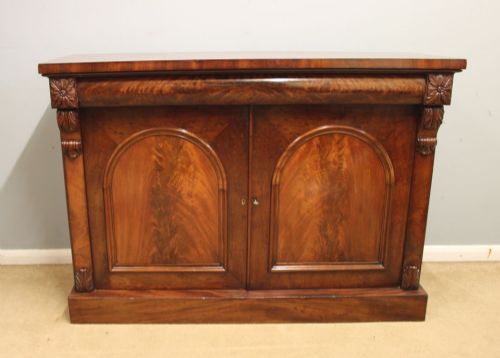
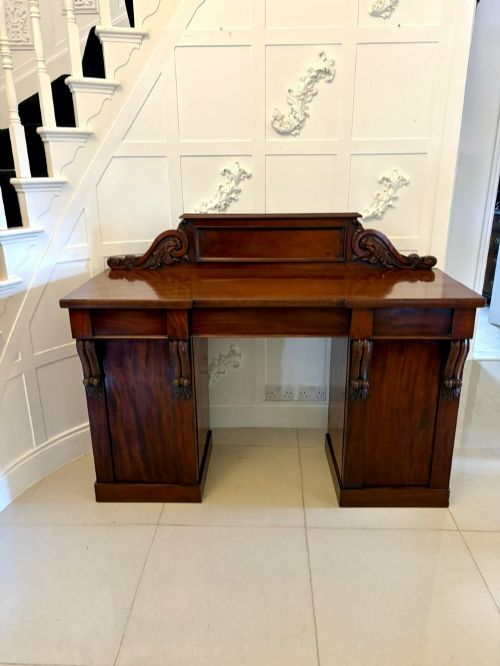
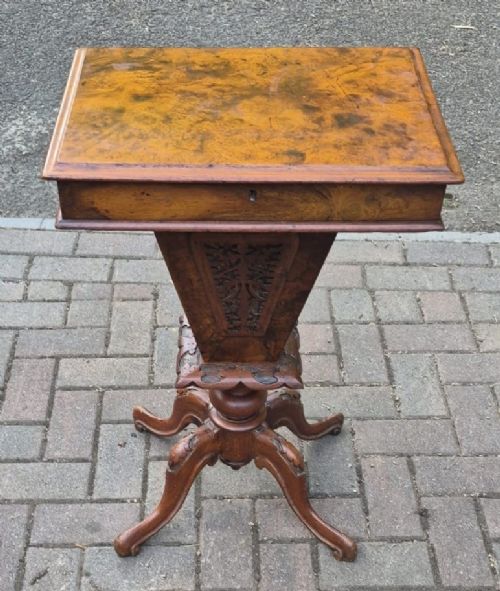
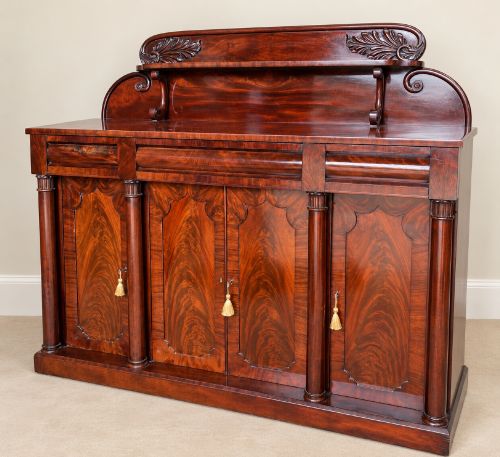
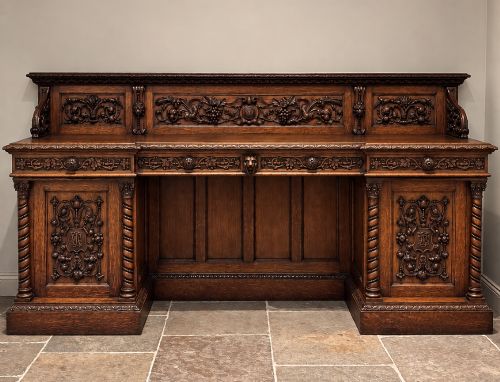
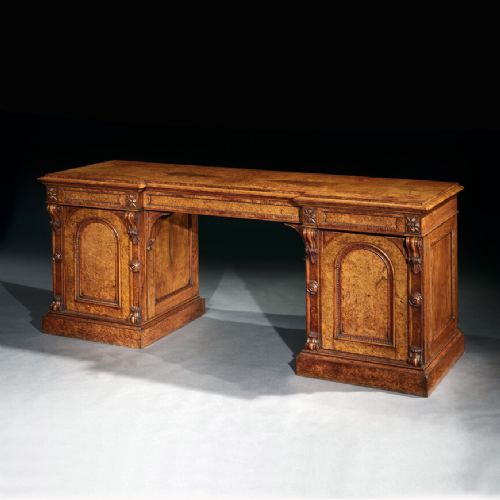
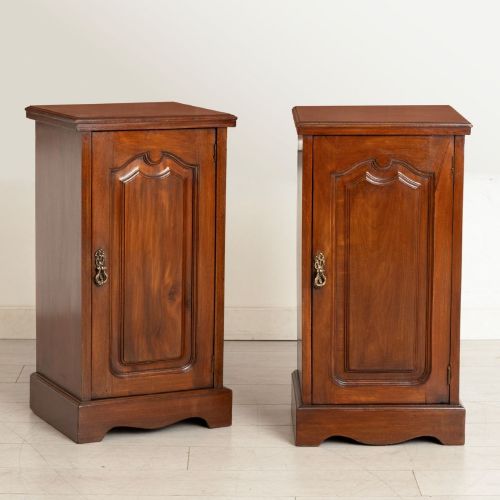
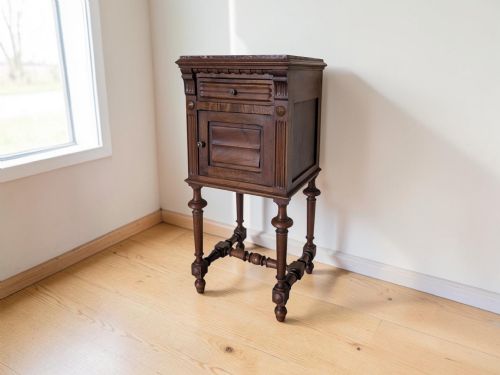
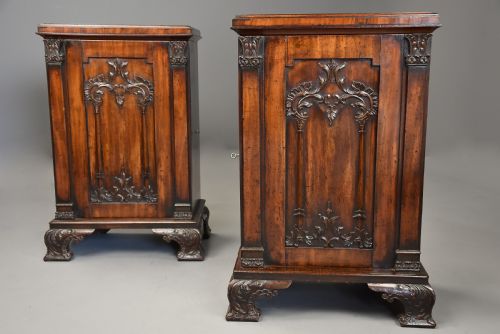
A carved pedestal cabinet represents a diverse group of case furniture designed to elevate storage onto a single or double plinth base. When you examine a carved pedestal cabinet on this page, you encounter forms spanning from Victorian bedside cupboards and tall oak stationery units to substantial mahogany and walnut sideboards. These pieces originate predominantly from nineteenth and early twentieth century British, French, and Irish workshops, reflecting shifting domestic requirements for functional display.
The selection frequently includes matched pairs of bedside cabinets alongside single freestanding cupboards and larger server units. Makers constructed these items using dense native and imported timbers, carving surface details with motifs drawn from Gothic Revival, French Henri II, and Queen Anne styles. Buyers select these items to anchor a room scheme while providing practical enclosed shelving and drawer space.
Materials and Construction
Cabinet makers relied heavily on solid hardwoods like mahogany, walnut, and oak, often applying figured veneers such as burr walnut or pollard oak to primary display surfaces. Workshops utilised secondary woods for internal framing, incorporating brass hardware for hinges, handles, and locks. Selected pieces integrate marble tops or glass panels, combining weight and durability with decorative contrast.
Joinery techniques involved precise dovetailing for drawer construction and mortise and tenon joints for structural frames. Carvers applied relief ornamentation directly into the solid timber or onto applied mouldings, defining panels, pilasters, and bracket feet. Surface finishes depended on hand-applied polishes that highlighted natural grain patterns and rich colour variations.
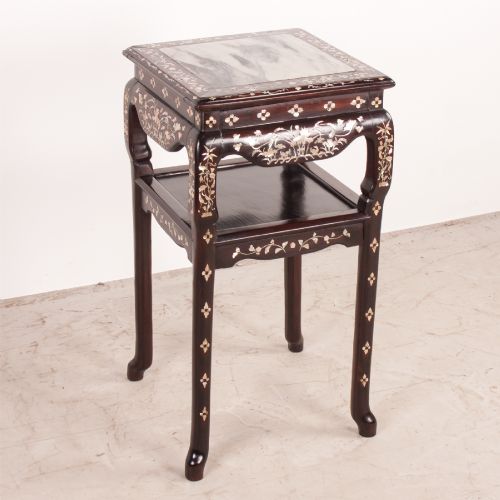
Mother-of-pearl inlay occasionally catches the light on imported occasional tables, proving that Victorians loved a bit of overseas shimmer.
Indicators of Excellence
Quality separates through the depth and crispness of hand-carving alongside the selection of timber veneers. Superior examples display symmetrical figuring across matched doors and drawer fronts, whereas lesser pieces rely on plain or heavily patched surfaces. The integrity of internal secondary timbers and original hardware further distinguishes high workshop standards.
Proportion and structural harmony define the upper tier of production, where carvers and joiners maintained balanced sightlines across heavy pedestals and cornices. Cabinets that retain matching pairs, original marble slabs, and functional interior shelving demonstrate superior preservation compared to heavily altered or mismatched survivors.
Denby & Spinks·Epstein
The Carved Pedestal Cabinet Glossary
- Pedestal
- A structural base or column supporting a cabinet body. It elevates the storage compartment off the floor.
- Burr Walnut
- Timber harvested from walnut tree growths, producing swirling, highly decorative grain patterns. Cabinet makers prized this veneer for high-status facades.
- Gothic Revival
- An architectural and decorative style inspired by medieval design. It incorporates pointed arches, trefoils, and heavy carved tracery.
- Figured Mahogany
- Tropical hardwood selected for distinct, light-reflecting grain formations such as flame or ripple. It provides rich colour across large furniture surfaces.
- Dovetail
- A traditional interlocking joint used in drawer construction. Multiple triangular pins and tails lock together to resist pulling forces.
Carved Pedestal Cabinet: Frequently Asked Questions
What is a pedestal cabinet?
A pedestal cabinet is an enclosed storage piece built upon a raised column or plinth base. These items range from small bedside cupboards to large dining room sideboards.
Craftsmen built them with internal shelving or drawers behind panelled doors, combining vertical presence with practical domestic storage.
How do I date a Victorian cabinet?
Dating relies on examining construction methods, timber choices, and stylistic revival markers. Victorian pieces frequently utilise mahogany or burr walnut with hand-cut dovetails and brass hardware.
Documentation, registration stamps, or specific regional revival styles like Gothic or Queen Anne further narrow the manufacturing window.
Where should I place a bedside cabinet?
Bedside cabinets suit bedrooms where enclosed surface storage is required next to a bed frame. Their compact pedestal footprints allow them to fit neatly beside standard mattress heights.
They also function effectively as lamp tables or occasional stands in hallways and living spaces.
Are these cabinets made of solid wood?
Most pieces combine solid structural framing with decorative veneers applied to primary surfaces. Woods like mahogany, oak, and walnut form the core structure and carved elements.
Cabinets often feature secondary timbers inside drawer linings and back panels to ensure structural stability.