



Carved Chinese Armchairs
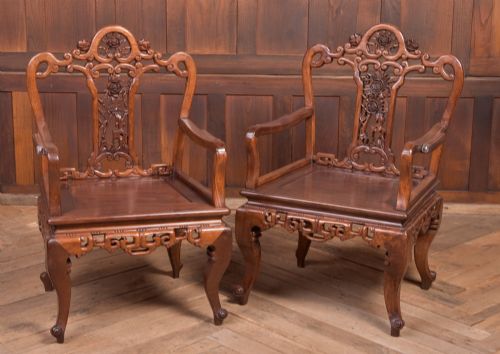
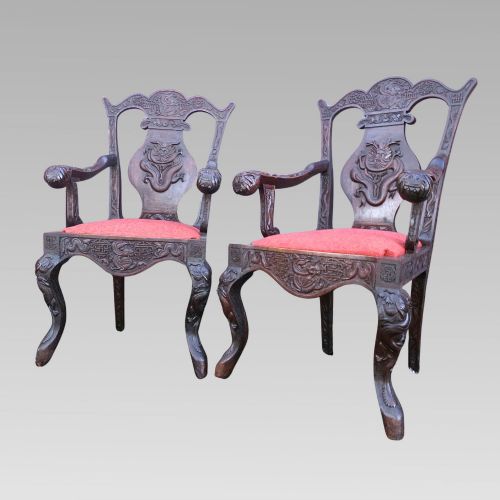
These carved chinese armchairs bring substantial presence through dense tropical timbers and intricate pierced panels.
Carved Chinese Armchairs
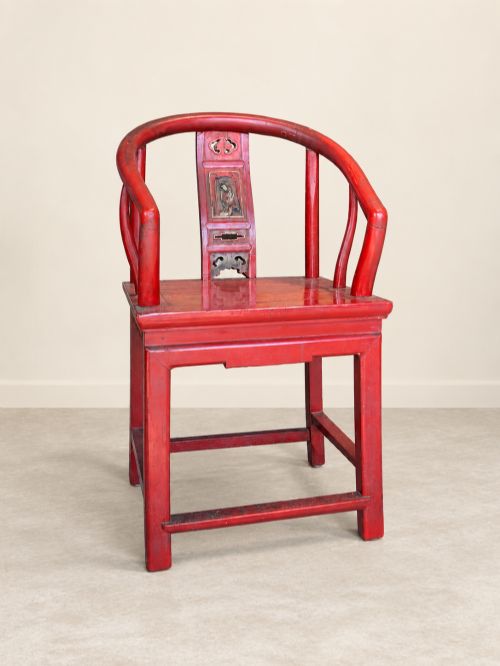
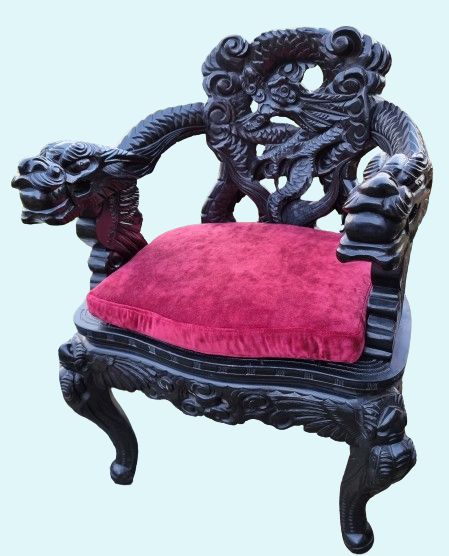
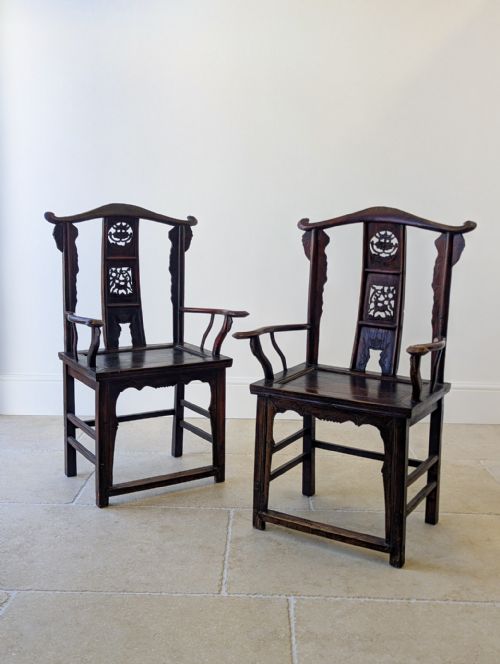
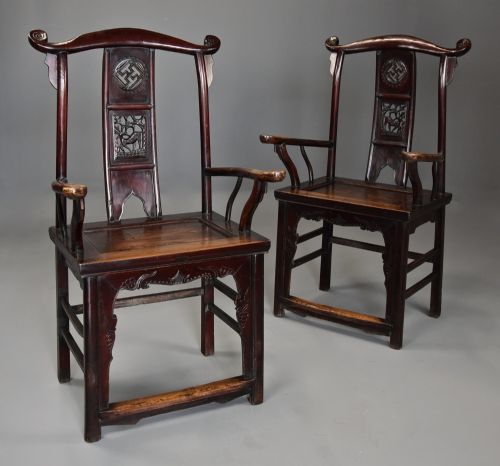
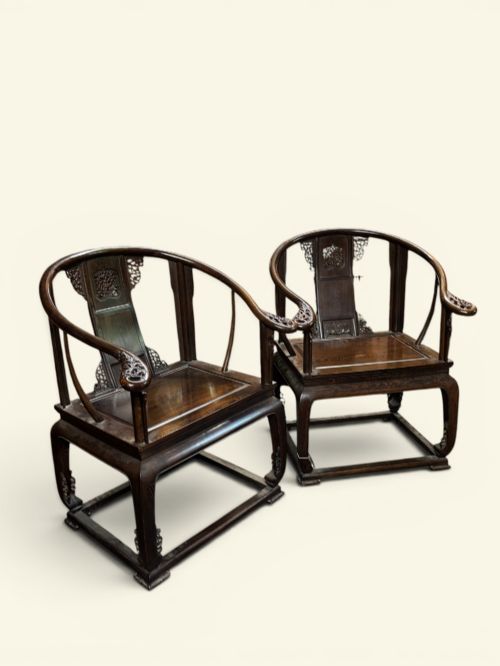
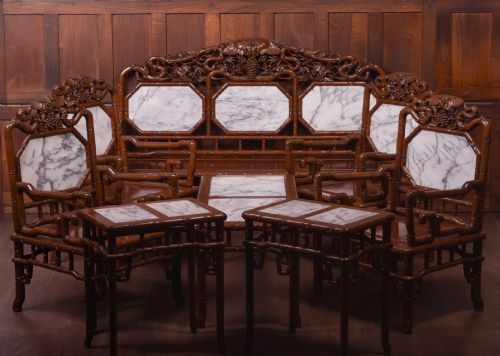
When searching for carved chinese armchairs, collectors encounter robust seating forms rooted in traditional craftsmanship, including nineteenth-century elm yoke-back chairs, horseshoe-back throne chairs, and elaborate parlor suites.
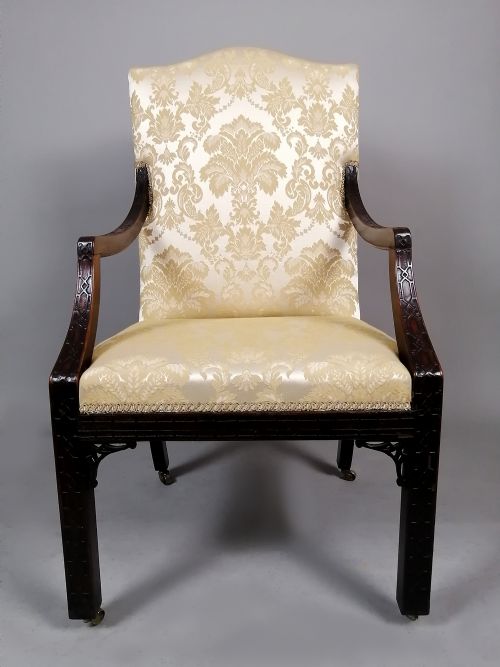
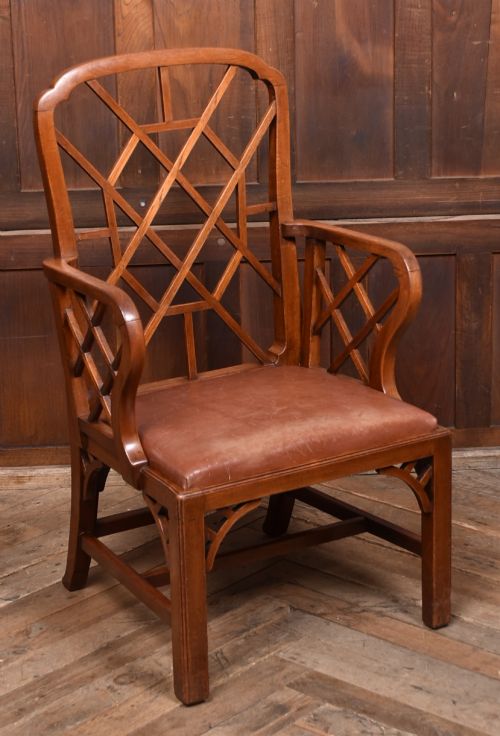
The selections span distinct cultural expressions, ranging from indigenous Qing Dynasty hardwood seating to eighteenth-century British interpretations influenced by Chinese export designs.
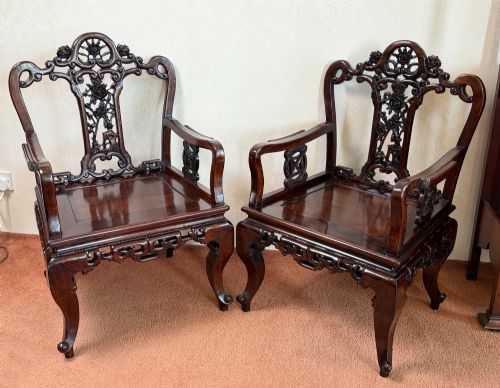
Buyers frequently find matched pairs and single seating pieces intended for scholar studies, formal halls, and reception rooms.
How They Were Made
Cabinetmakers utilised dense native and imported timbers, predominantly dense hongmu, rosewood, elm, and mahogany, chosen for structural stability and weight.
Joinery relied on complex mortise and tenon systems that eliminated the need for metal fasteners, allowing the timber to expand and contract naturally.
Surfaces received careful finishes of traditional red lacquer, mother-of-pearl inlay, or clear wax that highlighted the deep grain of the dense woods.
Listings feature elm, hongmu, and rosewood timbers across the nineteenth and early twentieth centuries.
What Varies in Quality
The crispness and depth of the manual chisel work separate standard production from superior pieces, where dragons, foliage, and scrolling motifs show sharp undercut details.
Proportion and structural integrity dictate value, with master-built pieces maintaining balanced architectural lines and tight, unyielding joints across complex curves.
Original surface preservation, such as undisturbed red lacquer or intact patinated elm, determines the historical integrity of the piece.
The Carved Chinese Armchairs Glossary
- Hongmu
- A dense tropical hardwood prized in Chinese furniture making for its heavy weight and rich reddish-brown tone. It translates literally as red wood.
- Yoke-back
- A traditional chair design featuring a curved top rail resembling an ox yoke. This shape provided comfortable head support for scholars.
- Horseshoe-back
- A continuous curved crest rail that sweeps downward to form armrests. This fluid form requires advanced steaming and joinery techniques.
- Lacquer
- A natural resin applied in multiple thin coats to seal and protect wooden surfaces. It creates a durable, glossy finish that accepts pigments well.
- Qing Dynasty
- The final imperial dynasty of China, spanning from sixteen-forty-four to nineteen-twelve. Furniture from this era often incorporates dramatic carved decoration.
Carved Chinese Armchairs: Frequently Asked Questions
What is hongmu timber?
Hongmu is a collective term for dense, heavy Asian hardwoods that develop a rich dark patina over time. It provides exceptional structural strength.
Furniture made from this material resists wear and supports intricate deep-relief carving without splintering.
How should I care for lacquered wood?
Maintain lacquered surfaces by dusting with a soft, dry cloth and avoiding direct sunlight. Keep ambient humidity stable to prevent cracking.
Harsh chemical cleaners strip the protective resin layer and permanently dull the historic sheen.
Are these chairs comfortable for daily use?
Most antique examples were built for formal posture rather than relaxed lounging. The upright backs and solid seats reflect traditional seating habits.
Adding custom silk cushions helps adapt rigid historical seating for modern living spaces.