
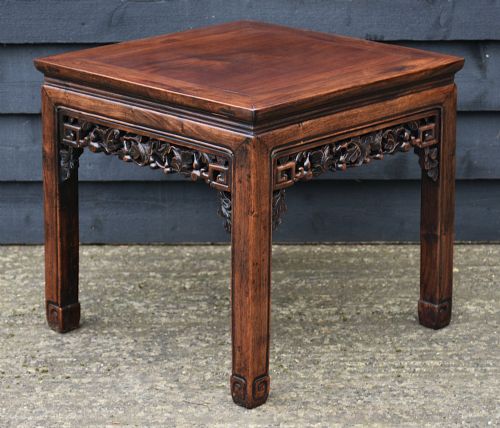
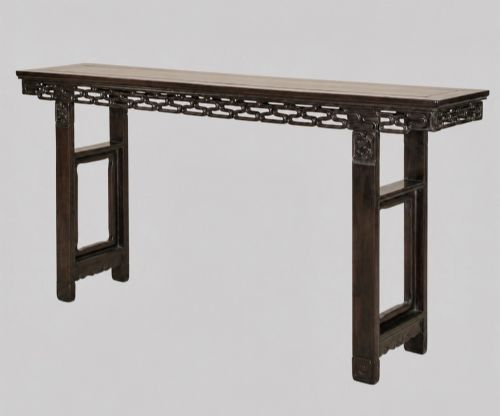
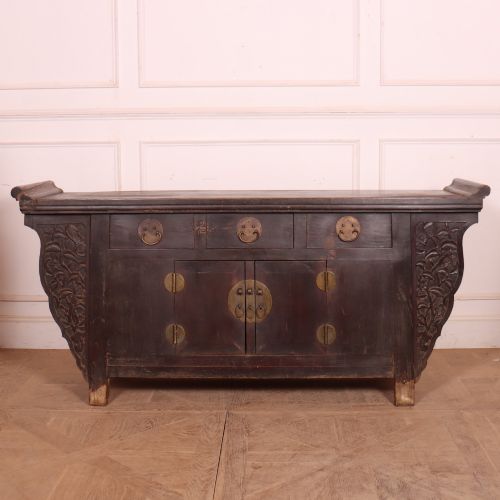
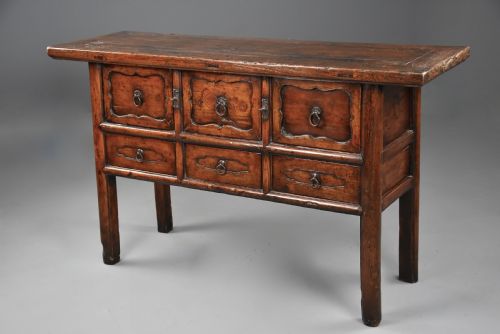
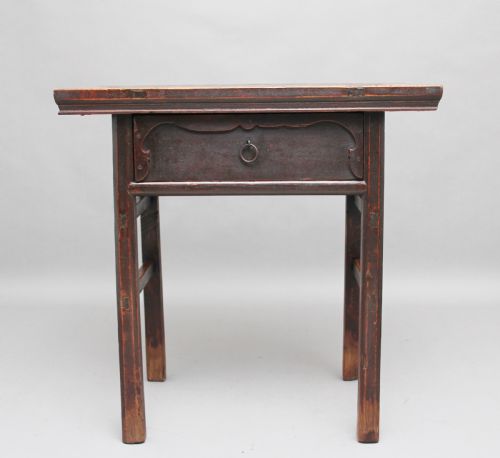


Carved Chinese Altar Table
A carved chinese altar table brings structural lineage and sculptural depth into a modern interior.
Carved Chinese Altar Table
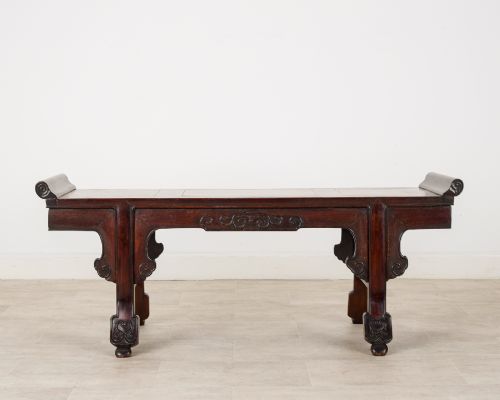
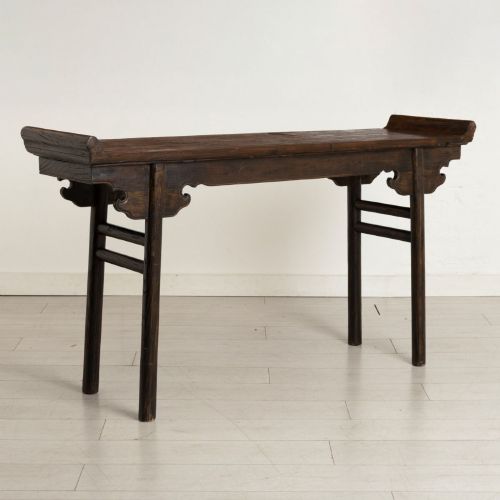
A carved chinese altar table stands as a significant domestic form originating from ancestral halls and traditional dwellings, designed originally to support ceremonial vessels. These surfaces evolved into versatile console and side furniture, distinguished by elongated proportions and distinct structural profiles.
The pieces appearing most frequently originate from the nineteenth century, often reflecting Qing Dynasty aesthetics or regional provincial traditions. Alongside formal altar tables, the inventory encompasses related low tables, benches, and writing desks sharing the same architectural vocabulary.
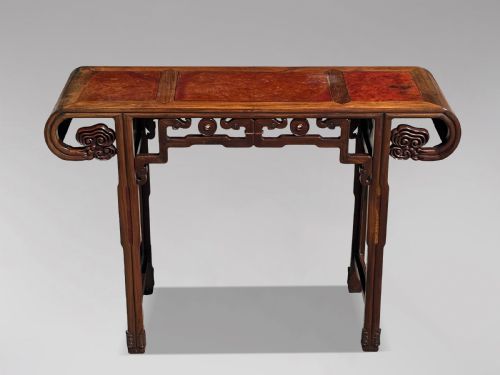
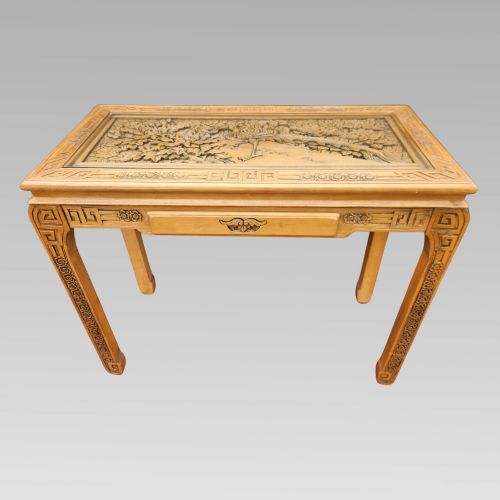
Builders shaped these forms from dense timbers and applied intricate relief carving to aprons, legs, and spandrels. The result is a heavy, grounded furniture type that functions effectively as a focal point in hallways, living spaces, and dining rooms.
How They Were Made
Cabinetmakers utilised dense native hardwoods including hongmu and rosewood alongside resilient domestic elm to construct frames using traditional mortise and tenon joinery. This method allowed the timber to expand and contract naturally without compromising the structural integrity of the heavy tops.
Surface ornamentation involved deep relief carving, sometimes paired with contrasting amboyna panels or inset red and black lacquer finishes. Selected examples incorporate inset rouge marble panels into the top surface, adding weight and a cool tactile contrast to the carved wooden frame.
Several tables doubling as window seats prove that ancestors sat comfortably on architectural woodwork.
What Varies in Quality
Quality rests upon the crispness of the chisel work and the depth of the carving within the aprons and spandrels. Pieces displaying sharp, well-defined motifs demonstrate superior workshop standards compared to softer, more generalised surface incisions.
The choice of primary timber similarly divides the range, with dense rosewoods and figured hongmu achieving a different weight and finish than rustic elm or secondary timbers. The condition of original lacquer and the stability of the joinery further separate standard regional pieces from finer scholar's examples.
The Carved Chinese Altar Table Glossary
- Hongmu
- A traditional Chinese term grouping dense, dark hardwoods such as rosewood and padauk. These timbers provide the heavy weight and dark tone seen on formal altar tables.
- Qing Dynasty
- The final imperial dynasty of China, spanning from sixteen forty-four to nineteen twelve. Pieces from this period often display elaborate carved motifs and formal structural symmetry.
- Elm
- A resilient domestic timber utilised across regional Chinese cabinetmaking. It yields a pronounced grain pattern that accepts wax finishes and rustic patination well.
- Lacquer
- A durable resin finish applied in multiple layers to wooden surfaces. It produces a smooth red or black coating that protects the timber beneath.
Carved Chinese Altar Table: Frequently Asked Questions
Where should I place an altar table?
These tables function well against long hallway walls or behind sofas where their narrow proportions do not obstruct movement. Their decorative aprons make them effective as standalone console surfaces.
Placing them in living areas allows the carved wood and inset marble panels to contrast effectively with modern seating and plain wall colours.
How do I care for hardwood furniture?
Maintain the timber by applying natural beeswax sparingly and buffing with a soft cloth to preserve the surface patina. Avoid placing the wood near direct heat sources or in fluctuating humidity.
Keep marble inserts clean using a damp cloth and mild soap, avoiding acidic cleaning solutions that might etch the polished stone surface.
What is the difference between elm and hongmu?
Elm is a domestic timber with a visible, open grain pattern that suits provincial and rustic furniture forms. It provides a lighter tone and softer texture than tropical hardwoods.
Hongmu refers to dense, heavy exotic hardwoods that take a dark, polished finish and allow for sharper, more intricate relief carving on formal pieces.
How can I tell the period of a table?
Examine the construction methods, tool marks on the underside, and the wear patterns on the timber feet. Nineteenth-century examples typically show hand-cut joinery and established patination from long use.
Stylistic details such as scroll-ended aprons or inset marble panels also indicate specific Qing Dynasty design phases recorded in archival pieces.