
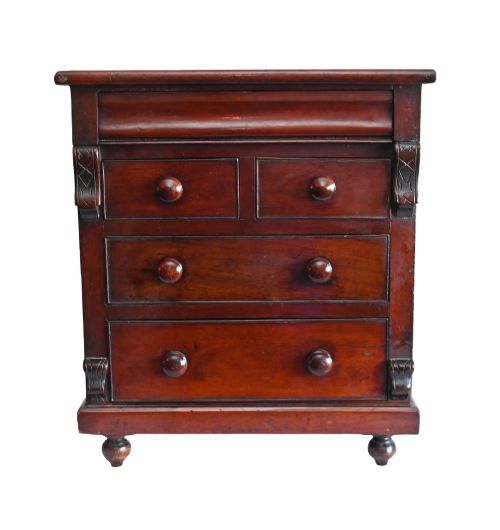
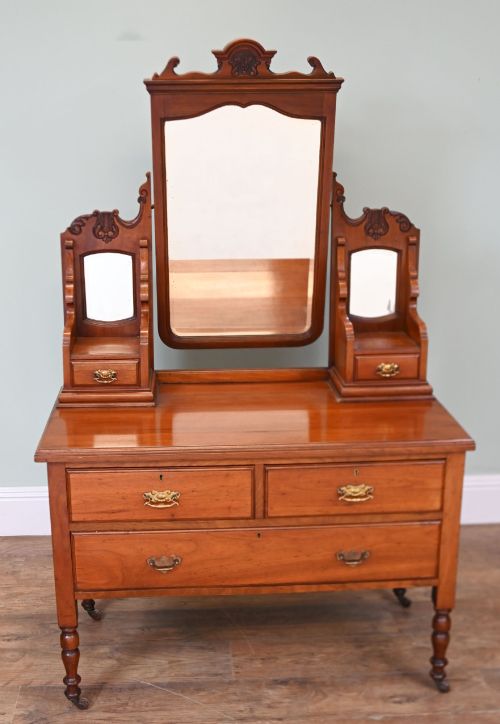
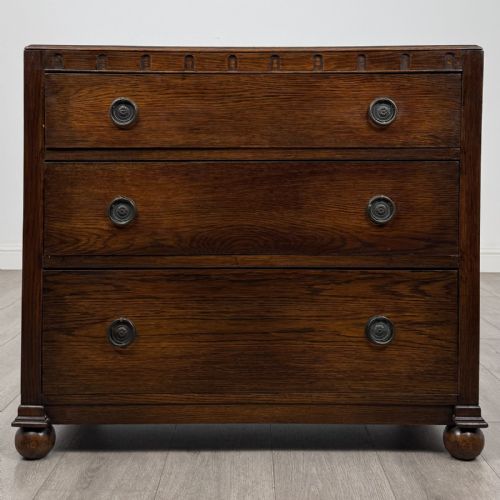
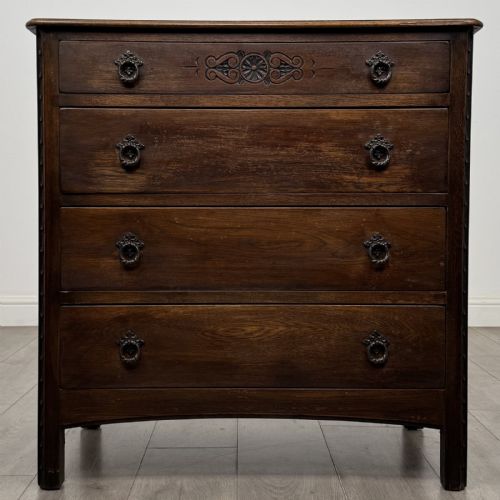
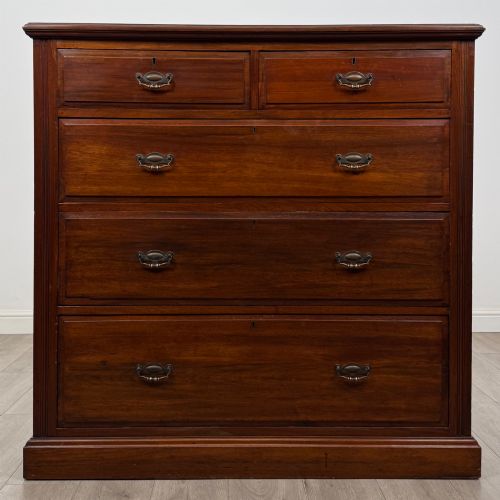
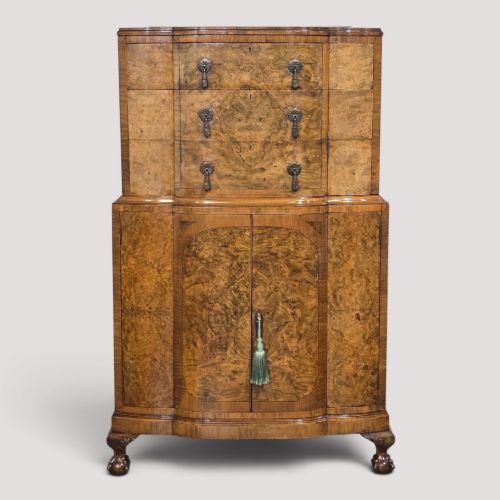
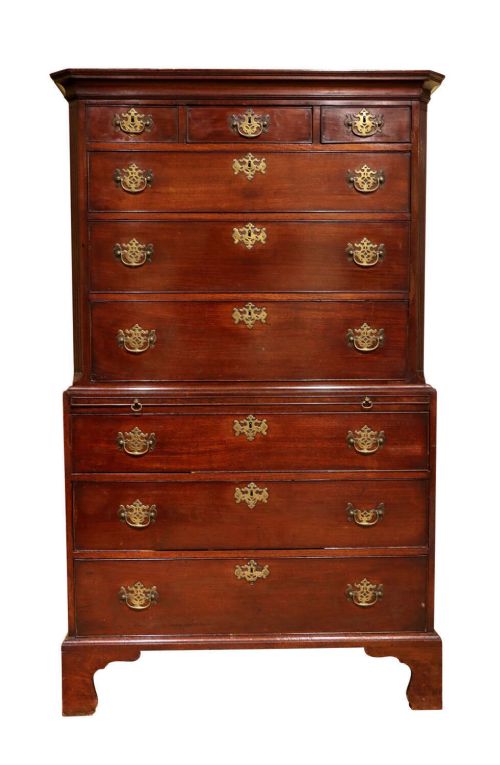
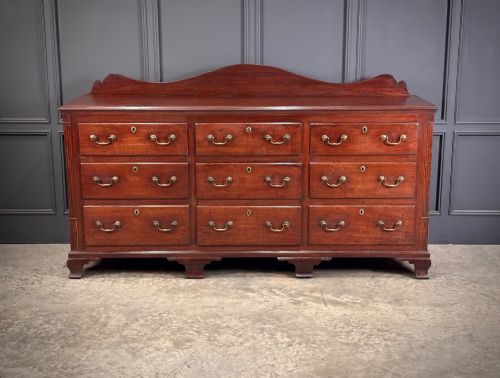
Carved Chest of Drawers
A carved chest of drawers brings structural grain, deep relief, and historical weight into a room.

Carved Chest of Drawers
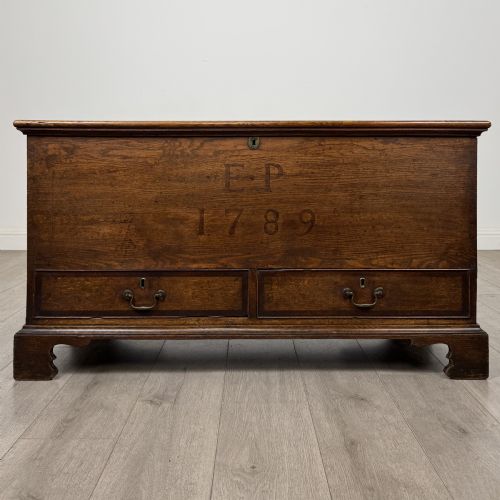
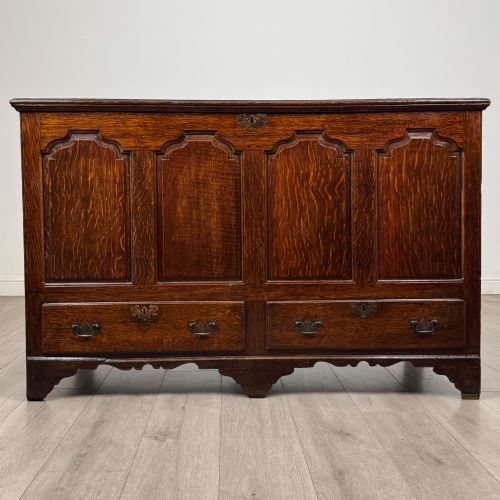
A carved chest of drawers is a storage piece defined by ornamented timber surfaces, ranging from 17th-century English oak designs featuring geometric panels to Victorian iterations bearing foliate and Green Man mask carvings.
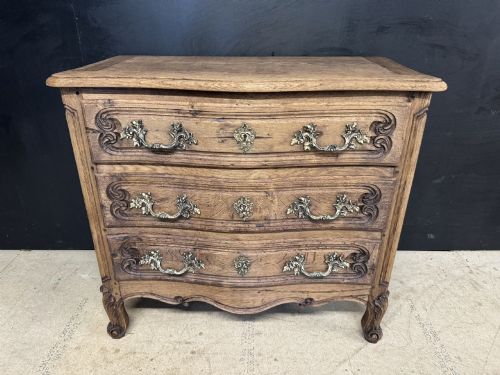
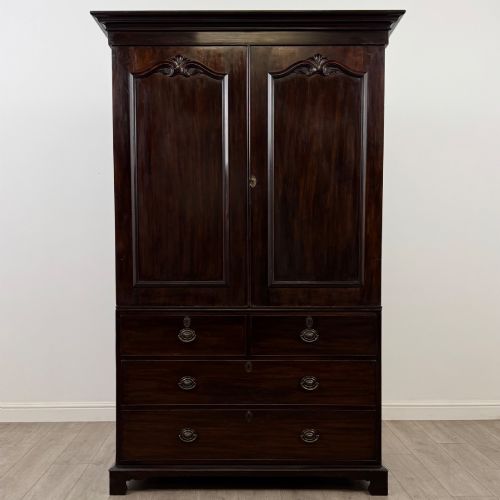
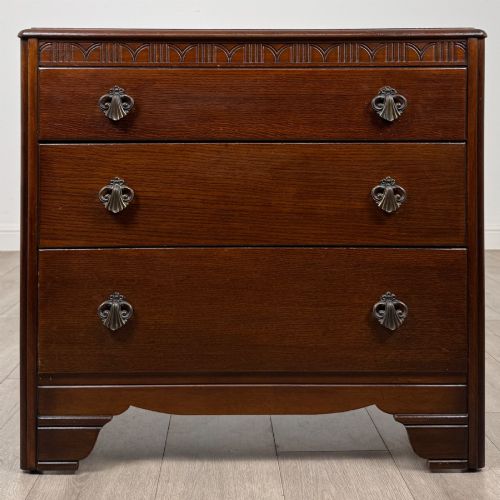
Buyers encounter numerous variations on this page, spanning formal walnut and mahogany Georgian and Regency examples, French Provincial commodes, and heavier Edwardian Jacobean Revival oak furniture.
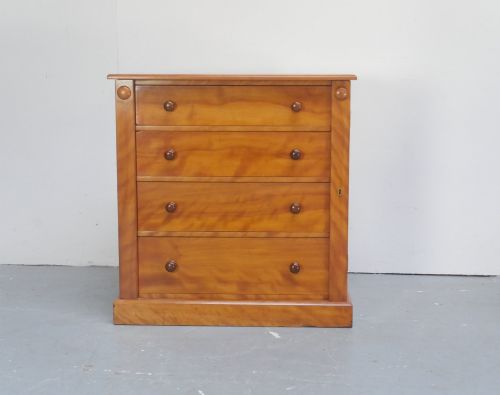
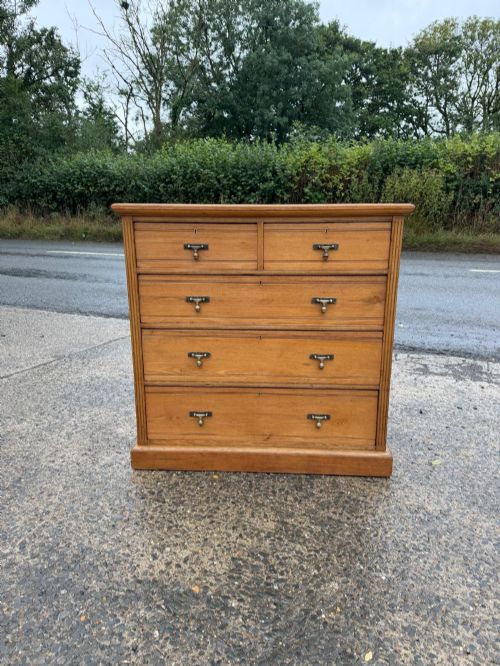
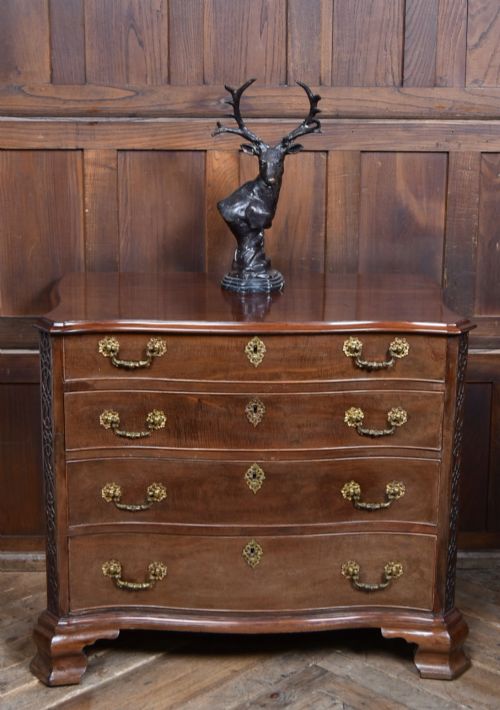
Formats vary from straight-fronted multi-drawer chests and narrow Wellington chests to complex serpentine shapes, mule chests, and tall chests of drawers.
Assessing Quality and Execution
Quality rests upon the crispness and depth of the carved ornament, where master carvers achieved sharp undercut details rather than shallow, softened impressions.
The choice of timber grain dictates overall distinction, seen particularly in the selection of figured mahogany, highly patterned burr walnut veneers, or quarter-sawn oak boards.
The listings span multiple centuries, uniting 17th-century oak joinery with Edwardian revival pieces and 1920s burr walnut furniture.
The Carved Chest of Drawers Glossary
- Serpentine
- A curved front shape with a convex centre flanked by concave ends. This undulating contour requires precise woodworking skill.
- Marquetry
- The art of applying pieces of veneer to a structure to form decorative patterns. Floral and geometric designs frequently decorate drawer fronts.
- Wellington chest
- A tall, narrow chest of drawers secured by a hinged locking stile on the right side. It traditionally holds seven graduated drawers.
- Commode
- A low French chest of drawers or cabinet. These pieces often feature marble tops and shaped serpentine bodies.
- Linenfold
- A style of carved wooden panelling resembling folded fabric. It appears commonly on early twentieth-century oak panels.
Carved Chest of Drawers: Frequently Asked Questions
How do I date an oak carved chest?
Dating relies on construction methods, timber choice, and the style of the carving. Seventeenth-century examples display hand-split oak boards and pegged joints, whilst later revivals show machine-sawn timber.
Hardware and lock mechanisms also provide clues. Original brass handles and hand-forged iron locks help anchor a piece to a specific century.
What is a Green Man carving?
A Green Man carving depicts a human face surrounded by or sprouting from foliage and vines. It symbolises rebirth and appears frequently on Victorian and seventeenth-century oak furniture.
These expressive masks often anchor the corners or central friezes of heavy chests and Wellington styles.
Where should I place a walnut chest?
Burr walnut and figured walnut pieces require stable environments away from direct sunlight and heat sources. Placing them in a reception room or hallway protects the delicate veneers from cracking.
Keep humidity levels steady to preserve the polished timber and intricate marquetry details.
How do French commodes differ from English chests?
French commodes often incorporate shaped marble tops and bombe or serpentine contours built with exotic veneers. They lean towards decorative presence in a room.
English equivalents tend to focus on architectural timber grains, straightforward drawer proportions, and solid oak or mahogany construction.