
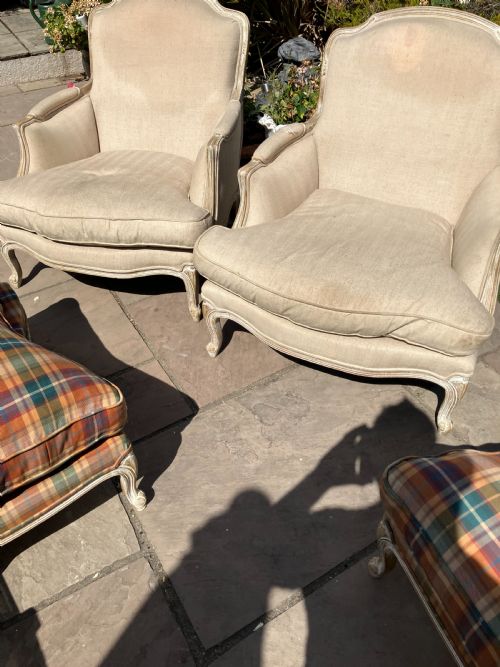

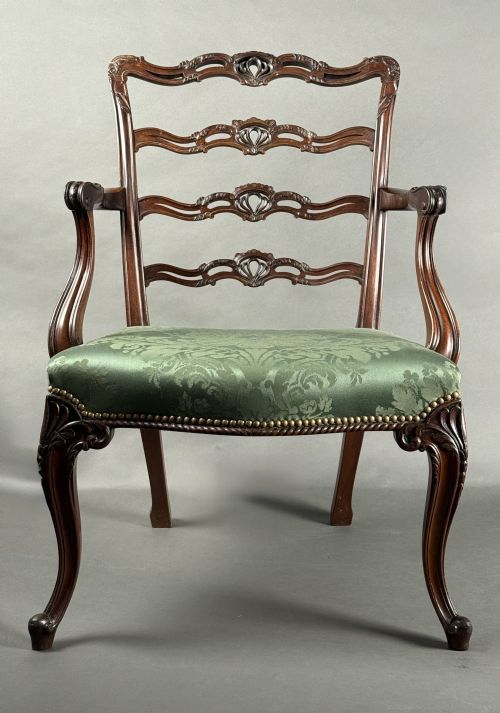
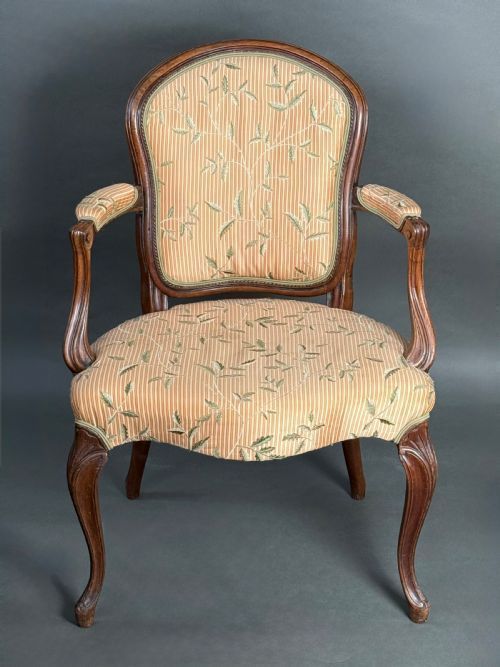
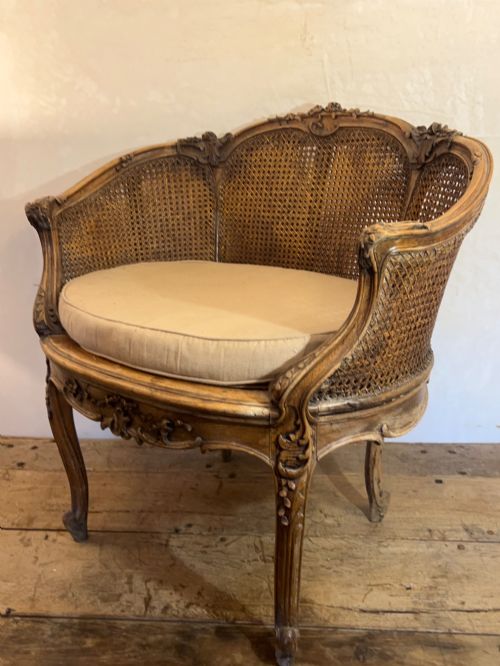
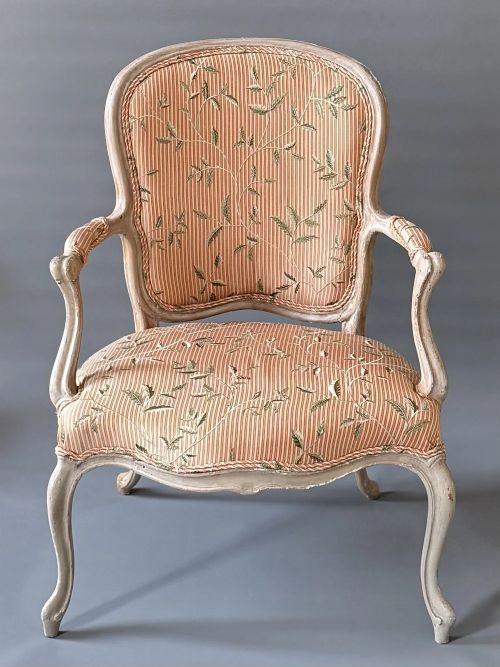
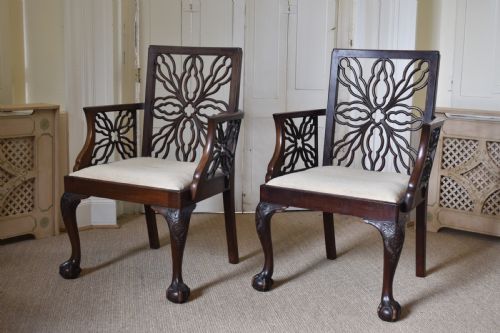
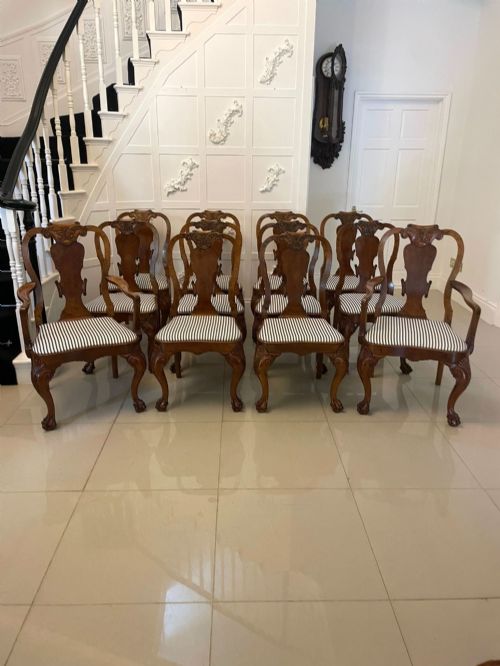
Carved Cabriole Armchairs
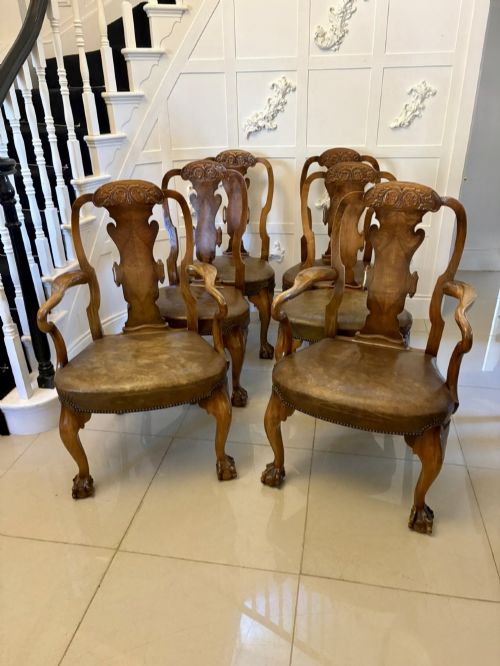
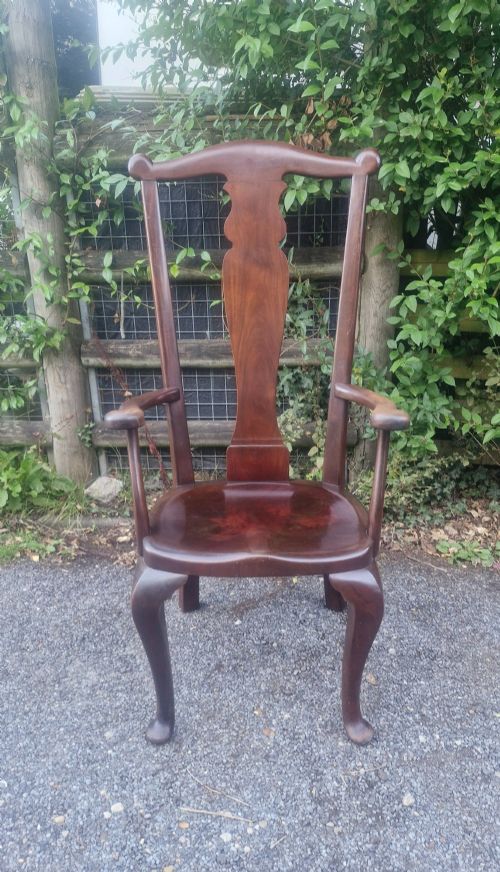
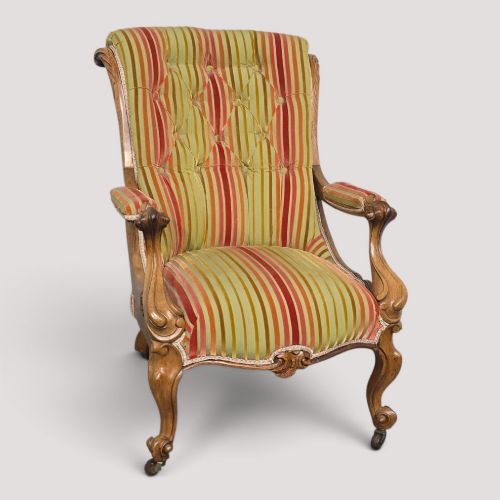
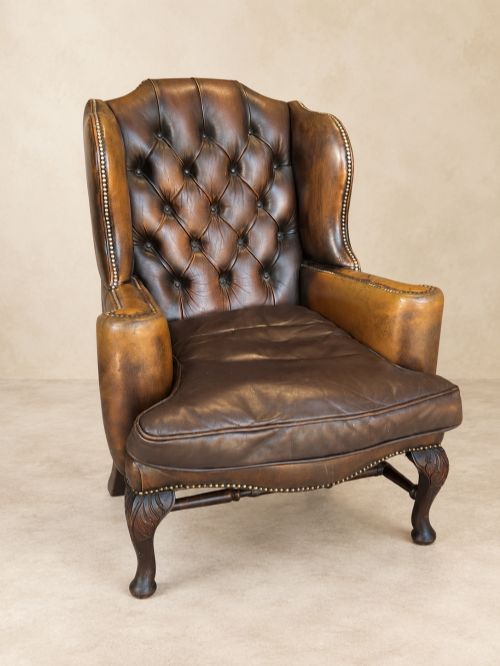
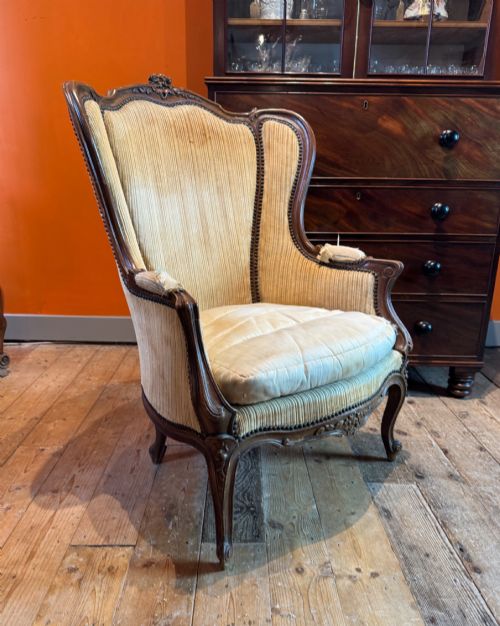
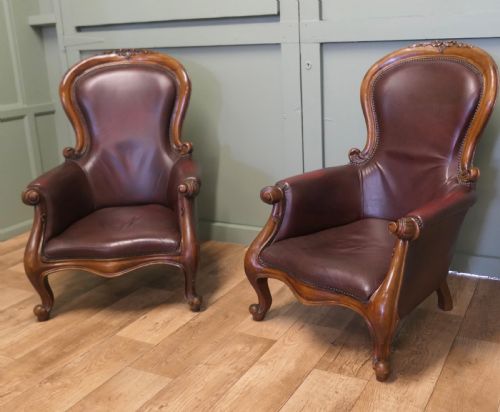
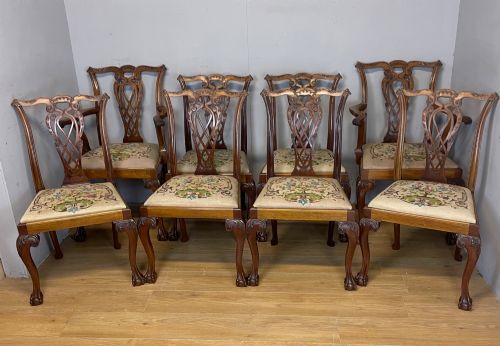
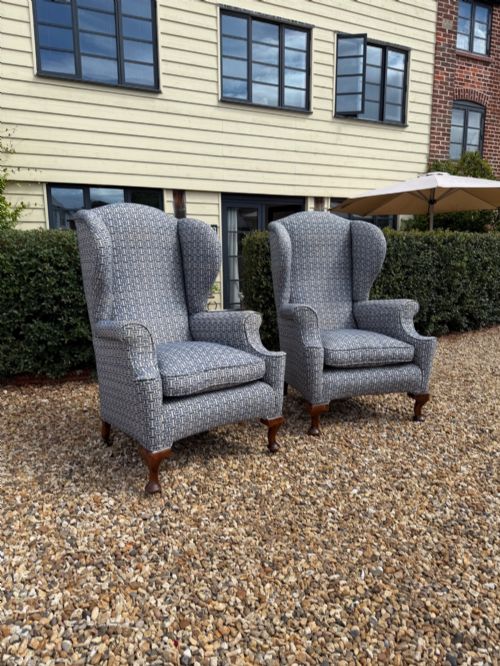
These carved cabriole armchairs bring distinct period seating into a room, combining shaped wooden frames with supportive upholstered forms.
Carved Cabriole Armchairs
Carved cabriole armchairs combine curved wooden supports with upholstered seats and backs, originating across several historical periods including the eighteenth and nineteenth centuries. Buyers searching this phrase encounter forms ranging from dining chairs and desk armchairs to larger library chairs and wing backs.
The material selection on this page relies heavily on walnut and mahogany for the timber frames, paired with textiles such as leather, velvet, fabric, and silk upholstery. The listed pieces span styles like Queen Anne, Louis XV, Chippendale, and Georgian, reflecting revivals as well as earlier periods.
Makers and workshops from various eras produced these seats as single pieces, pairs, or larger dining sets and salon suites. The inventory includes specific regional examples such as Scottish George III seating alongside French provincial and English styles.
How they were made
Craftsmen shaped the structural frames of these armchairs from dense hardwoods like walnut, mahogany, and rosewood, often carving details directly into the timber. The defining cabriole leg curves outward at the knee and tapers inward to a foot, requiring precise woodworking joints.
Upholstery techniques involved stuffing seats and backs with traditional fillings such as feathers or horsehair before securing them with leather, silk, velvet, or woven textiles. Frames frequently incorporate decorative elements like carved knees, scroll arms, and exposed wooden rails.
Carved Cabriole Armchairs Retail Price Guide 2026
Typical asking prices for carved cabriole armchairs among the pieces listed under this phrase on Sellingantiques today, from the lower quarter to the upper quarter. They describe what is for sale here now, not the wider market.
One armchair comes stuffed with feathers, ready for an eighteenth-century nap.
What varies in quality
The standard of carving on the wooden frames distinguishes basic production from finer workshop output, particularly in the definition of the cabriole leg and scrollwork. Crisp detailing in the wood and substantial timber scantlings indicate careful construction.
Upholstery materials and interior stuffing methods also differentiate the pieces, with higher-grade examples utilising quality leather, silk, or feather filling. Matching sets and pairs demonstrate greater uniformity across frames and upholstery than assembled groups.
Warings·Whytock and Reid
The Carved Cabriole Armchairs Glossary
- Cabriole leg
- A furniture leg that curves outward at the knee and tapers inward toward the foot, imitating an animal's limb. This form originated in ancient China and became prominent in European furniture during the eighteenth century.
- Wing armchair
- An upholstered seat with side panels, or wings, attached to the back to shield the occupant from drafts. These chairs often feature cabriole legs and deep stuffing.
- Library armchair
- A sturdy wooden armchair designed for reading rooms, typically featuring upholstered arms and a supportive high back. Mahogany and walnut are common woods for this form.
- Salon suite
- A matching set of seating furniture, including armchairs and sofas, intended for formal reception rooms. These suites often share identical wood carving and textile upholstery.
- Bergere
- An enclosed upholstered armchair with wooden framing around the sides and back, originating in France. The style often incorporates exposed carved walnut or painted finishes.
Carved Cabriole Armchairs: Frequently Asked Questions
What periods do these armchairs come from?
The listings span the eighteenth, nineteenth, and early twentieth centuries, encompassing Georgian, Victorian, and Edwardian eras. Revival styles from later decades also appear frequently.
Craftsmen during these different periods reinterpreted earlier forms, meaning a Queen Anne style chair might date to the early twentieth century rather than the eighteenth.
How are cabriole legs constructed?
A cabriole leg is carved from a single piece of hardwood, following the natural grain to ensure structural strength along the curved knee and ankle. The foot often terminates in a pad, scroll, or claw and ball motif.
This shaping requires thick timber blanks and skilled hand carving to achieve the characteristic double curve without weakening the wood.
Where were these chairs used originally?
These armchairs served various domestic functions, from dining rooms and studies to libraries and formal drawing rooms. Specific forms like desk chairs and nursing chairs suited particular domestic tasks.
Larger wing chairs and library armchairs provided comfort near fireplaces, while salon suites furnished formal entertaining spaces.
What upholstery materials are used?
Original and replacement upholstery includes leather, velvet, silk, and woven textile covers over traditional stuffing materials. Feather filling and horsehair provided the internal support for seats and backs.
Textiles range from plain leather hides to patterned silk fabrics supplied by makers such as Colefax and Fowler.