

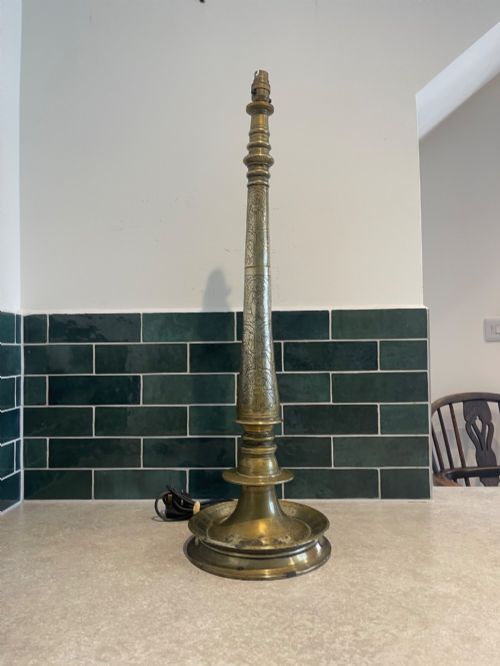


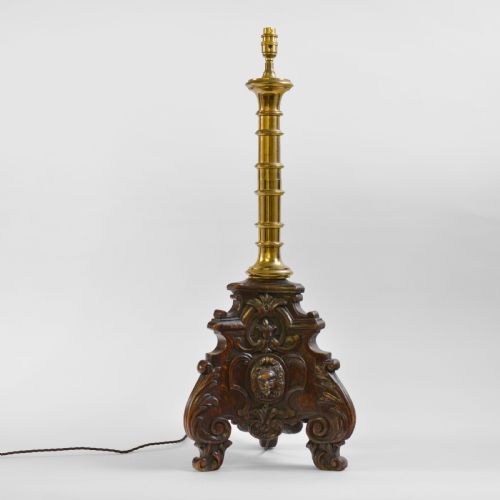


Carved Brass Table Lamp
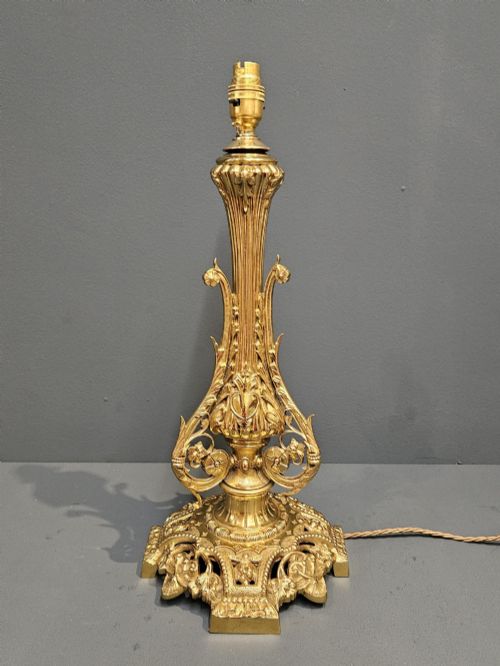
These carved brass table lamp examples bring nineteenth and twentieth century metalwork into domestic spaces with lasting presence.
Carved Brass Table Lamp
A carved brass table lamp brings historic metalwork into domestic spaces through varied international and domestic workshops. When searching for a carved brass table lamp, a buyer encounters Victorian, Edwardian, and early twentieth century creations reflecting Victorian, Neoclassical, and Anglo-Indian styles.
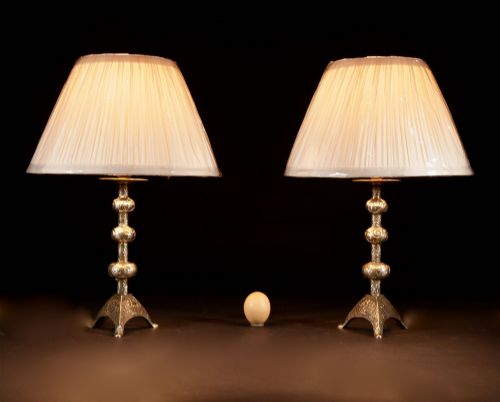
The selection frequently includes Indian brass lamps and regional interpretations utilising cast or chased detailing. These items range from standard table lighting to converted altar candlesticks and floor lamps incorporating marble, onyx, or porcelain elements alongside the primary metal structure.
Works appear from diverse periods including the nineteenth century, nineteen-hundred, and nineteen-twenty, demonstrating how lighting technology adapted to earlier vessels. Many examples transform Chinese porcelain vases, Italian ormolu, and French cassolettes into functional luminaires.
Materials and construction methods
Makers shaped these luminaires using cast and sheet brass, frequently combining the metal with white onyx, marble, alabaster, or mahogany components. Artisans applied chasing and piercing techniques to create intricate surface patterns visible on Indian and Anglo-Indian designs.
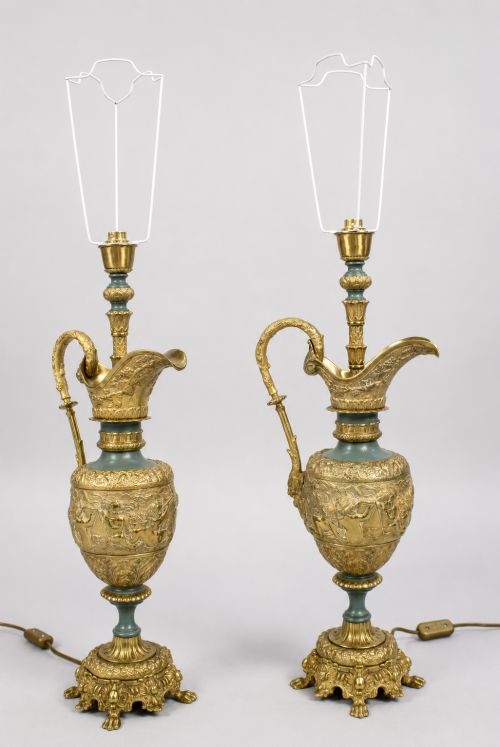
Many historical lighting pieces began life as utilitarian vessels or ritual items such as altar candlesticks, vases, or ewers before later conversion to electricity. Ormolu, gilt bronze, and gilt metal details were frequently integrated with stone bases to provide structural stability and visual contrast.
Carved Brass Table Lamp Retail Price Guide 2026
Typical asking prices for carved brass table lamp among the pieces listed under this phrase on Sellingantiques today, from the lower quarter to the upper quarter. They describe what is for sale here now, not the wider market.
Listings feature brass, mahogany, fabric, porcelain, gilt bronze, wood, gilt metal, and marble.
Distinctions in craftsmanship and materials
Quality separates standard production items from pieces displaying superior hand-chased detail and substantial metal gauges. The crispness of the surface decoration and the integrity of the integrated stone or porcelain determine the distinction between ordinary and exceptional examples.
The standard of later electrical conversions and the preservation of original gilding significantly influence the overall integrity of the object. Heavier cast components and well-balanced proportions indicate superior workshop standards across nineteenth and twentieth century production.
HOLLAND & SONS
The Carved Brass Table Lamp Glossary
- Ormolu
- A gilded bronze or brass finish applied to decorative mounts and fittings on nineteenth century furnishings. This technique creates a rich golden appearance that imitates solid gold.
- Cassolette
- A decorative vessel shaped like a vase, frequently featuring a removable pierced lid for burning perfumes. These objects were often converted into table lamps during subsequent eras.
- Cairoware
- Metalwork originating from Egypt and the Middle East, typically featuring intricate silver or copper inlay upon brass grounds. Pieces exhibit traditional Islamic geometric and floral motifs.
- Alabaster
- A fine-grained translucent stone used for lamp bases and sculptural elements. It diffuses light gently when placed near internal illumination sources.
- Famille Verte
- A Chinese porcelain palette dominated by green enamel colours, frequently seen on vases adapted into lighting. The style dates back to the Qing dynasty and earlier periods.
Carved Brass Table Lamp: Frequently Asked Questions
What is a carved brass table lamp?
A carved brass table lamp is a historic lighting fixture fashioned from brass featuring chased, engraved, or pierced ornamentation. These pieces originate from various nineteenth and twentieth century international traditions.
Such items frequently incorporate regional motifs and styles ranging from Victorian Neoclassical to Anglo-Indian designs. Many examples utilise converted vessels, ewers, or candlesticks adapted for modern electrical use.
How do I style a carved brass table lamp?
These lamps integrate successfully into traditional and eclectic interiors as focal points on side tables or desks. Their metallic surfaces reflect ambient light and complement wooden or marble furniture.
Consider pairing them with neutral fabric shades to balance heavy metal bases. Positioning them on occasional tables allows the detailed chased or cast surfaces to remain visible.
How do I date a carved brass table lamp?
Dating involves examining the manufacturing techniques, the character of the brass alloy, and any associated materials like onyx or mahogany. Victorian and Edwardian pieces often display distinct stylistic revivals.
Converted items like altar candlesticks or Chinese porcelain vases carry stylistic markers from their original periods of manufacture. Wiring components and mounting hardware also provide clues regarding the timeline of conversion.
What materials accompany brass in these lamps?
Makers frequently paired brass with white onyx, marble, alabaster, mahogany, and porcelain components. These secondary materials added structural weight and visual variety to the designs.
French and Italian pieces often utilise gilt bronze or ormolu mounts alongside stone plinths. Indian and Anglo-Indian variants tend to feature extensive surface carving across the primary metal body.