




Carved Brass Mount Table
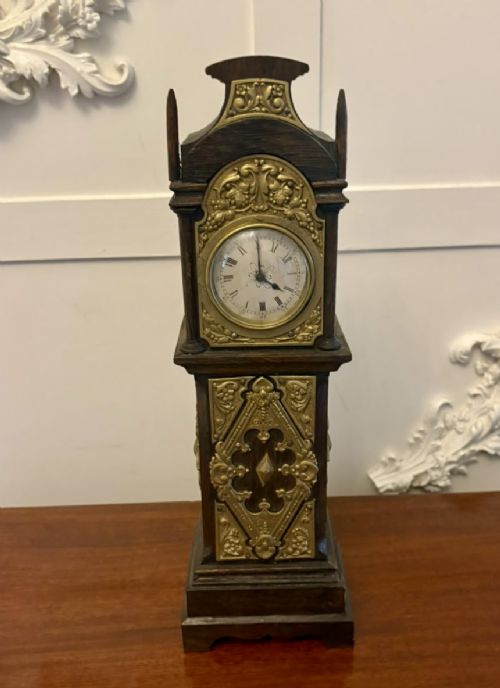
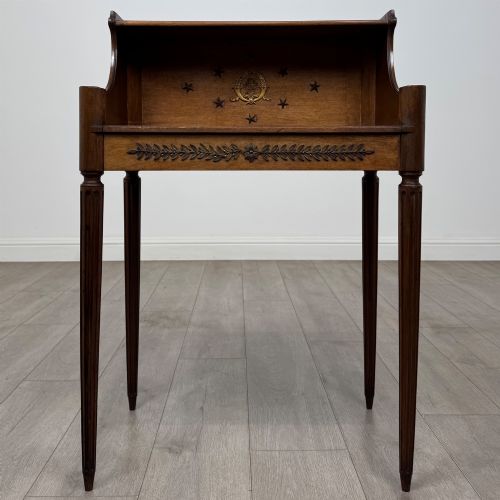
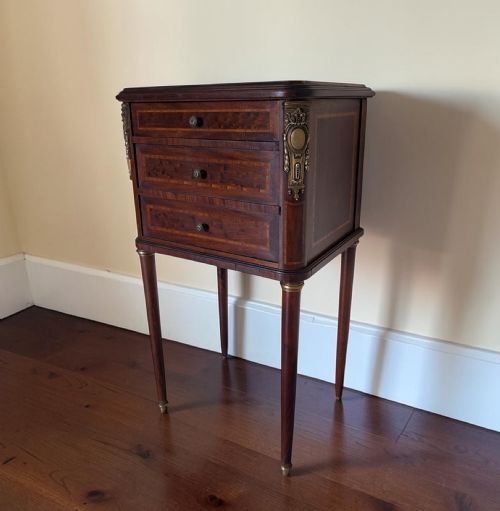
A carved brass mount table brings together rich timber and bright metalwork to anchor a room with period proportion.
Carved Brass Mount Table
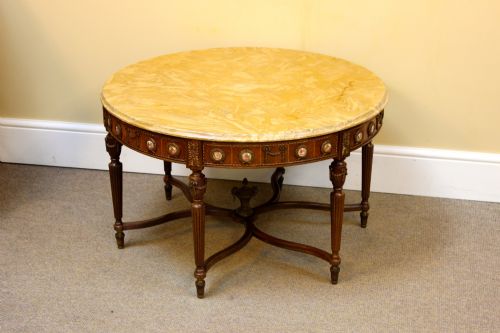
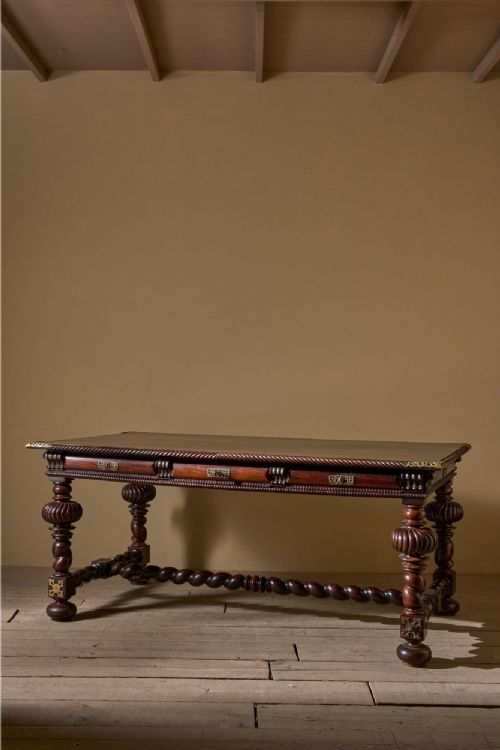
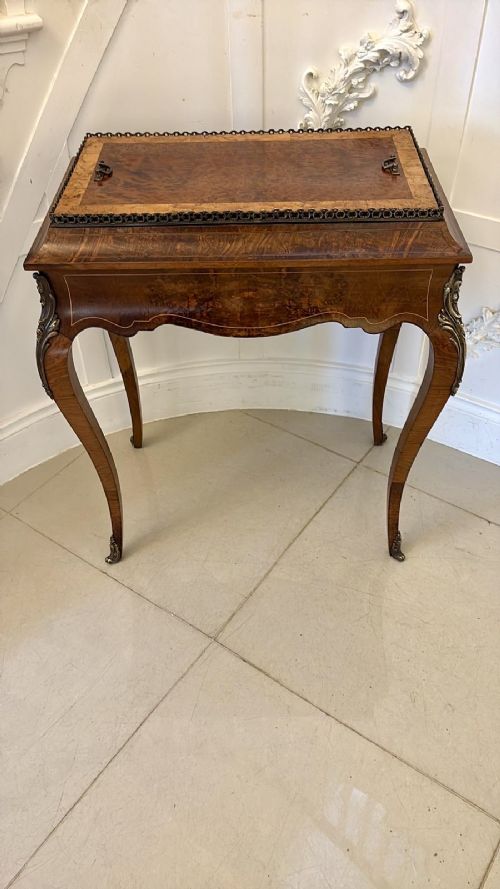
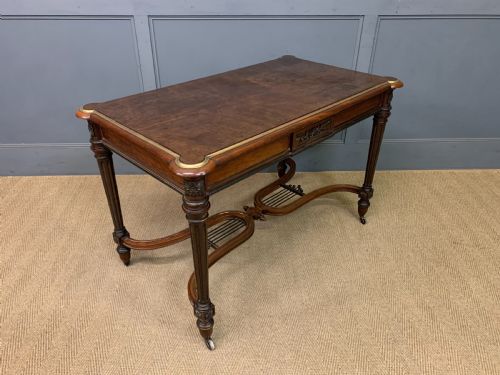
When you search for a carved brass mount table, you encounter diverse forms created across the nineteenth and twentieth centuries, including side tables, centre tables, coffee tables, and desks. These pieces originate from distinct design traditions such as Victorian, French Neoclassical, and Regency, utilising woods like mahogany, walnut, and rosewood.
The most common versions met on this page combine timber framework with applied metal decoration, frequently drawing upon French Louis XVI style or Louis XV revival aesthetics. These tables often feature marble tops or delicate brass inlay alongside carved wooden structures.
Makers and workshops across Britain, France, and Portugal produced these items for domestic use in reception rooms, libraries, and parlours. The surviving examples demonstrate how varied domestic furniture forms incorporated metal mounts during the nineteenth century.
Materials and technique
Cabinetmakers constructed the foundational carcass using dense hardwoods like mahogany, walnut, rosewood, and oak, often shaping the timber through carving and turning. These woods provided the necessary structural strength for supporting heavy stone surfaces or intricate metal additions.
Metalwork played a defining role, with brass and ormolu cast, chased, and applied as mounts, edgings, and inlay to accentuate the furniture lines. Artisans secured these decorative elements to the timber substrate using precise joinery and mechanical fixings.
Additional surface materials such as marble, porcelain, and glass were integrated into tabletops and decorative panels, requiring specialised cutting and fitting techniques to sit flush within the wooden frames.
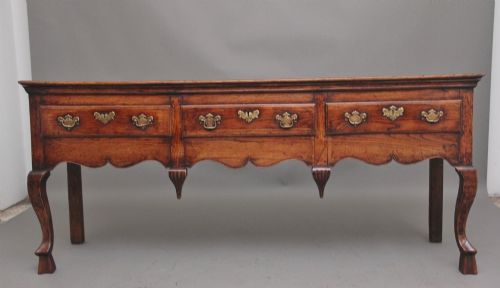
An eighteenth-century oak dresser base shares space with nineteenth-century cattle horn dinner gongs and ships' teak washstand tables.
Factors of quality
The standard of carving and the crispness of the brass or ormolu mounts dictate the visual success of the piece, separating workshops of high ambition from standard commercial production. Well-executed mounts display sharp chasing and secure integration with the surrounding wood.
The choice of timber grain and the quality of the veneer selection reveal the underlying cost and care invested by the cabinetmaker. Matched grain patterns and solid secondary timbers indicate a higher grade of manufacture.
Structural integrity depends upon traditional joinery methods and the stability of the timber over time, ensuring that marble tops, brass inlays, and legs remain properly aligned without distortion.
A. Beurdeley·Lenzkirch·Henry Dasson
The Carved Brass Mount Table Glossary
- Ormolu
- Gilded bronze or brass used for decorative mounts and hardware. It provides a bright golden finish that contrasts against dark cabinet timbers.
- Gueridon
- A small circular table supported by a central column or several legs. This French form frequently incorporates decorative brass mounts and marble tops.
- Bureau Plat
- A flat-topped writing desk, often freestanding and finished on all sides. These desks frequently feature leather writing surfaces and elaborate brass or ormolu mountings.
- Jardiniere Table
- A specialised table incorporating a waterproof liner or well for live plants. They are commonly made in walnut or mahogany with metal liners and decorative mounts.
- Specimen Marble
- A tabletop composed of various coloured marbles arranged in geometric patterns or specimen panels. This technique showcases mineral variety within a stone surface.
Carved Brass Mount Table: Frequently Asked Questions
What periods do these tables come from?
The listed items span the eighteenth, nineteenth, and early twentieth centuries, encompassing Victorian, Edwardian, and Regency eras. Many pieces reflect revivalist design movements.
European workshops, particularly in France and Portugal, produced the majority of these mounted wooden tables and desks during the nineteenth century.
How were these tables used originally?
These tables served various domestic functions in period interiors, from centre tables in formal reception rooms to side tables and desks in private libraries.
Many designs accommodated specific social rituals, such as displaying decorative objects, holding reading materials, or providing a stable writing surface.
How do I care for marble and wood?
Maintain wooden surfaces by dusting regularly with a dry cloth and avoiding excessive moisture or direct sunlight. Wax polishes help nourish traditional timber finishes.
Clean marble tops with a damp cloth and mild soap, ensuring acidic liquids are wiped away immediately to prevent surface etching.
Are the brass mounts original?
Original mounts generally match the patination and fixing methods appropriate to the period of the wooden carcass. Close inspection reveals how the metal integrates with the timber.
Cast brass and ormolu elements show wear patterns consistent with the age of the surrounding furniture structure.