
Carved Box Seat
A carved box seat combines timber seating with integrated storage, offering utility and traditional craftsmanship across centuries of domestic design.
Carved Box Seat
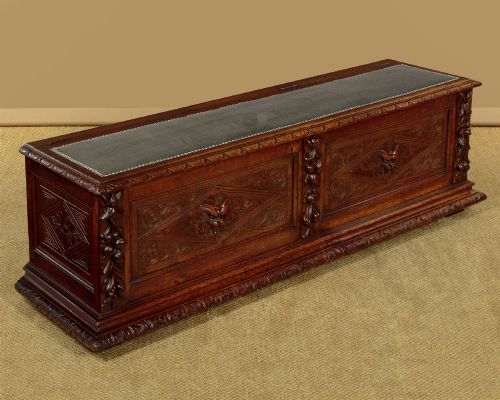
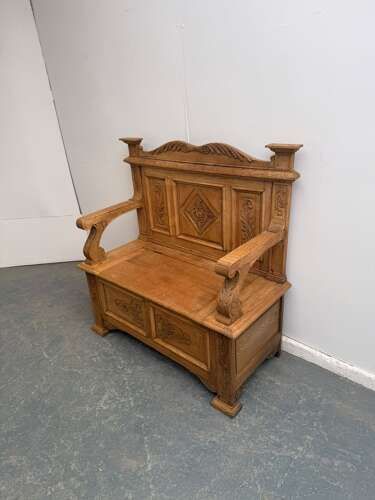
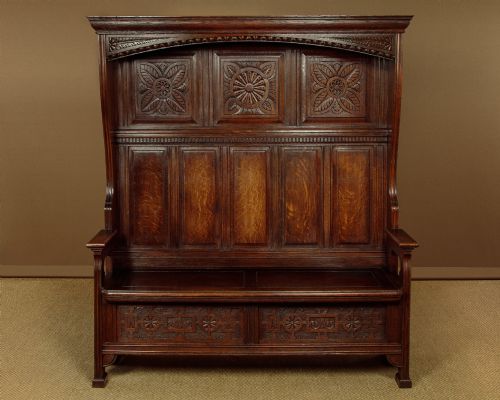
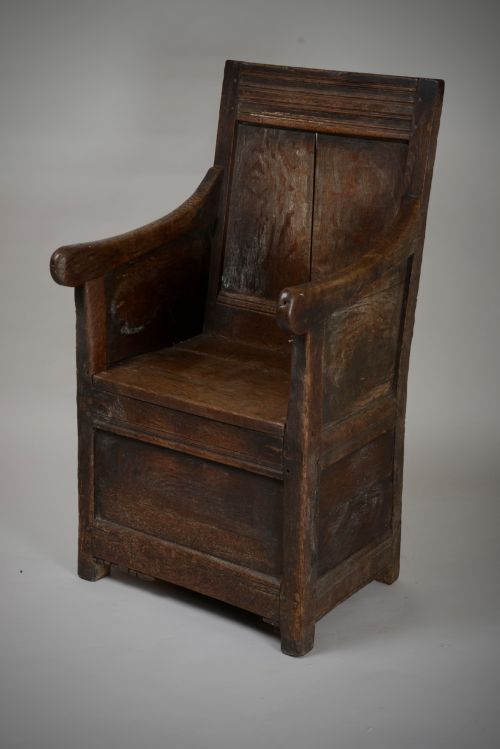
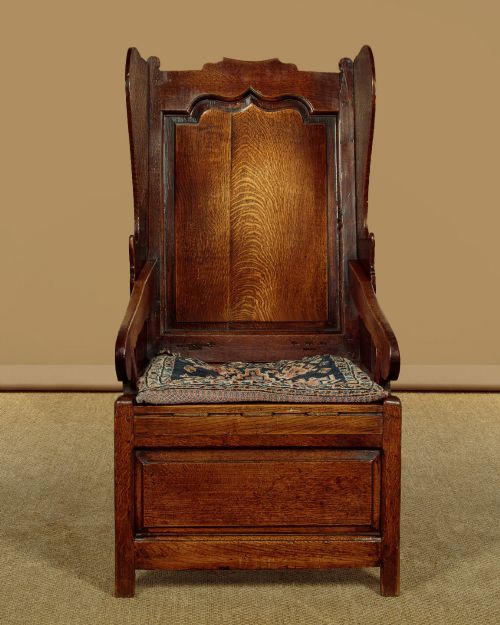
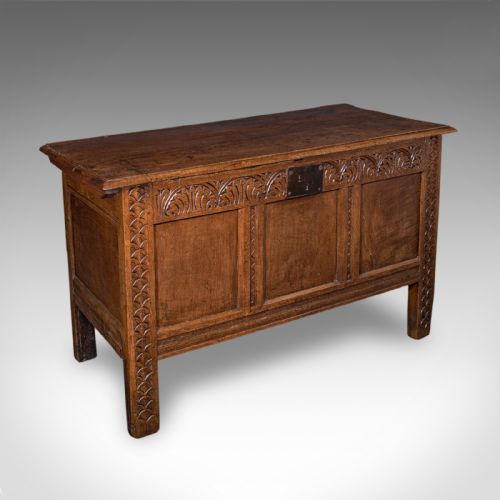
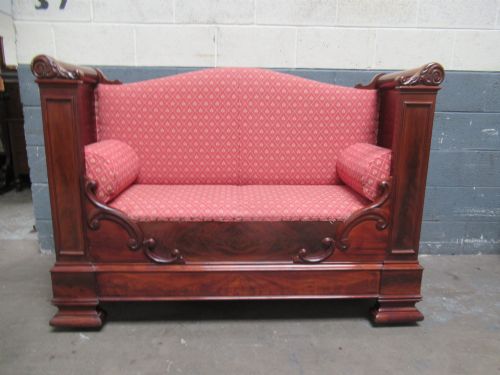
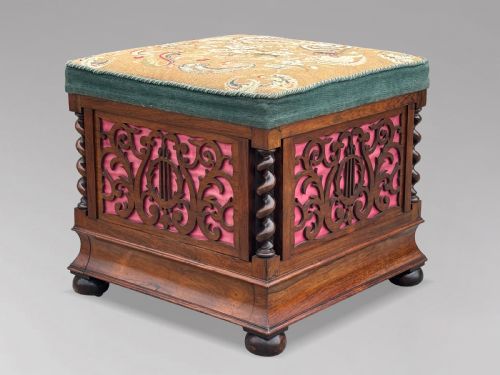
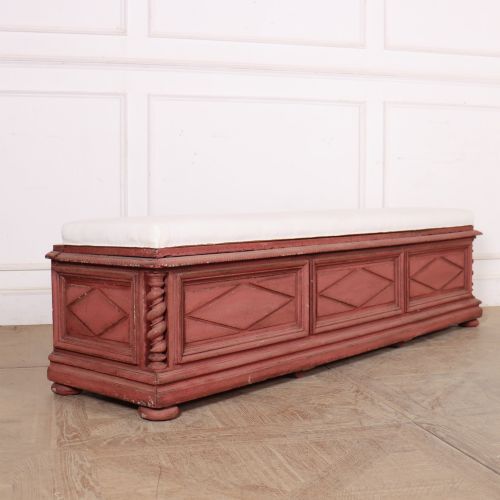
A carved box seat provides a dual function as a piece of furniture for sitting and a chest for storing household goods, appearing across domestic interiors from the seventeenth century to the twentieth century. When searching for a carved box seat, buyers encounter a variety of forms including settles, monk's benches, hall benches, and coffer-style window seats.
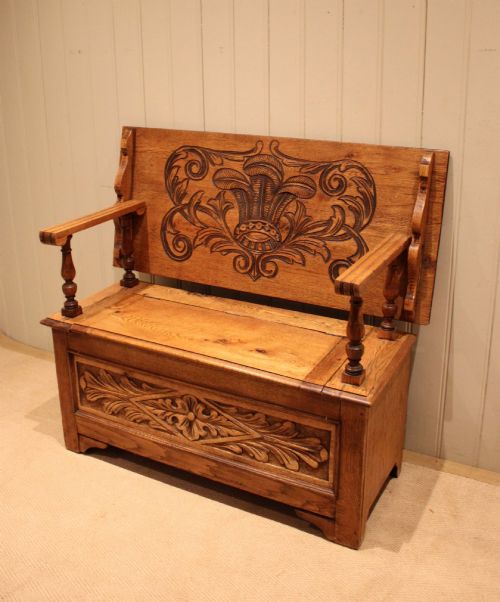
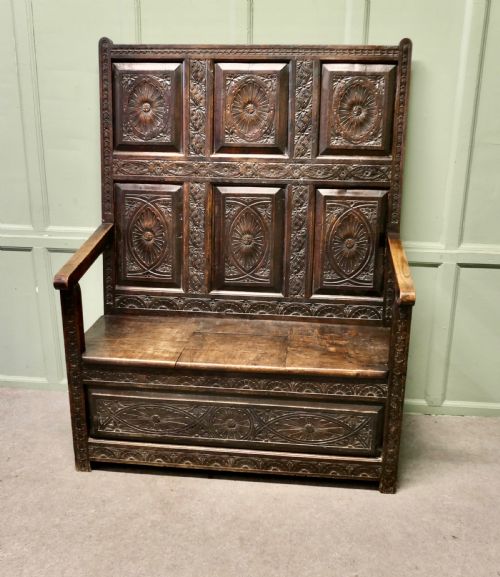
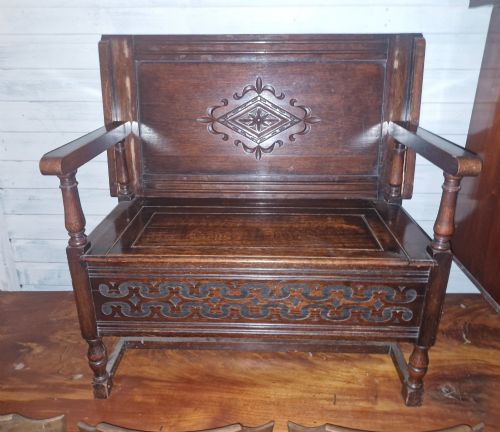
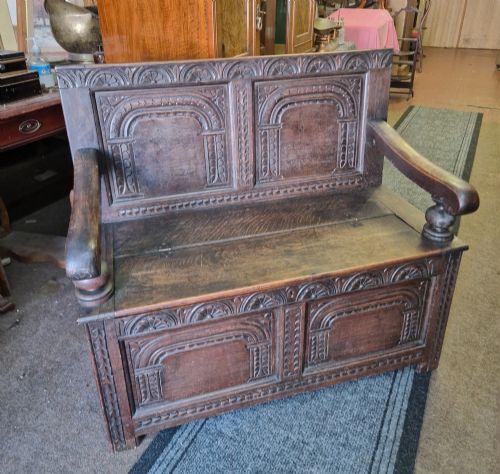
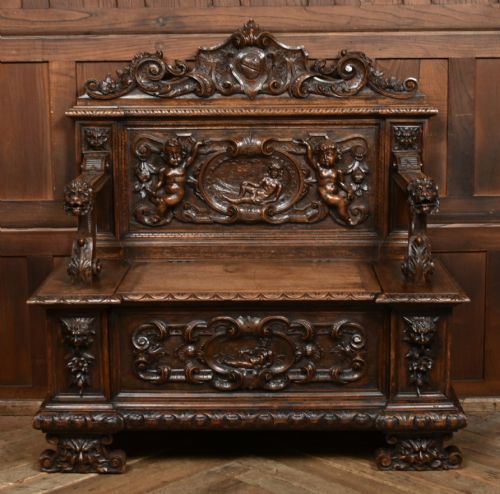
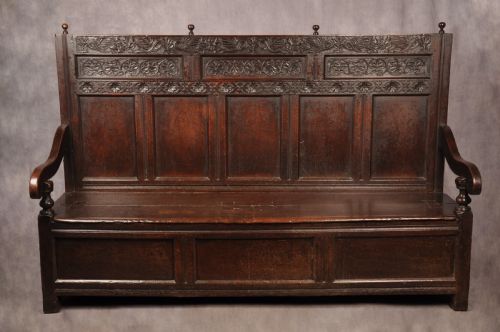
The most common iterations on this page are oak hall settles and monk's benches dating from the Victorian and Edwardian periods, alongside earlier seventeenth and eighteenth-century examples. These pieces frequently feature hinged or lift-up lids, high panelled backs, and elaborate surface carving reflecting Jacobean, Gothic, or revivalist influences.
Regional and continental variations also emerge, spanning English country workshops, Welsh or North Country pieces, French and Italian cassapancas, and Swiss marquetry chairs. They serve practically in hallways, bay windows, and living spaces as both storage chests and substantial seating.
How they were made
Construction relies predominantly on solid oak, joined using traditional mortise and tenon methods secured with wooden pegs, alongside secondary timbers such as mahogany, walnut, and rosewood in later or more refined models. Metalwork components like iron hinges, brass fittings, and occasional upholstery in fabric or velvet support the structural operation and comfort of the seats.
Surface ornamentation is executed through hand-carving directly into the timber, employing techniques like chip carving, linenfold panels, low-relief scrollwork, and figurative motifs such as Green Man masks. Finishing methods range from contemporary waxing to period patination achieved through decades of handling and polishing.
Some nineteenth-century makers concealed hinged secret compartments inside the box base alongside the main storage cavity.
What varies in quality
Quality separates ordinary utilitarian storage from exceptional joinery through the crispness of the hand-carved detail and the selection of figured timber boards. Superior pieces display harmonious proportions, original hinges and timber grounds, and integration between the carved backrest and the enclosed box base.
The depth and execution of the relief carving dictate distinction, distinguishing master regional workshops from later mass-produced revival pieces. Furthermore, the integrity of the original joints and the preservation of authentic surface patination govern the standing of an individual box seat.
The Carved Box Seat Glossary
- Settle
- A wooden bench with a high back, solid arms, and an enclosed box seat beneath the cushion or board. It kept draughts away from the sitter in older halls.
- Monk's bench
- A multi-functional form featuring a hinged back that folds down to convert the piece from a chair or settle into a table. These appeared frequently in the Victorian and Edwardian revival periods.
- Coffer
- A large wooden chest used for storing valuables or linens, which often doubles as a window seat when placed beneath glazing. Many early examples form the structural basis of box seats.
- Cassapanca
- An Italian wooden bench with a back, arms, and a deep storage box beneath the seat, often ornately carved or panelled. They represent grander continental domestic seating.
- Green Man
- A sculptural architectural and furniture motif depicting a human face surrounded by or sprouting from foliage. It signifies rebirth and appears frequently on nineteenth-century revival oak carvings.
Carved Box Seat: Frequently Asked Questions
Where should I place a box seat?
These pieces suit entrance halls, boot rooms, and wide corridors where their dual storage and seating capacity can be utilised daily. Placing them against a blank wall allows the high panelled backs and carved details to remain visible.
In living spaces or bay windows, shorter settles and coffer seats function effectively beneath windows or as statement seating. Their enclosed bases make them practical for storing blankets, shoes, or household items out of sight.
How do I date an oak box seat?
Dating relies on examining the construction methods, tool marks, and timber selection visible on the interior and underside of the piece. Hand-riven boards, pegged joints, and heavy patination typically indicate seventeenth or eighteenth-century origins.
Revival pieces from the Victorian and Edwardian eras often utilise machine-sawn timber or standardised hardware alongside softer secondary woods. The style of the carving also provides clues, as nineteenth-century makers frequently exaggerated Jacobean and Gothic motifs.
Are box seats comfortable to sit on?
Traditional box seats feature solid wooden boards designed for upright posture rather than deep lounging. They were historically intended for brief seating in drafty halls rather than long hours of relaxation.
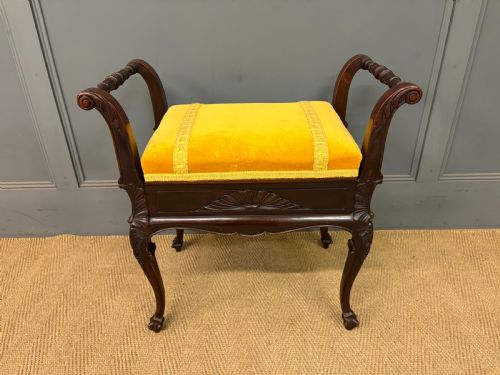
Many owners add loose squab cushions or upholstered pads to the seat boards to increase comfort. This adaptation softens the hard timber while keeping the original structure and storage compartment entirely unaltered.