




Golden Oak Hall Seat
These golden oak hall seat pieces bring warmth and robust timber presence to an entryway.
Golden Oak Hall Seat
A golden oak hall seat serves as practical entrance furniture, providing a place to sit while pulling on boots or waiting for guests. The pieces gathered here span from the Regency and Victorian eras through to the Edwardian period and the 1920s.
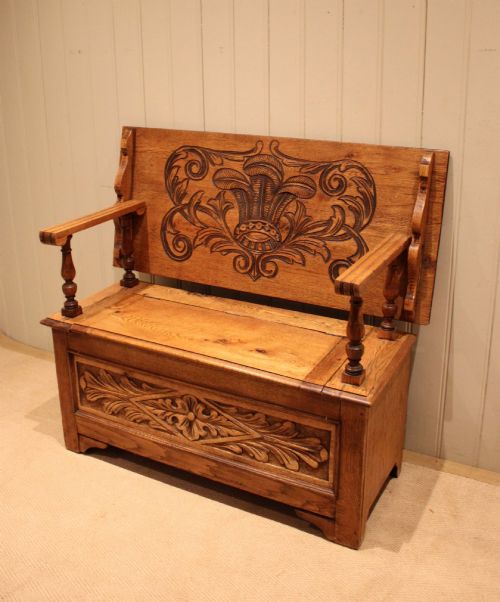
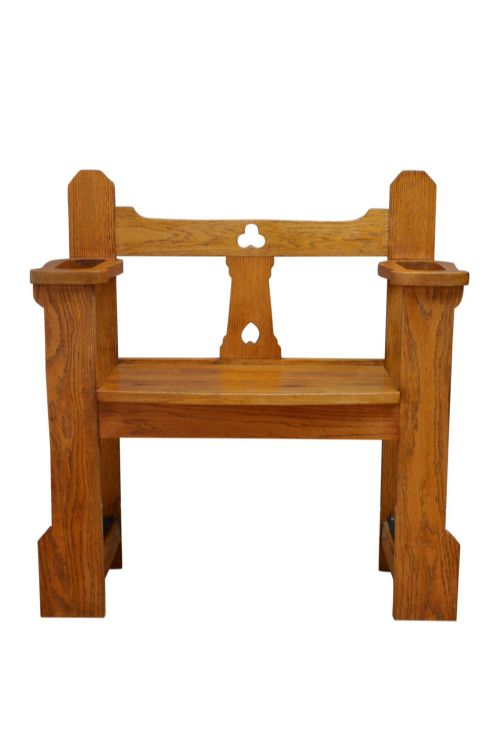
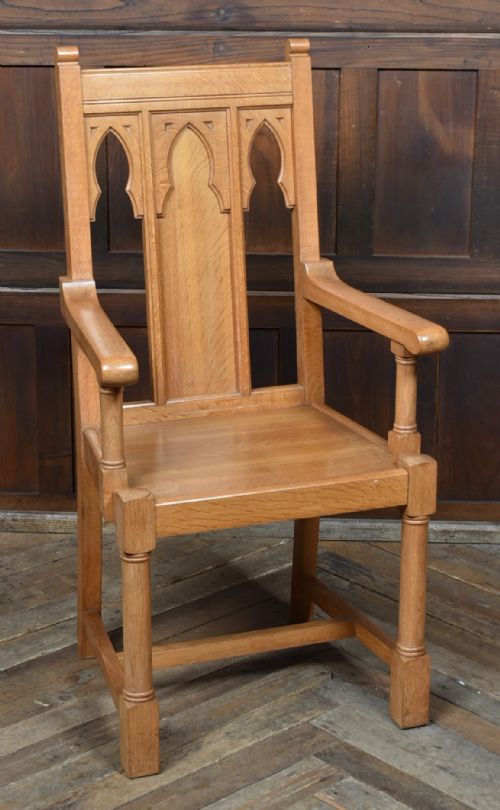
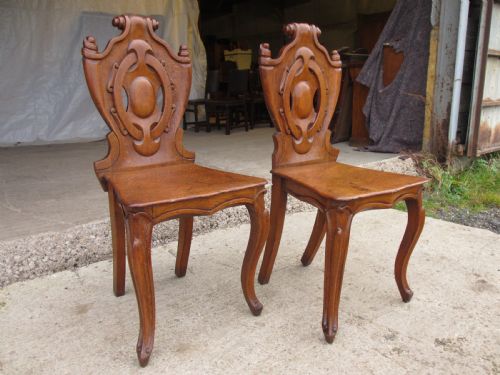
You will encounter various forms in this timber, ranging from narrow proportions benches and box settles to monks benches, chapel thrones, and paired side chairs. Many examples display regional character, including Scottish craftsmanship and Arts and Crafts ideals.
Revival styles heavily influence these designs, drawing upon Jacobean, Gothic, and Victorian motifs. Carved details such as Green Man faces, shield backs, and panelled woodwork appear frequently across the available forms.
How they were made
Makers relied primarily on solid oak, selected for its durability and strong grain pattern, which takes on a warm golden hue. Workshops shaped the timber using traditional joinery methods to build rigid frames capable of withstanding heavy daily use in busy entranceways.
Decoration often involved hand-carving directly into the solid wood to create figural motifs, tracery, and armorial shields. Metal hardware such as iron and brass appears on operational elements like storage boxes and settle compartments.
Periods represented span from the Regency era through Victorian and Edwardian times up to the 1920s.
What varies in quality
The distinction between ordinary and superior pieces rests upon the depth and crispness of the wood carving. Finer examples exhibit confident, hand-chiselled detailing on panels and crests rather than shallow or mechanical stamping.
Proportion and structural integrity also divide the range, as narrower benches and matched pairs require balanced timber selection and careful joint construction to endure centuries of hallway traffic.
The Golden Oak Hall Seat Glossary
- Golden oak
- A bright, warm shade of timber finish typical of various late nineteenth and early twentieth-century furniture. It highlights the natural grain and medullary rays of the wood.
- Settle
- A wooden bench with a high back, solid arms, and often a hinged seat revealing a box compartment beneath. They were traditionally placed near entrances to block drafts.
- Monks bench
- A convertible piece of furniture that functions as a table when the back tilts forward and as a bench seat when upright. It provides compact seating for smaller hallways.
- Green Man
- A sculptural architectural ornament depicting a human face surrounded by or sprouting from foliage. It symbolises rebirth and appears frequently in revivalist wood carvings.
- Shield back
- A chair design where the backrest is shaped in the outline of a heraldic shield. This form gained popularity during the Regency and Victorian periods.
Golden Oak Hall Seat: Frequently Asked Questions
What is a golden oak hall seat?
A golden oak hall seat is a sturdy wooden bench, settle, or chair designed specifically for placement in an entrance hall or reception space. These items combine practical seating with storage or decorative presence.
They appear in various forms reflecting periods from the Regency era to the 1920s, often featuring revivalist carving and solid timber construction.
How were these seats used historically?
Historically, hall seats provided a functional spot for household members and visitors to sit while removing outer garments and footwear. Box settles and monks benches additionally offered concealed storage for blankets or accessories.
Their substantial construction ensured they could withstand the heavy traffic of a busy home entrance.
How do I style a hall seat today?
A hall seat works best positioned against a clear hallway wall where its timber grain and carved details can be appreciated. It anchors the entryway while offering a practical drop zone.
Pairing the seat with neutral walls allows the golden oak tone and period characteristics to stand out.
How do I identify the period of a hall seat?
Dating relies on observing the prevailing style influences, such as Gothic Revival tracery, Arts and Crafts simplicity, or Victorian carved ornamentation. Construction methods and hardware choices also point towards specific manufacturing decades.
Comparing the proportions and decorative motifs helps distinguish nineteenth-century examples from 1920s revivals.