





Carved Back Oak Bench
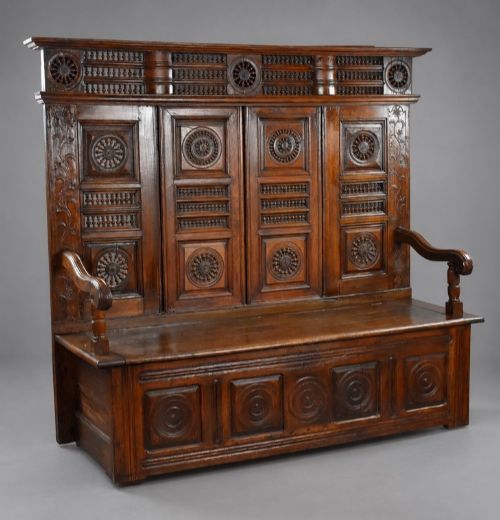
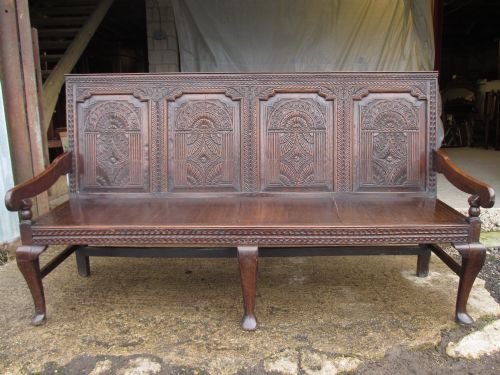
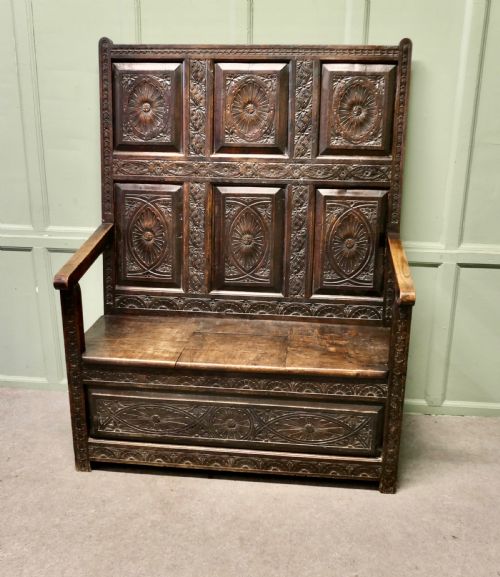
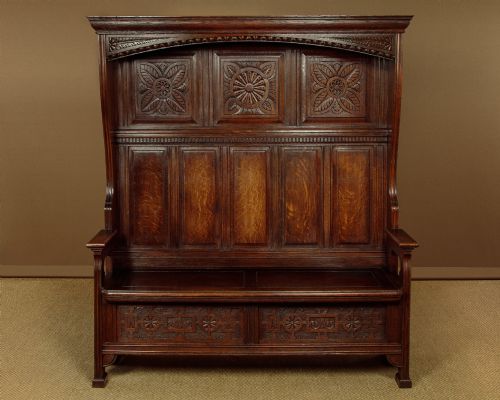
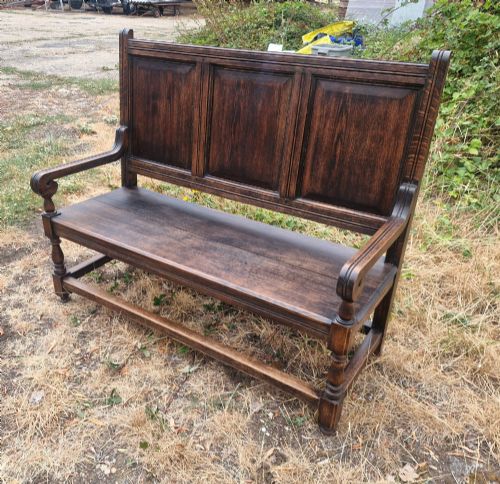
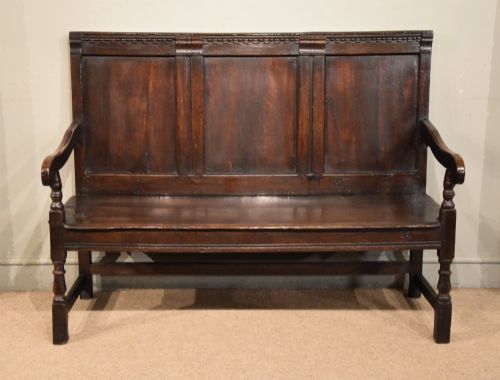
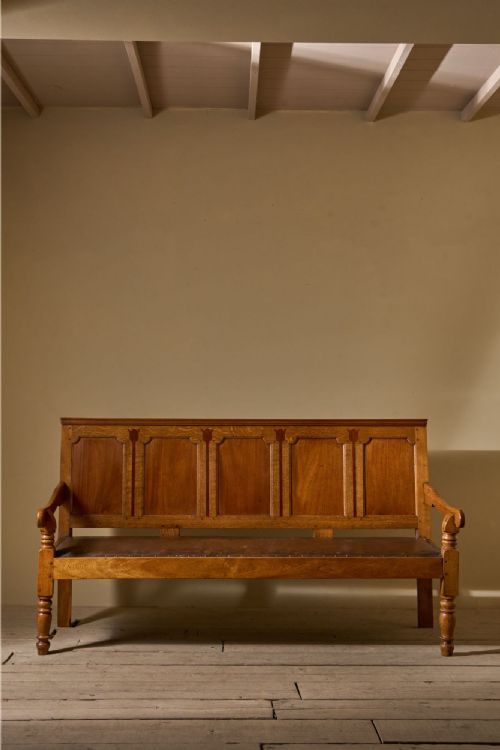
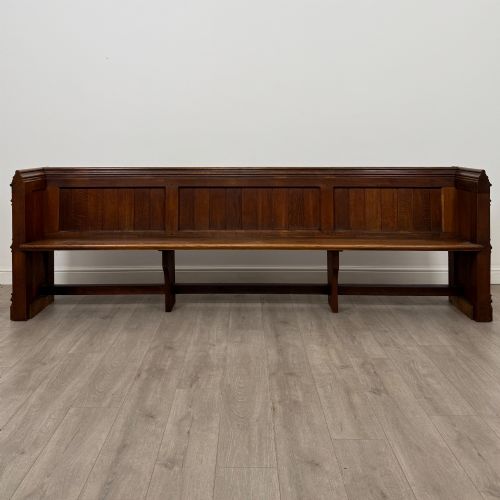
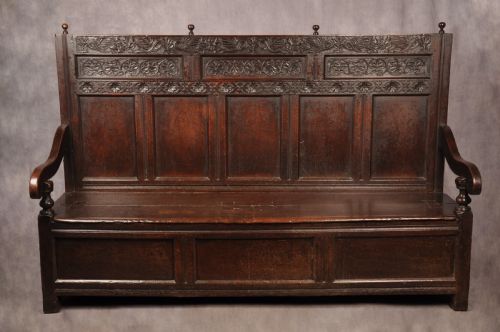
A carved back oak bench provides solid timber seating with panelled support, bringing centuries of domestic history straight into a hallway.
Carved Back Oak Bench
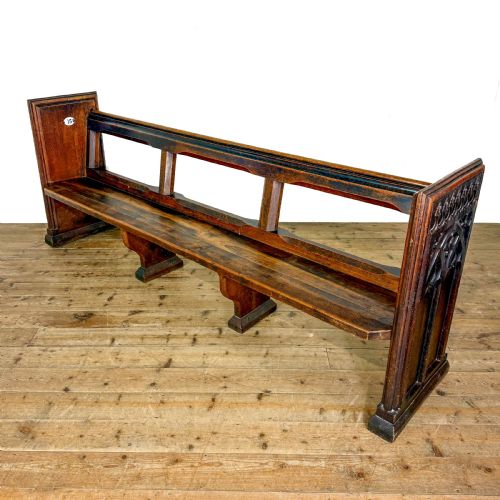
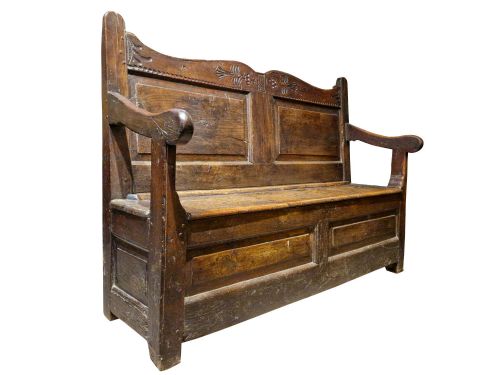
A carved back oak bench appears primarily as a settle, hall seat, or box settle designed for domestic and institutional interiors. These pieces span from the seventeenth century through the Victorian era and into the early twentieth century, showing regional origins in England, Wales, France, and Italy.
The most common form on this page is the high back oak settle, often featuring panelled construction and integrated storage beneath the seat. Buyers encounter variations ranging from rustic country examples to revivalist styles such as Jacobean and Victorian Gothic.
Materials and Construction
Makers utilised solid oak alongside supporting materials like walnut, iron, brass, and leather, often incorporating panelled joinery to construct rigid box seats and high backs. Surface treatments range from natural waxed timber to limed finishes and stripped golden oak.
Carving serves as the primary decorative technique, applied directly to wooden panels and crest rails with motifs including foliage, geometric patterns, and figurative details.
The selection spans from seventeenth century country pieces to twentieth century revival designs.
Assessing Quality
Quality rests upon the crispness of the hand carving and the integrity of the timber framing, where earlier seventeenth and eighteenth century examples demonstrate depth of relief and traditional joinery. Later revival pieces rely on proportion and the choice of figured grain to distinguish finer workshops from standard production.
The survival of original structural elements, such as panelled backs, box seats, and integrated armrests, separates standard utilitarian seating from pieces retaining artistic and historical coherence.
Hampton & Son's
The Carved Back Oak Bench Glossary
- Settle
- A wooden bench with a high back, solid arms, and frequently a box base for storage. This form protected occupants from draughts in older homes.
- Box Settle
- A variant featuring a hinged seat opening to a storage compartment underneath. It combines seating with domestic utility.
- Jacobean Revival
- A nineteenth century style copying the heavy turned legs, dark timber, and geometric panelling of the early seventeenth century. It reflects Victorian enthusiasm for historical interiors.
- Monks Bench
- A Victorian term often applied to a settle or convertible bench design. These pieces often feature adjustable backs or folding tables.
Carved Back Oak Bench: Frequently Asked Questions
How do I date an old oak settle?
Dating relies upon examining the construction methods, tool marks left on the timber, and the style of the carving. Seventeenth century pieces typically exhibit peg-joined frames and hand-riven boards, whereas Victorian revival examples display machine-sawn components and softer secondary woods.
The evolution of regional styles also aids identification, as country workshops maintained traditional joinery methods long after urban centres adopted newer fashions.
How were these benches used historically?
These pieces served as communal seating near hearths in domestic houses, inns, and churches, where high panelled backs deflected cold air from stone floors. The integrated box seat provided secure storage for household blankets, documents, or dry goods.
In later periods, they transitioned to grand entrance halls as decorative furniture for welcoming visitors.
Can I use a historic bench in a modern hallway?
These sturdy wooden seats fit naturally into contemporary hallways, providing durable seating and practical storage inside the box base. Their narrow profile allows them to sit flush against walls without obstructing walkways.
Placing them in modern interiors highlights the contrast between historical hand craftsmanship and clean architectural lines.