
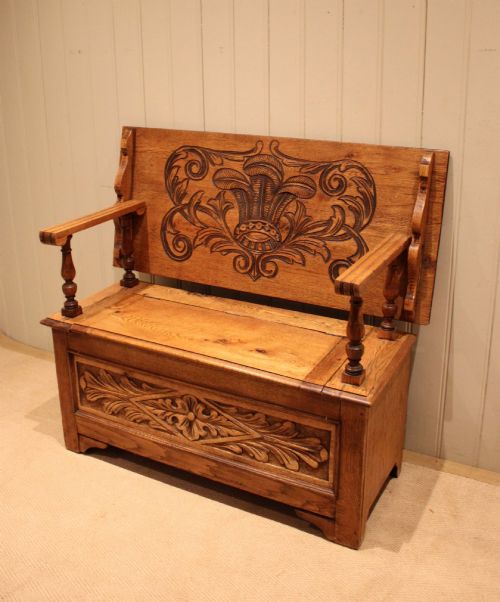
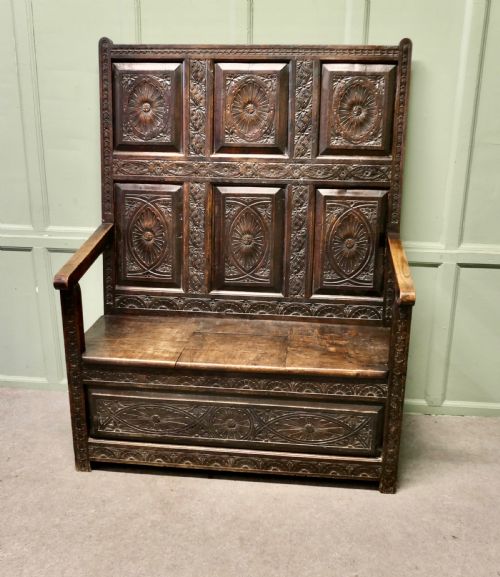
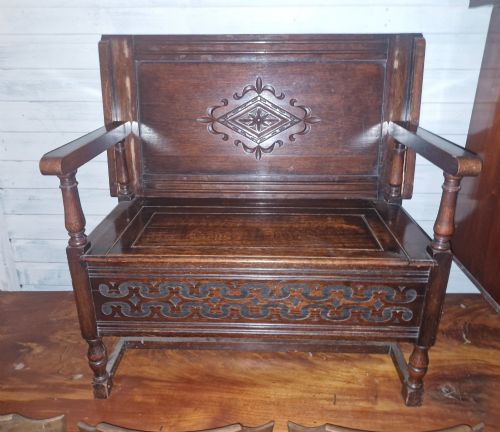
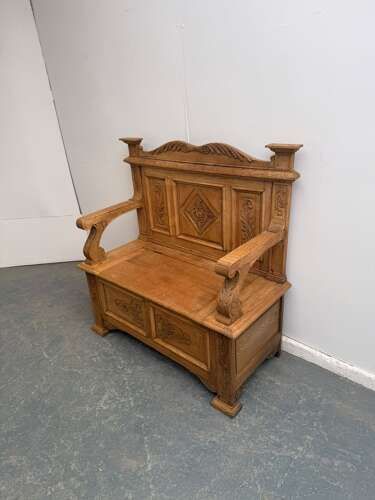


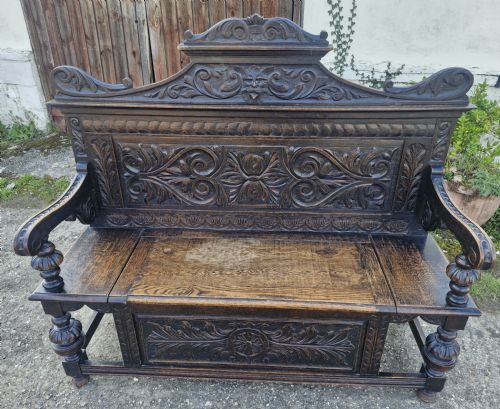

Carved Oak Box Settle
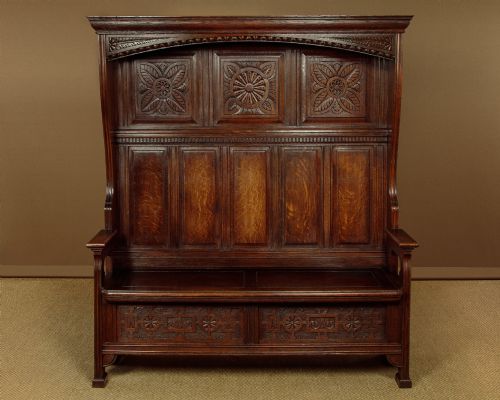
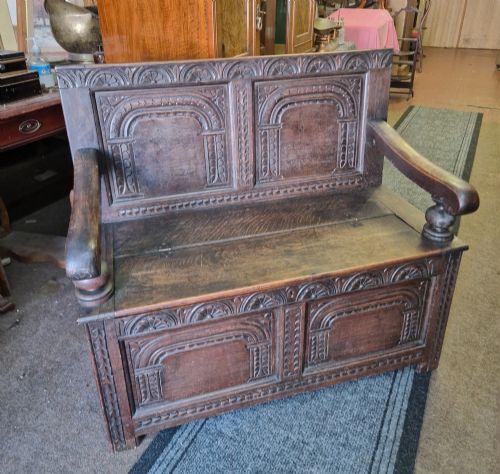
A carved oak box settle offers sturdy seating with integrated storage, bringing centuries of robust craft and domestic utility directly into a hallway or living space.
Carved Oak Box Settle
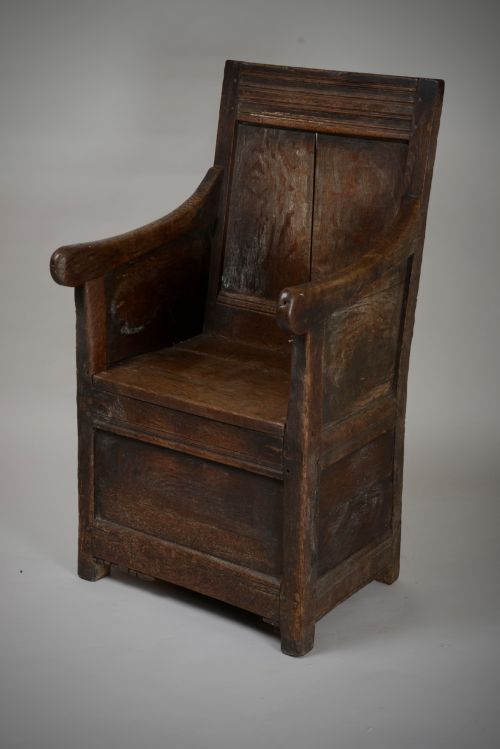
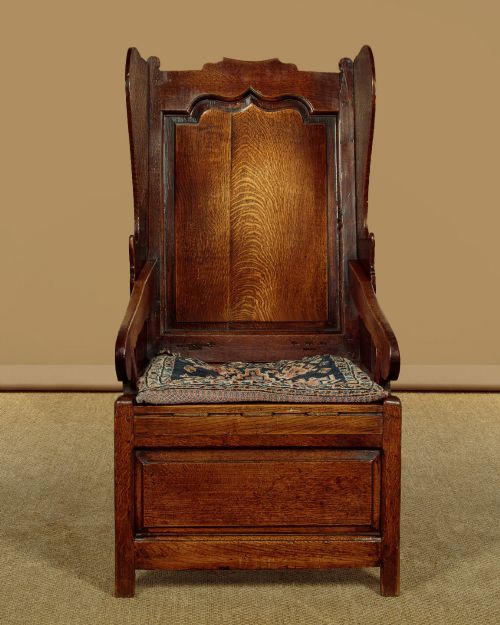
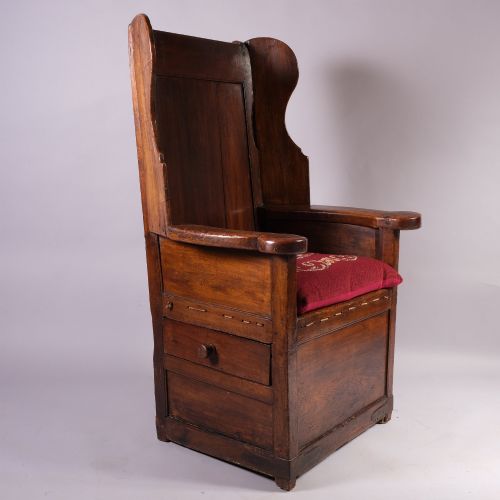
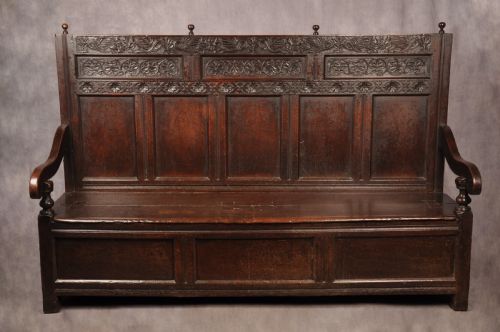
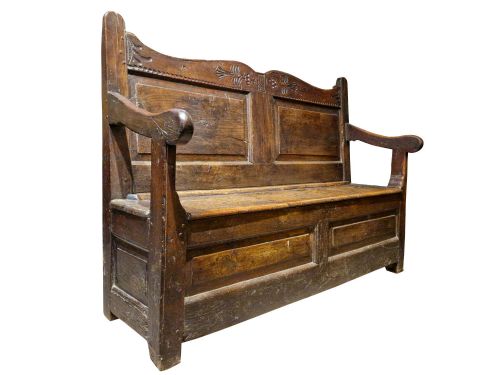
When you search for a carved oak box settle, you encounter high-backed benches and multifunctional seats that combine timber framing with a lidded compartment beneath the seat. These pieces range from substantial seventeenth-century regional examples to later nineteenth-century revival and twentieth-century interpretations.
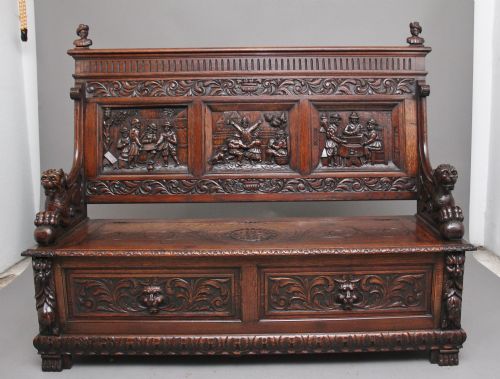
The versions most commonly met on this page date from the Victorian and Edwardian eras, often displaying Jacobean revival motifs, alongside genuine eighteenth-century country pieces and compact monk's benches with fold-over tops. They serve primarily as heavy hallway furniture, designed originally to keep draughts at bay while storing household items.
Originating in domestic and vernacular settings across Britain and Europe, these settles incorporate panelled backs, arm supports, and occasional decorative elements such as Green Man carvings or lion supports. Their enduring appeal lies in this combination of architectural presence and practical box storage.
What varies in quality
The standard of a carved oak box settle rests upon the proportion and integrity of its timber, with earlier seventeenth and eighteenth-century examples commanding attention for their honest, unpretentious joinery and patination. Later revival pieces differ according to the crispness and depth of the hand-carving, as well as the retention of original board seats and hinged lids.
Proportion and scale also dictate worth, as smaller proportions and high-backed formats with integrated canopy tops or original lion arm supports demonstrate greater ambition in design. Alterations to the base or replaced panels diminish the integrity of the piece, whereas undisturbed surfaces reflect superior preservation.
Some nineteenth-century examples are uniquely decorated with garden flowers and initialled by makers who clearly preferred horticulture over standard strapwork.
The Carved Oak Box Settle Glossary
- Settle
- A wooden bench with a high back, solid arms, and enclosed lower section designed to deflect cold draughts in historical rooms.
- Monk's bench
- A convertible seat featuring a hinged back that folds down onto the arms to form a table top above a box base.
- Box settle
- A variant incorporating a lidded compartment beneath the seat for storing textiles, rugs, or household provisions.
- Strapwork
- A carved decorative motif resembling flat interlaced bands or leather straps, prevalent in Jacobean and Elizabethan woodwork.
- Green Man
- An architectural ornament depicting a human face disgorging foliage, frequently encountered in revival and Gothic carvings.
- Patina
- The surface sheen and deep colour developed by aged timber through decades of handling, polishing, and environmental exposure.
Carved Oak Box Settle: Frequently Asked Questions
What is a box settle used for?
A box settle provides dual utility as both a rigid bench seat and a deep storage chest enclosed beneath the seat boards.
Historically placed in hallways or kitchens, the high back also acted as a windbreak against draughts in older dwellings.
How do I tell an 17th-century settle from a Victorian revival?
Seventeenth-century settles typically display vernacular tool marks, pegged frame construction, and natural timber shrinkage developed over centuries of age.
Victorian and Edwardian revival pieces often utilise machine-sawn elements, heavier carved relief work in a Jacobean style, and standardised iron hinges.
Where should I place a settle in my home?
These pieces suit entrance halls and boot rooms, where their integrated storage accommodates shoes, textiles, and everyday clutter.
They also function effectively against a large living room wall, where their architectural backs create a distinct seating zone.