

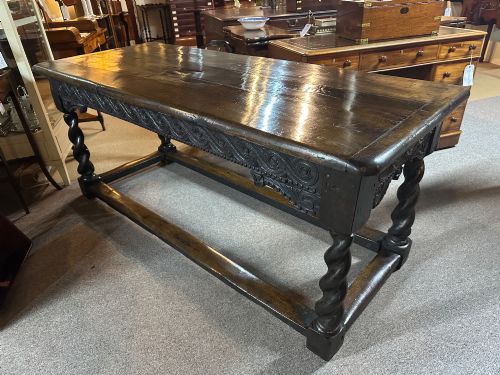
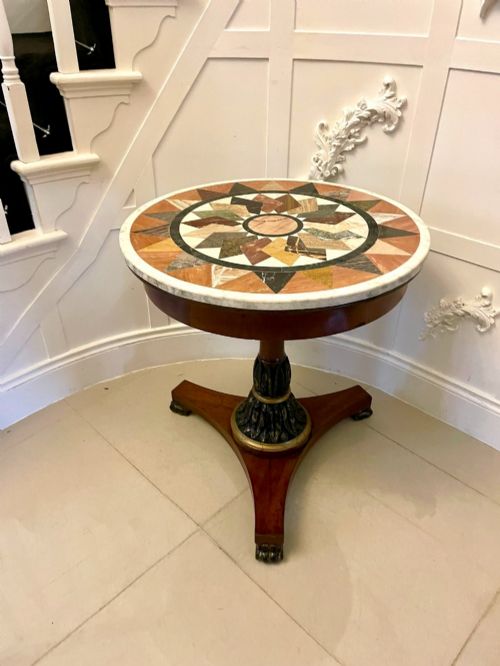
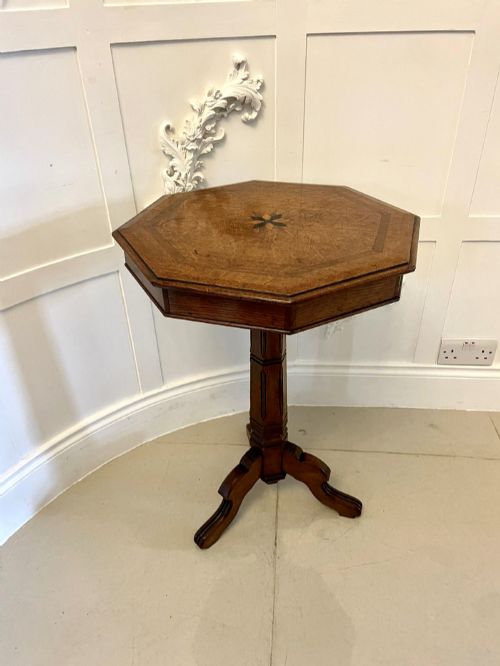
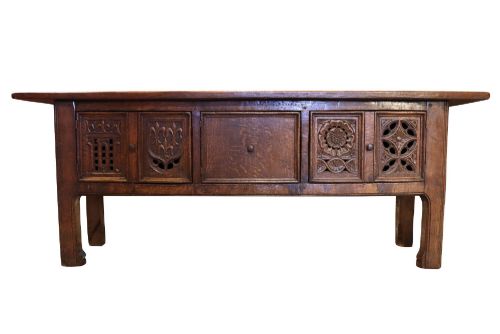


Carved Base Hall Table
A carved base hall table brings immediate architectural weight to an entrance, offering heavy timber construction and sculptural support beneath a functional surface.
Carved Base Hall Table
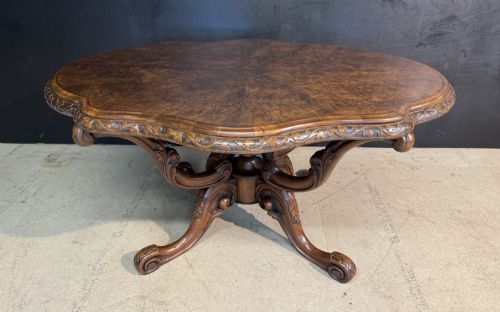
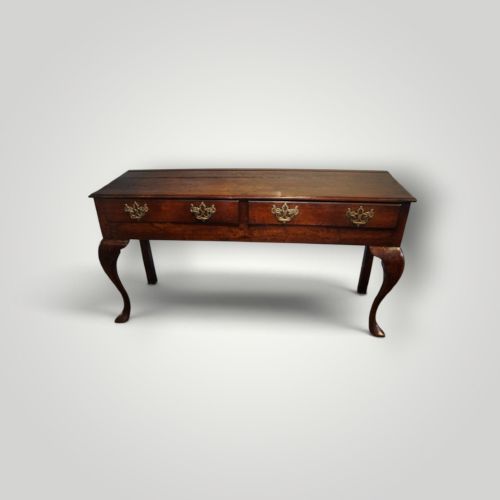
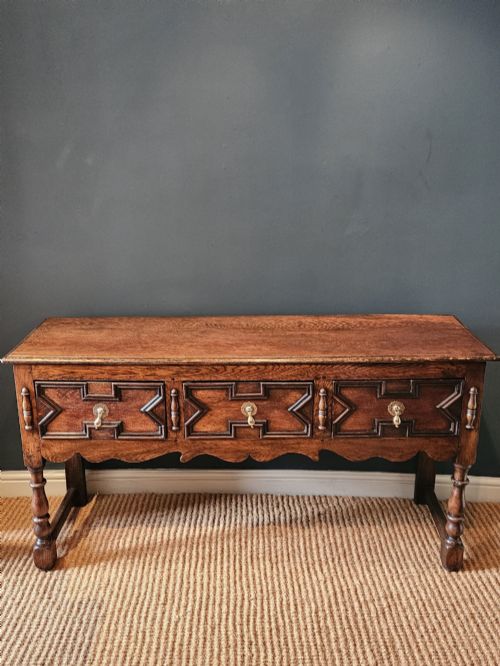
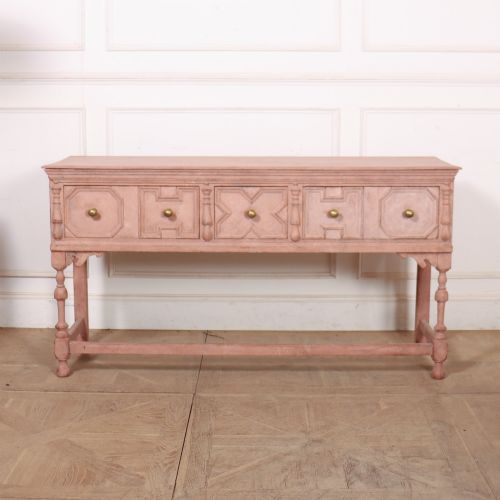
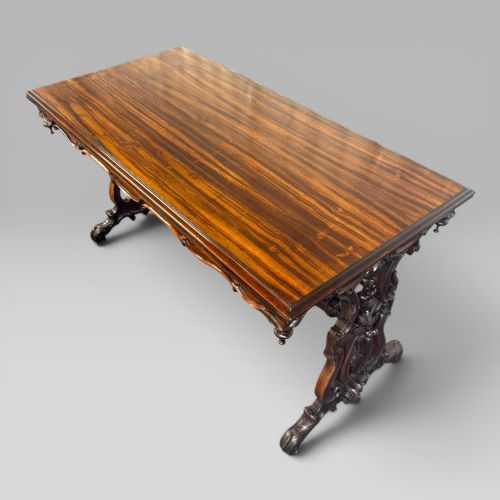
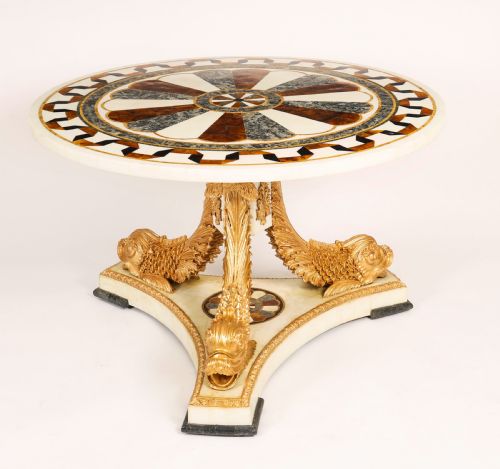
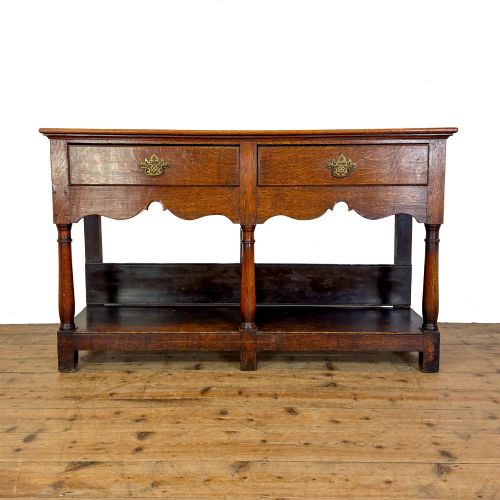
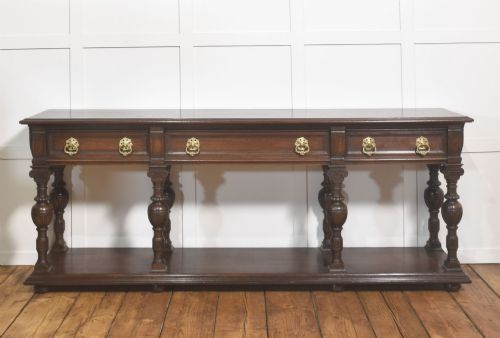
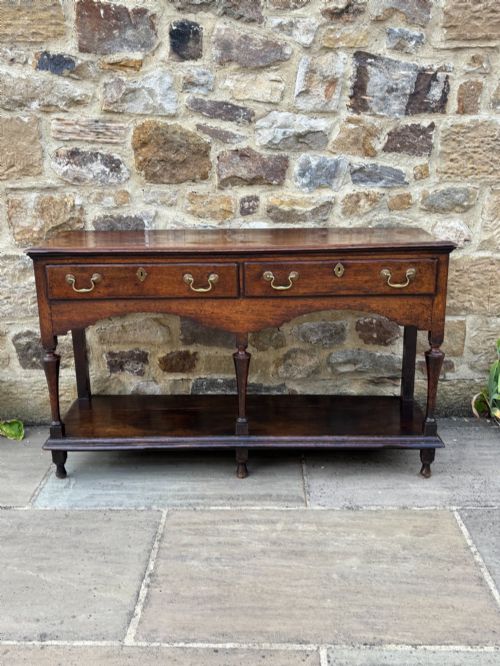
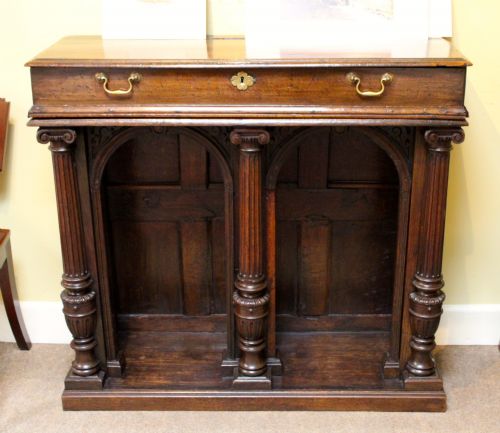
A carved base hall table encompasses several related forms designed for placement in hallways, reception rooms, and corridors. The listings on this page span heavy timber dresser bases, console tables, and centre tables originating from the seventeenth century through to the early twentieth century.
Oak represents the predominant timber for the earlier dresser bases and side tables, often displaying period characteristics such as geometric mouldings and potboards. Mahogany, burr walnut, and rosewood appear frequently among the later centre tables and console tables, frequently featuring marble tops or intricate pedestal supports.
Materials and construction
Makers utilised solid native and exotic hardwoods, pairing structural oak and mahogany with decorative veneers of burr walnut, zebrawood, and rosewood. Surface decoration relied on deep hand-carving, geometric moulding, and parcel gilding to accentuate the timber grain.
Support structures combined heavy turned legs, cabriole legs, and sculptural pedestals, sometimes reinforced with brass mounts, marble slabs, or secondary softwoods in concealed areas.
Carved Base Hall Table Retail Price Guide 2026
Typical asking prices for carved base hall table among the pieces listed under this phrase on Sellingantiques today, from the lower quarter to the upper quarter. They describe what is for sale here now, not the wider market.
The listings span the seventeenth through the early twentieth centuries, recording woods from native oak and pitch pine to exotic rosewood, zebrawood, and goncalo alves.
Assessing the execution
Quality rests in the crispness of the hand-carving and the selection of timber figures, particularly in burr walnut and figured oak surfaces. Superior examples demonstrate rigorous joinery and proportion, where structural supports integrate seamlessly with the decorative scheme.
The integration of secondary materials, such as inset marble tops and cast brass mounts, distinguishes standard utilitarian furniture from pieces designed for principal reception rooms.
The Carved Base Hall Table Glossary
- Dresser base
- A low sideboard or serving table, typically fitted with drawers above cupboards or an open potboard shelf. These pieces form a significant portion of the early oak listings.
- Gueridon
- A small French round table, frequently supported by a central pillar or tripod base and topped with marble. They function as centre tables or lamp tables.
- Console table
- A table designed to stand against a wall, sometimes secured with brackets or featuring front legs only. They often carry heavy marble slabs.
- Potboard
- An open slatted lower shelf incorporated into the base of a dresser for storing kitchen or utility ware. This feature appears on seventeenth and eighteenth-century oak examples.
- Parcel gilt
- Partially gilded timber ornament, where gold leaf highlights specific carved details against a dark wood ground. This technique appears on nineteenth-century rosewood and mahogany pieces.
Carved Base Hall Table: Frequently Asked Questions
Where should I place a carved base hall table?
These tables suit entrance halls, corridors, and large landings where their substantial timber frames and decorative supports remain visible from multiple angles. Their flat upper surfaces provide a convenient drop zone for post and keys.
Ensure the proportions match the width of your corridor or hallway, leaving adequate clearance for movement around projecting pedestal bases or cabriole legs.
How do I maintain an antique timber table?
Dust the surface regularly with a dry, soft cloth and apply a traditional beeswax polish sparingly to nourish the hardwood grain. Avoid placing timber tables near direct heat sources or in strong sunlight.
Protect marble inserts from acidic spills by using coasters, and lift objects rather than sliding them across polished wooden tops.
How do I date an oak dresser base?
Examine the construction methods, drawer linings, and tool marks visible on the underside and interior panels. Hand-cut dovetails and pegged joints generally indicate earlier manufacture.
Compare the moulding profiles and carved motifs against known period styles, noting that revival pieces from the nineteenth century often imitate seventeenth-century details.