

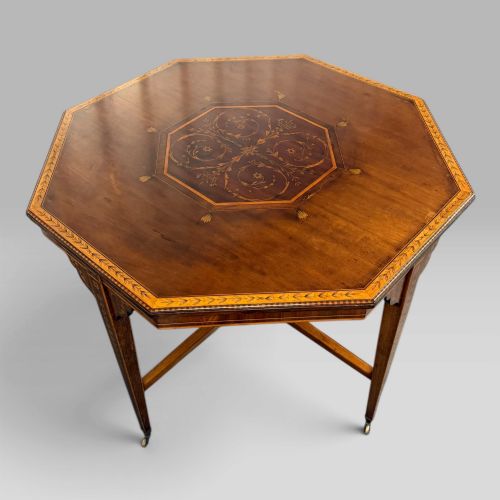
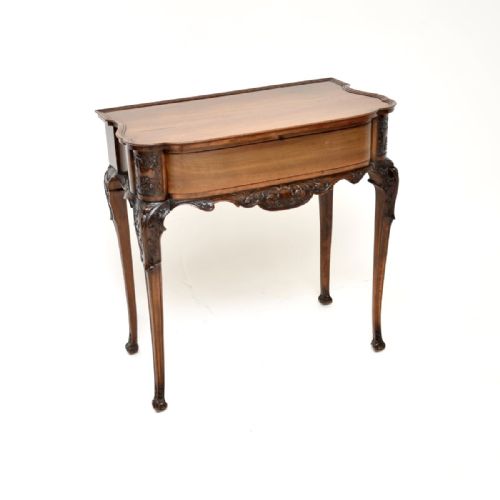
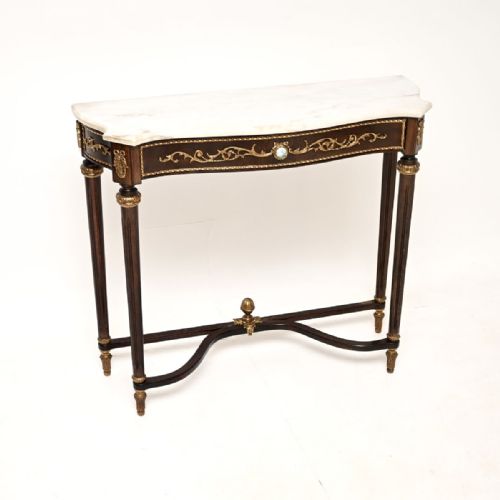
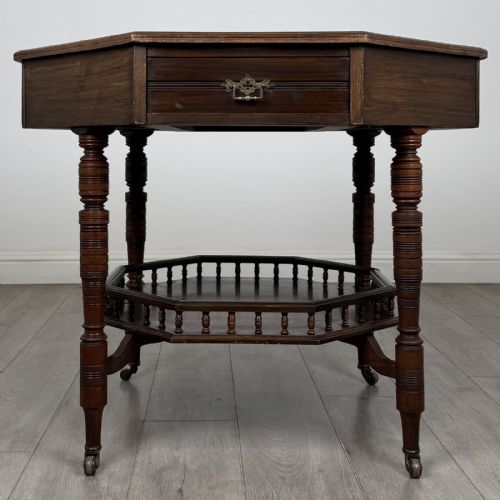
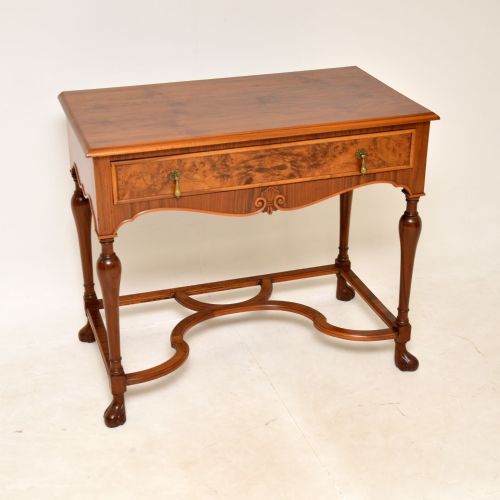
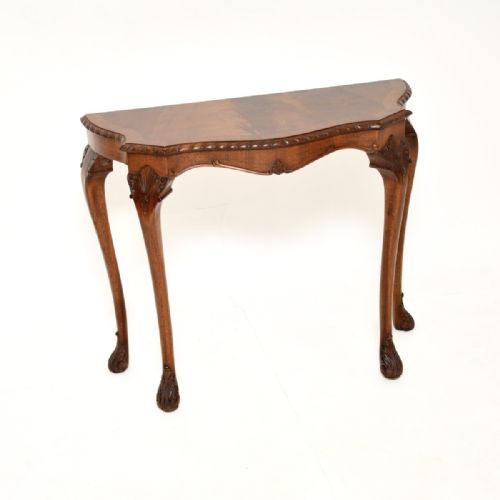

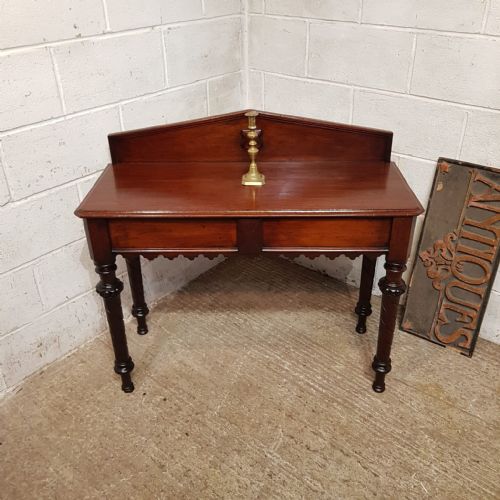
Foyer Table Carved Legs
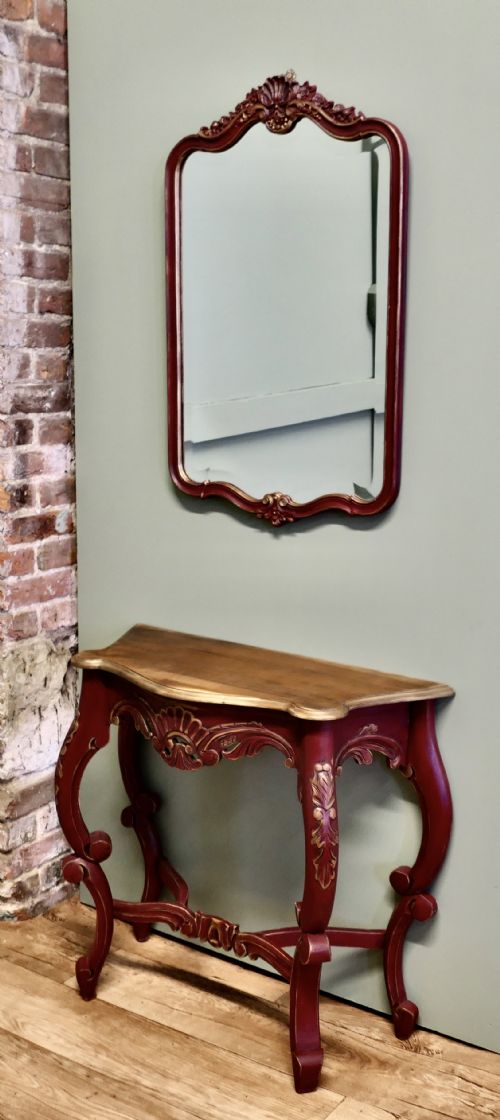
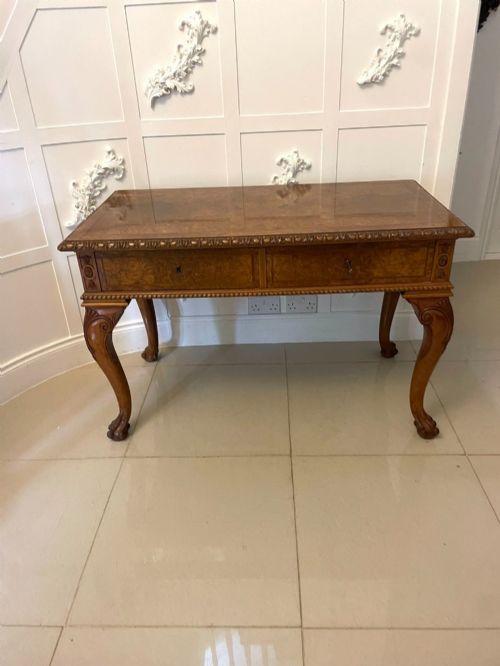
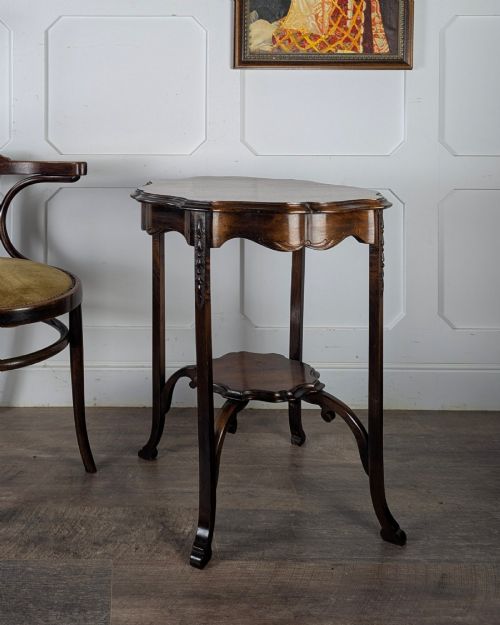
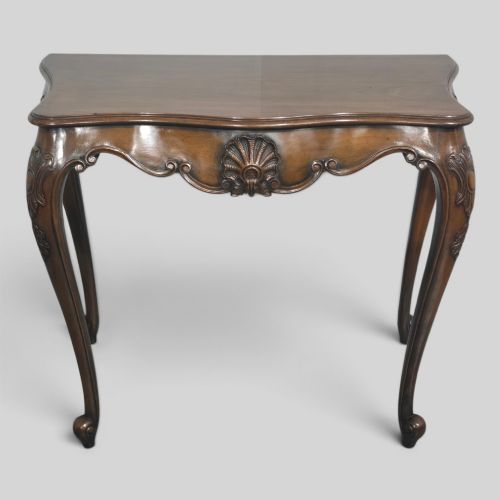
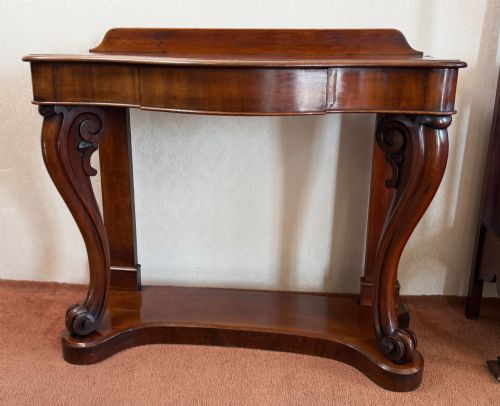
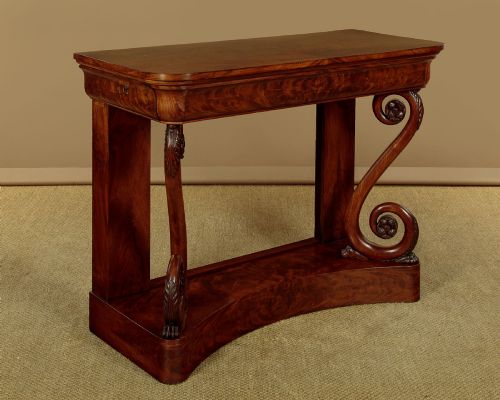
A foyer table carved legs sets a formal tone in an entrance hall, offering a sturdy surface with sculptural woodwork.
Foyer Table Carved Legs
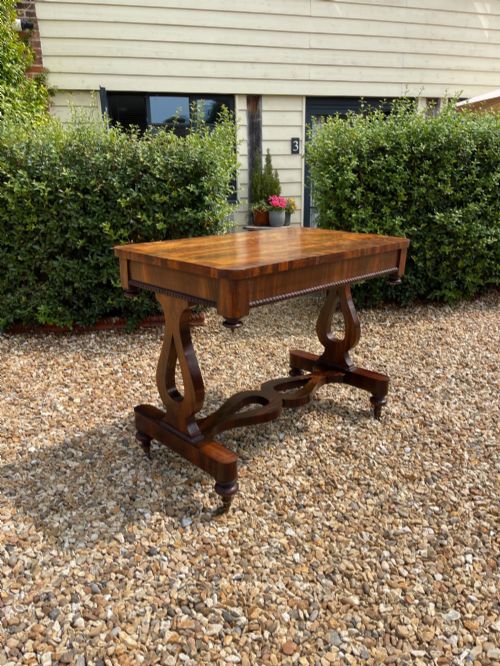
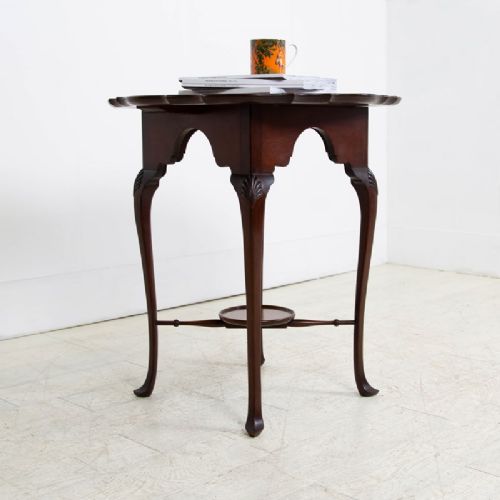
When searching for a foyer table carved legs, buyers encounter console tables, side tables, hall tables, and centre tables designed for placement against walls or in open spaces. The selection spans the nineteenth century, the Victorian era, the Edwardian period, and into the nineteen-twenties, incorporating styles from Queen Anne and Adam to Rococo Revival and Neoclassical.
Mahogany and walnut dominate the offerings, often appearing alongside burr walnut, rosewood, oak, and coromandel. These surfaces frequently pair with marble tops, leather inserts, and brass details, anchoring the sculptural forms of the carved supports.
The assortment balances narrow console forms meant for tight hallways with broader centre tables intended for reception spaces. Pieces originating from British, Irish, French, and Italian workshops bring distinct regional interpretations to the carved leg motif.
Materials and construction methods
Cabinetmakers utilised dense timbers like mahogany, walnut, and rosewood, selecting figured veneers and burr walnut to create patterned surfaces on tops and aprons. Oak frequently serves as a secondary wood for structural stability within the framework.
Carvers shaped solid timber to form cabriole legs, lion masks, paw feet, and elaborate scrolls. Marquetry inlay, brass mounts, and parcel silvering provide surface enrichment on select examples.
Table tops integrate materials such as white marble, inset leather, and matched wood veneers, secured to heavy frames designed to support the weight of stone and solid timber.
Foyer Table Carved Legs Retail Price Guide 2026
Typical asking prices for foyer table carved legs among the pieces listed under this phrase on Sellingantiques today, from the lower quarter to the upper quarter. They describe what is for sale here now, not the wider market.
The inventory records pieces from the nineteenth century, Victorian era, Edwardian period, and the nineteen-twenties.
Distinctions in craftsmanship and design
The depth and crispness of the carving separate standard production from exceptional work, particularly in the rendering of botanical motifs, scrolls, and animal forms on the legs. Superior examples show meticulous hand-chutting and undercut details rather than shallow machine profiling.
The choice of materials dictates the visual weight of the piece, with richly figured burr walnut veneers, book-matched mahogany, and heavy marble slabs marking the higher tier of production. Subtle touches like brass inlay, marquetry, and parcel silvering elevate the decorative ambition.
Proportion and structural honesty define the architecture, where narrow console depths align harmoniously with expansive length and balanced leg placement. Quality lies in the seamless integration of freestanding capability, allowing the piece to hold presence in the middle of a room as well as against a wall.
Shapland and Petter·Hicks of Dublin
The Foyer Table Carved Legs Glossary
- Console table
- A table designed to be fixed against a wall, frequently supported by ornamental legs or brackets at the front. These pieces serve narrow corridors and entrance halls.
- Centre table
- A freestanding table intended to sit in the middle of a room rather than against a wall. They feature finished detail on all sides.
- Burr walnut
- Timber taken from the warted growths of walnut trees, yielding highly decorative swirling grain patterns. Cabinetmakers sliced this wood into veneers for tabletops.
- Cabriole leg
- A furniture leg that curves out and then in, resembling the leg of an animal. This form frequently terminates in a paw, scroll, or pad foot.
- Pier table
- A decorative table designed to stand against the wall between two windows, often positioned beneath a mirror. They frequently incorporate marble tops.
- Marquetry
- The art of applying pieces of veneer to a structure to form decorative patterns and pictures. Walnut and exotic woods provide contrasting tones in these designs.
Foyer Table Carved Legs: Frequently Asked Questions
Where should a foyer table go?
These tables find their natural home in entrance halls and reception spaces where visitors arrive. Narrow console variants sit flush against walls to maintain clear pathways.
Freestanding centre tables occupy the middle of larger rooms, holding lamps, decorative bowls, and books while remaining accessible from all sides.
How do I spot Victorian pieces?
Victorian examples rely heavily on dense mahogany and walnut timbers with robust proportions. Carving during this era often draws on earlier revivals like Rococo and Queen Anne.
Construction methods reflect industrial advances while retaining hand-carved decorative elements on the legs and aprons.
What is a marble top used for?
Marble slabs provide a cool, hardwearing surface resistant to moisture and heat. They appear frequently on console and pier tables designed for formal display.
This heavy stone requires substantial timber framing underneath to support the weight and keep the structure stable.
How do I clean wood and marble?
Polishing timber surfaces with traditional beeswax preserves the grain and natural sheen of mahogany and walnut. Avoid modern silicone sprays that build up over time.
Marble requires gentle wiping with a damp cloth and mild soap to protect the polished stone from acidic spills and staining.