


Carved Back Oak Chairs
Carved back oak chairs bring heavy timber and sculptural detail into a room, offering tactile grain and enduring structure.
Defining carved back oak chairs
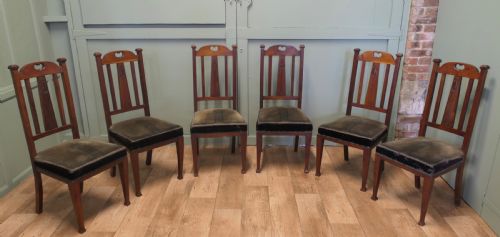
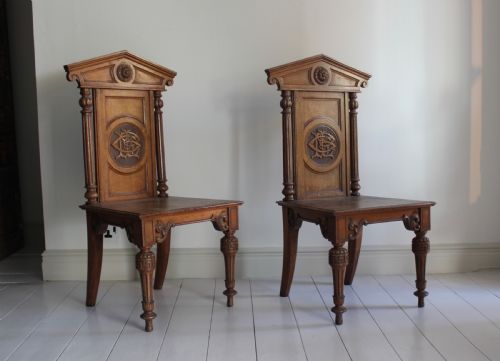
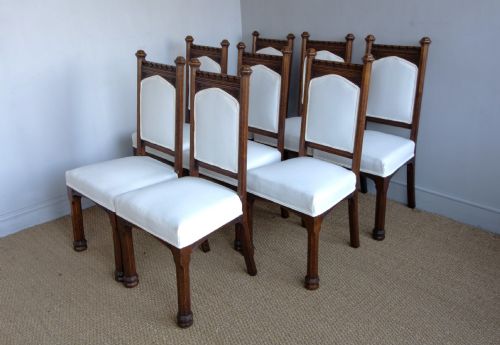
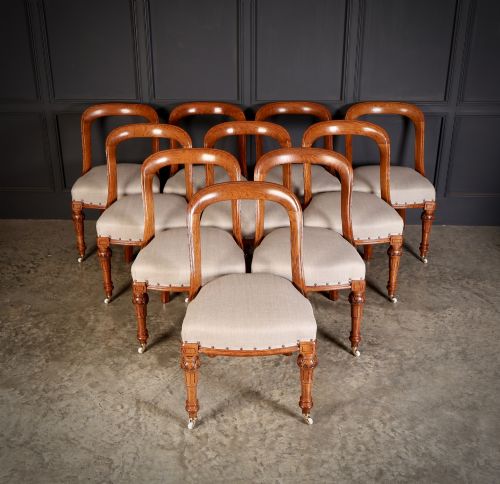
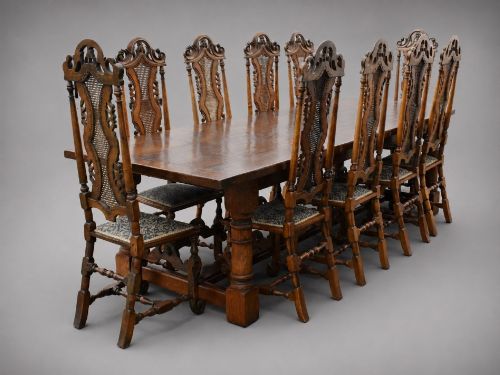
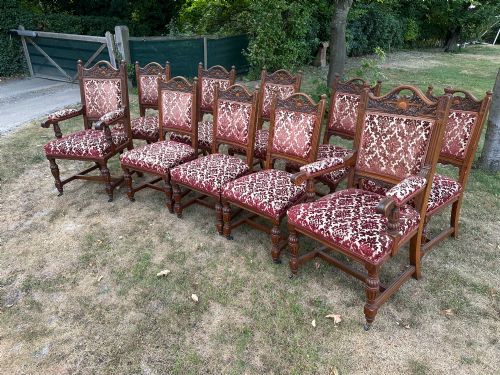
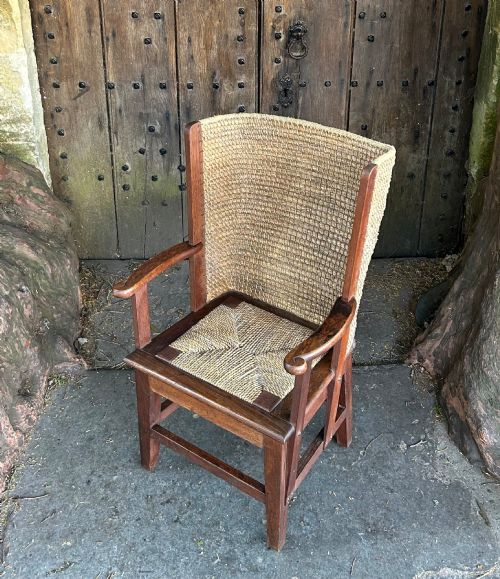
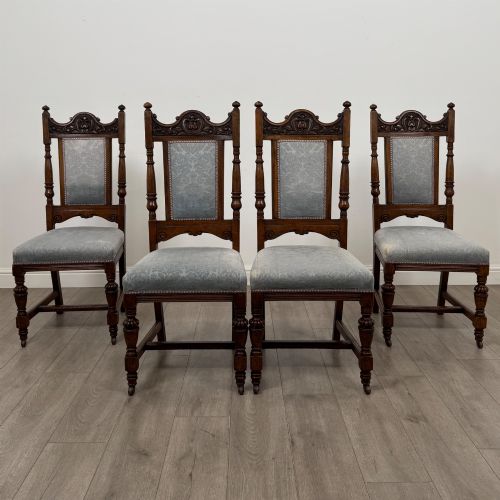
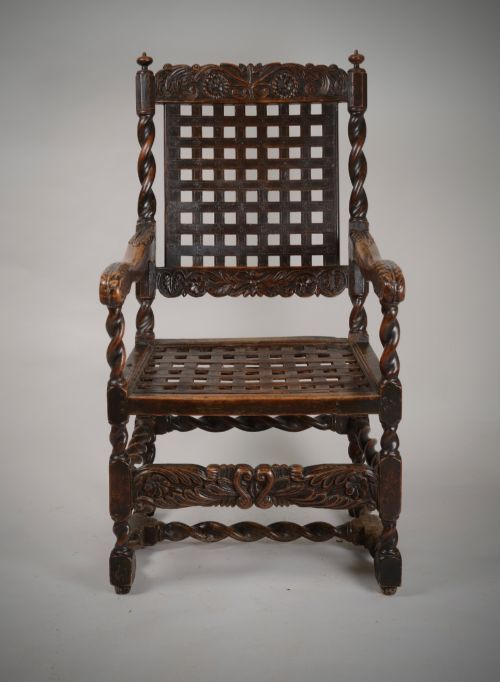
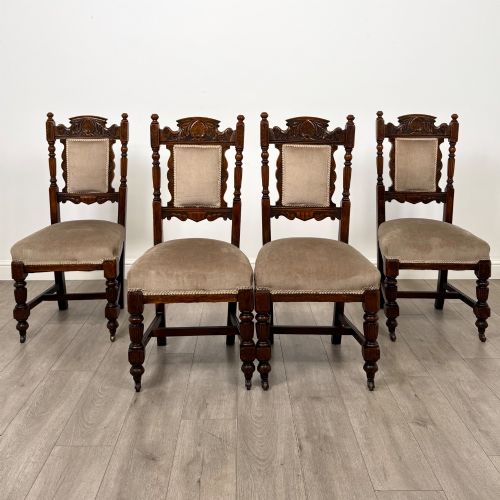
When you search for carved back oak chairs, you are looking at sturdy seating built from heavy timber, spanning dining chairs, carver armchairs, side chairs, and hall chairs. These pieces draw heavily on historical revivals, most notably Jacobean, Carolean, and 17th century styles.
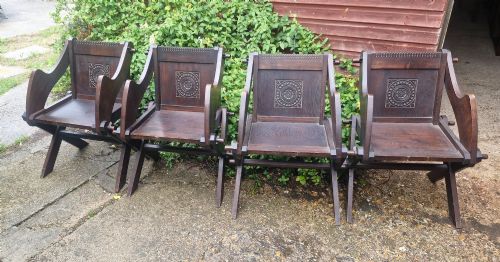
You are most likely to meet sets of dining chairs alongside pairs of hall chairs or carvers on this page. The forms range from tall high back profiles with barley twist supports to lower Art Deco, Arts and Crafts, and Gothic revival designs.
Origins stretch across the nineteenth and twentieth centuries, including Victorian interpretations and 1920s revivals. The unifying element across all these variations remains the solid oak construction paired with deeply worked wooden backrests.
Materials and construction
The primary material is oak, utilised for its dense grain and structural strength. Workshops fashioned the frames using traditional joinery, often incorporating turned stretchers and upright supports.
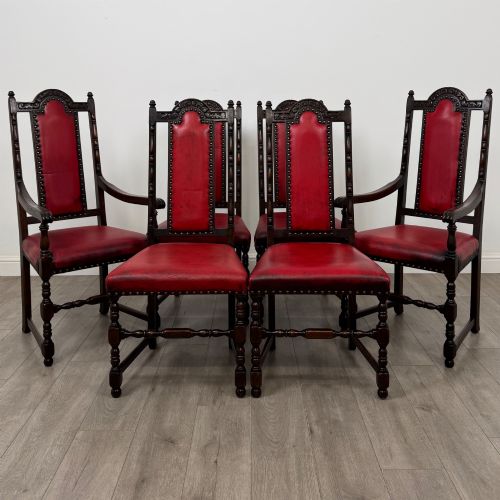
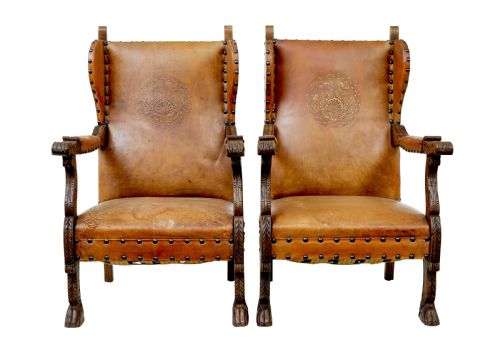
Decoration relies on hand carving applied directly to the timber backrests, rails, and splats. Many examples are paired with secondary materials such as leather, fabric, or upholstery fabric fitted to the seats and backs.
Retail Price Guide 2026
Typical UK retail prices for carved back oak chairs, calculated from the Sellingantiques database of over a million retail prices indexed since 2003. This retail price guide relies exclusively on Sellingantiques data; no external sources or auction records are used, so the figures do not describe the wider market.
Listings feature oak material paired with fabric, upholstery fabric, and leather across nineteenth and twentieth century periods.
Judging quality in carved oak
The distinction between ordinary and superior pieces rests on the depth and crispness of the carving. Master carvers produced intricate floral, geometric, and pierced designs with sharp relief, whereas lesser examples show shallow, mechanical tooling.
Timber selection and the integrity of the frame dictate longevity. Uniformity within a matched set of dining chairs and the tightness of the joints separate utilitarian seating from finer workshops.
Shapland and Petter
The Carved Back Oak Chairs Glossary
- Carver armchair
- An armchair designed with open arms, typically intended to sit at the head of a dining table or function as a standalone hall seat.
- Barley twist
- A turned wooden structural member resembling a spiral rope, frequently found on the legs and stretchers of Victorian and revival pieces.
- Jacobean revival
- A late nineteenth and early twentieth century style that copies the dark timber, heavy proportions, and geometric carving of seventeenth century English furniture.
- Hall chair
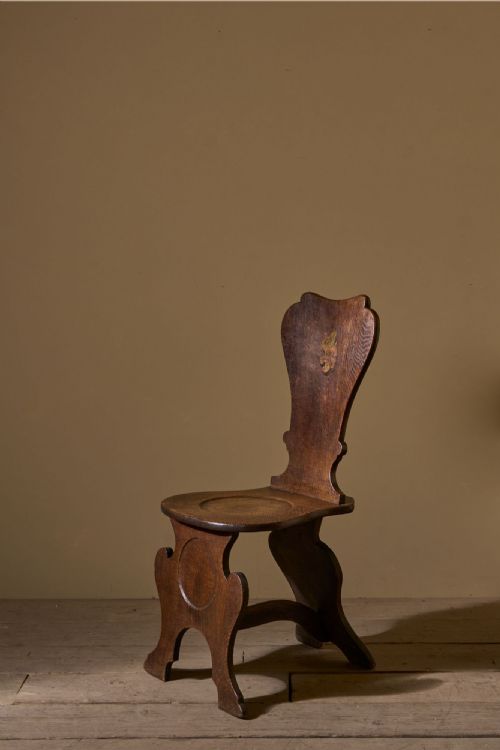
- A rigid, upright wooden chair designed for an entrance hall, usually featuring a solid carved back and no soft upholstery.
- High back
- A tall vertical backrest designed to create an imposing silhouette, often associated with seventeenth century dining chairs.
Frequently Asked Questions
How do I clean carved oak?
Dust the deep recesses of the carving regularly using a soft natural bristle brush to prevent dirt accumulation.
Feed the timber periodically with a traditional wax polish, rubbing it in thoroughly and buffing to maintain a soft sheen without building up heavy layers.
Are these chairs comfortable for daily dining?
Many high back and hall chairs were designed with an upright posture in mind, offering firm support rather than deep cushioning.
Pairs with upholstered or leather pads provide a softer sit, making them well suited for modern dining use.
How do I date a carved oak chair?
Examine the tooling marks, timber patina, and construction methods to distinguish nineteenth century revivals from earlier pieces.
Stylistic markers like barley twist supports and specific revival motifs typically point towards Victorian or 1920s production.
Can I mix different sets together?
Combining carver armchairs at the table ends with side chairs along the sides creates a balanced arrangement.
Keep to similar oak tones and proportions to maintain visual harmony when mixing different periods.